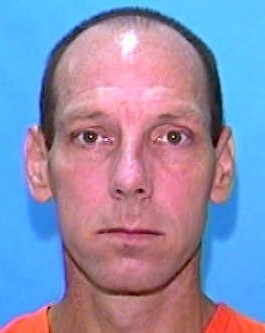
William Happ
Murderer Brian Kevin Rosenfeld
Murderer · USA · 1985
Brian Kevin Rosenfeld Brian Kevin Rosenfeld was sentenced to three concurrent l…
23 victims
Brian Kevin Rosenfeld
Murderer · USA · 1985
Brian Kevin Rosenfeld Brian Kevin Rosenfeld was sentenced to three concurrent l…
23 victims
 Yahweh ben Yahweh
Murderer · USA · 1980
Yahweh ben Yahweh was born and legally named Hulon Mitchell Jr. (October 27, 19…
23 victims
Yahweh ben Yahweh
Murderer · USA · 1980
Yahweh ben Yahweh was born and legally named Hulon Mitchell Jr. (October 27, 19…
23 victims
 Russell Ellwood
Murderer · USA · 1991
Russell Ellwood was a former taxi driver. Authorities suspected him of killing…
20 victims
Russell Ellwood
Murderer · USA · 1991
Russell Ellwood was a former taxi driver. Authorities suspected him of killing…
20 victims
 Peter Lundin
Murderer · USA / Denmark · 1991
Peter Lundin was born in Solrød Strand, Denmark in 1971. His family migrated to…
4 victims
Peter Lundin
Murderer · USA / Denmark · 1991
Peter Lundin was born in Solrød Strand, Denmark in 1971. His family migrated to…
4 victims
 Robert Farquharson
Murderer · Australia · 2005
Robert Donald William Farquharson (born 1969) was an Australian father convicte…
3 victims
Robert Farquharson
Murderer · Australia · 2005
Robert Donald William Farquharson (born 1969) was an Australian father convicte…
3 victims
 Anton Krawczuk
Murderer · USA · 1990
Anton Krawczuk (born 06/08/59) was tried in the Twentieth Judicial Circuit, Lee…
1 victim
Anton Krawczuk
Murderer · USA · 1990
Anton Krawczuk (born 06/08/59) was tried in the Twentieth Judicial Circuit, Lee…
1 victim
 Matej Curko
Murderer · Slovakia · 2010
Matej Curko was an alleged cannibal. · May 10, 2011 — Matej Curko died in a fir…
2 victims
Matej Curko
Murderer · Slovakia · 2010
Matej Curko was an alleged cannibal. · May 10, 2011 — Matej Curko died in a fir…
2 victims
 Shon Miller
Spree killer · USA · 1999
Shon Miller Sr. was a 22-year-old homeless man who was described as having a st…
4 victims
Shon Miller
Spree killer · USA · 1999
Shon Miller Sr. was a 22-year-old homeless man who was described as having a st…
4 victims
- Gender
- male
- Country
- USA
- Location
- Citrus County, Florida, USA
- Date of birth
- January 19, 1962
- Age at first offence
- 24
- Characteristics
- rape, kidnapping
- Victim profile
- Angela Crowley, 21
- Method of murder
- Strangulation
- Date(s) of murder
- May 24, 1986
- Years active
- 1986
- Date of arrest
- —
- Status
-
Executed
Sentenced to death on July 31, 1989; executed by lethal injection in Florida on October 15, 2013
Case identification
- Name: William Happ
- Prisoner number / identifier: DC# 117027
- Date of birth: 01/19/62
- Case venue history: Fifth Judicial Circuit, Citrus County; venue changed to Lake County on 06/29/88
- Case number: 86-671 (Fifth Judicial Circuit, Citrus County); Lake County case # 88-1037 (after venue change)
Background
William Happ was a death row inmate in Florida. He met with two spiritual advisers, including a Roman Catholic priest who administered last rites, according to Department of Corrections spokeswoman Jessica Cary. Happ abandoned his appeals and said he was ready to die.
The offence
On 05/24/86, a fisherman found the body of a partially clad woman on the bank of the Cross-Florida Barge Canal. The woman’s shoulders were covered by a tee shirt that was pulled up to her underarms, and a pair of stretch pants was tied tightly around her neck. The medical examiner testified that the woman’s face and skull were badly bruised and hemorrhaged, had multiple scrapes on her back and right heel, had suffered ten to twenty hard blows to the head, had been anally raped before death, and that the cause of death was strangulation.
The victim was last seen at a Cumberland Farms store at 2:30 a.m. on 05/24/86, and a woman’s scream was heard at approximately the same time. The victim’s car was found six-tenths of a mile from the store, with its driver’s side window shattered. A shoe print found outside the driver’s side door matched one of Happ’s shoes and Happ’s fingerprints were found on the exterior of the car.
Crowley's abduction involved her meeting prearranged guidance plans around Memorial Day weekend in 1986. She prearranged with her friend to meet at a convenience store in Crystal River so she could be guided the last few miles of the trip. Crowley found the store, but before she could get to the pay phone, William Happ smashed her car window and kidnapped her. Happ beat her, raped her and strangled her with her pants before throwing her body into a canal.
Investigation
Happ revealed the details of the crime to a fellow jail inmate, Richard Miller.
Arrest
No arrest details were included in the provided material.
Trial
Charges and plea
Happ’s first trial ended in a mistrial when the prosecutor violated a court order and revealed Happ’s prior criminal record.
At the second trial, a friend of Happ testified that around the time of the murder, he saw Happ walking toward the canal, and the next morning he noticed that Happ had a swollen right hand. Happ’s former girlfriend testified that Happ told her he had broken a car window with his fist.
On 12/02/86, Happ was indicted on:
- Count I: First-Degree Murder
- Count II: Burglary with Battery
- Count III: Kidnapping
- Count IV: Sexual Battery
On 02/05/87, Happ entered a plea of not guilty.
On 06/29/88, venue changed from Citrus to Lake County (Lake County case # 88-1037).
Verdicts and sentencing
On 07/28/89, the matter proceeded in the adjusted venue. On 07/28/89, the jury returned guilty verdicts on all counts of the indictment.
On 07/31/89, the jury recommended a death sentence by a vote of 9-3.
On 07/31/89, Happ was sentenced as follows:
- Count I: First-Degree Murder — Death
- Counts II-IV: Life Imprisonment
Sentencing
Happ’s death sentence was imposed on 07/31/89 after the jury recommended death on 07/31/89 by a vote of 9-3.
Appeals
Florida Supreme Court
Happ filed a Direct Appeal with the Florida Supreme Court on 08/30/89, citing nine errors:
- Denying motion to dismiss the indictment on double jeopardy grounds
- Denying motion to suppress evidence
- Refusing to answer a jury deliberation question
- Restricting evidence regarding witness testimony
- Failing to find that the State did not express non-racial reasons for striking a juror
- Allowing the reading of Miller’s (a fellow jail inmate) testimony at the second trial
- Commenting on the evidence and limiting defense counsel’s closing arguments
- Refusing to allow the defense to refer to the key state witness as a “snitch” and “squealer”
- Denial of a fair trial due to the cumulative effect of errors
The Florida Supreme Court affirmed the conviction and sentence on 01/23/92.
Happ filed a Petition for Writ of Certiorari with the U.S. Supreme Court on 06/08/92, granted on 11/02/92. The U.S. Supreme Court vacated the sentence and remanded the case to the Florida Supreme Court.
On 05/20/93, the Florida Supreme Court again affirmed the death sentence.
Supreme Court on 08/18/93 that was denied on 10/12/93.
Post-conviction proceedings
Happ filed a 3.850 Motion with the Circuit Court on 01/17/95; it was denied on 05/15/97.
Happ filed a 3.850 Motion Appeal with the Florida Supreme Court on 06/01/98; it was dismissed without prejudice on 09/13/00 to allow Happ to raise ineffective assistance of counsel claims in an amended 3.850 Motion.
Happ filed an amended 3.850 Motion with the Circuit Court on 11/02/99, which was again amended on 08/31/00 and 11/10/00. The motion was denied on 09/18/03.
Happ filed a Petition for Writ of Habeas Corpus with the Florida Supreme Court on 10/27/00, citing issues related to ineffective assistance of appellate counsel; the Florida Supreme Court denied the Petition on 05/03/01.
Happ filed a 3.850 Motion Appeal with the Florida Supreme Court on 10/22/03; it was denied on 12/08/05.
Outcome
William Happ’s execution took place on 10/15/2013. He was pronounced dead at 6.16pm on Tuesday at Florida State Prison in Starke. The execution began at 6.02pm at Florida State Prison in Starke.
Statements and last words
Before the injection was given, Happ stated:
- “To my agonizing shame, I must confess to the crime.”
He also stated:
- “I wish to offer my most sincere, heartfelt apology. I have prayed for the good Lord to forgive me for my sins. But I understand why those here cannot.”
Minutes before his death, facing 17 members of the victim’s family, Happ stated:
- “For 27 years, the horrible murder of Angela Crowley has been clouded by circumstantial evidence and uncertainty.”
- “For the sake of her family, loved ones and all concerned, it is to my agonising shame that I must confess to this terrible crime.”
Chris Cowley, the victim’s brother, replied:
- “You need to ask somebody a lot more important than me for forgiveness,”
After the confession, Happ blinked repeatedly and shook his head back and forth as he was executed.
Execution protocol details
Happ was the first death row inmate to be injected with the drug midazolam hydrochloride. The drug used was midazolam as part of a lethal injection cocktail designed to induce unconsciousness, paralysis and death by cardiac arrest. Midazolam was typically used by doctors for sedation. The first of the drugs administered as part of the lethal injection protocol in Florida has long been the barbiturate pentobarbital. Florida and other death penalty states using a trio of drugs had run out of pentobarbital since its manufacturer clamped a ban on its use in future executions.
The execution involved three drugs pumped into Happ. The first was midazolam. The second drug was described as designed to paralyze him, and the third was described as designed to result in death by cardiac arrest.
Richard Dieter, executive director of the Death Penalty Information Center in Washington, said:
- “This is somewhat of an experiment on a living human being,” and added:
- “The three-drug process depends on the first drug rendering the inmate unconscious and, if he is only partially unconscious, the inmate could be experiencing extreme pain,” and:
- “Because the second drug paralyzes him, he would be unable to cry out or show that he’s in pain.”
During the execution:
- At 6.08pm, the official overseeing the execution tugged at Happ’s eyelids and grasped his shoulder to check for a response.
- Happ appeared to remain conscious for a greater length of time and made more body movements after losing consciousness than people executed by the old formula which usually kills the prisoner within seven minutes.
Conditions and meal
For his last meal, Happ had a 12-ounce box of assorted chocolates and 1 1/2 quarts of German chocolate ice-cream.
Other details
Victim
The victim was Angie Crowley, 21. Her body was found on a canal bank near Crystal River in central Florida. Crowley’s mother and two siblings died before they could see the sentence carried out. Crowley’s surviving sisters and brothers traveled to Starke to watch as Happ was executed.
A Cumberland Farms store was involved in the victim’s last sighting. Her car was found six-tenths of a mile from that store.
Earlier life and community details
The murder shook Oregon, a small town about 40 miles southwest of Rockford, Illinois. Angie Crowley was a popular student at Oregon High School. After graduating, she attended Northern Illinois University before moving to Fort Lauderdale in December 1985. She worked as a travel agent to help pursue her dreams to travel the world.
Quotes attributed to Crowley’s relatives and others included:
- Chris Cowley said: “He killed my sister, he took her life. But when he took that life, he created so many other victims,” and added: “What he did affected everybody. It ate my mother up. I changed jobs and moved all within three months.”
Jim Kaufman, a classmate who visited Crowley in Florida just before her slaying, said:
- “He took away the potential. There were seven kids in that family and she had the greatest potential of everybody. She had the personality, she had the looks, she had the smarts and she had the attitude. She really, really accomplished things and he took that,” and:
- “We were never able to see it.”
Jim Kaufman also said:
- “She was a sweetheart. Everybody just loved her, she had a great personality. She was prom queen, she was homecoming queen. She was just a gorgeous, gorgeous girl,” and:
- “All of her classmates were devastated. Everybody in the whole town was. The whole town from young to older people knew her very well. She was very, very outgoing.”
Sharon McBreen, who moved from Illinois to Florida in 10th grade, said:
- “She was a thoughtful friend who made great efforts to stay connected,” and:
- “Not only did Crowley write long letters, but she mailed McBreen a senior yearbook signed by all her former classmates.”
McBreen said:
- “She was just one of those really good friends who never missed your birthday. The card was always on time.”
- “She would write me six-page letters,”
- “She would just write, front and back. She filled these letters with everything that was going on in town, and what she was thinking and what she wanted to do.”
Defence and counsel
The material listed the following lawyers:
- Attorney, Trial: Jeffery M. Pfister — Assistant Public Defender
- Attorney, Direct Appeal: Christopher S. Quarles — Assistant Public Defender
- Attorney, Collateral Appeals: Robert Strain & Carol Rodriguez — CCRC-M
Trial-related timeline items and procedural notes
- The execution was preceded by events during the appeal process in which the U.S. Supreme Court vacated the sentence and remanded the case.
- Happ told a circuit judge in Inverness, Florida, last month that he did not want to continue the court appeals that had kept him on Florida’s death row for nearly a quarter-century.
- Happ’s lawyer, Eric Pinkard of St Petersburg, said there were no late motions to stay the execution.
Related legal development
Another condemned Florida prisoner, Etheria Jackson, had a hearing set for a November 6 in Jacksonville's federal court, challenging the use of midazolam. The appeal contended that there was “substantial risk” of midazolam not working completely, violating the Eighth Amendment’s prohibition of “cruel and unusual punishment” by subjecting the condemned to painful paralysis and fatal heart seizure over several minutes.
Spotted an error, or have more information about this case?