Leonard Laws
Murderer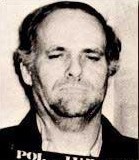 Ervil LeBaron
Murderer · USA · 1972
Ervil Morrell LeBaron (1925 to August 16, 1981) was the leader of a polygamous…
35 victims
Ervil LeBaron
Murderer · USA · 1972
Ervil Morrell LeBaron (1925 to August 16, 1981) was the leader of a polygamous…
35 victims
 Brian Kevin Rosenfeld
Murderer · USA · 1985
Brian Kevin Rosenfeld Brian Kevin Rosenfeld was sentenced to three concurrent l…
23 victims
Brian Kevin Rosenfeld
Murderer · USA · 1985
Brian Kevin Rosenfeld Brian Kevin Rosenfeld was sentenced to three concurrent l…
23 victims
 Marvin Gray
Murderer · USA · 1975
Marvin Gray was convicted killer who claimed responsibility for 23 slayings and…
23 victims
Marvin Gray
Murderer · USA · 1975
Marvin Gray was convicted killer who claimed responsibility for 23 slayings and…
23 victims
 Yahweh ben Yahweh
Murderer · USA · 1980
Yahweh ben Yahweh was born and legally named Hulon Mitchell Jr. (October 27, 19…
23 victims
Yahweh ben Yahweh
Murderer · USA · 1980
Yahweh ben Yahweh was born and legally named Hulon Mitchell Jr. (October 27, 19…
23 victims
 Alexander Solonik
Murderer · Russia · 1990
In February 1997, Greek newspapers published articles that claimed a Russian mo…
10 victims
Alexander Solonik
Murderer · Russia · 1990
In February 1997, Greek newspapers published articles that claimed a Russian mo…
10 victims
 Thomas Quick
Serial killer · and Finland · 1964
Thomas Quick (born Sture Bergwall, 1950, Korsnäs, Falun, Sweden) was sentenced…
15 victims
Thomas Quick
Serial killer · and Finland · 1964
Thomas Quick (born Sture Bergwall, 1950, Korsnäs, Falun, Sweden) was sentenced…
15 victims
 Mukosi Freddy Mulaudzi
Serial killer · South Africa · 1990
Mukosi Freddy Mulaudzi (46) from Mandala Village was a convicted serial killer…
13 victims
Mukosi Freddy Mulaudzi
Serial killer · South Africa · 1990
Mukosi Freddy Mulaudzi (46) from Mandala Village was a convicted serial killer…
13 victims
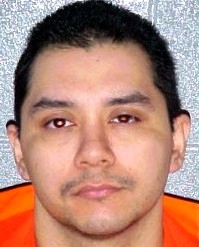 Christopher Lamar
Murderer · USA · 1996
Christopher George Theodore Lamar was sentenced to death on June 1, 2001 (ADC#…
1 victim
Christopher Lamar
Murderer · USA · 1996
Christopher George Theodore Lamar was sentenced to death on June 1, 2001 (ADC#…
1 victim
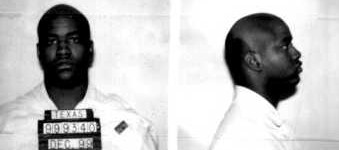 Geno Capoletti Wilson
Homicide · USA · 1998
Name: Geno Capoletti Wilson TDCJ Number: 999340 Date of Birth: 05/24/1981 Date…
1 victim
Geno Capoletti Wilson
Homicide · USA · 1998
Name: Geno Capoletti Wilson TDCJ Number: 999340 Date of Birth: 05/24/1981 Date…
1 victim
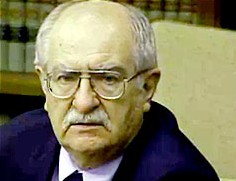 Gary Leiterman
Murderer · USA · 1969
Name: Gary Leiterman · Case: State of Michigan Court of Appeals opinion 265821…
1 victim
Gary Leiterman
Murderer · USA · 1969
Name: Gary Leiterman · Case: State of Michigan Court of Appeals opinion 265821…
1 victim
- Gender
- male
- Country
- USA
- Location
- St. Louis County, Missouri, USA
- Date of birth
- August 1, 1949
- Age at first offence
- 31
- Characteristics
- robbery, murder for hire
- Victim profile
- Clarence and Lottie Williams
- Method of murder
- Shooting (twelve gauge shotgun)
- Date(s) of murder
- October 29, 1980
- Years active
- 1980
- Date of arrest
- January 2, 1981
- Status
-
Executed
Executed by lethal injection in Missouri on May 17, 1990
Parties and case identifiers
Leonard M. Laws was convicted in the State of Missouri v. Leonard M. Laws, 661 SW 2d 526 (Mo. banc 1983). The federal habeas corpus appeal was Leonard Marvin Laws, Appellee, v. Bill Armontrout, Appellant, United States Court of Appeals, Eighth Circuit, No. 834 F.2d 1401.
Background
Leonard Laws lived in a two-room house trailer with George Clifton Gilmore, Gilmore’s brother Norman, and several members of the Gilmore family. All three men were unemployed. George Gilmore suggested to his brother and Laws that they could make money easily by robbing old people and then killing them to prevent identification. The three bought shotguns and a rifle on October 8, 1980.
During the punishment phase of the July 1982 trial, the State introduced evidence through certified copies of judgments that Laws had been convicted of two previous but separate capital murders in Missouri, for which he received life sentences, two armed robberies in Arizona, for which he received concurrent five to six-year sentences, and one aggravated assault in Mississippi, for which he received an eleven-year sentence. Laws was imprisoned in March of 1982 in the Missouri State Penitentiary for his first Missouri murder conviction and had been incarcerated ever since. Laws had previously spent a little over six years in prison on the armed robbery and aggravated assault convictions before being paroled.
The offence
Victims
Clarence and Lottie Williams were targeted for robbery and killing.
Events leading to the murders
Late in the evening of October 28, 1980, George Clifton Gilmore, his brother Norman, and Leonard Laws met and decided to rob Clarence and Lottie Williams.
In the early morning hours of October 29, 1980, they went to the Williams’s home. They roused Mr. Williams and convinced him to open his front door. The assailants gained entry after Laws cut the telephone line.
Binding, threats, and ransacking
Mr. Williams and Mrs. Williams were bound with clothesline in their home. They were taken to Mr. Williams’s bedroom, where both were bound with clothesline. Laws threatened to cut off their fingers if they would not reveal where their money was concealed. The victims complied, and the three ransacked the house.
Killing and attempted escape
The assailants untied Mr. and Mrs. Williams and took them into the bedroom. George Gilmore prepared to kill them with his twelve-gauge shotgun. Laws suggested: “Let me hit them in the head with a ball bat.” Gilmore told Laws to go stand outside and see if he could hear the shotgun blasts, and Laws complied.
Gilmore shot Mrs. Williams, reloaded the weapon, and then shot Mr. Williams. The first shot failed to kill Mr. Williams, and he attempted to escape toward the front door when he saw kerosene being spread throughout the home. Gilmore then shot Mr. Williams a second time, killing him. Thereafter, Laws reentered the house.
Arson
After removing property, the three poured fuel oil on the floor, which Laws lit, starting a fire that substantially destroyed the house.
Investigation
Several weeks after the murders, Laws discussed the crimes with two relatives: Robert Gilmore and Bobby DeClue. After confirming the story by a visit to the site of the Williams’s home and speaking to Norman Gilmore, DeClue and Robert Gilmore reported the incident to police and agreed to help apprehend the three perpetrators.
Arrest
On January 2, 1981, DeClue and Robert Gilmore tricked Leonard Laws and George Gilmore into leaving their trailer. They were then arrested at a police roadblock. Norman Gilmore was arrested at a house in Franklin County, Missouri.
Trial
Laws received a four-day trial in St. Louis County, Missouri Circuit Court in July 1982. A jury found him guilty of two counts of capital murder.
Guilt-phase result
The jury found Laws guilty of two counts of capital murder.
Punishment phase and mitigation issues
The punishment phase began on the morning of July 23, 1982 before the same jury. During this phase the State introduced evidence of prior convictions through certified copies of judgments. Laws’s lawyer introduced no evidence of mitigating circumstances, although the trial court gave an instruction directing the jury to consider any mitigating circumstances.
The jury returned a verdict fixing Laws’s punishment at death. Laws’s motion for a new trial was overruled on September 17, 1982, and he was sentenced to death on each count of capital murder.
Related appeal to the Missouri Supreme Court
State v. Laws, 661 S.W.2d 526 (Mo. banc 1983) affirmed the conviction and sentence in full. Certiorari was denied in 467 U.S. 1210, 104 S.Ct. 2401, 81 L.Ed.2d 357 (1984). Rehearing was denied on December 20, 1983.
Sentencing
Laws was sentenced to death on each count of capital murder.
The punishment phase included the following instruction (Instruction No. 30):
If you decide that a sufficient aggravating circumstance or circumstances exist to warrant the imposition of death, as submitted in Instruction No. 28, it will then become your duty to determine whether a sufficient mitigating circumstance or circumstances exist which outweigh such aggravating circumstance or circumstances so found to exist. In deciding that question you may consider all of the evidence relating to the murders of Clarence and Lottie Williams. You may also consider
Appeals
State post-conviction proceedings (Mo. S. Ct. R. 27.26)
Laws filed a pro se motion pursuant to Mo.S.Ct.R. 27.26 alleging ineffective assistance of counsel. New counsel was appointed, and on November 16, 1984, an evidentiary hearing was held on the Rule 27.26 motion before a different judge from the one presiding over the trial.
The court found no showing of incompetence by Laws’s trial counsel. The Missouri Court of Appeals affirmed the denial of relief in Laws v. State, 708 S.W.2d 182 (Mo.App.1986). Laws’s motions for rehearing and for transfer were denied on March 25, 1986 and May 13, 1986. He then unsuccessfully petitioned to the Supreme Court for certiorari in Laws v. State, --- U.S. ----, 107 S.Ct. 246, 93 L.Ed.2d 171 (1986).
At the time Rule 27.26 provided:
A prisoner in custody under sentence and claiming a right to be released on the ground that this sentence was imposed in violation of the Constitution and laws of this State or the United States, or that the court imposing such sentence was without jurisdiction to do so, or that such sentence was in excess of the maximum sentence authorized by law or is otherwise subject to collateral attack, may file a motion at any time in the court which imposed such sentence to vacate, set aside or correct the same. Unless the motion and the files and records of the case show to the satisfaction of the court that the prisoner is entitled to no relief, the court shall cause notice thereof to be served on the prosecuting attorney, grant a prompt hearing thereon, determine the issues and make findings of fact and conclusions of law with respect thereto. If the court finds that the judgment was rendered without jurisdiction or that the sentence imposed was illegal or otherwise subject to collateral attack, or that there was such a denial or infringement of the constitutional rights of the prisoner as to render the judgment subject to collateral attack, the court shall vacate and set aside the judgment and shall discharge the prisoner or resentence him or grant a new trial or correct the sentence as may appear appropriate.
Federal habeas corpus appeal (Eighth Circuit)
After eight unsuccessful attempts in the state court system, including four alleging ineffective assistance of counsel, Laws began the federal attack by filing a pro se petition for writ of habeas corpus in the district court pursuant to 28 U.S.C. § 2254. Counsel was appointed, and Laws amended his petition raising two arguments: ineffective assistance of trial counsel during the punishment phase for failing to put on evidence in mitigation, and that the death penalty violated the eighth and fourteenth amendment rights because Laws was only an accomplice and had no direct role in the killing of the victims. Laws sought only a new trial of the death penalty phase and did not raise issues regarding counsel’s handling of the guilt phase.
The district court granted habeas corpus relief, vacating Laws’s two consecutive death sentences and giving the State the opportunity to retry the punishment phase. The Eighth Circuit reversed and reinstated the sentence.
Eighth Circuit decision details
The Eighth Circuit held there was no valid claim of ineffective assistance of trial counsel and reversed the grant of habeas relief. The case was submitted April 14, 1987 and decided December 9, 1987, before McMillan, Fagg, and Magill, Circuit Judges. Magill delivered the opinion.
The Eighth Circuit concluded the district court erred by setting out a per se rule regarding ineffectiveness when no mitigating evidence was introduced. It also held the district court erred in considering Laws’s “Vietnam experience” claim because it was not properly exhausted. The court further held that, on the claims properly before it, the assessment of evidence supported a conclusion that Laws received effective assistance of counsel.
District court analysis quoted within the appellate opinion
The district court called counsel’s decision “a bold tactic” and stated:
Had it succeeded, its brilliance may have been unquestioned. Having failed, it must be considered beyond the bounds of professional norms.
It also stated:
Trial counsel may well believe he had reasonable grounds for the decision he reached in the death penalty phase of this cause. Nonetheless, that decision was wrong.
It further stated:
To a certain extent, we risk developing a body of law that says at the death penalty phase defense counsel must introduce some evidence or be found ineffective, while it is certainly possible and sometimes probable that putting on and offering evidence may worsen the client's chances. Perhaps this ruling stresses only the importance of fully investigating each case on its merits before deciding that as a matter of reasonable strategy, no evidence should be introduced.
Laws’s “Vietnam experience” argument and evidence referenced
In an affidavit prepared in support of the federal habeas petition, Laws stated:
During my trial preparation for the Williams case, [trial counsel] and I discussed very briefly my service in the army and in Vietnam from 1967 to 1970. I told him I had an honorable discharge. He never asked me about it again.
During the closing argument of the punishment phase, Laws’s counsel said:
when I was in Vietnam, I killed somebody. Okay, I killed somebody. I had to. Leonard Laws was in Vietnam. I killed somebody in those circumstances and I can remember the day, March 17th.
Strickland and related quoted material within the appellate opinion
The Eighth Circuit reproduced the Supreme Court discussion of counsel’s conduct from Strickland, including:
Counsel’s strategy choice was well within the range of professionally reasonable judgments, and the decision not to seek more character or psychological evidence than was already in hand was likewise reasonable.
and:
Trial counsel could reasonably surmise from his conversations with respondent that character and psychological evidence would be of little help.
The opinion reproduced the Supreme Court’s discussion of Darden, including:
In this case, there are several reasons why counsel reasonably could have chosen to rely on a simple plea for mercy from petitioner himself. Any attempt to portray petitioner as a non-violent man would have opened the door for the State to rebut with evidence of petitioner's prior convictions. * * * In addition, * * * the State could have responded with a psychiatric report * * *. In sum, petitioner has not "overcome the presumption that, under the circumstances, the challenged action 'might be considered sound trial strategy.' "
Trial counsel’s alleged failures addressed in the Eighth Circuit
The Eighth Circuit addressed three claims considered properly before it:
- Failure to adequately investigate psychological background Laws had undergone a psychiatric examination in the Mississippi State Hospital in 1974-75 while serving time in the Mississippi Penitentiary on an aggravated assault charge. Trial counsel relied on a psychiatric exam of Laws conducted on September 22, 1981 at the Fulton State Hospital in connection with one of the two other capital murder charges. The Fulton State Hospital examination concluded that Laws was mentally capable of standing trial and could know and appreciate the nature, quality and wrongfulness of the murders and could conform his conduct to the requirements of the law.
The appellate opinion included verbatim portions of testimony from the Rule 27.26 hearing. Examples include:
The findings were, from Roman Numeral VIII, that the accused had no mental disease or defect within the meaning of Section 552.010, and that Leonard had the capacity to understand the proceedings against him and knew and appreciated the nature and wrongfulness of his conduct.
...
Well, in my conversations with him I didn't detect--again, its a lay opinion. But I didn't detect any mental disease or defect that would interfere with our preparing to go to trial, or for his standing trial.
...
I considered it, but I rejected it. (Emphasis added.)
...
It was in the context of the individual's finding that there was no mental disease or defect. (Emphasis added.)
...
But you did not investigate, at the time you represented Mr. Laws , exactly what a situational reaction was, what the scope of that was?
A. What the scope of it was, I have an understanding what it is. But I don't know the actual scope of it. And again, I read it. It was in the context of the individual's finding that there was no mental disease or defect. (Emphasis added.)
...
Q. But when you represented Mr. Laws and read this report, did you at any time talk to the psychiatrist or psychologist about what types of incidents aggravate situational reactions?
A. No, I didn't. [Rule 27.26 Tr. at 83-84.]
The Rule 27.26 court found as fact that Laws never gave any indication that he was mentally incompetent at the time of trial or at the time of the offenses. The Missouri Court of Appeals concluded counsel made a reasoned strategic decision to refrain from putting on evidence at trial of Laws’s psychiatric state. The Missouri Court of Appeals stated:
Close examination of the transcript reveals that [trial counsel] made a reasoned strategic decision based on all the circumstances to refrain from putting on evidence at trial of [ Laws '] psychiatric state.
and:
The evidence at movant's 27.26 hearing convinces us that [trial counsel] made a careful and conscious choice against putting on psychiatric evidence during trial or at the penalty stage. Nothing made known to counsel during his representation of movant, and extensive interviews with him, suggested to counsel that presenting evidence of movant's psychiatric state would be of any benefit in his defense.
The Eighth Circuit held counsel’s performance was not deficient on this ground.
- Failure to contact and interview relatives
During the Rule 27.26 hearing, counsel testified about efforts to contact relatives and stated:
She refused.
When asked about the response, counsel said:
She stated that she didn't wish to help Leonard in this case, and she didn't--she knew that the other family members didn't wish to help.
Counsel also testified:
In the death phase, they were most adamant about not testifying.
The Rule 27.26 court found as fact that trial counsel contacted relatives by calling a phone number Laws supplied and that two different persons told trial counsel the relatives would not testify on Laws’s behalf.
- Failure to elicit testimony of community members (clergyman, statistician, or professor)
The Eighth Circuit discussed that Laws considered calling a priest or religious personage and a statistician. In the Rule 27.26 hearing, Laws testified:
Yes, I considered that.
Laws also testified:
After the first trial I spoke with the jurors in the case. And they told me that they had disregarded totally the testimony of these individuals. I believe the gentleman's name is Mr. Gilsonin. Q. He was a statistician, or professor? A. And I don't recall the other. I don't recall the other gentleman's name right now. Q. But the one was a priest and one was a statistician? A. Right. And the jurors said that they rejected out of hand that testimony and instead centered on the deal between Norman Gilmore and the State in their finding of fifty years rather than death in the first case.
The Rule 27.26 court found that trial counsel was fully informed at the time of trial of the possibility of calling clergy persons and professors and decided the testimony would not be beneficial.
Dissent
McMillan dissented. He would have affirmed the district court’s grant of habeas corpus relief and remanded for a new trial on the penalty phase only. He stated that he would affirm because appellant did not receive effective assistance of counsel at the penalty phase. In his view, defense counsel failed to conduct a reasonable investigation and to present mitigating evidence.
The dissent included quoted language from Strickland and Kimmelman regarding counsel’s duty to investigate, as well as additional discussion of why he concluded counsel’s performance was unreasonable and prejudicial.
Outcome
The Eighth Circuit reversed the district court’s grant of habeas corpus relief and reinstated Laws’s death sentence.
Aftermath
Leonard Laws was executed on May 17, 1990 by lethal injection in Missouri.
Spotted an error, or have more information about this case?