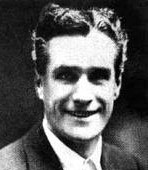
Patrick Mahon
Murderer Albert Burrows
Murderer · United Kingdom · 1920
Albert Burrows (also named Albert Edward Burrows): married farm labourer who to…
4 victims
Albert Burrows
Murderer · United Kingdom · 1920
Albert Burrows (also named Albert Edward Burrows): married farm labourer who to…
4 victims
 Lock Ah Tam
Murderer · United Kingdom · 1925
Lock Ah Tam was 54 when he killed his wife and two daughters. He had been a suc…
3 victims
Lock Ah Tam
Murderer · United Kingdom · 1925
Lock Ah Tam was 54 when he killed his wife and two daughters. He had been a suc…
3 victims
 Walter Graham Rowland
Murderer · United Kingdom · 1934
Defendant: Walter Graham Rowland Age: 39 (labourer) Residence/Origin: from Mell…
2 victims
Walter Graham Rowland
Murderer · United Kingdom · 1934
Defendant: Walter Graham Rowland Age: 39 (labourer) Residence/Origin: from Mell…
2 victims
 One L. Goh
Mass murderer · USA · 2012
One L. Goh was 43 years old at the time of the Oikos University shooting. He wa…
7 victims
One L. Goh
Mass murderer · USA · 2012
One L. Goh was 43 years old at the time of the Oikos University shooting. He wa…
7 victims
 Ebony Smith
Murderer · USA · 2011
Ebony Passion Smith was a Warner Robins woman who was sentenced to life in pris…
1 victim
Ebony Smith
Murderer · USA · 2011
Ebony Passion Smith was a Warner Robins woman who was sentenced to life in pris…
1 victim
 Brian Kevin Rosenfeld
Murderer · USA · 1985
Brian Kevin Rosenfeld Brian Kevin Rosenfeld was sentenced to three concurrent l…
23 victims
Brian Kevin Rosenfeld
Murderer · USA · 1985
Brian Kevin Rosenfeld Brian Kevin Rosenfeld was sentenced to three concurrent l…
23 victims
- Gender
- male
- Country
- United Kingdom
- Location
- Eastbourne, Sussex, England, United Kingdom
- Date of birth
- 1890
- Age at first offence
- 34
- Characteristics
- dismemberment
- Victim profile
- His lover, Emily Beilby Kaye, 37 (two months pregnant)
- Method of murder
- ???
- Date(s) of murder
- April 15, 1924
- Years active
- 1924
- Date of arrest
- May 2, 1924
- Status
-
Executed
Executed by hanging at Wandsworth Prison on September 2, 1924
Offender
Patrick Herbert Mahon (also known as Pat Waller), born in West Derby, Liverpool, in 1889.
Background
Patrick Herbert Mahon was married to 23-year-old Jessie on 6th April 1910. A year later he took another girl for a weekend on the Isle of Man and paid for the visit with forged cheques; for this offence, his first, he was bound over, but he was soon in prison after being found guilty of embezzlement. After his release he moved to Surrey.
Mahon was in prison again in 1916: while attempting a robbery, he hit a maidservant with a hammer and received five years.
On his release, his wife got him a job as a salesman with a firm, Consol Automatic Aerators, selling soda fountains. In May 1922 the company went bankrupt but Mahon and his wife, who also worked at Consol, were kept on. Mr Hobbins, the receiver, appointed Mahon sales manager and one of Mahon’s duties was to visit the receivers’ head office in Moorgate, London.
Mahon met Mr Hobbins’ secretary, Miss Emily Beilby Kaye. Miss Kaye was 38 years old and lived at the Green Cross Club off Russell Square. She had over £600 invested in stocks and shares and often spoke to Mahon over the telephone regarding the business. She knew that he was married.
Sometime toward the end of the summer of 1922, Miss Kaye suggested that they spend a day together on the river; they spent a day on the Thames. Mahon later described this as: "a woman of the world."
Miss Kaye lost her job at the end of October but managed to get another job as a typist for a financier in Old Bond Street, where she worked for one month.
Emily started to sell her shares in February 1924. In March she fell ill with influenza and went to Bournemouth to recuperate. Mahon travelled down to see her at the end of her stay there and they shared a double room in the South Western Hotel, Southampton, where they registered as Mr and Mrs Mahon. Mahon had bought a diamond and sapphire cluster ring from a jewellers in Southampton, and on their return to London Emily told her friends that she was engaged to Mahon.
At the beginning of April Emily told her close friend Edith Warren that a date had been fixed for the wedding and that the pair were then going to emigrate to South Africa. Emily wrote to her sister on 5th April and told the same story.
Mahon, calling himself Waller, travelled down to Langley in response to an advert in Dalton's Weekly and agreed to rent the Officer’s House, Crumbles, from 11th April to 6th June at a rent of three and a half guineas a week. Emily Kaye packed her bags on 7th April and travelled to Eastbourne, where she stayed at the Kenilworth Court Hotel.
The offence
Relationship and arrangements with Emily Beilby Kaye
Mahon invited Emily Beilby Kaye to spend a romantic weekend at the Crumbles. Emily travelled to Eastbourne and moved into the bungalow believing that it was the start of a new life with her lover. Emily knew Mahon was married but believed he would leave his wife; she left her job to embark on the venture.
Mahon used a rented bungalow on the Sussex coast between Eastbourne and Pevensey Bay known as the Crumbles, specifically the Officer's House. The lease ran for two months.
Purchase of tools and death
Mahon bought a ten inch cook’s knife and a small meat-saw. He bought a large cook’s knive and a tenon saw.
Mahon met Emily at Eastbourne station and they took a taxi to Officer’s House. Emily was still alive the next morning when a butcher delivering meat saw her. She was also still alive on either the Monday or Tuesday when she enquired about any post at the Kenilworth Court.
Mahon had a quarrel with Emily: Mahon recounted that on the 16th he and Emily quarrelled, that she threw an axe at him hitting a doorframe, and that during the struggle Emily fell, hit her head on the coal-scuttle, and died. Mahon said he bought the knife on the 17th and dismembered the body on the 18th.
Sir Bernard Spilsbury testified that Emily could not have received the fatal injuries from falling onto the coal-scuttle; the object was described as cheap, very flimsy, and completely undamaged. Mahon’s explanation about the axe striking the doorframe was not supported: while there were bloodstains in the living room there was no sign of any mark on the doorframe.
Emily Beilby Kaye had been about two months pregnant.
Dismemberment and concealment
After Emily died, Mahon locked the spare bedroom and dragged the body into it. The next day he returned to London, met Ethel Duncan, and took her out to dinner.
Mahon dismembered Emily’s body with the saw and knife that he bought in London. He placed parcels in her trunk in the spare bedroom and locked it.
He burned Emily’s head in the living-room grate. He broke up the charred remains with a poker and disposed of other parts similarly. He then further dismembered the torso and boiled parts in saucepans in the kitchen so that they could be cut into smaller pieces.
Mahon put most of the final remains into a Gladstone bag and threw them from the carriage window of a train when he later travelled to Waterloo Station in London.
Missing parts and body parts found
Police and investigators found parts in containers at the Crumbles. In a large trunk marked "EBK" they found the quartered body of a woman. In a biscuit tin and a hatbox they found a heart and other organs and, in a saucepan, were body parts that had been boiled.
The limbs and head were never found. Mahon claimed that he had burnt these on the living-room fire.
Police took dogs along the train route in case missing items had been tossed out the window, but the missing parts were not found.
Spilsbury later stated that the victim’s head, uterus, and right leg were missing.
Investigation
Family suspicion and discovery at Waterloo
On the 30th April Jessie Mahon, who knew that something was going on, confided in a friend, a former railway policeman. Jessie gave him a left-luggage ticket she had found in the pocket of one of her husband’s suits and, suspecting that her husband was having an affair, asked her friend to investigate.
The former railway policeman went to Waterloo station and, in exchange for the ticket, received a locked Gladstone bag. By carefully easing the sides apart he saw a knife and bloodstained female underwear. He put the bag back and gave the ticket back to Jessie, telling her to replace it in her husband’s pocket.
The next day the ex-policeman told Frederick Wensley, Chief Constable, what he had seen in the bag. DCI Savage was sent to investigate. After verifying the contents, he replaced the bag and instigated a watch on it.
Apprehension and questioning
On 2nd May at 6.30pm, Mahon turned up and presented the ticket. He was given the bag and, as he was leaving the station, was apprehended by DS Thompson. Mahon was taken firstly to Kennington police station and later to Scotland Yard.
DCI Savage began questioning Mahon at around 9.45pm. The bag was on the table, still unopened. Mahon admitted that the bag was his and Savage opened it.
Inside were several bloodstained items including a torn pair of bloomers and a canvas racket bag initialled "EBK". Everything had been liberally sprinkled with disinfectant.
When asked about the blood Mahon said: "I suppose I have carried home meat for dogs in it" to which Savage replied: "That explanation won't do." They both sat in silence for fifteen minutes when Mahon said: "I wonder if you can realise how terrible a thing it is for someone's body to be active and one's mind to fail to act." Savage said nothing, and another thirty minutes passed before Mahon spoke again: "I'm considering my position." Another fifteen minutes passed in silence and Mahon said: "I suppose you know everything. I'll tell you the truth." It took over two hours to take down Mahon’s statement.
In his statement Mahon recounted that he and Emily had quarrelled on the 16th; Emily threw an axe that hit a doorframe; during the struggle Emily fell, hit her head on the coal-scuttle, and died.
Search at the Crumbles
Early the next morning, Savage, accompanied by Wensley, drove down to the Crumbles.
While there were plenty of bloodstains in the living room there was no sign of any mark on the doorframe that had supposedly been struck by an axe.
Sir Bernard Spilsbury arrived and started to piece together the remains. He found the remains he was able to reconstruct and also determined from the condition of Emily’s breasts that she had been pregnant.
Detection dispute about cause of death
Spilsbury determined that Emily could not have died from hitting her head on the coal bucket because it showed no sign of blood, hair, or damage. He also determined that it would not have caused injuries with a rapidly fatal result.
Spilsbury also performed a trial using fire to try to duplicate Mahon’s account that he had burned Emily’s head and smashed the remains into pieces.
He stated that because Mahon had claimed to have purchased a knife and saw after the accident, Mahon’s timeline caused his undoing; the police proved he had purchased these items before Emily died.
Arrest
Mahon presented the left-luggage ticket at Waterloo, received the locked Gladstone bag, and was apprehended by DS Thompson as he was leaving the station. He was taken to Kennington police station and later to Scotland Yard, where he was questioned by DCI Savage.
Trial
Court and prosecution/defence
Mahon’s trial began on Tuesday, 15th July 1924, at Sussex Assizes, Lewes.
Sir Henry Curtis Bennett led for the prosecution and Mr J D Cassels defended Patrick Mahon.
Evidence and testimony
Sir Bernard Spilsbury testified that Emily could not have received the fatal injuries from falling onto the coal-scuttle, described as cheap, very flimsy, and completely undamaged.
The evidence that Mahon had bought the knife and saw before the woman's death was described as sealing his fate.
The jury heard that Mahon had purchased a knife and saw before Emily’s death and that his claim about the coal-scuttle fall did not fit the injuries.
Defence position and evidence challenged
Mahon maintained that Miss Kaye died accidentally by hitting her head on the coal bucket, striking his head during the quarrel and struggle.
During the trial Mahon gave evidence for more than five hours. The court heard that on the evening of Emily’s death he and Emily had a furious quarrel; Mahon testified that he was attacked by his lover, and that during the struggle Emily’s head hit the coal scuttle. He said he was afraid and in shock, remembered little, went outside, and then concealed what he had done.
At the end of this story Mahon’s counsel asked him: "Did you desire the death of Miss Kaye?" Mahon replied: "Never at any time".
Witness evidence
Ethel Duncan, considerably distressed, spent an hour in the witness box. She maintained she had seen nothing to arouse suspicion during the weekend she spent with Mahon.
Jury reaction and verdict
As the trial continued two jury-men collapsed and were replaced. Mahon was found guilty of murder.
Sentencing
Mahon was sentenced to death.
Appeals
No appeal information was provided.
Outcome
Mahon’s execution was carried out by Thomas Pierrepoint and William Willis.
Aftermath
Execution
Mahon was executed by hanging at Wandsworth Prison on 9th September 1924.
Letter from cell
Before his execution on Wednesday 3 September, Mahon wrote a kind and loving letter to his wife from his cell. Mahon’s wife remained loyal to the end.


Spotted an error, or have more information about this case?