Patrick Carraher
Murderer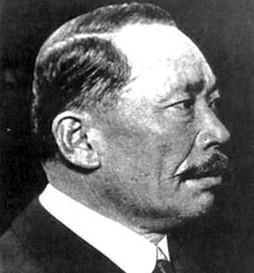 Lock Ah Tam
Murderer · United Kingdom · 1925
Lock Ah Tam was 54 when he killed his wife and two daughters. He had been a suc…
3 victims
Lock Ah Tam
Murderer · United Kingdom · 1925
Lock Ah Tam was 54 when he killed his wife and two daughters. He had been a suc…
3 victims
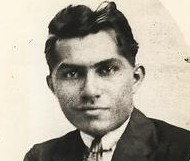 Buck Ruxton
Murderer · United Kingdom · 1935
Buck Ruxton (21 March 1899, Bombay – 12 May 1936, Manchester) was also known as…
2 victims
Buck Ruxton
Murderer · United Kingdom · 1935
Buck Ruxton (21 March 1899, Bombay – 12 May 1936, Manchester) was also known as…
2 victims
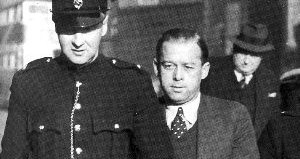 Walter Graham Rowland
Murderer · United Kingdom · 1934
Defendant: Walter Graham Rowland Age: 39 (labourer) Residence/Origin: from Mell…
2 victims
Walter Graham Rowland
Murderer · United Kingdom · 1934
Defendant: Walter Graham Rowland Age: 39 (labourer) Residence/Origin: from Mell…
2 victims
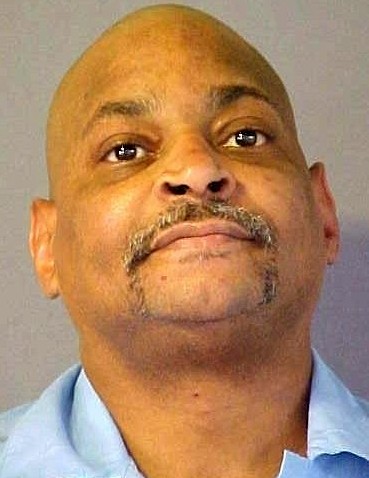 Eric Allen Patton
Murderer · USA · 1994
Eric Allen Patton — defendant; convicted killer; former handyman · Charlene Kau…
1 victim
Eric Allen Patton
Murderer · USA · 1994
Eric Allen Patton — defendant; convicted killer; former handyman · Charlene Kau…
1 victim
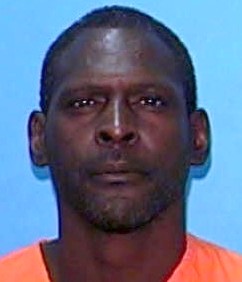 Crosley Green
Murderer · USA · 1989
Crosley Green was sentenced to death on February 8, 1981. Late in the evening o…
1 victim
Crosley Green
Murderer · USA · 1989
Crosley Green was sentenced to death on February 8, 1981. Late in the evening o…
1 victim
 Reginald & Jonathan Carr
Spree killers · Kansas · 2000
The Wichita Massacre, also known as “The Wichita Horror,” was a murder/assault/…
5 victims
Reginald & Jonathan Carr
Spree killers · Kansas · 2000
The Wichita Massacre, also known as “The Wichita Horror,” was a murder/assault/…
5 victims
 Dale Shackelford
Murderer · USA · 1999
Dale Carter Shackelford was convicted for the 1999 slayings of Donna Fontaine a…
2 victims
Dale Shackelford
Murderer · USA · 1999
Dale Carter Shackelford was convicted for the 1999 slayings of Donna Fontaine a…
2 victims
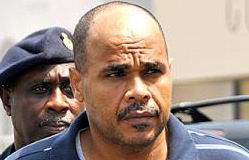 Cyril Darville
Serial killer? · The Bahamas · 1990
Cyril Darville was convicted for a murder committed in 1990. He had a prior rec…
9 victims
Cyril Darville
Serial killer? · The Bahamas · 1990
Cyril Darville was convicted for a murder committed in 1990. He had a prior rec…
9 victims
 Edith McAlinden
Murderer · United Kingdom · 2004
Edith McAlinden (born 1968) — accused; convicted for murder; mother of John McA…
1 victim
Edith McAlinden
Murderer · United Kingdom · 2004
Edith McAlinden (born 1968) — accused; convicted for murder; mother of John McA…
1 victim
- Gender
- male
- Country
- United Kingdom
- Location
- Glasgow, Scotland, United Kingdom
- Date of birth
- 1906
- Age at first offence
- 28
- Characteristics
- drunken rage, rape, rape?, spree killer
- Victim profile
- James Shaw / John Gordon (soldiers)
- Method of murder
- St abbing with knife
- Date(s) of murder
- August 13, 1934 / November 23, 1945
- Years active
- 1934–1945
- Date of arrest
- —
- Status
-
Executed
Executed by hanging on April 4, 1946
Case summary
Patrick Carraher was an alcoholic Glasgow brawler who was charged with murder on August 13, 1934, after fatally stabbing James Shaw, a young soldier, in the course of a saloon altercation. At trial, Carraher pleaded drunkenness. He was convicted of “culpable murder” and was sentenced to three years imprisonment.
After serving his time, Carraher was picked up again in 1943 on charges of razor-slashing, assault and battery. On November 23, 1945, he murdered a second young soldier, John Gordon, in Glasgow. A jury convicted Carraher of first-degree murder. He was hanged at Barlinnie Prison on April 4, 1946.
Timeline
- August 13, 1934 — Patrick Carraher was charged with murder after fatally stabbing James Shaw, a young soldier, during a saloon altercation.
- 1938 (September) — Carraher was tried for murder in the High Court of Justiciary, Glasgow.
- 1943 — Carraher was arrested again and sent to jail for three years on charges of razor-slashing, assault and battery.
- November 23, 1945 — Carraher murdered John Gordon, a young soldier, in Glasgow.
- February 1946 — Carraher was tried for a second murder in the same court.
- April 4, 1946 — Carraher was hanged at Barlinnie Prison.
- 1934 (trial outcome) — Carraher was convicted of “culpable murder” and sentenced to three years imprisonment.
- 1941 — Carraher walked through the gates of Barlinnie in 1941 after serving time for the 1934 killing.
The offence
Killing of James Shaw (1934)
Carraher was involved in a saloon altercation after he fatally stabbed James Shaw, a young soldier. The killing occurred after Carraher, now very drunk, spotted a young woman he had been involved with walking with her young man, James Durie, a window cleaner, and after he called her every name under the sun and threatened worse.
Carraher’s orders had been ignored, and he became involved in a confrontation. A passing serviceman on leave, Jannes Shaw, told Carraher to be quiet. When Peter Howard turned round, Shaw was lying on the ground and Carraher was walking away.
Peter Howard rushed to help the young soldier but he was wounded on the neck and died within the hour at Glasgow Royal Infirmary.
At his trial at Glasgow High Court, it was obvious he had knifed Shaw, but his lawyer convinced the jury that no one actually saw Carraher knife the man. The jury found him not guilty of murder but guilty of the lesser charge of culpable homicide, and he was jailed for three years.
Killing of John Gordon (1945)
John Gordon was a career soldier who had served 20 years with the Seaforth Highlanders and spent years in a German PoW camp. In November 1945, he was set to be demobbed and had celebratory drinks with his brothers.
Carraher had taken up with Daniel Bonnar, the brother of his then girlfriend, Sarah, during the blackout years of the war. On the day-long orgy of violence in 1943, Carraher was once again arrested and sent to jail for three years.
After Carraher’s release in November 1945, Daniel Bonnar bumped into the Gordon crew all drunk. There was an outstanding issue between Bonnar and one of the Gordons. When the latter invited Bonnar to fight, Bonnar took to his heels. When Carraher found out, he decided to settle the matter and, with Bonnar in tow, went looking for the Gordons.
They eventually found John Gordon along with his brother-in-law, Duncan Reevie, an Army deserter hiding out in Scotland. When the fight started, Bonnar once again ran but Carraher reached out and punched John Gordon in the neck. People, including Carraher’s own girlfriend, would later testify that Carraher had slipped a razor sharp chisel into his pocket as he left home. He had not punched John Gordon but plunged the blade into his neck. The man died in hospital in less than an hour.
Investigation and arrest
Initial prosecution after the 1934 killing
At first, the cops charged Peter Howard because there were no witnesses. Soon word reached the police that The Fiend of the Gorbals had been up to his old tricks and Carraher was arrested.
The Duries stood as witnesses against him, and others to whom Carraher had boasted of the killing also provided evidence.
Arrest after the 1945 killing
Carraher was arrested by a cop called John Johnstone, the same man who had lifted him on his first murder charge.
Carraher’s so-called pal Daniel Bonnar turned King’s evidence. The evidence against Carraher was described as undeniable.
Trial
1938 trial (murder trial)
Carraher was tried for murder in the High Court of Justiciary, Glasgow, in September 1938.
His defence pleaded drunkenness. The jury found him not guilty of murder but guilty of the lesser charge of culpable homicide. He was jailed for three years.
1946 trial (second murder trial)
Carraher was tried for a second murder in the same court in February 1946. His defence involved doctors to say he was psychopathic, a claim of diminished responsibility, and an effort to obtain a lesser sentence.
The jury took only 20 minutes to find him guilty.
Sentencing
After the 1938 trial, Carraher was convicted of “culpable murder” and sentenced to three years imprisonment.
After the February 1946 trial, Carraher was hanged at Barlinnie Prison on April 4, 1946.
Outcome
Patrick Carraher was executed by hanging on April 4, 1946.
Other details
Carraher was described as a serious booze problem and a temper that simmered constantly. He was born in 1906 into a working class family. By the time he was 14, he had been shipped off for his first spell in borstal and would be in and out of jails for the rest of his life.
By 1938, aged 32, he had stabbed, slashed and gouged his way through life, with the victims described as hapless, innocent bystanders.
Carraher was called “The Fiend of the Gorbals.” Sir Percy Sillitoe was mentioned as being recognised for his role as Chief Constable of Glasgow, having been recruited to the job in 1931.
The story also described Glasgow gang involvement, including the Billy Boys and Norman Conks, and references to other named gangs. It mentioned that the Billy Boys had involved forming a Glasgow branch of Sir Oswald Moseley’s Black shirts and marching on significant days.
Carraher was described as being rejected as unfit to fight for his country during World War II due to a dodgy stomach and bad chest.
The record also listed: “SEX: M RACE: W TYPE: T MOTIVE: PC-argument MO: Killed soldiers in drunken brawls DISPOSITION: three years for manslaughter (1934); hanged Apr. 4, 1946”.
Spotted an error, or have more information about this case?