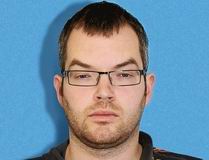
Vincent Tabak
Murderer Dale Cregan
Murderer · United Kingdom · 2012
Dale Christopher Cregan (born 6 June 1983) was convicted in the United Kingdom…
4 victims
Dale Cregan
Murderer · United Kingdom · 2012
Dale Christopher Cregan (born 6 June 1983) was convicted in the United Kingdom…
4 victims
 Rahan Arshad
Murderer · United Kingdom · 2006
Rahan Arshad (born 1970) was a taxi driver. He lived at Turves Road, Cheadle Hu…
4 victims
Rahan Arshad
Murderer · United Kingdom · 2006
Rahan Arshad (born 1970) was a taxi driver. He lived at Turves Road, Cheadle Hu…
4 victims
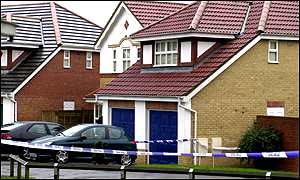 Anthony Smith
Murderer · United Kingdom · 2001
Anthony Smith was a former sergeant in the Coldstream Guards. He had left the C…
3 victims
Anthony Smith
Murderer · United Kingdom · 2001
Anthony Smith was a former sergeant in the Coldstream Guards. He had left the C…
3 victims
 Arthur Simpson-Kent
Murderer · United Kingdom · 2015
Name: Arthur Simpson-Kent · Age at sentencing: 49 · Age at time of offence (as…
3 victims
Arthur Simpson-Kent
Murderer · United Kingdom · 2015
Name: Arthur Simpson-Kent · Age at sentencing: 49 · Age at time of offence (as…
3 victims
 Karl Bluestone
Murderer · United Kingdom · 2001
Karl Bluestone was a Gravesend police officer. · 28 August 2001 — Karl Blueston…
3 victims
Karl Bluestone
Murderer · United Kingdom · 2001
Karl Bluestone was a Gravesend police officer. · 28 August 2001 — Karl Blueston…
3 victims
 Levi Bellfield
Murderer · United Kingdom · 2003
Levi Bellfield (born 17 May 1968) was a British murderer. He was described by p…
3 victims
Levi Bellfield
Murderer · United Kingdom · 2003
Levi Bellfield (born 17 May 1968) was a British murderer. He was described by p…
3 victims
 Vanessa Williamson
Murderer · USA · 2010
Vanessa Kay Williamson was convicted by a Shasta County jury and was sentenced…
1 victim
Vanessa Williamson
Murderer · USA · 2010
Vanessa Kay Williamson was convicted by a Shasta County jury and was sentenced…
1 victim
 Evan Miller
Homicide · USA · 2003
Evan Miller was sentenced to spend the rest of his life in prison. He was sente…
1 victim
Evan Miller
Homicide · USA · 2003
Evan Miller was sentenced to spend the rest of his life in prison. He was sente…
1 victim
 Simone Weber
Murderer · France · 1980
Simone Weber was 60 years old at trial. She was described as “round and dowdy”…
2 victims
Simone Weber
Murderer · France · 1980
Simone Weber was 60 years old at trial. She was described as “round and dowdy”…
2 victims
 Cornelius Alan Goss
Murderer · USA · 1987
Name: Cornelius Alan Goss · May 20, 1987 — 66-year-old Carl Leevy, a sporting g…
1 victim
Cornelius Alan Goss
Murderer · USA · 1987
Name: Cornelius Alan Goss · May 20, 1987 — 66-year-old Carl Leevy, a sporting g…
1 victim
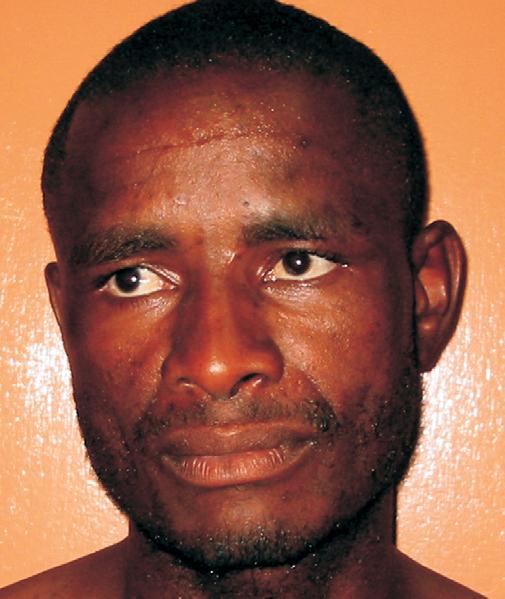 Elias Chauke
Spree killer · South Africa · 2002
Elias Chauke was accused of a spate of killings and rapes that occurred over tw…
5 victims
Elias Chauke
Spree killer · South Africa · 2002
Elias Chauke was accused of a spate of killings and rapes that occurred over tw…
5 victims
- Gender
- male
- Country
- United Kingdom
- Location
- Clifton, Bristol, England, United Kingdom
- Date of birth
- February 10, 1978
- Age at first offence
- 32
- Characteristics
- —
- Victim profile
- Joanna Clare "Jo" Yeates, 25
- Method of murder
- Strangulation
- Date(s) of murder
- December 17, 2010
- Years active
- 2010
- Date of arrest
- January 20, 2011
- Status
-
Life imprisonment
Sentenced to life imprisonment with a minimum term of 20 years on October 28, 2011
Case record: Vincent Tabak
Background
Vincent Tabak was a Dutch engineer who lived and worked in the United Kingdom since 2007. He was born 10 February 1978. He was the son of Gerald and Sonja Tabak and the youngest of five siblings. Tabak was raised in Uden, 21 miles (34 km) north of Eindhoven.
Tabak studied at Eindhoven University of Technology from 1996 and graduated with an MSc in architecture, building and planning in 2003. He began a PhD that was a study of how people use space in office buildings and public areas. The paper was published in 2008.
After leaving university in 2007, he moved to the United Kingdom after taking a job at the headquarters of Buro Happold, an engineering consultancy firm in Bath, and settled in a flat in the town. He worked as a “people flow analyst”, a role which required him to examine how people move around public spaces such as schools, airports and sports stadiums.
While living in Bath, he established a relationship with a woman he first met through The Guardian's online dating website Soulmates. The couple moved to a flat in Canynge Road, Bristol, in June 2009.
Tabak lived in Flat 2 at 44 Canynge Road with his girlfriend, Tanja Morson. Joanna Yeates lived in Flat 1 with her boyfriend Greg Reardon.
In the months leading up to Joanna Yeates’ death, Tabak researched escort agencies during business trips in the United Kingdom and United States and contacted several prostitutes by phone. He also viewed violent internet pornography depicting women being controlled by men, showing images of them being bound and gagged, held by the neck and choked.
During the murder investigation, police found images of a woman who bore a striking resemblance to Yeates. In one scene she was shown pulling up a pink top to expose her bra and breasts. When Yeates was discovered, she was wearing a similarly arranged pink top.
After the trial it was disclosed that images of child pornography had been found on Tabak’s laptop.
The victim: Joanna Clare “Jo” Yeates
Joanna Clare “Jo” Yeates was a landscape architect from Hampshire, England. She was born 19 April 1985 and was 25 years old at the time of her disappearance. She went missing on 17 December 2010 in Bristol after an evening out with colleagues. Her body was discovered on 25 December 2010 in Failand, North Somerset.
A post-mortem examination determined that she had been strangled.
Yeates had been privately educated at Embley Park near Romsey. She studied for her A-levels at Peter Symonds College and graduated with a degree in landscape architecture from Writtle College. She received her Master's degree in landscape architecture from the University of Gloucestershire.
In December 2008, Yeates met then-25-year-old fellow landscape architect Greg Reardon at Hyland Edgar Driver in Winchester. The couple moved in together in 2009 and settled in Clifton, Bristol, when the company relocated to that area. Yeates later changed jobs to work at the Building Design Partnership in Bristol.
Timeline
- 17 December 2010 8:00 pm — Greg Reardon returned home from a weekend visit to Sheffield and found Joanna Yeates absent from their flat on Canynge Road, Clifton.
- 17 December 2010 8:10 pm — Yeates was seen on closed-circuit television leaving a Waitrose supermarket without purchasing anything.
- 17 December 2010 8:30 pm — Yeates phoned her best friend, Rebecca Scott, to arrange a meeting on Christmas Eve.
- 17 December 2010 8:40 pm — The last known footage showed Yeates buying a pizza from a Tesco Express branch.
- 25 December 2010 — A fully clothed body was found in the snow by a couple walking their dogs along Longwood Lane near a golf course and next to the entrance of a quarry in Failand, approximately 3 miles from Yeates’ home; the body was identified as Yeates.
- 26 December 2010 — A post-mortem examination began.
- 28 December 2010 — Investigators announced the case had become a murder inquiry after the coroner determined Yeates had died as a result of strangulation.
- 30 December 2010 — Shortly after 7:00am, Christopher Jefferies was arrested on suspicion of Yeates’ murder.
- 31 December 2010 — Officers were granted additional time to question Christopher Jefferies.
- 1 January 2011 — Christopher Jefferies was released on bail the following day.
- 4 January 2011 — A clinical forensic psychologist joined the investigation.
- 5 January 2011 — Police announced one of Yeates’ socks was missing when she was found dead.
- 9 January 2011 — Kerry McCarthy gave her support to the idea of a public DNA screening process.
- 18 January 2011 — A reconstruction of Yeates’ last movements was filmed for the BBC television programme Crimewatch.
- 20 January 2011 — Vincent Tabak was arrested.
- 22 January 2011 — Tabak was charged with Yeates’ murder.
- 4 October 2011 — Tabak’s trial started at Bristol Crown Court.
- 28 October 2011 — Tabak was found guilty of murder and sentenced to life imprisonment with a recommendation that he serve at least 20 years.
Background and disappearance
Joanna Clare Yeates was born on 19 April 1985 to David and Teresa Yeates in Hampshire, England.
On 19 December 2010 at approximately 8:00 pm, Greg Reardon returned from his weekend visit to Sheffield and found Yeates absent from their flat on Canynge Road, Clifton. Reardon tried to contact her by phone and text and found it “completely out of character” that she did not respond. While awaiting Yeates’ return, Reardon found that her purse and keys were at the flat and that their cat appeared to have been neglected.
After calling her again, Reardon found her mobile phone rang from a pocket of her coat at the flat. Around midnight, Reardon contacted the police and then Yeates’ parents to report her missing.
Investigators pieced together the sequence of events leading up to her disappearance. They determined Yeates spent the evening of 17 December 2010 with colleagues at the Bristol Ram pub on Park Street, leaving at around 8:00 pm to begin the 20-minute walk home. She told friends and colleagues she was looking forward to spending the weekend alone and planned to spend her time baking and shopping for Christmas.
Yeates was seen leaving Waitrose at around 8:10 pm on CCTV. She phoned Rebecca Scott at 8:30 pm. The last known footage showed her buying a pizza from a Tesco Express at around 8:40 pm. She bought two small bottles of cider at Bargain Booze.
The last known footage also included the period during which she was captured on CCTV at around 8:10 pm leaving Waitrose. She was captured on CCTV walking past The Hophouse public house in Clifton close to her flat at around 8:33 pm.
Reardon and Yeates’ friends set up a website and used social networking services to help look for her. On 21 December 2010, Yeates’ parents and Reardon made a public appeal for her safe return at a police press conference.
In a press conference broadcast live on 23 December 2010 by Sky News and BBC News, Yeates’ father David commented on her disappearance:
"I think she was abducted after getting home to her flat ... I have no idea of the circumstances of the abduction because of what was left behind ... I feel sure she would not have gone out by herself leaving all these things behind and she was taken away somewhere".
Her keys, phone, purse and coat were left behind at her flat. Detectives retrieved a receipt for a pizza, but found no sign of it or of its packaging. Both bottles of cider were found in the flat, one of them partially consumed.
Because there was no evidence of forced entry or a struggle, investigators began to examine the possibility that Yeates may have known her abductor.
Search, public appeal, and discovery of body
On 25 December 2010, a fully clothed body was found in the snow by a couple walking their dogs along Longwood Lane near a golf course and next to the entrance of a quarry in Failand, approximately 3 miles from Yeates’ home. The body was identified by police as that of Yeates.
Reardon and Yeates’ family visited the site of the discovery on 27 December 2010. David Yeates said the family “had been told to prepare for the worst” and expressed relief that his daughter’s body had been recovered.
Funeral arrangements were delayed as investigators wished to retain the body for a while. A pathologist, Dr Nat Carey, consented to the release of the body on 31 January 2011.
Investigation
The investigation, named Operation Braid, comprised 80 detectives and civilian staff under the direction of Detective Chief Inspector Phil Jones, a senior officer with Avon and Somerset Constabulary's major crime investigation unit. It became one of the largest police operations in the Constabulary's history.
Jones urged the public to come forward with any information to help catch the killer, especially potential witnesses in the vicinity of Longwood Lane in Failand in the period before Yeates’ body was discovered there. He stated that the investigation was seeking the driver of a “light-coloured 4x4 vehicle” for questioning. Jones said officers had been “inundated with thousands of calls” and were “exhausting every lead and avenue that [they were] provided with.”
Police examined over 100 hours of surveillance footage along with 293 tonnes (293,000 kg) of rubbish seized from the area around Yeates’ flat. Refuse collection had been suspended in that part of Clifton since 23 December 2010.
Crime Stoppers offered a £10,000 reward for information leading to the arrest and conviction of her murderer, while The Sun offered £50,000.
Authorities advised people living in the area to secure their homes and warned women not to walk alone after dark. On 29 December, Yeates’ father said:
"I fear that whoever has done this will never hand themselves in, but we live in hope that the police will catch who is responsible."
Post-mortem and initial enquiries
Following the discovery, detectives issued an appeal and investigated similarities with other unsolved cases. Those included:
- Glenis Carruthers, strangled in 1974
- Melanie Hall, aged 25, missing in 1996 and whose body was discovered thirteen years later
- Claudia Lawrence, aged 35, who went missing in 2009
Investigators identified “striking similarities” between the Yeates and Hall cases, including their age and appearance and that they had disappeared after returning home from meeting friends; authorities later downplayed the possibility of such connections.
The police gathered surveillance video from Clifton Suspension Bridge, part of the most direct route from the crime scene to Clifton. The footage was of poor quality, making it impossible to distinguish individuals or car registration numbers clearly. Investigators noted that the perpetrator could have used an alternative bridge across the River Avon less than a mile to the south to avoid CCTV coverage.
A post-mortem examination began on 26 December 2010, but results were delayed due to the frozen condition of the body. Police initially thought it possible that Yeates froze to death because her body showed no visible signs of injury.
Investigators announced on 28 December 2010 that the case had become a murder inquiry as the coroner determined Yeates had died as a result of strangulation. The post-mortem indicated she had died “several days before being discovered” on 25 December 2010.
The examination also confirmed that Yeates did not eat the pizza she had purchased.
Detective Chief Inspector Jones stated that the investigation found “no evidence to suggest that Joanna was sexually assaulted”.
The police searched Reardon’s laptop computer and mobile phone as part of standard procedure. Reardon was ruled out as a suspect and treated as a witness.
A young woman attending a party at a neighbouring house on Canynge Road on the night of Yeates’ disappearance recalled hearing two loud screams shortly after 9:00 pm coming from the direction of Yeates’ flat. Another neighbour behind Yeates’ home said he heard a high-pitched woman’s voice scream:
"Help me"
Officers removed the front door to Yeates’ flat to check for clothing fibres and DNA evidence, examining the possibility that the perpetrator had entered the flat before Yeates returned home.
Further enquiries
Senior officers asked for assistance from the National Policing Improvement Agency. On 4 January 2011, a clinical forensic psychologist joined the investigation to narrow down potential suspects. Jones said:
"I can assure you, we are determined to solve this crime and bring Jo's killers to justice. No stone will be left unturned."
Jones said officers were checking through 1,300 tips and pieces of information from the public and had established over 1,000 lines of inquiry, 239 of them considered “high priority”.
On 5 January, Jones announced one of Yeates’ socks was missing when she was found dead and had not been found at the crime scene or in her home.
Police launched a national advertising campaign to appeal for witnesses through Facebook. By the following day, the page had been viewed nearly 250,000 times. CCTV footage of Yeates was viewed 120,000 times on YouTube by 5 January.
On 9 January 2011, Bristol East MP Kerry McCarthy gave her support to the idea of a public DNA screening process. McCarthy suggested screening extended beyond Clifton.
Saliva found on Yeates’ body was tested for a potential DNA profile. Detectives liaised with Multi-Agency Public Protection Arrangements (MAPPA) officials to interview registered sex offenders living within their jurisdiction.
Arrests and reconstruction of crime
Shortly after 7.00am on 30 December 2010, Christopher Jefferies, Yeates’ landlord who lived in the same building, was arrested on suspicion of her murder. Forensic investigators inspected his flat. A senior police officer granted a 12-hour extension to the arrest on 31 December to enable additional questioning. Magistrates granted another 24 hours on 31 December, and Jefferies was released on bail the following day. He retained the legal services of Stokoe Partnership to act on his behalf.
On 4 March 2011, police released Jefferies from bail and stated he was no longer a suspect. He later won an undisclosed sum in libel damages for defamatory news articles published following his arrest.
A reconstruction of Yeates’ last movements was filmed on location in Bristol for broadcast in the 26 January edition of the BBC television programme Crimewatch. A firm involved in producing the Harry Potter films was contracted to reproduce snowy conditions. Within 24 hours of news coverage about the production, over 300 people contacted police.
A breakthrough led investigators to believe Yeates’ body may have been transported in a large holdall or suitcase.
On the morning of 20 January, the Avon and Somerset Constabulary arrested 32-year-old Vincent Tabak. Tabak lived with his girlfriend in the flat next door to Yeates. Authorities declined to reveal additional details while the suspect was interrogated due to concerns over controversial media coverage of Jefferies’ arrest.
The Tabak arrest followed an anonymous tip from a female caller, hours after a televised appeal by Yeates’ parents on Crimewatch. Canynge Road was closed by police while scaffolding was constructed around Yeates’ home and officers sealed off the adjacent flat of Dutch engineer Tabak. Investigators also searched the nearby townhouse of a friend where Tabak was believed to have been staying. Tabak had previously been ruled out as a suspect, returned to England from a holiday visit to his family in the Netherlands, and was arrested hours later.
After Tabak’s arrest, the BBC cancelled plans to air the Yeates re-enactment on Crimewatch.
DNA tests
DNA tests were carried out by LGC Forensics, a private company that undertakes forensic analysis for criminal investigations. Lindsey Lennen, a body fluids and DNA specialist, said DNA swabs matched Tabak but were not of sufficient quality to be evaluated. The team deployed DNA SenCE to enhance unusable samples through purification and concentration. Lennen said:
"We couldn't say whether the DNA was from saliva, or semen, or even touch. But we could say that the probability of it not being a match with Tabak was less than one in a billion."
Legal proceedings and perpetrator
Murder charge and plea
After questioning during 96 hours of detention, Tabak was charged on 22 January 2011 with the murder of Joanna Yeates. He made a brief appearance at Bristol Magistrates' Court on 24 January and was remanded in custody. Tabak declined to request bail during a hearing the following day.
Tabak was moved from Bristol Prison because of fears for his safety and was placed under suicide watch at Long Lartin Prison near Evesham. Tabak’s family and friends in the Netherlands started to fundraise for his court defence.
Tabak initially maintained he was not responsible for Joanna Yeates’ death, claiming that DNA evidence linking him to the crime had been fabricated by corrupt officials. On 8 February, while on remand, he told Peter Brotherton, a prison chaplain, that he had killed her and intended to plead guilty.
On 5 May 2011, Vincent Tabak pleaded guilty to the manslaughter of Yeates but denied murdering her. The Crown Prosecution Service rejected the plea of guilty to manslaughter.
Tabak appeared in person at a pre-trial hearing at Bristol Crown Court on 20 September. Appearances at previous hearings had been made via videolink from prison.
Personal details about Vincent Tabak
Vincent Tabak was described as intelligent and “introverted” by his childhood next-door neighbour, John Massoeurs, after the trial.
Tabak’s work and life in the United Kingdom included relocation history: he moved to the UK in 2007 to work at Buro Happold in Bath, then moved to Canynge Road in June 2009.
Tabak and Yeates did not meet prior to 17 December. After moving to Clifton, Tabak’s computer research included topics connected to escort agencies and violent pornography depicting women being choked and bound.
During the murder investigation, police found images of a woman bearing resemblance to Yeates, with pink top features matching what Yeates wore when discovered.
At Tabak’s trial, prosecuting barrister Nigel Lickley QC argued that evidence of Tabak’s activities should be provided to the jury:
"It might shed light on the need to hold a woman for long enough and the need to squeeze hard enough to take her life."
The prosecution did not include details of Tabak’s viewing of pornography in their case, because the judge believed it did not prove he acted with premeditation. After the trial, images of child pornography were disclosed as having been found on Tabak’s laptop.
Trial
Tabak’s trial started on 4 October 2011 at the Crown Court at Bristol before Mr Justice Field and a jury. William Clegg QC represented Tabak, and Nigel Lickley QC prosecuted.
Tabak pleaded guilty to manslaughter but denied murder.
Prosecution evidence and arguments
The prosecution case was that Tabak strangled Yeates at her flat within minutes of her arrival home on 17 December 2010, using “sufficient force” to kill her.
The trial was told that Tabak had used his height and build to overpower Yeates, pinning her to the floor by the wrists. Tabak was around 1 foot (0.30 m) taller than Yeates. Yeates suffered 43 separate injuries to her head, neck, torso and arms during the struggle, including cuts and bruises and a fractured nose. Lickley told the court the struggle was lengthy and her death would have been slow and painful, while also noting the prosecution did not provide an explanation for the reasoning behind Tabak’s initial attack.
Evidence presented included DNA swabs taken from Yeates’ body providing a match with Tabak. Samples found behind the knees of Yeates’ jeans indicated she may have been held by the legs while she was carried. Fibres suggested contact with Tabak’s coat and car. Blood stains were found on a wall overlooking a quarry close to where Yeates was discovered.
The prosecution said Tabak attempted to implicate Christopher Jefferies for the murder during the police investigation. The prosecution also said that after Yeates’ death, Tabak made internet searches for topics including the length of time a body takes to decompose and the dates of refuse collections in the Clifton area.
Defence evidence and arguments
In his defence, Tabak claimed the killing was not sexually motivated. He said he killed Yeates while trying to silence her after she screamed when he tried to kiss her.
He claimed Yeates made a “flirty comment” and invited him to drink with her. He said that after she screamed he held his hands over her mouth and around her neck to silence her.
Tabak denied suggestions of a struggle, claiming to have held Yeates by the neck with only minimal force “for about 20 seconds”. He said that after dumping the body he was “in a state of panic”.
Deliberations and verdict
The jury was sent out to deliberate on 26 October and returned with a verdict two days later. On 28 October 2011, Tabak was found guilty of murder by a 10 to 2 majority verdict.
Sentencing
On 28 October 2011, Tabak was sentenced to life imprisonment with a minimum term of 20 years.
During sentencing, Mr Justice Field referred to a “sexual element” to the killing. He told Tabak he had committed “a dreadful, evil act on a vulnerable young woman”, and he said Tabak intended to go “much further” after attempting to kiss her, and that Yeates died “in pain and fear”. He also said the disappearance left her family suffering “seven days of agonising uncertainty”.
Media controversy and legal actions
The manner in which certain aspects of the case were reported by British media led to legal action against several newspapers and also led to sanctions against broadcasters.
A television news report on 4 January 2011 that criticised the handling of the investigation led Avon and Somerset Constabulary to ban ITN reporters from attending a press conference to give updates. The item, presented by journalist Geraint Vincent, claimed police had made little progress and questioned whether they were following correct procedural methods. A former murder squad detective told the report:
"certain routine inquiries" such as looking for fresh evidence at the crime scene were not being carried out.
ITN accused police of attempting:
"to censor what information we can broadcast"
and the constabulary filed a complaint with the Office of Communications, calling the broadcast “unfair, naïve and irresponsible reporting”. The police later lifted sanctions against ITN but said:
"not hesitate to adopt similar tactics in the future."
Legal action was also considered over a tweet revealing that Tabak had viewed internet pornography showing erotic asphyxiation and bondage. The contempt of court charges were dropped after the tweet was removed.
Roy Greenslade wrote in London’s Evening Standard on 5 January 2011 expressing concern over negative articles about Christopher Jefferies after his arrest, describing the coverage as:
"character assassination on a large scale"
Greenslade cited examples of headlines and stories, including a headline in The Sun describing Jefferies as “weird, posh, lewd and creepy”; a story from the Daily Express quoting unnamed former pupils referring to him as "a sort of Nutty Professor" who made them feel "creeped out" by his "strange" behaviour; and an article from the Daily Telegraph reporting that Jefferies “has been described by pupils at Clifton College…as a fan of dark and violent avant-garde films”.
Jefferies launched legal action for libel against six newspapers on 21 April: The Sun, the Daily Mirror, the Daily Star, the Daily Express, the Daily Mail and the Daily Record, seeking damages. On 29 July, he accepted “substantial” damages for defamation from The Sun, the Daily Mirror, the Sunday Mirror, the Daily Record, the Daily Mail, the Daily Express, the Daily Star and The Scotsman in connection with their coverage of his arrest.
In an interview following Tabak’s conviction, Jefferies commented:
"It has taken up a whole year virtually of my life, that period of time has meant that everything else that I would normally be doing has been in abeyance."
Dominic Grieve, the Attorney General for England and Wales, stated on 31 December 2010 that he was considering action under the Contempt of Court Act 1981 to enforce the obligation of the media not to prejudice a possible future trial.
Criminology professor David Wilson commented that the case resonated with the national news media, saying:
"The British public loves a whodunnit ... It's a particularly British thing. We were the first nation to use murder stories to sell newspapers and that culture is more ingrained here than elsewhere."
Wilson called Yeates a “white female professional” and an “ideal victim” for the media. On 1 January, Greg Reardon commented:
"Jo's life was cut short tragically but the finger-pointing and character assassination by social and news media of as yet innocent men has been shameful."
On 12 May 2011, the Administrative Court granted the Attorney General permission to move a motion for committal for contempt of court against The Sun and the Daily Mirror for their way of reporting Jefferies’ arrest.
On 29 July, the court (Lord Judge CJ, Thomas LJ & Owen J) ruled both newspapers had been in contempt of court and fined the Daily Mirror £50,000 and The Sun £18,000. Lord Chief Justice Lord Judge said:
"in our judgment, as a matter of principle, the vilification of a suspect under arrest is a potential impediment to the course of justice."
The publishers appealed the fines, but the Mirror appeal was rejected by the Supreme Court of England and Wales on 9 March 2012, while The Sun withdrew its appeal.
Other details
Reconstruction timeline reported in trial-related reporting
Tabak’s case included reporting of specific movements and times around Yeates’ disappearance and Tabak’s actions, including a timeline that included:
- 19 December 2010 8pm — after joining colleagues from BDP for a Christmas drink at the Bristol Ram Pub, Yeates set off for the 20-minute walk to her flat in the Clifton area.
- 19 December 2010 8.13pm — Yeates stopped off at Waitrose; she used her mobile phone to ring Rebecca Scott to arrange to meet on Christmas Eve.
- 19 December 2010 8.25pm — Yeates purchased two bottles of cider at Bargain Booze.
- 19 December 2010 8.31pm — Yeates stopped off at Tesco Express where she bought a pizza.
- 19 December 2010 8.33pm — Yeates was captured on CCTV walking past The Hophouse public house in Clifton close to her flat.
- 19 December 2010 8.45pm — Father Henwood was described as the last person to see her alive while walking her dog close to her flat in Canynge Road.
- 19 December 2010 8.49pm — screams were heard coming from the direction of Yeates’ flat.
- 19 December 2010 9.25pm — Vincent Tabak sent a text message to his girlfriend, Tanja Morson: “Miss you loads. It is boring here without you Vxx.”
- 19 December 2010 10pm — Tabak left Canynge Road in his grey Renault Megane car.
- 19 December 2010 10.25pm — Greg Reardon texted Yeates telling her he had arrived safely in Sheffield and asking if she enjoyed her evening; he received no reply.
- 19 December 2010 10.28pm — Tabak visited a branch of Asda in Bedminster where he purchased rock salt, beer and crisps.
- 19 December 2010 10.30pm — Tabak sent a text message to Morson: “How are you, I am at the Asda buying crisis (sic). Was bored cannot wait to pick you up.”
- 18 December 2010 midnight — Tabak went online back at his flat and checked a number of work related websites.
- 18 December 2010 1.30am — Tabak accessed the BBC News website and looked up information about the weather.
- 18 December 2010 1.32am — Miss Morson called Tabak.
- 18 December 2010 2am — Tabak arrived home after collecting Miss Morson from her office party.
- 18 December 2010 lunchtime — Tabak and Miss Morson went out for lunch.
- 18 December 2010 10pm — Tabak and Miss Morson attended a friend’s birthday party at Pitcher and Piano pub.
- 19 December 2010 evening — Greg Reardon returned from Sheffield to discover she was missing.
- 19 December 2010 12.45am — Reardon dialled 999 and reported Yeates missing.
- 21 December 2010 — police organised a search of the Avon gorge and Yeates’ parents appealed for her to come home.
- 22 December 2010 — Reardon made an emotional appeal for Yeates’ safe return and spoke of distress at her disappearance.
- 23 December 2010 — Tabak and Morson left Bristol to spend Christmas with Morson’s family in Cambridge; police revealed they were keen to establish what happened to the pizza Yeates bought; the receipt was found but there was no sign of the pizza or packaging; Yeates’ parents made another appeal.
- 24 December 2010 — detectives released CCTV footage of Yeates buying the pizza in Tesco.
- 25 December 2010 — a couple walking their dog in Longwood Lane discovered a woman’s frozen body on the roadside verge.
- 26 December 2010 — police were unable to conduct a post-mortem examination due to the remains being frozen but were satisfied the body was Yeates.
- 27 December 2010 — Yeates’ parents and Reardon visited the discovery spot.
- 28 December 2010 — Tabak and Morson travelled from Cambridge to Holland to spend New Year with his family; police announced Yeates died as a result of strangulation.
- 30 December 2010 6am — Yeates’ landlord Chris Jefferies was arrested.
- 31 December 2010 — detectives were granted more time to question Jefferies.
- 1 January 2011 3pm — Yeates’ parents released a statement saying they had confidence Yeates’ killer would be caught.
- 1 January 2011 9pm — Jefferies was released on police bail without charge.
- 3 January 2011 — Tabak and Morson returned from Holland and temporarily moved into a friend’s flat in nearby Aberdeen Road while forensics searched 44 Canynge Road.
- 5 January 2011 — police revealed Yeates was missing one grey ski sock and appealed for the public’s help in locating it.
- 15 January 2011 — Tabak and Morson attended a dinner party at which he joked about the investigation and told another guest the killer must be a “crazy detached person”.
- 18 January 2011 — reconstruction was filmed for Crimewatch.
- 20 January 2011 6am — Tabak was arrested at suspicion of murder.
- 21 January 2011 — police were granted more time to question Tabak.
- 22 January 2011 10pm — police charged Tabak with the murder of Yeates.
- 24 January 2011 — Tabak appeared before Bristol Magistrates charged with murder and was remanded in custody.
- 11 February 2011 — Yeates’ funeral took place in her hometown of Ampfield, Hants.
- 5 May 2011 — at Old Bailey Tabak appeared by video link and pleaded guilty to manslaughter but not guilty to murder; a trial date was set for October 4 at Bristol Crown Court.
- 10 October 2011 — prosecution opened their case at Bristol Crown Court.
- 29 October 2011 — Tabak was found guilty of the murder of Yeates.
Confession and prison chaplain evidence
A prison chaplain, Peter Brotherton, a voluntary Salvation Army chaplain at Long Lartin prison in Worcestershire, testified that Tabak confessed during an emotional meeting in jail on February 8.
Brotherton said Tabak requested a meeting and informed him:
“I have something to tell you that will shock you.”
Brotherton testified:
“I said ‘you tell me and we will see’, or words to that effect.
He said ‘I am going to change my plea to guilty’. He said it was to do with the crime he had committed.
I said, ‘is this concerning the young lady from Bristol?’, he said ‘yes’.”
Brotherton said Tabak was upset and said it would be difficult to tell his girlfriend, Tanja Morson. Brotherton said he advised Tabak to contact his legal team and offered to pray with him.
Under cross-examination by William Clegg QC, Brotherton accepted that Tabak had not told him he wanted to change his plea, only that he intended to plead guilty. Brotherton said Tabak was depressed and distressed and had been on suicide watch on the prison’s healthcare unit.
Brotherton also said Tabak was angry that Brotherton had breached his confidence and told him he would not tell him anything else.
Tabak apologised to Yeates’ family while describing the moment he strangled her. One report quoted Tabak as saying:
"I'm so sorry for doing that. I put Joanna's parents through a week of hell. I still can't believe I did that. "It will haunt me for the rest of my life, no matter what sentence I get."
During that account, it was said Tabak described putting his hand on Yeates’ throat because he panicked and wanted to stop her screaming.
Tabak also told the court that he briefly took Yeates’ body back to his flat to put her in a bicycle cover. He said:
"I carried her with my arms. One hand was underneath her back, the other was under her knees."
He insisted a text message received by his girlfriend from his phone saying he was bored had been sent before Yeates’ death. He said:
"I think I sent it before I decided to go to Asda,"
and he told the jury:
"I took my usual route past Flat 1" – Miss Yeates's flat.
Evidence about injury and strangulation method
In trial evidence, Home Office pathologist Dr Nat Cary said:
"There are some people, perhaps a pretty small number in the population who become sexually aroused by asphysxia."
He added that there was no evidence to suggest that Yeates had been subjected to sexual interference.
Dr Cary also said:
"Overall the injuries could be consistent during the course of a fairly short attack."
Asked what Dr Cary’s statement suggested, he responded:
"It means that in the end of the day to suggest this is a primarily sexual attack is largely speculative."
A pathologist Russell Delaney testified that he could not exclude the use of one hand. He also said that the duration leading to Yeates’ death could be a matter of seconds rather than minutes.
Delaney said, in response to questioning on whether injuries were consistent with being strangled with one hand:
"Or two, yes."
Delaney also said blood found on Yeates’ pink T-shirt may have been deposited after her death. The court heard that Yeates suffered 43 injuries at her flat in Clifton, Bristol, on December 17.
Other testimony about discovery
Daniel Birch described written evidence about finding Yeates. He said he was walking a chocolate Labrador named Roxy with his wife Rebecca when they discovered the body.
Birch said:
“I did not think about it straight away and carried on walking. After about 10 paces my mind was saying, ‘that was a body’, to me.
“I handed the dog to my wife, I remember saying to Rebecca, ‘that was a body back there’, and walked back to the lump in the snow.
“I could see the form of a human body covered in snow. It was lying on its side, facing the wall, parallel to the road.”
He added:
“Although the body was almost covered in snow there was a small section with not covered. I could see what appeared to be a rear jeans pocket.”
In a further quote, Birch said he could see what appeared to be white coloured knickers and said it made him think it was a female.
Blood and wall evidence
Forensic scientist Tanya Nickson testified about blood on a wall next to where Yeates was found. She said the pattern indicated smearing rather than splattering and suggested someone had attempted to put the body over the wall into the quarry below. Nickson said:
"The presence of the blood on the top of the wall may indicate that an attempt was made to deposit the body over the top of the wall."
Allegations about sexual motivation in court
During cross-examination, Lickley asked Tabak about deriving sexual gratification from holding her throat and whether he had sex on his mind prior to killing her.
Tabak denied those suggestions and responded “Definitely not” to multiple questions.
The report quoted Lickley’s questioning around sexual elements, including a question:
“That is sexual Vincent Tabak why won’t you admit that? Is it because there are other sexual elements to what happened?”
Tabak replied:
“There were no other sexual elements.”
Lickley continued:
“Was the holding of her throat by you, sexual in your mind?”
Tabak replied:
“Definitely not.”
Lickley further asked:
“Did you derive sexual gratification from holding her throat. Were you sexually aroused when you had your hand around her throat and your hand over her mouth?”
Tabak replied:
Lickley asked Tabak about moving Yeates’ clothing and pulling up her top. Tabak replied:
"Not intentionally."
Lickley asked whether what Tabak did made Yeates scream. Tabak replied:
"No, that is not what made her scream."
During another exchange, Lickley suggested rather than being invited into Yeates’ flat, Tabak used her pet cat Bernard as a pretext. Tabak denied and told the court:
"We were standing close to each other, she invited me in for a drink. She made a flirty comment. I thought she was flirtatious."
Outcome and sentencing status
Vincent Tabak was found guilty of murder on 28 October 2011 by a 10 to 2 majority verdict. He was sentenced to life imprisonment with a minimum term of 20 years on 28 October 2011.
Aftermath and memorials
Associate vicar Dan Clark led a memorial service for Yeates at Christ Church in Clifton on 2 January 2011.
Prayers for her were also said at the church on 17 December 2011, the first anniversary of her death, with visitors leaving tributes and condolence messages.
Greg Reardon started a charity website in Yeates’ memory to raise funds for families of missing people.
Yeates’ friends and family planted a memorial garden at Sir Harold Hillier Gardens in Romsey where she had worked as a student. The Building Design Partnership and the local NHS trust announced plans to commemorate Yeates with a memorial in a garden she had been designing for a new £430 million hospital in Southmead, Bristol.
Other memorials included a garden of remembrance at BDP’s studio in Bristol, a published anthology of Yeates’ work, and an annual landscape design prize named after her for students of the University of Gloucestershire.
Building Design Partnership announced it would dedicate a charity cycle ride between its offices on its 50th anniversary, with proceeds to charities selected by her family.
Yeates left behind an estate valued at £47,000 including money set aside to purchase a home with Reardon. Since she had not written a will, the sum was inherited by her parents.
Following the release of her body on 31 January 2011, her family arranged to hold her funeral at St Mark's of Ampfield, Hampshire, and have her interred in the churchyard. Yeates was buried on 11 February. Approximately 300 people attended the service led by vicar Peter Gilks.
Spotted an error, or have more information about this case?