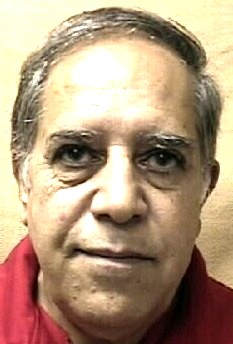
Elias Syriani
Murderer Brian Kevin Rosenfeld
Murderer · USA · 1985
Brian Kevin Rosenfeld Brian Kevin Rosenfeld was sentenced to three concurrent l…
23 victims
Brian Kevin Rosenfeld
Murderer · USA · 1985
Brian Kevin Rosenfeld Brian Kevin Rosenfeld was sentenced to three concurrent l…
23 victims
 Yahweh ben Yahweh
Murderer · USA · 1980
Yahweh ben Yahweh was born and legally named Hulon Mitchell Jr. (October 27, 19…
23 victims
Yahweh ben Yahweh
Murderer · USA · 1980
Yahweh ben Yahweh was born and legally named Hulon Mitchell Jr. (October 27, 19…
23 victims
 Russell Ellwood
Murderer · USA · 1991
Russell Ellwood was a former taxi driver. Authorities suspected him of killing…
20 victims
Russell Ellwood
Murderer · USA · 1991
Russell Ellwood was a former taxi driver. Authorities suspected him of killing…
20 victims
 Robert Martines Perez
Murderer · USA · 1994
Name: Robert Martines Perez · Other name used in proceedings: Robert Martinez P…
15 victims
Robert Martines Perez
Murderer · USA · 1994
Name: Robert Martines Perez · Other name used in proceedings: Robert Martinez P…
15 victims
 Rickey Cummings
Murderer · USA · 2011
Rickey Cummings was recorded with the name Rickey Donnell Cummings, and with TD…
2 victims
Rickey Cummings
Murderer · USA · 2011
Rickey Cummings was recorded with the name Rickey Donnell Cummings, and with TD…
2 victims
 Raymond Clark
Murderer · USA · 2009
Annie Marie Le (July 3, 1985 – September 8, 2009) was a 24-year-old American do…
1 victim
Raymond Clark
Murderer · USA · 2009
Annie Marie Le (July 3, 1985 – September 8, 2009) was a 24-year-old American do…
1 victim
 Udo Proksch
Mass murderer · Indian Ocean · 1977
Udo Proksch was an Austrian businessman and industrialist. He was convicted of…
6 victims
Udo Proksch
Mass murderer · Indian Ocean · 1977
Udo Proksch was an Austrian businessman and industrialist. He was convicted of…
6 victims
 Sidney Cornwell
Murderer · USA · 1996
Sidney Cornwell was convicted in Ohio of killing a three-year-old child during…
1 victim
Sidney Cornwell
Murderer · USA · 1996
Sidney Cornwell was convicted in Ohio of killing a three-year-old child during…
1 victim
 Larry Bill Elliott
Murderer · USA · 2001
Larry Bill Elliott · 1 January 2001 — Elliott broke into Finch's Woodbridge tow…
2 victims
Larry Bill Elliott
Murderer · USA · 2001
Larry Bill Elliott · 1 January 2001 — Elliott broke into Finch's Woodbridge tow…
2 victims
 Willie James Wilson
Murderer · USA · 1981
Willie James Wilson Jr. was convicted in Pierce County of armed robbery and two…
2 victims
Willie James Wilson
Murderer · USA · 1981
Willie James Wilson Jr. was convicted in Pierce County of armed robbery and two…
2 victims
- Gender
- male
- Country
- USA
- Location
- Mecklenburg County, North Carolina, USA
- Date of birth
- January 7, 1938
- Age at first offence
- 52
- Characteristics
- parricide, domestic violence
- Victim profile
- Teresa Yousef Syriani (his wife)
- Method of murder
- Stabbing with a screwdriver
- Date(s) of murder
- July 28, 1990
- Years active
- 1990
- Date of arrest
- Same day
- Status
-
Executed
Executed by lethal injection in North Carolina on November 18, 2005
Case details
Elias Hanna Syriani was convicted of first-degree murder of his wife, Teresa Yousef Syriani, and was sentenced to death.
Timeline
- 28 July 1990 — Elias Syriani drove to the home where Teresa Syriani had not returned from work; he blocked her way with his van, approached her car, and stabbed her with a screwdriver while their ten-year-old son John sat in the car.
- 24 August 1990 — A forensic pathologist and medical examiner performed an autopsy on Teresa Syriani’s body.
- 29 July 1990 — Jeane Allen, a registered nurse at Carolinas Medical Center, saw Teresa Syriani after she was transported; Teresa complained that it hurt and had difficulty breathing.
- 5 July 1990 — An ex parte domestic violence order was issued.
- 27 June 1990 — Teresa Syriani decided to file a complaint against her husband.
- 28 July 1990 to 26 days later — Teresa Syriani died twenty-eight days later from a lethal wound to her brain.
- 3/12/1993 — The North Carolina Supreme Court confirmed Elias Syriani’s conviction and sentence of death.
- 6/12/1991 — Elias Syriani was sentenced to death in Mecklenburg County Superior Court.
- 10/3/2005 — The U.S. Supreme Court denied Syriani’s petition for a writ of certiorari.
- 11/17/2005 — Governor Mike Easley denied clemency for Elias Syriani.
- November 18, 2005 — Elias Syriani was executed by lethal injection in North Carolina.
Background
Elias Syriani was born in Jerusalem in 1938. He left school at age twelve when his father became sick, worked to help his mother support his siblings, learned the machinist trade, and entered the Jordanian Army at age nineteen as a civilian machinist.
Elias Syriani testified that he married Teresa at age thirty-six in Amman, Jordan, when Teresa was twenty-four. Friends had arranged the marriage. He testified that they lived in Washington, D.C., where he worked as a busboy and learned English at night, then moved to Chicago where he worked as a machinist with Protective Door. When Protective Door closed, he worked at Kerr Glass Manufacturing for almost six years. He purchased a home for his family in Calumet, Illinois, near Chicago.
When Kerr Glass closed in 1986, Syriani moved to North Carolina, found a job and a place to live, and brought his family to Charlotte.
During the marriage, the couple spoke Arabic in their home. Syriani testified that, when his wife asked for work, she began working part-time and then changed jobs, and that he was not happy with the change. He testified that he did not strike her and tried to make her “more happy.”
He testified that he received papers from a lawyer about Teresa’s request for a divorce. He testified that in July 1990 she came home with police officers and told him he had to leave his keys and move out of the home. He testified that he packed his clothes and moved into a hotel room and visited the neighborhood to ask his children to tell their mother he wanted to talk.
The offence
Events on 28 July 1990
On 28 July 1990, around 11:20 p.m., the state’s evidence tended to show the following sequence:
Elias Syriani and his wife were living apart: Syriani was in a motel and Teresa was with their children in their home. Syriani drove to the home although Teresa had not returned from work. As Teresa drove her automobile onto a nearby street, Syriani blocked her way with his van. He got out of his van, gestured, and chased after her car as she put it in reverse.
As Teresa sat in her car, Syriani began stabbing her with a screwdriver through the open door or window, while their ten-year-old son John sat in the seat beside her. John was unable to stop his father; he got out of the car and ran home to get his older sister.
At least two neighbors watched from their homes as Syriani stabbed Teresa and then walked away. The testimony described Teresa screaming as Syriani attacked her through the door or window and that she was covered in blood.
Witness observations
David Wilson testified that on 28 July 1990, around 11:20 p.m., he heard children hollering and saw Syriani park a van across the street with interior lights on and the door open. Wilson later saw Teresa’s car shaking as Syriani leaned inside and then returned to the van; he saw John Syriani and John’s friend. Wilson heard a woman hollering “somebody help my mother.” He saw Teresa covered in blood and described her to him as looking “like somebody [who] had been shot in the face with a load of buckshot.”
Thomas O’Connor testified he received a phone call from a neighbor prompting him to look out his window. He saw a man standing at a car halfway in a driveway holding what appeared to be a screwdriver and “stabbing into the car.” O’Connor ran outside yelling and made eye contact with the man. He testified the man kept stabbing into the car, then drove away after getting out and walking toward the car with the screwdriver.
John Syriani testified about the family’s living situation and what he saw on the night of 28 July 1990. He testified that the family had lived in the house in Charlotte since 1986 except for a week in summer 1988 when the police took him, his sisters, and his mother to a battered women’s shelter, and then they stayed with his mother’s sister in New Jersey for about a month before returning to Charlotte. He testified that in July 1990 he and his mother lived in a motel and that they moved back to the home when his father moved out. John testified that his father blocked his mother’s way with his van, got out, gestured, chased the mother’s car, stabbed her through the open door, walked back to the van, and yelled, “Go home bastard,” in Arabic. He testified that he ran back down the street, and neighbors took him into their home.
John testified that his father always carried a screwdriver as part of his work tools. John testified there were arguments, and he later described seeing his father slap his mother when he was five and seeing his father hit his mother in “the ear” on Easter Sunday, 1989. He testified he also saw his mother screaming and running out of the house in summer 1988 as his father stood in the doorway.
Rose Syriani testified about the events leading up to the shelter in summer 1988. She described Syriani entering the house, throwing down groceries, screaming at his wife, breaking a table with his foot, going into the garage and returning with a large wooden bat, and running upstairs after his mother. She testified that the police arrived shortly thereafter and took her mother and children to the shelter.
State’s description of the fatal injury and death
The state’s evidence included medical testimony describing the cause of death and wounds.
James Sullivan, a forensic pathologist and medical examiner, testified that he performed an autopsy on the victim on 24 August 1990. Sullivan testified there were multiple healed wounds on Teresa’s face, neck, cheeks, mouth, and on the back of her right hand and arm, and several wounds had been sutured. He testified that none of the arm or hand wounds were life-threatening but that a chronic penetrating brain wound caused her death.
Sullivan testified the wound involved a three-inch deep puncture wound to the right temple to the right of her right eye penetrating the brain, through the right temporal lobe and into a deep central area of the brain known as the basal ganglia area. Sullivan testified that such a wound would cause brain dysfunction, unconsciousness or coma, infarct or stroke, and paralysis on the left side of the body. He testified the wound was caused by a narrow instrument like a squared-off pick, screwdriver, or knife and that it would take substantial force to penetrate an adult skull.
Jeane Allen testified that she saw Teresa Syriani at 12:24 a.m. on 29 July 1990. Allen testified Teresa was covered in blood and suffered lacerations to her arm, right side, and face. Allen testified that as Teresa was being moved, she grasped her jaw and complained, “It hurts.” Allen testified monitors showed difficulty breathing and someone inserted a tube through Teresa’s nose into her lungs.
Teresa Syriani died twenty-eight days later due to a lethal wound to her brain.
Investigation
Charlotte Police Department Investigator Hilda M. Griffin testified she arrived at the scene around 11:37 p.m. She testified she found Teresa alive, sitting in the car with her head laid back, blood everywhere, and she could not tell what Teresa was saying. Griffin testified that when she arrived at the fire station where Syriani had stopped for first aid, Syriani had already been arrested and his van had been searched. Griffin testified that a team searched for but never found the murder weapon.
Arrest and custody-related events
Dr. Richard C. Stuntz, Jr., treated Syriani in the emergency room of Carolinas Medical Center on the morning of 29 July 1990. Stuntz testified Syriani had a bruised hand, an abrasion on his lower left leg, and scratches on his nose and shoulder that could have been caused by a fingernail. Stuntz testified his hand was X-rayed, and he was treated with a tetanus shot and pain medicines. On cross-examination, Stuntz testified Syriani told him he had been assaulted by his wife.
Charles M. Stanford, a fireman, testified that around 1:00 a.m. on 29 July 1990, Syriani walked into his station and Stanford tended to scratches on his face, arms, and chest. Stanford testified Syriani told him he had been in a fight. On cross-examination, Stanford testified Syriani said his wife had assaulted him.
Michael Thomas McCarn, a deputy with the Mecklenburg County Sheriff’s Department, testified that during Syriani’s eleven months of incarceration he never gave anyone trouble, was “very cooperative,” and was a model prisoner.
Trial
Charge and verdict
Syriani was tried on an indictment charging him with first-degree murder of his wife, Teresa Yousef Syriani.
The jury returned a verdict finding Syriani guilty of first-degree murder based on premeditation and deliberation. The jury recommended a sentence of death.
Jury findings at sentencing
At the capital sentencing hearing, the jury found one aggravating circumstance: that the murder was especially heinous, atrocious, or cruel. The jury also found eight mitigating circumstances, including:
- a statutory mitigating circumstance that the murder was committed while Syriani was under the influence of mental or emotional disturbance;
- nonstatutory mitigating circumstances including that Syriani understood the severity of his conduct, had demonstrated an ability to abide by lawful authority since his incarceration, had a history of good work habits, had a history of being a good family provider, and had been a person of good character or reputation in the community in which he lived;
- other mitigating circumstances that arose from the evidence.
After finding that the mitigating circumstances were insufficient to outweigh the aggravating circumstance and that the aggravating circumstance was sufficiently substantial to call for the death penalty, the jury recommended a sentence of death.
Evidence admitted about prior misconduct and family circumstances
Syriani contended the trial court erred in overruling objections and allowing testimony by his children (John, Rose, and Sara Syriani) about specific instances of prior misconduct toward them and their mother.
The North Carolina Supreme Court set out testimony described in the trial. John Syriani, age eleven, testified over objection details including that when he was five he saw his father slap his mother and he heard his father call Teresa “whore” and backhand Teresa during an argument on Easter Sunday, 1989. Rose Syriani, age fourteen, testified about fights in Illinois and described events before the shelter in summer 1988 and described threats and violence, including that her father had threatened them with a big wooden bat and chased her mother out of the house with the bat. She also testified about being grabbed by the hair and kicked and about statements allegedly made by Syriani to her mother about killing.
The Supreme Court concluded the testimony about misconduct toward his wife was proper under Rule 404(b) to prove motive, opportunity, intent, preparation, and absence of mistake or accident with regard to the subsequent fatal attack.
The Supreme Court also described other trial testimony and evidence, including:
- registered nurse Jeane Allen’s testimony about Teresa’s injuries and breathing;
- Kenneth C. Martin’s testimony about a domestic action and an ex parte domestic violence order;
- Alice Safar’s testimony about visiting Teresa at the hospital;
- forensic pathologist James Sullivan’s autopsy testimony on injuries and cause of death;
- Charlotte Police Investigator Hilda M. Griffin’s testimony about the scene, arrest, and search for the murder weapon;
- testimony from defense witnesses including David D. Stevens, Harold Linn, Florence Linn, Odett Syriani, and Walid Bouhussein about Syriani’s demeanor and community reputation;
- Syriani’s own testimony describing his background and describing the night of 28 July 1990 as an event in which he testified he did not intend to hurt or kill Teresa and only remembered hitting her three or four times;
- Cindy Smith’s rebuttal testimony that she observed the children’s fear and terror.
Syriani’s account of the fatal night
Syriani testified that late in the evening hours of July 28, 1990, he was watching the road that Teresa and John would travel home from her job and became worried when her car had not yet passed. He testified he drove to the neighborhood and saw Teresa’s car pull into the neighborhood. He denied blocking her path of travel and testified Teresa stopped her car, he approached the driver’s side window, and he asked, “With whom did you leave my kids, by themselves?” J.A. 815.
He testified Teresa scratched his face, he pushed her away, she opened the car door and hit him in the leg, he grabbed the door, and she placed the car in reverse. He testified he struck her through the open window with a screwdriver he said he had in his pocket, and he testified he never had any desire to hurt or kill Teresa and remembered hitting her only three or four times.
Defence and sentencing presentation
During the capital sentencing hearing, Syriani testified about his time after arrest and about feeling remorse. The state presented rebuttal testimony from Sara Syriani about alleged incidents including being chased with scissors and other assaults.
Sentencing
Elias Syriani was sentenced to death in Mecklenburg County Superior Court. The jury recommended death following a sentencing proceeding under N.C.G.S. § 15A-2000.
Appeals
Direct appeal
On 3/12/1993, the North Carolina Supreme Court confirmed Syriani’s conviction and sentence of death.
The Supreme Court described and rejected multiple contentions, including that excusing a prospective juror for cause did not deny constitutional rights and that children’s testimony regarding specific instances of prior misconduct was properly admitted. It also concluded evidence was sufficient to sustain a conviction of first-degree murder, and that the aggravating circumstance of especially heinous, atrocious, or cruel was properly submitted. The Supreme Court concluded the death penalty was not disproportionate and found “No error.”
Federal habeas
In Syriani v. Polk, 118 Fed. Appx. 706 (4th Cir. 2004), the U.S. Court of Appeals for the Fourth Circuit affirmed denial of federal habeas relief, holding that counsel’s alleged failure to further investigate and present mitigating evidence of cultural background and social history did not constitute ineffective assistance and that counsel’s alleged failure to present mitigating evidence of mental health problems did not constitute ineffective assistance.
The Fourth Circuit’s decision described competency evaluation at Dorothea Dix Hospital by Dr. James G. Groce and a subsequent post-conviction evaluation by Dr. Robert Rollins. It also described Syriani’s claims that trial counsel failed to investigate and present mitigation related to his cultural background and mental health and the court’s conclusion that Syriani failed to demonstrate prejudice.
U.S. Supreme Court
On 10/3/2005, the U.S.
Outcome
Governor Mike Easley denied clemency for Elias Syriani, and the execution proceeded.
Elias Syriani was executed by lethal injection in North Carolina on November 18, 2005. He was pronounced dead at 2:12 a.m. at Central Prison in Raleigh.
Aftermath
Media and witness observations during execution
During execution, Elias Syriani was wheeled into the death chamber and strapped to a gurney lying on his back under a blue sheet. Witnesses described seeing a pink-and-blue beaded necklace around his neck and that the IVs in his arms were not visible from the witness area.
A journalist account described Syriani as smiling and speaking through thick glass panes. Verbatim quoted statements included:
- “I love you,”
- “I love everybody.” In the later stage of the execution, quoted fragments included:
- “I want them to be happy.”
- “Fifteen years.”
- “I hope ... I hope ... I really loved her.”
The account described chemicals being delivered through IV tubes, including sodium pentothal, Pavulon, and potassium chloride, and it described the heart monitor in another room running flat for five minutes before death was official. It quoted Donald Eggleston: “Oh, dear God.”
Family
Elias Syriani’s execution occurred after the governor rejected clemency following pleas from Syriani’s children. The children were Rose, Sarah, John, and Janet.
A lawyer representing the children was quoted as saying after the execution: “Tonight we punished four innocent children already scarred by family violence. ... By taking the life of a man in the process of giving life back to his kids, we betray our own humanity.”
Russell Sizemore, a lawyer representing the children, was quoted as saying it was “incomprehensible” that Easley denied clemency after hearing from Rose, Janet and John Syriani and Sarah Barbari, and he was also quoted: “The contact visit, literally, that's the first contact they've had with their father in 15 years, touching.” He later was quoted: “The children have traveled so far in the process of healing from the terrible wounds of a horrible domestic tragedy that it is nothing short of cruel that their journey would be violently interrupted tonight by another death, a death entirely within our power to prevent,” and he was quoted describing “In this case, it is the kids' healing that's the issue,” and “It's the children of domestic violence saying, 'We have a chance to recover our lives; please don't stop that healing process.'”
Defense lawyer Henderson Hill was quoted: “This is a day of overwhelming sadness,” and also: “Tonight we punished four innocent children already scarred by family violence. ...
Governor Mike Easley’s statement included the quote: “After careful review of the facts and circumstances of this crime and conviction, I find no convincing reason to grant clemency and overturn the unanimous jury verdict affirmed by the state and federal courts,” and was also described as finding “no convincing reason to grant clemency and overturn the unanimous jury verdict affirmed by the state and federal courts.”
Children’s reconciliation and broader accounts of prior violence
Accounts described police involvement and restraining order activity including that Teresa obtained a restraining order and that she filed for divorce. They described domestic violence history including police being called to the house multiple times in two years and Teresa telling neighbors that Elias hit her with a table leg, and they described that at least one witness testified to injuries or threats.
Trial evidence described that the victim’s older sister, Alice Safar, testified Teresa squeezed her hand when Safar spoke, and that the marriage between Teresa and Elias was arranged.


Spotted an error, or have more information about this case?