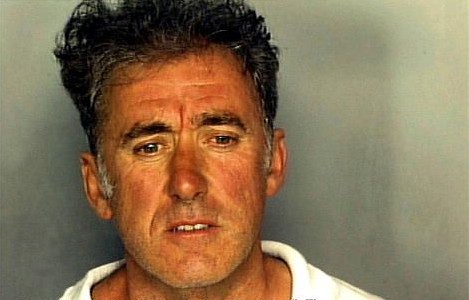
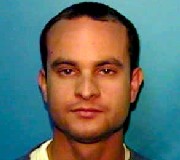
Francisco Arce Montes
Murderer Albert Foulcher
Murderer · France · 1993
Albert Foulcher was described as a former insurance agent and a gun enthusiast.…
5 victims
Albert Foulcher
Murderer · France · 1993
Albert Foulcher was described as a former insurance agent and a gun enthusiast.…
5 victims
 Alfredo Stranieri
Murderer · France · 1997
Alfredo Stranieri (born July 30, 1956) was nicknamed "the killer ads." Alfredo…
4 victims
Alfredo Stranieri
Murderer · France · 1997
Alfredo Stranieri (born July 30, 1956) was nicknamed "the killer ads." Alfredo…
4 victims
 Jean-Louis Turquin
Murderer · France · 1991
Jean-Louis Turquin was a Nice veterinary surgeon who was convicted of murdering…
1 victim
Jean-Louis Turquin
Murderer · France · 1991
Jean-Louis Turquin was a Nice veterinary surgeon who was convicted of murdering…
1 victim
 Marc Cécillon
Murderer · France · 2004
Marc Cécillon was a former French rugby union player who captained the national…
1 victim
Marc Cécillon
Murderer · France · 2004
Marc Cécillon was a former French rugby union player who captained the national…
1 victim
 Pascal Payet
Murderer · France · 1997
Pascal Payet was born 7 July 1963. He was a French criminal. Payet spent his ch…
1 victim
Pascal Payet
Murderer · France · 1997
Pascal Payet was born 7 July 1963. He was a French criminal. Payet spent his ch…
1 victim
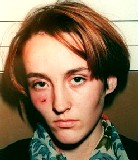 Florence Rey
Murderer · France · 1994
Florence Rey was born August 25, 1975. She was 19 years old at the time of the…
4 victims
Florence Rey
Murderer · France · 1994
Florence Rey was born August 25, 1975. She was 19 years old at the time of the…
4 victims
 Ashley Humphrey
Murderer · USA · 2003
Ashley Humphrey was the wife of Timothy "Tracey" Humphrey. She was born Oct. 13…
1 victim
Ashley Humphrey
Murderer · USA · 2003
Ashley Humphrey was the wife of Timothy "Tracey" Humphrey. She was born Oct. 13…
1 victim
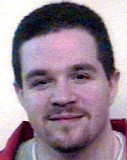 Benjamin Ritchie
Murderer · USA · 2000
Benjamin Ritchie was a defendant in a case involving the death of a law enforce…
1 victim
Benjamin Ritchie
Murderer · USA · 2000
Benjamin Ritchie was a defendant in a case involving the death of a law enforce…
1 victim
 James Homer Elledge
Murderer · USA · 1975
James Homer Elledge was executed by lethal injection in Washington on August 28…
2 victims
James Homer Elledge
Murderer · USA · 1975
James Homer Elledge was executed by lethal injection in Washington on August 28…
2 victims
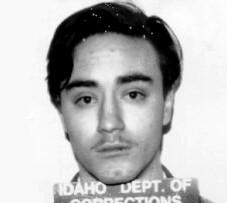 James Hairston
Murderer · USA · 1996
James Hairston was 27 years old and was of Grand Junction, Colo. James Hairston…
2 victims
James Hairston
Murderer · USA · 1996
James Hairston was 27 years old and was of Grand Junction, Colo. James Hairston…
2 victims
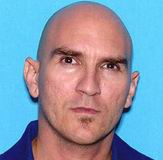 Pedro Alberto Vargas
Mass murderer · USA · 2013
Pedro Alberto Vargas carried out a shooting rampage at an apartment complex in…
6 victims
Pedro Alberto Vargas
Mass murderer · USA · 2013
Pedro Alberto Vargas carried out a shooting rampage at an apartment complex in…
6 victims
- Gender
- male
- Country
- France
- Location
- Pleine Fougeres, Brittany, France
- Date of birth
- March 14, 1951
- Age at first offence
- 45
- Characteristics
- rape, rapist, mentally ill, torture
- Victim profile
- Caroline Dickinson, 13 (British schoolgirl)
- Method of murder
- Suffocation
- Date(s) of murder
- July 18, 1996
- Years active
- 1996
- Date of arrest
- March 11, 2001
- Status
-
Imprisoned
Sentenced to 30 years in prison on June 14, 2004; 30-year sentence upheld on appeal in June 2005; appeal rejected
Background
Francisco Arce Montes was a psychologically troubled loner who drifted around Europe for 25 years. He left a trail of convictions and arrests for abusing young girls.
Montes was born in Gijon, northern Spain, in March 1950. He was the younger child of a middle-class couple who ran a corner grocery.
In an interview with investigators that was read out at his trial, Montes said: "My mother hated me - unlike my father. Everyone accused me of things"
Mental troubles began in his teens in the late 1960s. He developed an obsession about hygiene, opening doors and switching on lights with a handkerchief, and washing his food with mineral water. At the age of 20, his first sexual problems appeared after exposing himself to a neighbour. He was sent to a psychiatrist, who diagnosed depression and "progressive schizophrenia."
In the mid 1970s Montes left Spain for a rootless life across Europe. He worked occasionally as a waiter or driver but lived mainly off money sent to him by his father.
The only acquaintance to testify at the trial was fellow Asturian Eduardo Riesgo Suarez. He said that Montes "knew all the youth hostels in Europe and spent his time chasing girls ." He also said Montes thought the ideal age for a woman was 11 or 12, and after 20 he found them old. Riesgo Suarez also said Montes had a ferocious temper and told him in an argument once that he thought nothing about killing a person.
Montes’s first known sexual aggression resulted in a brief relationship and the birth of a son. In 1981 Montes broke into the room of French girl Christine Le Menes at a hostel in the Netherlands. Le Menes, later described as a teacher, told the court that he touched her sexually against her wishes. Later they met in Paris and had a consenting relationship, and as a result she fell pregnant. She left him shortly afterwards, complaining of physical violence.
In 1994 Montes was arrested after breaking into a hostel in central France where a group of Irish girls was staying. In 1996 he was caught at a hostel in Llanes, northern Spain. In August 1997 he was arrested for an armed sex attack again at Llanes.
After the last attack he spent some months in prison. After release he returned home to Gijon. His mother gave testimony read out in court: "I would rather have gone out and lived on a door-step than be with him. The simple act of going into his bedroom disgusted me."
Around this time Montes’s father died, leaving him money that paid for his fare to South America. He went far enough, he hoped, from a murder investigation that was underway in France.
At his trial Montes appeared vague, depressed and lost in his own mind. His answers, uttered in a dull monotone, were of no more than a few words. At one point he burst into tears at the account of his childhood problems. He later said: "I ask Caroline's parents to forgive me for these tears. "They are totally out of place in this room, where it is not I who am the victim."
The offence
Caroline Dickinson was 13. She was attacked and murdered by Spaniard Montes at a hostel in Brittany in July 1996.
At the trial it was heard that Caroline was raped and killed in the early hours of 18 July 1996 while she slept on the floor of a hostel dormitory in Pleine Fougeres, Brittany. She was among 41 youngsters from Launceston Community College on an activity holiday.
During the trial there was evidence from Caroline’s mother, Sue Dickinson. She was concerned about sending her daughter on the school trip to France. She said: "I was a bit worried because though she knew all the other girls, she didn't have a real good friend so I had asked the teacher to keep an eye on her as she was a bit shy."
Statements were read out from Caroline’s school friends. Ann Jasper told how she heard noises and saw Caroline’s legs shaking, but had thought she was "dreaming and having a nightmare".
Montes admitted sexually assaulting Caroline but claimed she was alive when he left her room. During the series of court cases and police interviews lasting three years, his denials were described as continually denying his involvement in a string of sex attacks. Initially he challenged the accuracy of DNA evidence which linked him to the crime.
The court heard that he had a previous conviction for rape in Germany and an attempted rape in his native Spain, both of which he denied in a police statement. He also dismissed his arrest in Florida as a "misunderstanding".
Evidence was also presented that he had preyed on children in hostels in Britain, Holland, France and Spain. At a closed committal hearing in February last year, Montes apparently admitted Caroline's murder, only to change his story again before the main trial.
At sentencing evidence included a forensic policeman, Major Thierry Lezeau. He said: "It is very clear to me that the asphyxiation was significant and harsh. She stopped breathing very quickly."
Montes attempted to attack another English schoolgirl at a different hostel on the same night Caroline died.
At his first trial in Rennes last June, where he jailed for 30 years, Montes barely spoke. On the opening day of his appeal against the murder conviction, Montes accepted he was responsible for Caroline’s death. He said he had no intention of killing Caroline. It was "an accident, a misfortune".
On appeal he was described to the appeal court in St Brieuc as a "sexual predator". He said he had not demanded the second trial for his own sake, and that he was putting the Dickinson family through this ordeal so he could tell them what had really happened that night. He said: "I understand the gravity of what I did. "I know that the Dickinson family will never forgive me."
At the appeal hearing Montes said he had put his hand over Caroline’s mouth to stifle her cries while he raped her. He told the court: "Yes, that is true, I killed her but I had no intention of killing her. It was the result of the rape. I didn't go into her room to kill her. I didn't cover her mouth to kill her. "First I would like to say I am appealing because I want to explain what happened on that day and the previous days. That wasn't the case in Rennes - I didn't give any explanation."
In describing his actions, Montes said that after taking tranquillisers and alcohol, he had gone to a youth hostel at St Lunaire where he had tried to rape another English girl. He fled when her companions woke and went to the hostel at Pleine Fougères, east of Saint Malo.
Investigation
Major Thierry Lezeau gave forensic evidence casting doubt on Montes’s claim that Caroline was alive when he left the hostel.
Arrest and extradition
Montes evaded capture until US police arrested him over a similar attack on a woman in Florida in April 2001. Montes denied raping and murdering Caroline and initially challenged DNA evidence.
Montes was arrested in Florida after allegedly breaking into a woman's apartment. He was linked to Caroline’s murder by a US immigration officer visiting the UK after reading a newspaper article about the girl's murder.
A warrant for Montes’s arrest was issued after DNA tests allegedly showed a match.
In April 2001 an inquest at Bodmin Magistrates Court into Caroline’s death recorded a verdict of unlawful killing.
Montes was ordered extradited to France by a US judge. On 19 November 2001 he was handed over to American federal marshals in Miami. On 20 November 2001 he was extradited to France for questioning by investigators.
Montes was transferred to a psychiatric unit at a prison outside Paris in October 2003.
Trial
Montes went to trial after extradition and committal hearings.
The week-long case in Rennes heard evidence from Caroline’s mother Sue Dickinson and statements read out from Caroline’s school friends.
It was also revealed Montes had attempted to attack another English schoolgirl at a different hostel on the same night Caroline died.
The trial heard that Montes repeatedly refused to answer questions in court, but broke down when a statement from his mother was read out. His defence included his denial of intent to murder at the time he challenged the accuracy of DNA evidence and other claims.
At the end of the week-long case, the jury convicted him. The jury takes just over four hours to reach a guilty verdict was recorded for 14 June 2004.
Montes was sentenced to 30 years in prison.
Sentencing
On 14 June 2004 the jury took just over four hours to reach its guilty verdict.
The judge said he should serve at least 20 years.
In June 2004 Montes appeared before the court after being taken to Rennes to stand trial. The trial opened in Rennes on 7 June 2004.
Appeals
A decision was made that Montes’s appeal would be heard next summer. His appeal was to be heard next May or June in St Brieuc, Brittany. It was revealed he would have his appeal heard following his trial.
At the appeal hearing, a French court of appeal upheld the 30-year sentence. The St Brieuc jury took an hour to reach its verdict.
Caroline's father John Dickinson spoke outside the court of the "pain of reliving the events" for his family and the friends of Caroline’s. He said: "We hope our search for justice for Caroline is at last complete and that she can be allowed to rest in peace. "We did not want to be here, but Montes' exploitation of the French judicial system and our determination to seek justice for Caroline has required us again to suffer the pain of listening and thus reliving the events of 18 July 1996."
He called Montes an "evil man" who had no grounds for appeal. He said: "It seems that the offender's rights have overshadowed those of the victims," he said.
Montes technically had the right to appeal again on procedural irregularities. Herve Rouzad Le Boeuf said a request to the French Supreme Court would fail. He said: "After nine years this is the end of the matter and rightly so because it has been too long for the Dickinson family."
Before the verdict Montes apologized in court once more to Caroline's parents John and Sue and her sister Jenny, 20. While standing in the dock he said: "What I did was awful. It was horrendous. I cannot be pardoned. "I am sorry and I regret my actions but I didn't intend to kill your daughter."
At the end of the week-long appeal hearing, the prosecutor recommended that Montes serve at least 25 years.
In last June's trial Montes was given 30 years in jail for smothering the 13-year-old to death.
Montes insisted on appealing despite warnings from his legal team that it could lead to an even longer sentence.
Outcome
Montes’s 30-year sentence for the rape and murder of Caroline Dickinson was upheld on appeal.
Aftermath
The court, in a civil hearing, ordered that Caroline's parents be paid £24,100 each, with an additional £17,217 paid to Jenny.
Caroline was from Launceston and was killed during a school trip.
Caroline's father John was followed by his daughter Jenny Dickinson, now 20, who spoke in public for the first time about the loss of her "best friend". Jenny Dickinson was 11 when her sister died, and she said it had taken six years before she could talk about her loss. Montes appeared to wipe away a tear as she finished giving her evidence.
Caroline’s family said they were disappointed that Montes chose to appeal following his trial. They said their wish to begin the process of rebuilding their lives was "yet again, on hold".
Members of Caroline's family said in a statement at the time they were angry and very upset to learn of the appeal, and their wish to begin the process of rebuilding their lives was "yet again, on hold". Caroline's family said on Friday: "We are still very disappointed that Montes chose to appeal following our trial. "However, we stand by what we said at the time that we will attend the appeal hearing whenever it is held."
Timeline
- March 1950 — Francisco Arce Montes was born in Gijon, northern Spain.
- Late 1960s — Mental troubles began in Montes’s teens.
- Age 20 — Montes developed sexual problems and was sent to a psychiatrist after exposing himself to a neighbour.
- Mid 1970s — Montes left Spain for a rootless life across Europe.
- 1981 — Montes broke into the room of French girl Christine Le Menes at a hostel in the Netherlands.
- 1994 — Montes was arrested after breaking into a hostel in central France where a group of Irish girls was staying.
- July 1996 — Caroline Dickinson was attacked and murdered at a hostel in Brittany.
- 18 July 1996 — Caroline Dickinson was raped and murdered by Montes in the early hours while she slept in a hostel dormitory in Pleine Fougeres, Brittany.
- 19 July 1996 — Caroline’s body was discovered at 0800 in the dormitory in the village of Pleine Fougeres, Brittany.
- 20 July 1996 — French police arrested a vagrant who was later released following a DNA test.
- November 1997 — A French magistrate, Renaud Van Ruymbeke, visited Britain for a three-day fact-finding mission.
- December 1998 — A homeless man arrested by French police in Marseilles was released after DNA tests proved negative.
- 2 February 1999 — The UK Government urged France to investigate more thoroughly after Caroline’s father, John, called for more action.
- 10 December 1999 — Sue Dickinson lost her civil claim for damages against Cornwall County Council over her daughter’s death.
- October 2000 — John Dickinson made his 18th trip to France to appeal for help from the public.
- April 2001 — An inquest at Bodmin Magistrates Court recorded a verdict of unlawful killing.
- April 2001 — French police issued a warrant for Montes’s arrest after DNA tests allegedly showed a match.
- 11 March 2001 — Montes was arrested in Florida after allegedly breaking into a woman's apartment.
- March 2001 — A US immigration officer visiting the UK linked Caroline’s murder to Montes after reading a newspaper article.
- June 2001 — A US judge ruled Montes should be extradited to France.
- 19 November 2001 — Montes was handed over to American federal marshals in Miami.
- 20 November 2001 — Montes was extradited to France for questioning by investigators.
- October 2003 — Montes was transferred to a psychiatric unit at a prison outside Paris.
- 1 June 2004 — Montes was taken to Rennes, France, to stand trial.
- 7 June 2004 — The trial into Caroline’s rape and murder opened in Rennes.
- 14 June 2004 — The jury took just over four hours to reach a guilty verdict; Montes was sentenced to 30 years in prison.
- 1 October 2004 — It was announced Montes’s appeal was to be heard next summer.
- 22 June 2005 — Montes accepted on the opening day of his appeal that he was responsible for Caroline’s death.
- 28 June 2005 — A French court of appeal upheld the 30-year sentence.
Other details
Caroline Dickinson’s school trip involved 41 youngsters from Launceston Community College.
The prosecutor recommended that Montes serve at least 25 years at the end of the week-long appeal hearing.
Caroline’s father, John Dickinson, was aged 48 and was from Bodmin. Caroline’s mother, Sue Dickinson, was 46 and was from Launceston. Caroline’s sister Jenny Dickinson was 19 at the time of the trial.
During the trial in Rennes, the chairman of the judges was Jean-Luc Bockel.
When Montes was taken to Rennes, the trial involved Caroline’s rape and murder. The jury took an hour to reach its verdict in the appeal hearing. The appeal hearing was at the Court d'Assises in St Brieuc.
A rare statement from Montes followed his mother’s comments. He acknowledged the extent of his crime and said:
Caroline’s father said: "Life has stuck at the same page for nine years."
Caroline’s family said they hoped their search for justice was complete and she could be allowed to rest in peace.
Spotted an error, or have more information about this case?