James Arcene
Homicide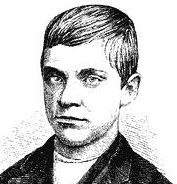 Jesse Pomeroy
Homicide · USA · 1874
Jesse Pomeroy was sentenced to death on two counts in 1876. His sentence was co…
10 victims
Jesse Pomeroy
Homicide · USA · 1874
Jesse Pomeroy was sentenced to death on two counts in 1876. His sentence was co…
10 victims
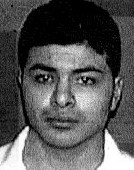 Edward Brian Capetillo
Homicide · USA
Edward Brian Capetillo was a Latino male who was 17 years of age at the time of…
1995 victims
Edward Brian Capetillo
Homicide · USA
Edward Brian Capetillo was a Latino male who was 17 years of age at the time of…
1995 victims
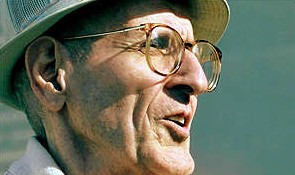 Jack Kevorkian
Homicide · USA · 1990
Jack Kevorkian (born May 26, 1928) was a controversial American pathologist. He…
130 victims
Jack Kevorkian
Homicide · USA · 1990
Jack Kevorkian (born May 26, 1928) was a controversial American pathologist. He…
130 victims
 David Koresh
Homicide · USA · 1993
David Koresh (born Vernon Wayne Howell; August 17, 1959 – April 19, 1993) led t…
79 victims
David Koresh
Homicide · USA · 1993
David Koresh (born Vernon Wayne Howell; August 17, 1959 – April 19, 1993) led t…
79 victims
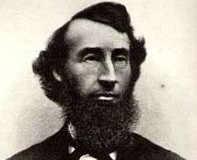 Nathaniel Gordon
Homicide · USA · 1860
Nathaniel Gordon (c.1834 – February 21, 1862) was the first and only American s…
29 victims
Nathaniel Gordon
Homicide · USA · 1860
Nathaniel Gordon (c.1834 – February 21, 1862) was the first and only American s…
29 victims
 Manuel Antonio Rodriguez
Murderer · USA · 1984
Manuel Antonio Rodriguez (Dade #93-25817) was convicted of three counts of Seco…
3 victims
Manuel Antonio Rodriguez
Murderer · USA · 1984
Manuel Antonio Rodriguez (Dade #93-25817) was convicted of three counts of Seco…
3 victims
 Robert Gene Garza
Mass murderer · USA · 2002
Robert Gene Garza (male; Hispanic; black hair; brown eyes; height 05'07"; weigh…
10 victims
Robert Gene Garza
Mass murderer · USA · 2002
Robert Gene Garza (male; Hispanic; black hair; brown eyes; height 05'07"; weigh…
10 victims
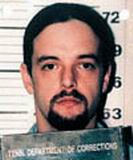 David Scott Poe
Murderer · USA · 1986
David S. Poe was convicted of felony-murder in the Criminal Court of Montgomery…
1 victim
David Scott Poe
Murderer · USA · 1986
David S. Poe was convicted of felony-murder in the Criminal Court of Montgomery…
1 victim
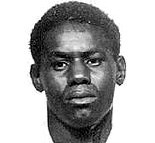 Sammie Felder
Murderer · USA · 1975
March 13, 1975 — Felder worked his usual day shift, 6:00 a.m. to 2:00 p.m., whi…
1 victim
Sammie Felder
Murderer · USA · 1975
March 13, 1975 — Felder worked his usual day shift, 6:00 a.m. to 2:00 p.m., whi…
1 victim
 Hasan Akbar
Murderer · Kuwait · 2003
Sergeant Hasan Akbar was a U.S. Army soldier convicted for the murder of two fe…
2 victims
Hasan Akbar
Murderer · Kuwait · 2003
Sergeant Hasan Akbar was a U.S. Army soldier convicted for the murder of two fe…
2 victims
- Gender
- male
- Country
- USA
- Location
- Fort Gibson, Oklahoma, USA
- Date of birth
- 1862
- Age at first offence
- 10
- Characteristics
- juvenile
- Victim profile
- William Feigel (Swedish immigrant)
- Method of murder
- Shooting
- Date(s) of murder
- November 25, 1872
- Years active
- 1872
- Date of arrest
- 1884 (12 years after)
- Status
-
Executed
Executed by hanging by the U.S. federal government in Fort Smith, Arkansas, on June 18, 1885
Background
James Arcene (ca. 1862 – June 18, 1885) was the youngest child sentenced to death, who was subsequently executed for his crime, in the United States. Arcene was a Cherokee man and was hanged by the U.S. federal government in Fort Smith, Arkansas for his role in a robbery and murder committed thirteen years earlier, when he was 10 years old. Arcene was arrested and tried for the robbery and murder of his victim, but escaped and eluded capture until he was apprehended and executed at the age of 23.
The offence
Arcene and a Cherokee adult named William Parchmeal noticed William Feigel, a Swedish national, making a purchase in a store. They followed him when he left, heading for Fort Gibson, and caught up with him about two miles outside of the fort.
With robbery as a motive, they shot Feigel six times before crushing his skull with a rock. Arcene and Parchmeal then divested Feigel’s corpse of its boots and money, totalling only 25 cents.
Investigation
The case remained unsolved for over a decade. In 1884, 12 years after Feigel’s death, a U.S. Deputy Marshall named Andrews arrested Arcene and Parchmeal in connection with the murder.
Though documents describing the evidence used to obtain the arrest warrant were not readily available, Andrews was able to convince a judge that the trail had not gone cold after so many years.
Arrest
Arcene “denied having knowledge of the killing,” but Parchmeal made a statement through an interpreter “admitting being present, but said that he was there under duress and that Arcine did the killing.”
Trial
Arcene and Parchmeal were convicted of a murder committed 13 years previously. At the time of the conviction mentioned, the murder had occurred on November 25, 1872, when someone had killed a Swedish immigrant named Henry Feigel on the road near Fort Gibson in Indian Territory (now Oklahoma).
After both men were convicted, Arcene made a confession stating that he had “shot [Feigel] six times, then both took rocks and mashed the man’s head” before dragging him off the road and robbing him of his boots and 25 cents.
Judge Parker sentenced both men to hang.
Sentencing
The executions were presided over by “Hanging judge” Isaac Parker, who presided over the executions held at Fort Smith. Arcene claimed to have been “only a boy [about] 10 or 12 years old” at the time of the murder. Primary documents confirmed that, after he was captured, James Arcene claimed to have been a child in 1872 when the crime was committed. He did not revise that statement when it became clear that that status would not help him in sentencing.
Outcome
Arcene and Parchmeal were hanged by the U.S. federal government in Fort Smith, Arkansas. On June 18, 1885, Arcene was executed by hanging.
Aftermath
The execution was held at Fort Smith under Federal Judge Isaac Parker, the “Hanging Judge” of the old Southwest. Arcene and Parchmeal had their limbs bound and their faces covered before being “launched into eternity.”
Moments before their deaths, both men made statements, though it was stated that it was unlikely that their last words were intelligible to many witnesses at the military outpost, owing to the heavy rain and the fact that Parchmeal spoke little English.
Arcene and Parchmeal had their cases brought up in discussions of the death penalty for children and, to a lesser degree, in discussions of the unfair treatment Native Americans received from the United States government. It was stated that it was difficult to verify James Arcene’s age with complete certainty because there were few surviving census records for Indian Territory in the 1870s and 1880s.
A quote attributed to Glenn Shirley, from Law West of Fort Smith: A History of Frontier Justice In The Indian Territory, 1834-1896 (1957), 79, stated:
“Tried, found guilty as charged, sentenced,” was the tale repeated until the mere fact of arrest meant almost certain conviction. The same quote also stated: “To die on the gallows” was passed upon more men here than anywhere in history. It further stated: So numerous were the executions [Parker] ordered and so commonplace the thunderous crash of the gallows trap that street urchins playing outside the old walls would gleefully shout: “There goes another man to hell with his boots on!”
- Glenn Shirley, Law West of Fort Smith: A History of Frontier Justice In The Indian Territory, 1834-1896 (1957), 79.
The case was also discussed in relation to later legal developments, including that in March of 2005 the Supreme Court handed down a 5-4 ruling in Roper v. Simmons declaring that states could no longer execute criminals who had committed their crimes while under the age of 18.
The case was described as part of broader discussion of juvenile offenders, including statistical statements that between 1976 and 2004, 77% of juvenile offenders executed for murder in the US killed a white victim, and that as of 2004, 9 of the last 10 juvenile offenders executed in Texas were black or Hispanic.

Spotted an error, or have more information about this case?