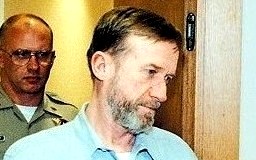
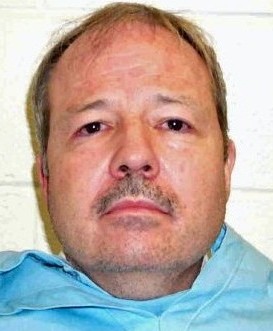
James Homer Elledge
Murderer Ervil LeBaron
Murderer · USA · 1972
Ervil Morrell LeBaron (1925 to August 16, 1981) was the leader of a polygamous…
35 victims
Ervil LeBaron
Murderer · USA · 1972
Ervil Morrell LeBaron (1925 to August 16, 1981) was the leader of a polygamous…
35 victims
 Brian Kevin Rosenfeld
Murderer · USA · 1985
Brian Kevin Rosenfeld Brian Kevin Rosenfeld was sentenced to three concurrent l…
23 victims
Brian Kevin Rosenfeld
Murderer · USA · 1985
Brian Kevin Rosenfeld Brian Kevin Rosenfeld was sentenced to three concurrent l…
23 victims
 Marvin Gray
Murderer · USA · 1975
Marvin Gray was convicted killer who claimed responsibility for 23 slayings and…
23 victims
Marvin Gray
Murderer · USA · 1975
Marvin Gray was convicted killer who claimed responsibility for 23 slayings and…
23 victims
 Yahweh ben Yahweh
Murderer · USA · 1980
Yahweh ben Yahweh was born and legally named Hulon Mitchell Jr. (October 27, 19…
23 victims
Yahweh ben Yahweh
Murderer · USA · 1980
Yahweh ben Yahweh was born and legally named Hulon Mitchell Jr. (October 27, 19…
23 victims
 Lionell Gonzales Rodriguez
Murderer · USA · 1990
Lionell Gonzalez Rodriguez was executed by lethal injection on June 20, 2007 in…
1 victim
Lionell Gonzales Rodriguez
Murderer · USA · 1990
Lionell Gonzalez Rodriguez was executed by lethal injection on June 20, 2007 in…
1 victim
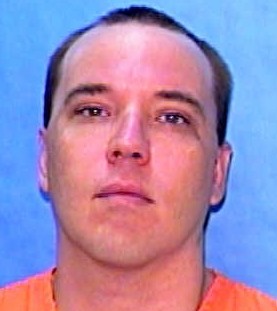 Lawrence Smith
Murderer · USA · 1999
Lawrence Smith was convicted of first-degree murder and attempted first-degree…
1 victim
Lawrence Smith
Murderer · USA · 1999
Lawrence Smith was convicted of first-degree murder and attempted first-degree…
1 victim
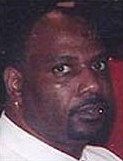 Cyrano Marks
Mass murderer · USA · 1999
Cyrano Marks committed suicide by shooting himself the same day after shooting…
6 victims
Cyrano Marks
Mass murderer · USA · 1999
Cyrano Marks committed suicide by shooting himself the same day after shooting…
6 victims
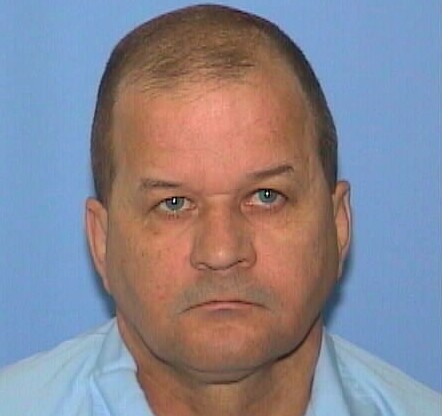 Luther Casteel
Murderer · USA · 2001
Luther Casteel was described by acquaintances as a divorced construction worker…
2 victims
Luther Casteel
Murderer · USA · 2001
Luther Casteel was described by acquaintances as a divorced construction worker…
2 victims
 Therressa Jolynn Ritchie
Murderer · USA · 1995
Therressa Jolynn Ritchie was convicted for killing her 4-year-old daughter, Sam…
1 victim
Therressa Jolynn Ritchie
Murderer · USA · 1995
Therressa Jolynn Ritchie was convicted for killing her 4-year-old daughter, Sam…
1 victim
- Gender
- male
- Country
- USA
- Location
- King County/Snohomish County, Washington, USA
- Date of birth
- 1943
- Age at first offence
- 32
- Characteristics
- arguments, rape, revenge
- Victim profile
- Bertha Lush (motel manager) / Eloise Jane Fitzner, 47
- Method of murder
- Beating with a ball-peen hammer / St abbing with knife
- Date(s) of murder
- 1975 / 1998
- Years active
- 1975–1998
- Date of arrest
- April 21, 1998
- Status
-
Executed
Executed by lethal injection in Washington on August 28, 2001
Case record: James Homer Elledge
Overview
James Homer Elledge was executed by lethal injection in Washington on August 28, 2001. He pleaded guilty to aggravated first degree murder. A special sentencing jury found there were insufficient mitigating circumstances to merit leniency and the trial court sentenced him to death. Elledge waived his right to appeal.
Background
Elledge was on parole for a 1975 first-degree murder conviction in King County at the time of his arrest. He had other prior convictions, including a 1965 armed robbery conviction in New Mexico.
Elledge had invited Eloise Fitzner and her friend (referred to in court proceedings as “S.C.”) for a night out that was to include gifts and dinner. Elledge worked as a custodian at the Lighthouse Methodist Church in Lynnwood.
The offence
On the afternoon of April 18, 1998, James Elledge invited Eloise Fitzner and her friend, “S.C.,“ for a night out, promising gifts and dinner. They arranged to meet around 8:30 p.m. at the church where Elledge worked.
When Ms. Fitzner and S.C. arrived, Elledge gave them a brief tour of the church, during which they met the pastor. After the pastor left, Elledge continued with the tour and eventually guided both women to Room 102, a bible study room with risers around its perimeter. After the two women entered the room, Elledge closed the door, pulled out a knife, and told Ms. Fitzner “that {he} didn’t appreciate what she had done about a year ago, as far as trying to mess the marriage up between {he} and {his} wife.” Ex. 43; RP at 1549.
Ms. Fitzner had been a former neighbor in the same apartment complex. Approximately one year earlier, Ms. Fitzner wrote a letter to Elledge’s then girl friend, urging her to “{not} stay with that awful man any more,” and asserting that “{Elledge} does not even love you” and that “She is just using you for sex, and because he needs the income from your job.” Ex. 4. The letter further accused Elledge of making sexual advances toward Ms. Fitzner. Id.
Elledge read the letter despite the fact that, later, Elledge and his girlfriend married. In Elledge’s words:
“I had been carrying around . . . anger inside of me for over a year {and it} just got to the top and it just spewed out. . . . . That Saturday. Uh, I don’t know, twelve, twelve-thirty, something like that was when this whatever it is inside of me came out. The rage uh whatever it is.” Ex. 43.
Elledge went to Fred Meyer to buy some rope, visited the church to prepare for the murder, and wrote two letters, one to his wife and the other to his employer. Elledge stated, “{i}t was premeditated {t}he whole thing was.” Ex. 43.
After the confrontation, Elledge bound the two women’s wrists and ankles with nylon cord. He placed S.C. on an upper riser, placed a black sweatshirt over her head, and had her face the wall. RP at 1549. Elledge placed a Bible next to S.C., telling her it would keep her safe. RP at 1550.
S.C. could hear a struggle and peeked a few times, noticing Elledge ripping off a piece of duct tape on one occasion. When Elledge caught S.C. looking he told her to turn around or she would be next. RP at 1551.
The last words heard from Ms. Fitzner were, “No, stop, I can't breathe,” as Elledge placed a strip of duct tape over her mouth. Id. Elledge then manually strangled Ms. Fitzner. Ex. 43.
After choking Ms. Fitzner, Elledge dragged her underneath the riser. In his taped confession, Elledge explained his next actions:
“Uh, after I ??? choked her to death, uh there appeared to be some kind of movement still going on with the body. I guess that the body was just settling or something but I didn't uh want to take any chances and I put a knife in her neck.” Ex. 43.
Elledge covered up Ms. Fitzner’s body with “several blankets and shirts” and placed “boxes and packages and stuff like that on top of her.” Id. Elledge fled the scene, took Ms. Fitzner’s car, abducted S.C., and drove to his home.
The next day, Elledge drove S.C. to her vehicle and released her, threatening he would find her if she contacted the police. Immediately upon her release, S.C. contacted authorities and an investigation began.
Police located Ms. Fitzner’s abandoned car in Tacoma on the morning of April 21. On the same day, Elledge telephoned the police from a Tacoma hotel room and surrendered. Tacoma police detained Elledge and detectives from Lynnwood came to Tacoma to interview him. The detectives informed Elledge of his Miranda rights, and obtained a written and oral waiver.
Elledge confessed to killing Ms. Fitzner, describing the crime in detail. Elledge stated the reason for making his confession and recounted his mental state at the time leading up to the killing:
“{T}he thing is uh I've already been convicted once of a first degree murder and I'm still on parole for that. Uh, the Parole Board is obviously gonna revoke my parole uh and that is still carrying a life sentence . . . {s}o I don't feel that I have anything to uh gain or lose by holding back . . . . I've already made my bed, now I've gotta sleep in it the rest of my life . . . . . I don't really think I'm looking for any you know kind of insanity plea or anything like that but I'm just saying that there's something wrong with my nature. I don't know where it comes from or what it is uh, but at times uh this particular type of nature comes up in me uh, an evil that I can't control uh. This happened several times in the past few years but I had been able to control a lot of it by uh power or prayer. I am a Christian but this particular time, Saturday, uh, it was just something I couldn't control.” Ex. 43.
The medical examiner testified that either the strangulation or stabbing injury alone would have caused Ms. Fitzner’s death and that she was probably alive when she was stabbed, but may have been unconscious.
Investigation and arrest
On April 19, Elledge released S.C. after threatening to find her if she contacted the police; S.C. immediately went to police and an investigation began.
On April 21, Elledge called police from a Tacoma hotel room and surrendered. Tacoma police detained Elledge, and detectives from Lynnwood interviewed him after informing him of Miranda rights. Elledge waived Miranda rights.
Elledge’s confession included a description of the crime in detail.
Charges
On April 24, 1998, Elledge was charged by information with one count of aggravated first degree murder, based on the aggravator of kidnapping in the first degree.
Trial
At arraignment on April 28, 1998, the court entered a plea of not guilty on Elledge’s behalf and Elledge was held without bail.
On May 27, 1998, the State filed an amended information and a notice of special sentencing seeking the death penalty. That same day, Elledge entered a guilty plea.
The typewritten statement included in Elledge’s guilty plea stated:
“On April 18, 1998, in Snohomish County, Washington, with the intent to inflict bodily injury upon Eloise Fitzner, I tied up both she and S.C. (DOB 11/01/58) and held them in a place where they were not likely to be found, and threatened them both with the use of deadly force, and in the course of and in furtherance of such crime, I choked Eloise Fitzner and stabbed Eloise Fitzner with the premeditated intent to kill her . . . .” Clerk’s Papers (CP) at 226.
Elledge acknowledged the above statement in open court, and the trial judge assessed Elledge’s competency and the voluntariness of his plea. The court accepted the plea, found Elledge guilty, and scheduled a jury sentencing proceeding for June 19, 1998.
Following continuances, voir dire began on September 30, 1998. The majority of the venire panel was informed that Elledge would not be contesting the death penalty.
A special sentencing proceeding commenced on October 20, 1998. Following an opening statement by the prosecution (the defendant reserved), the State presented its case. Three witnesses were called:
- Detective Jim Nelson, the lead detective on the case, provided general testimony regarding the crime.
- Dr. Daniel Selove, the medical examiner, presented testimony regarding the autopsy and examination of Ms. Fitzner, as well as the cause of death.
- Michael Helland, Ms. Fitzner’s brother, provided victim impact testimony.
After the State’s presentation, Elledge’s attorney gave an opening statement and introduced Elledge, who delivered a statement of allocution. Elledge expressed remorse for the killing but asked the jury to impose the death sentence, asserting: “this wicked part of me needs to die.” RP at 1721.
On October 21, 1998, the jury returned an affirmative answer to the question:
“{h}aving in mind the crime of which the defendant has been found guilty, are you convinced beyond a reasonable doubt that there are not sufficient mitigating circumstances to merit leniency.” CP at 34.
On that same date, the trial court sentenced Elledge to death. Elledge was apprised of his right to appeal, which he waived.
Sentencing
A special sentencing jury found there were insufficient mitigating circumstances to merit leniency. The trial court sentenced Elledge to death on October 21, 1998.
Appeals
Elledge waived his right to appeal both his conviction and sentence. Before the Washington Supreme Court, both Elledge and the State advocated affirmance of Elledge’s death sentence.
The Washington Supreme Court performed mandatory statutory review. It held that Elledge’s waiver was made “knowingly, voluntarily, and intelligently.” It affirmed Elledge’s death sentence.
The court also addressed statutory review criteria under RCW 10.95.130, including:
- sufficiency of evidence to justify the finding that there were not sufficient mitigating circumstances to merit leniency,
- proportionality of death compared to similar cases,
- whether the sentence was brought about through passion or prejudice, and
- whether Elledge was mentally retarded.
The opinion concluded that Elledge was not mentally retarded under RCW 10.95.030(2).
A dissenting judge (SANDERS, J.) argued that proportionality review had degenerated and challenged the majority’s approach.
Outcome
Elledge’s death sentence was affirmed by the Washington Supreme Court.
Elledge waived further rights to appeal.
Execution
Elledge was executed by lethal injection in Washington on August 28, 2001.
After midnight, Elledge was strapped to a gurney and prison officials began administering a combination of four chemicals that would render him unconscious and then kill him. Elledge declined an offer for a sedative to calm him. He was declared dead at 12:52 a.m.
An assistant attorney general in Olympia, Gregory Rosen, stated that Elledge was declared dead at 12:52 a.m.
Prison superintendent John Lambert announced: “Inmate Elledge has no last words.”
The execution protocol described the lethal combination as beginning with saline solution followed by a relaxant, then by a drug that impairs the nervous system, then finally potassium chloride to stop his heart.
Elledge’s will included the following written statement:
“I commit myself to God's care, secure in His love for me and trusting in the salvation purchased for me through the suffering and death of His Son, Jesus Christ,” he wrote. “I leave those who survive me the comfort of knowing that I have died in this faith, and have now joined my Lord in eternal glory.”
Other details
S.C. (the surviving victim) was a surviving victim in this case.
The Washington Supreme Court opinion included a stipulation of Elledge’s criminal background, including juvenile breaking and entering and theft convictions in Louisiana, an armed robbery at a Western Union office in Roswell, New Mexico, prison escape, and a 1974 murder in Seattle in which Elledge killed Bertha M. Lush by hitting her with a ball-peen hammer in an argument over rent.
Elledge’s allocution and taped confession included statements about carrying anger for over a year and an “evil” he could not control at the time of the killing.
Spotted an error, or have more information about this case?