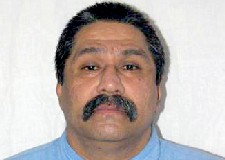
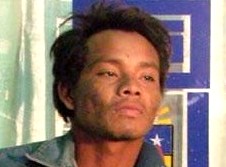
Pedro Arias
Murderer Brian Kevin Rosenfeld
Murderer · USA · 1985
Brian Kevin Rosenfeld Brian Kevin Rosenfeld was sentenced to three concurrent l…
23 victims
Brian Kevin Rosenfeld
Murderer · USA · 1985
Brian Kevin Rosenfeld Brian Kevin Rosenfeld was sentenced to three concurrent l…
23 victims
 Yahweh ben Yahweh
Murderer · USA · 1980
Yahweh ben Yahweh was born and legally named Hulon Mitchell Jr. (October 27, 19…
23 victims
Yahweh ben Yahweh
Murderer · USA · 1980
Yahweh ben Yahweh was born and legally named Hulon Mitchell Jr. (October 27, 19…
23 victims
 Russell Ellwood
Murderer · USA · 1991
Russell Ellwood was a former taxi driver. Authorities suspected him of killing…
20 victims
Russell Ellwood
Murderer · USA · 1991
Russell Ellwood was a former taxi driver. Authorities suspected him of killing…
20 victims
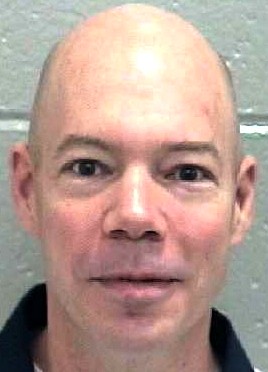 Robert Dale Conklin
Murderer · USA · 1984
Defendant: Robert Dale Conklin · Gender: Male · Race: White · Date of birth: 02…
1 victim
Robert Dale Conklin
Murderer · USA · 1984
Defendant: Robert Dale Conklin · Gender: Male · Race: White · Date of birth: 02…
1 victim
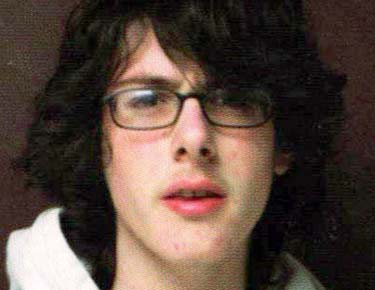 Robert Hawkins
Mass murderer · USA · 2007
Robert A. Hawkins committed suicide by shooting himself after a mass shooting a…
8 victims
Robert Hawkins
Mass murderer · USA · 2007
Robert A. Hawkins committed suicide by shooting himself after a mass shooting a…
8 victims
 John O'Shaughnessy
Murderer · United Kingdom · 1996
John O'Shaughnessy was born in 1965 in Chester, England. He was 31 at the time…
1 victim
John O'Shaughnessy
Murderer · United Kingdom · 1996
John O'Shaughnessy was born in 1965 in Chester, England. He was 31 at the time…
1 victim
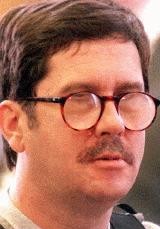 Lewis Lent
Murderer · USA · 1983
Lewis Lent was sentenced to life in prison without parole in Massachusetts in 1…
8 victims
Lewis Lent
Murderer · USA · 1983
Lewis Lent was sentenced to life in prison without parole in Massachusetts in 1…
8 victims
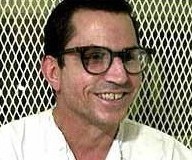 Johnny Paul Penry
Murderer · USA · 1979
Johnny Paul Penry (born May 5, 1956) was a Texas Death Row convict. He was sent…
1 victim
Johnny Paul Penry
Murderer · USA · 1979
Johnny Paul Penry (born May 5, 1956) was a Texas Death Row convict. He was sent…
1 victim
- Gender
- male
- Country
- USA
- Location
- Sacramento County, California, USA
- Date of birth
- 1 963
- Characteristics
- robbery, rape, kidnapping, domestic violence, drugs
- Victim profile
- Herbert John Waltrip Jr., 22 (gas station clerk)
- Method of murder
- Stabbing with knife
- Date(s) of murder
- May 23, 1987
- Years active
- 1987
- Date of arrest
- June 5, 1987
- Status
-
Sentenced to death
Sentenced to death on February 22, 1990
Case record: Pedro Arias
Overview
Pedro Arias was convicted of the stabbing death of Herbert J. John Waltrip Jr., 22, during a minimart robbery, and the kidnapping, sexual assault and robbery two weeks later of a woman motorist he forced off the road. There were three witnesses in the store and it was caught on camera. Prior to the murder, Arias had a long criminal history. Arias disrupted his trial by tearing off his shirt and pants in front of the jury. Pedro Arias was also convicted in a spree that included kidnapping, three robberies and seven sex crimes.
Timeline
- May 23, 1987 — Arias and his friend went for a drive to the Beacon gasoline station at 44th Street and Fruitridge Road; the stabbing death of Herbert J. John Waltrip Jr. occurred during the store robbery.
- June 5, 1987 — Arias kidnapped and sexually assaulted Judy N., forced her off the road after a collision, and robbed her.
- February 22, 1990 — Arias was sentenced to death.
Background
Arias had a long criminal history prior to the murder.
Arias was 24 years old at the time of the Beacon gasoline station incident. Arias lived in a house on Lemon Hill Avenue in Sacramento with a group and used his mother’s 1968 red-primered Plymouth. The driver's door of the Plymouth was jammed, and because the passenger door would not latch, it had to be tied shut with a rope.
Arias had recently had James (Jimmy) Valdez stay at the Lemon Hill house; Valdez had been contributing to the household by “boosting” (i.e., stealing) food.
Arias’ mother was Adeline Rodriguez. Relatives said her drinking and neglect affected the children.
Arias’ girlfriend was Yolanda Gomez, who remarked: “[s]ince Jimmy's here, we got everything.” Arias responded to Valdez: “Let's take a ride.”
The offence
Beacon gas station incident (May 23, 1987)
At around 8 p.m. on May 23, 1987, Waltrip and Lawrence Galvin were at the rear of the store restocking cold beverages. Herbert John Waltrip Jr. was out of sight in a storage cooler, passing merchandise through to Galvin, who stood in front of the beverage cases.
Arias and Valdez entered the store and walked toward the beverage cases. Valdez grabbed a 12-pack of beer and ran out. As Tina Cheatam yelled for Valdez to stop, Arias grabbed her from behind and held a knife to her hip. Galvin began to move forward, and Arias told him to “freeze.” Arias then ordered Cheatam to open her register.
Cheatam said she did not have the key to open the register for Waltrip. Arias grew angrier, shouted obscenities, and continued to demand money. Cheatam became hysterical and pounded on Waltrip’s register, indicating that “other clerk” would have to open it. Arias told her: “Well, get the guy out here.” Cheatam screamed “several times” for Waltrip. Waltrip finally emerged from the back room and said, “Here I am.”
As Waltrip stepped up onto the slightly elevated register area, the floor creaked. Galvin stated that Arias turned, placed his left hand on Waltrip’s right shoulder, pulled Waltrip toward him, drew back his right elbow to a 90-degree angle, and “very, very violently” thrust the knife into Waltrip’s midsection. Galvin stated it plunged with a “thunk” sound like a fist hitting a punching bag. Waltrip doubled over and stumbled into the store’s back office. Cheatam opened her own register, and Arias swept cash out with a “deft scooping motion.” The hidden camera sequentially photographed the holdup stages.
While the robbery was in progress, Edgar Calderon entered to pay for gas, but withdrew when Arias told him to “get the hell out.” After cleaning out Cheatam’s register, Arias brandished the knife at Galvin and forced him to lie down on the floor. Arias then left.
Outside, Valdez was waiting in the passenger seat of the Plymouth. Arias approached the car running; Valdez slid behind the wheel and Arias got in the passenger side. They sped away northbound on 44th Street. At the first intersection, Valdez started to turn right, but Arias told him it was a dead end and Valdez swerved back onto 44th Street. After Arias departed the store, Galvin locked the front door, entered the back office, and found Waltrip unconscious with the telephone in his hand. Galvin took the telephone and called the police.
Waltrip died of his wound during emergency surgery due to loss of blood. The knife had penetrated nine to ten inches, passing completely through Waltrip’s abdominal wall and liver and piercing the front wall of the aorta.
After the incident, Arias and Valdez returned to the Lemon Hill house and divided the money from the robbery, either $45 or $90. Valdez heard Arias tell Yolanda Gomez he had robbed the Beacon store. Sonya White, Gomez’s friend, also overheard the comment and Arias implied White should forget what she had heard.
Arias and Valdez later obtained drugs. Arias used a van owned by Victor Trejo’s father. Arias avoided using the Plymouth because it was “a little warm.” At one point, Trejo wanted to return the van to his father, but Arias pulled a knife and held it to Trejo’s neck. Arias told Trejo he did not want to have to make a “movita,” or move, on Trejo, “like he already did to someone else.” Trejo complied and later dropped Arias at the Lemon Hill house. At Arias’ request, Valdez then went with Arias in the Plymouth to obtain still more drugs.
Later that night, Arias discussed the Beacon robbery and told Valdez: “I think I killed somebody.” The next day, Arias and Valdez bought a newspaper. Arias read the story and told Valdez: “[t]hat the guy died at the gas station.” Arias then moved the Plymouth into the backyard of the Lemon Hill house, where police later found it.
Valdez asked Arias what happened to the knife used to kill Waltrip. Arias retrieved a knife from the kitchen described by Valdez as about 12 inches long. Valdez broke the knife up with his hands.
Valdez made plans to “split” the Lemon Hill house immediately.
Arias met his mother, Adeline Rodriguez, in a park. Arias told her he had robbed the Beacon station and killed a man there, though he “didn't mean to do that.” Arias described that someone grabbed his shoulder from behind and he turned. Arias told Rodriguez he did not want to go to prison and needed time to get away and think.
Arias called Rodriguez and asked for money a couple of days later. About two weeks after the Beacon incident, Valdez saw Arias at McClatchy High School. Arias told Valdez: “Don't worry about nothing, home boy, I ride my own beef.” Arias acted paranoid, said homicide detectives were at his house, and indicated he wanted to go to Mexico.
During trial, Arias presented a single witness, Dr. Gwen Hall, a forensic pathologist. Based on the autopsy report, Dr. Hall disputed the depth of Waltrip's wound and opined that the autopsy findings were not consistent with a violent, audible knife blow such as Galvin had described.
Dr. Hall estimated the blood-alcohol level at 8 p.m. for a 170-pound man who had drunk 12 twelve-ounce beers and 6 glasses of tequila between 11 a.m. and 5 p.m. She opined it would be between .17 and .27 percent. She suggested that at that level, such a person might appear normal, especially if a chronic drinker, but judgment might still be grossly distorted by alcohol intoxication.
Judy N. incident (June 5, 1987)
On June 5, 1987, 13 days after the Beacon incident, Arias borrowed a brown 1970's Plymouth owned by Nelda Smith.
At about 3 p.m. that day, Judy N. was driving eastbound in her 1986 Honda on highway 50 in Sacramento. Arias, driving the brown Plymouth, entered her lane from the right and bumped the right front fender. Judy N. signaled him to pull over; they parked on the shoulder just west of the 51st Street overpass.
After inspecting minor damage, Arias said he had no insurance. Judy N. suggested they exchange names and telephone numbers. She reentered her car to obtain writing paper and a pen. She used the pen to write her own name and telephone number and also wrote the license number of Arias’ car. She tore off the license number and handed the remainder of the paper. Arias wadded up the paper after reaching in and pointing a revolver at her. He demanded Judy N.’s purse and wallet. Judy N. said she had only 23 cents and opened her wallet, showing it contained no cash.
Arias asked about automatic teller machine (ATM) cards. Judy N. acknowledged she had ATM cards and complied with Arias’ instructions to bring her purse and wallet, follow him, and get into the passenger seat of the brown Plymouth.
Arias entered the driver’s side, placed the gun in his lap and pointed at her, and asked the location of the nearest machine that would accept her ATM card. Judy N. mentioned the “college campus” and said she would try to direct him from the next freeway exit at 59th Street. Arias instructed her to remove all clothing below her waist to keep her from trying to get away. She removed shoes, jeans, pantyhose, and underpants.
Arias left highway 50 at the 59th Street exit, then doubled back westbound on S Street. Near the intersection with 55th Street, he parked and told her they were going to return to her car. Arias directed her to put jeans and shoes back on and he put underpants in his pocket. The two climbed over a chain link fence and clambered down an embankment to the freeway.
Eventually they arrived on foot at her vehicle. Arias directed Judy N. to get behind the wheel, again remove her jeans and shoes, and begin driving. He asked about her husband and children, the family’s financial status, and their credit and ATM cards. Fearing for their safety, she told Arias falsely she had no children. She advised him that she and her husband had ATM cards for Golden One Credit Union and Sacramento Savings.
Arias said: “We'll go to the Golden One. I know where there's a Golden One.” He directed her by freeway and surface road southwesterly through Sacramento. Arias demanded her watch and wedding ring. She handed them over.
Arias pulled out her underpants, fondled them, and asked questions about her sex life. He held the gun and said: “I want you to play with yourself like you've never done before.” He directed her to insert her finger in her vagina; he reached over and inserted his own finger in her vaginal opening.
During the drive, they passed police cars, making Arias more agitated. Arias advised Judy N. to drive carefully and avoid attracting attention. He warned he had killed before and it would not bother him to kill again, indicated the killing had occurred about two weeks before, and asked if she had read about it in the newspaper.
They traveled westbound on Florin Road, seemingly headed toward a Golden One branch at Florin Road and interstate 5. Before reaching that location, Arias instructed Judy N. to turn left; she said, “I thought we were going to the credit union.” Arias replied with a smirk: “We'll get there.”
They crossed the Sacramento River into Yolo County, left the paved highway and traveled on a dirt road to an isolated clearing. Arias directed Judy N. to get out, place her hands on the bumper, and lean over. He pulled down his pants, pressed his penis against her anus, and told her to take off the rest of her clothes. She complied, dislodging an earring.
When she was naked, Arias said: “Have you ever sucked [expletive]? Well, you're going to, now. Come here.” He pushed her head down, causing his penis to penetrate her mouth, and continued pushing, saying: “Move. Move harder.” Arias directed her back into some trees where there was another clearing; he said: “Now, we're going to do it doggy style.” He directed her to get down on her hands and knees on his T-shirt, and said: “Nice white ass.” He pressed his penis against her anus and penetrated her vagina with his penis.
Arias withdrew and said he wanted a blanket. Judy N. said there was one in the back of her car. Arias returned, spread it on the ground, and directed her to lie down. During this rape, he entered her vagina with his penis a second time, thrusting hard and biting her breast.
After the assaults, Arias and Judy N. returned to her car. Arias opened the trunk, got her purse, removed ATM cards for two different Golden One accounts, and directed her to tell him the personal identification numbers; he wrote them down. He tied her hands with his belt and put a gag in her mouth, ordered her into the trunk, and from inside the trunk she felt the car return to the paved road, recross the bridge into Sacramento County, and continue for a while, then stop and begin moving again.
When the car stopped a second time, Arias opened the trunk and they were back in Yolo County at the isolated clearing. Arias ordered her out, untied her hands, and directed her to put her T-shirt back on and get behind the wheel. He told her to remove the gag; in doing so, she dislodged another earring.
Arias instructed her to drive back toward Sacramento. Before they reached the bridge, he ordered her to stop on the shoulder. He said he had already gotten money from one of her ATM cards and showed her the receipt, but seemed frustrated and asked where her Sacramento Savings card was. She said it had been on the passenger seat and fallen on the floor of the car. Arias directed her to put her jeans back on, search for the card, and find it. He asked how much money he could get; she said $900. Arias began looking through her purse and found a gold necklace with a Disneyland pendant, demanding she take it off and put it around his neck; she could not work the clasp, and he unfastened it himself.
Arias ordered her to remove her jeans again and resume driving. He then became angry when he found photographs of her children and reminded her that she had claimed to be childless. Judy N. said the pictures were of her nieces and nephews. Arias threatened: “If you're lying to me, I'll blow you away, right now. Don't lie to me. If I find somewhere on these pictures that says 'Mom' anywhere, you're dead.” He also became angry when he found a $20 bill tucked in a side pocket of her wallet; she said she had forgotten about the bill.
Arias took the $20 bill and directed Judy N. to the Golden One branch at a shopping center at Mack Road and Franklin Boulevard in Sacramento. He ordered her to park and wait. He cradled the revolver in his left arm and draped his T-shirt over it, then got into the ATM line.
Judy N. spotted a security guard and sensed a chance to escape. Still naked from the waist down, she snatched her jeans, got out of the car, pointed to Arias, and shouted that he had a gun. She ran into a nearby hardware store.
At around 6 p.m. on June 5, 1987, Linda McCord parked her yellow 1974 Ford pickup next to the Golden One ATM at Mack Road and Franklin Boulevard. After grocery shopping and placing groceries in the truck bed, she attempted to start her engine and heard a loud thump and felt the truck move. She saw a man with a gun in the bed. She heard voices saying, “He has a gun,” and saw people ducking behind cars. The man told her to get out of the truck. He came around to the driver’s window still brandishing the gun, opened the door, slid into the driver’s seat, and McCord escaped out the passenger door leaving keys in the ignition.
Police arrived and directed McCord to go into the hardware store. She was told to stand next to Judy N., and during that time Judy N. was visibly upset. Judy N. repeatedly told McCord: “[w]hatever you do, never get in a car,” and she repeatedly warned that her abductor had stated: “Haven't you been reading about me in the papers? I'm the man who killed the man in the Beacon Gas Station.”
Around 6 p.m. on June 5, 1987, Sacramento police officers Steven Spillmer and Henry Luckie were parked at the Mack Road shopping center discussing police business. A man approached Spillmer and told him about a naked woman and someone with a gun near the Golden One ATM. Spillmer responded and witnesses told him the gunman fled northward on Franklin Boulevard. Spillmer pursued and soon spotted a yellow pickup traveling erratically at high speed. The truck hit a curb in a residential neighborhood and rolled over. Defendant was arrested in the truck, which belonged to McCord.
Various items of Judy N.’s property, including the ATM cards, were found on Arias’ person at the scene. A loaded handgun was recovered from the truck. Arias was transported to a hospital for injuries sustained in the rollover, and Judy N. was taken to the same hospital for a medical examination.
While at the hospital, Judy N. spontaneously observed Arias and identified him as her assailant, and she identified him again at trial.
Police recovered $423 in cash (21 $20 bills and 3 $1 bills) from under the mattress of Arias’ hospital gurney. They also recovered Judy N.'s necklace, watch, and wedding ring, an ATM receipt on Judy N.'s Golden One account, and a live .22-caliber bullet from Arias’ person or clothing at the hospital.
An employee of Golden One confirmed that between 5:21 p.m. and 5:24 p.m. on June 5, 1987, ATM withdrawals of $200 each, the maximum daily allowance, were made from two separate accounts belonging to Judy N. and her husband. The cash was supplied in $20 bills, withdrawals were made from the Florin Road branch, and the person who made them was videotaped. Six unsuccessful attempts to withdraw money from the same accounts were made at the Mack Road ATM between 6:18 p.m. and 6:21 p.m. on the same day, and these transactions were videotaped. Neither Judy N. nor her husband used their Golden One ATM cards on June 5, 1987.
Arias’ fingerprints were found on the brown Plymouth and at several locations on Judy N.’s Honda. Judy N.’s earring was located at the remote Yolo County location she described as the site of the sexual assaults.
Investigation and trial conduct
A hidden camera recorded stages of the holdup during the Beacon robbery. There were three witnesses in the store at that time.
During trial, Arias disrupted proceedings by tearing off his shirt and pants in front of the jury.
Arias presented the testimony of Dr. Gwen Hall, who disputed aspects of the autopsy findings and provided blood-alcohol level estimates.
The prosecution rebutted with Dr. Michael Adelberg, a neurologist, who disputed all bases for Dr. Globus’s opinion that Arias suffered from organic brain damage and concluded the tests were consistent with antisocial personality.
Penalty trial
Prosecution evidence used at penalty phase
The prosecution presented prior incidents as part of the penalty case-in-chief.
Rypich robbery (June 6, 1979)
On June 6, 1979, Daniel Rypich, then 64 years old, and his wife Lucy were returning to their car after purchasing groceries at the Farmers Mart in Sacramento. Defendant was 16 years old and grabbed Daniel around the neck from behind and held a knife in his back, demanding Daniel hand over all his cash or he would be killed. Daniel gave defendant $223. As defendant fled, a rust-colored Chevrolet with license No. CEA 026 picked him up and sped away. A witness provided the police with the license number. Defendant was arrested driving the car the next day. Daniel never saw defendant’s face, but Lucy positively identified defendant from a photo lineup two days after the robbery and “emphatically” identified him at the juvenile proceeding arising from the incident. Beatrice Arriaga, defendant’s girlfriend in 1979, testified that he told her he “got 200 [dollars] from the old man” at the Farmers Mart.
Priscilla Lane shooting incident (August 14, 1981)
Around 11 p.m. on August 14, 1981, James Barger was in the driveway of his house on Priscilla Lane. He heard a shot, and a car turned onto Priscilla Lane from Fruitridge Road. Defendant, wearing a long coat, emerged from the back of the car. A female voice shouted, “There he is,” whereupon defendant pulled a rifle from the car and fired into the yard of the corner house, 5571 Priscilla Lane. Defendant ran in the direction of his shots and disappeared from Barger’s view. Barger heard gunfire five more times. He entered his own house, told his wife to call the police, and returned outside with a .45 automatic. Someone in the car shouted, “Get out of here,” and the vehicle sped away. Defendant, carrying the rifle, ran past Barger. Barger leveled his pistol at defendant’s back and ordered him to freeze. Defendant dropped the rifle and approached Barger, who instructed him to lie down in the street. A crowd of Black and Hispanic youths assembled. In their protective company, defendant got up and walked around the corner onto Fruitridge Road. Barger followed, keeping defendant in sight. When police arrived, Barger pointed out defendant in the crowd. Defendant was arrested, handcuffed, and placed in a police car with another suspect. In their conversation, tape-recorded, defendant threatened to return and kill Barger. When police entered the back-yard of 5571 Priscilla Lane, they found Andrew Benanato cowering under a bush. Spent shell casings and bullet strafe marks were discovered nearby.
High-speed chase incident (July 22, 1985)
In the early afternoon of July 22, 1985, Ernest Daniels, a plainclothes narcotics officer, was parked in an unmarked vehicle on 38th Street at 22nd Avenue near a house where drug activity was suspected. Defendant’s car stopped in front of the house. Daniels emerged, displayed his badge, announced his identity, and approached defendant’s car. Defendant sped away on 38th Street. Daniels activated his siren and red light. Another police car tried to cut defendant off at 20th Avenue but swerved aside to avoid collision. Defendant ran a stop sign at 21st Avenue and violated a yield sign at 19th Avenue. Children playing in the street had to scramble to safety. The pursuit ended at 16th Avenue where defendant was arrested for resisting an officer. Two locking-blade knives were found on his person.
Chief's Auto Parts Store robbery (February 16, 1987)
Late on the evening of February 16, 1987, Richard Lam worked as assistant manager of the Chief's Auto Parts Store on Broadway in Sacramento. John Geddes was the other employee. Defendant and another man entered, inquired about a part, and left. An hour later, they returned, pressed knives into the backs of Lam and Geddes, and ordered them to lie down. Defendant attempted to open the register; when unable, he ordered Lam to open it. Defendant took bills from the register and left. Defendant’s accomplice tore loose a television set bolted to a shelf and carried the television out, following defendant.
Assault and robbery of “Joe” (May 23, 1987)
On the evening of the Beacon robbery and murder, defendant and James Valdez went to a house on 20th Avenue to negotiate a $20 purchase of heroin. Valdez reported persons there included “this lady” and “this guy named Joe.” Valdez had only $15 and asked for partial credit. The lady refused and handed Valdez a bag containing $10 worth of heroin. Valdez injected the amount and told defendant: “Well, I tried to help you, home boy, but I can't. All I got is a dime [i.e., $10].” Defendant became angry and ran toward the lady, brandishing a knife. Joe got up to meet him; the two men fell to the floor and a struggle ensued. Joe was cut on the hand while defending himself from defendant’s knife. When the lady screamed for Valdez to “do something,” Valdez replied: “See, I told you [you] should have gave us the dope.” The lady handed Valdez another bag of narcotics. Valdez then approached defendant, who was struggling with Joe, and said: “Hey, Pete, Pete, I got the dope.” Defendant stopped fighting, snatched “all the dope and money,” and ran out to the car.
Assault on Miguel Pina (May 26, 1987)
On May 26, 1987, three days after the Beacon incident, defendant’s girlfriend, Yolanda Gomez, telephoned Miguel Pina, a high school acquaintance, and asked him to meet her at a store near Pina’s residence. When Pina arrived, Gomez told him she was in some trouble. Defendant appeared and hit Pina on the head with a pistol. Pina reeled backward as defendant screamed, “Who the fuck are you? What the fuck are you doing here?” Defendant held the gun to Pina’s head and asked several times, “Do you want to know how it fucking feels to die?” Defendant asked Gomez who Pina was; she said he was a stranger from whom she had asked directions. Pina agreed and told defendant he was just going to the store.
Defendant forced Pina against a wall and ripped off Pina’s necklace, scratching Pina’s neck. Defendant threw the necklace down when he realized it was fake gold. Finally, defendant told Pina to “[g]o into the store if that's where you're going to,” and released him. Pina went into a nearby store where a woman gave him napkins for his bleeding head. Pina’s pistol-whipping wound required five stitches at a hospital.
Defense evidence during penalty trial
Arias presented witnesses to show he had a neglected and chaotic childhood, that some people cared for him, that he expressed remorse for Waltrip’s murder, and that he could adjust to life imprisonment.
Delores Garcia, a friend since childhood, testified she intended to marry Arias despite his situation. Garcia said Arias sent her daughter drawings and a tender letter from jail.
Marie Alvarado, Garcia’s mother, testified Arias had always been respectful, called her “mom,” and expressed remorse about the Beacon incident. Alvarado said he wrote to her from jail when she was in the hospital with pneumonia.
Several witnesses described Arias’ chaotic childhood and the family’s drug use. Leonard Sanchez said defendant’s mother, Adeline Rodriguez, was a sloppy housekeeper who drank heavily and neglected her children. Sanchez said family standards were lacking and drug use was rampant “from the youngest to the oldest.” Sanchez testified that defendant’s older brother introduced him to drugs, stealing, and burglary, and that Sanchez sold defendant alcohol.
Rodney Hall supervised a foster home where Arias was temporarily placed at age 11. Hall said Arias was stubborn and angry at first but his attitude improved. Hall said he developed a rapport with defendant through auto mechanics. Hall testified that on one occasion Arias intervened to help Hall’s wife when another resident threatened her with a knife. Hall said the foster home forced to close two years later and Arias was returned to his family.
Several jail guards and a jail psychiatric nurse indicated Arias was hot-tempered and retaliated when provoked but respected authority. They testified his disciplinary record while in jail awaiting trial was at least average.
An expert for the defense, Jerry Enomoto, former Director of the Department of Corrections, voiced similar opinions after reviewing Arias’ prison file.
Dr. Albert Globus testified as a psychiatrist and neurologist. Dr. Globus opined Arias showed signs of organic brain damage that would diminish his judgment, impulse control, and capacity to intend Waltrip’s murder. Dr. Globus suggested causes included Rodriguez’s drinking while she was pregnant with Arias, Arias’ lifelong drug and alcohol abuse, and an untreated illness during infancy that may have included a brain infection. Dr. Globus conceded Arias exhibited antisocial personality independent of brain damage, and acknowledged that his intent to rob the Beacon store was not affected by any organic condition.
Outcome
Pedro Arias received a death sentence on February 22, 1990.
Arias’ case included People v. Arias (1996) 13 Cal. 4th 92 [51 Cal. Rptr. 2d 770, 913 P.2d 980].
Spotted an error, or have more information about this case?