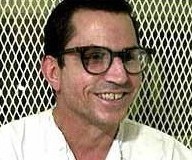
Johnny Paul Penry
Murderer Ervil LeBaron
Murderer · USA · 1972
Ervil Morrell LeBaron (1925 to August 16, 1981) was the leader of a polygamous…
35 victims
Ervil LeBaron
Murderer · USA · 1972
Ervil Morrell LeBaron (1925 to August 16, 1981) was the leader of a polygamous…
35 victims
 Brian Kevin Rosenfeld
Murderer · USA · 1985
Brian Kevin Rosenfeld Brian Kevin Rosenfeld was sentenced to three concurrent l…
23 victims
Brian Kevin Rosenfeld
Murderer · USA · 1985
Brian Kevin Rosenfeld Brian Kevin Rosenfeld was sentenced to three concurrent l…
23 victims
 Marvin Gray
Murderer · USA · 1975
Marvin Gray was convicted killer who claimed responsibility for 23 slayings and…
23 victims
Marvin Gray
Murderer · USA · 1975
Marvin Gray was convicted killer who claimed responsibility for 23 slayings and…
23 victims
 Yahweh ben Yahweh
Murderer · USA · 1980
Yahweh ben Yahweh was born and legally named Hulon Mitchell Jr. (October 27, 19…
23 victims
Yahweh ben Yahweh
Murderer · USA · 1980
Yahweh ben Yahweh was born and legally named Hulon Mitchell Jr. (October 27, 19…
23 victims
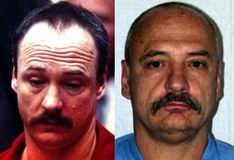 James Marlow
Serial killer · USA · 1986
James Gregory Marlow was convicted in San Bernardino County, California, of mur…
5 victims
James Marlow
Serial killer · USA · 1986
James Gregory Marlow was convicted in San Bernardino County, California, of mur…
5 victims
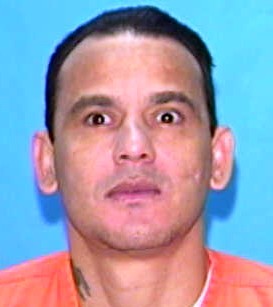 Norberto Pietri
Murderer · USA · 1988
Norberto Pietri was at Lantana Community Correctional Work Release Center await…
1 victim
Norberto Pietri
Murderer · USA · 1988
Norberto Pietri was at Lantana Community Correctional Work Release Center await…
1 victim
 Ershad Sikder
Murderer · Bangladesh · 1990
Ershad Sikder was an influential political figure in the south-western city of…
30 victims
Ershad Sikder
Murderer · Bangladesh · 1990
Ershad Sikder was an influential political figure in the south-western city of…
30 victims
 David Lee Goff
Murderer · USA · 1990
David Lee Goff was convicted of capital murder for the September 1, 1990, murde…
1 victim
David Lee Goff
Murderer · USA · 1990
David Lee Goff was convicted of capital murder for the September 1, 1990, murde…
1 victim
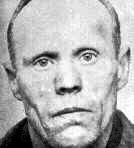 Albert Edward Matheson
Murderer · United Kingdom · 1957
Albert Edward Matheson was employed as a handyman at a hall in Newcastle, where…
1 victim
Albert Edward Matheson
Murderer · United Kingdom · 1957
Albert Edward Matheson was employed as a handyman at a hall in Newcastle, where…
1 victim
- Gender
- male
- Country
- USA
- Location
- Polk County, Texas, USA
- Date of birth
- May 5, 1956
- Age at first offence
- 23
- Characteristics
- rape, drug addict, mentally ill, history of mental illness
- Victim profile
- Pamela Moseley Carpenter, 22 (sister of American football star Mark Moseley)
- Method of murder
- St abbing with a pair of scissors
- Date(s) of murder
- October 25, 1979
- Years active
- 1979
- Date of arrest
- —
- Status
-
Life imprisonment
Sentenced to death on April 9, 1980; commuted to life in prison on February 15, 2008
Case overview
Johnny Paul Penry (born May 5, 1956) was a Texas Death Row convict. He was sentenced to death on April 9, 1980 for raping and stabbing 22-year-old Pamela Moseley Carpenter (sister of American football star Mark Moseley), who died of her wounds, on October 25, 1979.
In the plea proceedings on February 15, 2008, Penry entered a plea agreement in which he accepted a sentence of life without parole.
Timeline
- October 1979 — Penry was convicted and sentenced to death for the October 1979 rape and murder of 22-year-old Pamela Carpenter in Livingston, Texas.
- October 25, 1979 — Penry raped and stabbed Pamela Moseley Carpenter; she died of her wounds.
- February 15, 2008 — Penry entered a plea agreement accepting a sentence of life without parole.
- April 9, 1980 — Penry was sentenced to death.
- February 1977 — Penry raped Diana Koch in Livingston, Texas.
- August of 1979 — Penry was released on parole.
- May 1990 — Penry was found legally competent to stand trial (second time).
- January 1985 — The Texas Court of Criminal Appeals affirmed Penry's conviction and sentence.
- January 1986 — The U.S. Supreme Court denied certiorari review.
- May 1986 — The Court of Criminal Appeals denied state habeas relief.
- April 1987 — The U.S. District Court for the Eastern District of Texas denied federal habeas relief.
- November 1987 — The Fifth Circuit Court of Appeals affirmed the District Court's decision to deny habeas relief.
- June 1989 — The U.S. Supreme Court reversed the Fifth Circuit and ordered a new trial so that a jury could consider Penry's mitigation evidence during deliberations on punishment.
- July 1990 — Penry was retried in Walker County and found guilty.
- February 22, 1995 — The Court of Criminal Appeals affirmed the July 1990 conviction.
- November 13, 1995 — The U.S.
- December 3, 1997 — The Court of Criminal Appeals denied Penry's application for state habeas relief.
- March 30, 1999 — The federal district court denied relief and denied permission to appeal based on Penry's petition for federal habeas relief.
- June 20, 2000 — The Fifth Circuit Court of Appeals denied permission to appeal.
- July 25, 2000 — The Fifth Circuit Court of Appeals denied rehearing.
- November 13, 2000 — Texas Attorney General John Cornyn issued a media advisory stating Penry was scheduled to be executed on Thursday, November 16.
- March 1980 — Penry was found legally competent to stand trial.
- April 1980 — Penry was convicted and sentenced to death.
- January 1995 — The U.S. (Appeals timeline lists January 1995.)
- March 30, 1999 — Penry's petition for federal habeas relief was denied and permission to appeal was denied.
- November 13, 2000 — Penry's execution scheduling statement appeared in a media advisory.
The offence
Penry first saw Carpenter when he went to her home in early October with another man to help install new appliances her husband had purchased. In his confession to police, Penry admitted that he was attracted to Carpenter when he saw her and that he thought of her often after seeing her in early October. Penry also admitted that he noticed Carpenter kept money in her purse, which he stated later was another motive for going to Carpenter's house.
On the morning of October 25, 1979, Penry went to Carpenter's house after seeing a woman that reminded him of Carpenter. According to his confession, before Penry got to the door of the home, he opened his pocket knife and placed it in his back pocket. He then knocked on the door and asked Carpenter if her husband was home. When Carpenter replied no, Penry asked if he could come in and look at the new stove he had helped install. When Carpenter refused and told Penry to leave, he forced himself into her home, held his pocket knife at her side, and pushed her into the kitchen.
Carpenter began to scream and knocked the knife out of Penry's hand. Penry and Carpenter struggled. Penry told Carpenter to stop screaming or he would cut her throat. Carpenter was able to grab a pair of scissors and stab Penry in the back. The struggle continued as Penry dragged Carpenter into her bedroom. When Carpenter tried to get away, Penry tripped her. Penry ordered Carpenter to take off her clothes. When she refused, he kicked her two or three times in the side. Carpenter then took off her clothes and Penry raped her.
After the rape, Penry grabbed the scissors Carpenter had stabbed him with. Penry told her he was going to kill her because, as Penry said in his confession, he thought "she would squeal on me." Penry then stabbed Carpenter in the chest. Penry ran out of Carpenter's home.
Pamela Carpenter managed to call a friend to say that she had been raped and stabbed. Before Carpenter died at the hospital, she told doctors that she had been stabbed with scissors and gave a description of her attacker that matched Penry.
Investigation
Later in the day, police found Penry with two fresh puncture wounds on his back that appeared consistent with being stabbed by scissors, the murder weapon Carpenter told doctors Penry used to stab her.
After first lying to police about how he got the wounds by saying he got them by falling off his bike, Penry told police, "I want to get it off my conscience, I done it."
Penry signed two statements confessing to the rape and murder of Pamela Carpenter.
Evidence and injuries
Puncture wounds found on Penry's back were consistent with being stabbed by scissors, the murder weapon Pamela Carpenter told doctors Penry had used to stab her.
Carpenter sustained numerous injuries, including a deep puncture wound to the chest, ruptured kidney, and numerous cuts and bruises, all of which were consistent with Penry's account of the violent sexual assault.
Prior criminal history
In February 1977, Penry raped Diana Koch in Livingston, Texas. Koch testified that as she was getting out of her car to enter a department store in downtown Livingston, Penry forced his way into her car. Penry told Koch that his brother had been in an accident and asked her to take him to the accident scene down the road. Koch, although hesitant, began to drive down the road. As they drove, Koch became worried and reached down to use the CB radio in her car. When she did so, she saw that the wires had been cut.
Penry then put a knife to Koch's ribs, pulled her head back by her hair, and told her to keep driving. Penry forced Koch to drive off the road in a remote area and forced her to take off her clothes at knife point. Penry raped Koch. After raping her, Penry tried to drive off, but the car got stuck on a dirt road, forcing Penry and Koch to walk. As they walked, Penry kept the knife at Koch's side.
A pickup approached them and Penry told the driver "my wife and I need a ride." Penry and Koch climbed into the back of the truck. When the driver stopped at a small store, Koch began screaming for help. Penry tried to persuade people looking that his "wife" was "throwing a tantrum." Koch kept screaming, which led two men to hold a gun on Penry until sheriffs arrived at the scene. Penry later pled guilty to raping Koch. He received a five year prison sentence, of which he served about half before being released on parole in August of 1979.
Penry was on parole for less than three months before he raped and killed Pamela Carpenter.
Mental capacity and competence
The issue of Penry's mental capacity was presented to four separate juries, and each jury found Penry to be legally competent to stand trial and/or rejected defenses based upon Penry's alleged mental retardation.
Penry's mother testified at the first competency trial for the defense. Her testimony centered on that Penry had a troubled childhood and included incidents where Penry abused his siblings, and there was little if any discussion by Penry's mother about his mental capacity.
Dr. Kenneth Vogstberger, a board certified psychiatrist affiliated with Deep East Texas Regional Mental Health/Mental Retardation services, testified at the first competency trial that Penry was competent to stand trial and possessed no serious mental disease or defect. Dr. Vogstberger stated that Penry had a good understanding of the nature of the charges against him and the trial proceedings, and that Penry knew the difference between right and wrong.
Defense expert Dr. Randall Price testified under cross-examination at Penry's second trial that there had never been any objective medical evidence that Penry suffers from any brain damage or impairment. Price stated that Penry knows the difference between right and wrong and would be a dangerous person in the free world.
Dr. Stanton Samenow, a psychologist who testified during the punishment phase of Penry's second trial, stated that Penry is aggressive, violent and dangerous. Samenow also testified that Penry's history of anti-social criminal behavior showed that Penry possessed an ability to scheme, plan, and be purposefully deceptive.
Trial and procedural history
Penry was found legally competent to stand trial in March 1980. He was convicted and sentenced to death in April 1980. The Texas Court of Criminal Appeals affirmed Penry's conviction and sentence in January 1985. The U.S. Supreme Court denied certiorari review in January 1986. The Court of Criminal Appeals denied state habeas relief in May 1986. The U.S. District Court for the Eastern District of Texas denied federal habeas relief in April 1987. The Fifth Circuit Court of Appeals affirmed the denial of habeas relief in November 1987.
In June 1989, the U.S. Supreme Court reversed the Fifth Circuit's decision and ordered a new trial so that a jury could consider Penry's mitigation evidence during deliberations on punishment.
In May 1990, Penry was found legally competent to stand trial (second time). In July 1990, Penry retried in Walker County and found guilty. In February 22, 1995, the Court of Criminal Appeals affirmed the July 1990 conviction. In November 13, 1995, the U.S. In December 3, 1997, the Court of Criminal Appeals denied Penry's application for state habeas relief. In March 30, 1999, the federal district court denied relief and denied permission to appeal based on Penry's petition for federal habeas relief. In June 20, 2000, the Fifth Circuit Court of Appeals denied permission to appeal, and in July 25, 2000, the Fifth Circuit Court of Appeals denied rehearing.
Penry's writ of certiorari was pending with the U.S. Supreme Court, and his clemency petition was pending before the Texas Board of Pardons and Paroles.
Sentencing and plea
Penry was sentenced to death on April 9, 1980.
On February 15, 2008, Penry entered a plea agreement accepting a sentence of life without parole. During the plea proceedings, Penry stated:
"is presently, and at all times relevant to these proceedings, not a person with mental retardation as that term is defined by the Texas Health and Safety Code, The Diagnostic and Statistical Manual IV-TR published by the American Psychiatric Association, and the American Association on Intellectual and Developmental Disabilities (formerly AAMR)."
Penry and his attorneys ratified the 2002 jury finding that he was not mentally retarded, and ratified the 2002 findings of fact and conclusions of law entered by then presiding judge Elizabeth Coker to the same effect.
Prior confinement-related testimony
At Penry's second trial, several prison guards at the Ellis Unit in Huntsville testified about incidents where Penry beat up and threatened other inmates and guards with various homemade prison weapons. They also testified about Penry having an aggressive and violent reputation among inmates and guards.
After the jury returned its verdict in Penry's first trial, Penry had to be restrained when he attempted to physically attack the prosecutor.
Other details and media advisory
A Texas Attorney General media advisory issued on November 13, 2000 stated that Johnny Paul Penry was scheduled to be executed after 6 p.m., Thursday, November 16. The advisory stated that Penry was convicted and sentenced to death for the October 1979 rape and murder of Pamela Carpenter in Livingston, Texas, and that at the time of the rape and murder Penry had been on parole less than three months for another rape committed in 1977.
Outcome
Penry's death sentence was overturned three times by the U.S. Supreme Court in 1988, 2001, and 2006. The case then proceeded through a retrial after the June 1989 U.S. Supreme Court reversal.
On February 15, 2008, Penry accepted a plea agreement for a sentence of life without parole.

Spotted an error, or have more information about this case?