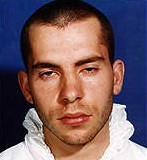
David John Copeland
Murderer Rahan Arshad
Murderer · United Kingdom · 2006
Rahan Arshad (born 1970) was a taxi driver. He lived at Turves Road, Cheadle Hu…
4 victims
Rahan Arshad
Murderer · United Kingdom · 2006
Rahan Arshad (born 1970) was a taxi driver. He lived at Turves Road, Cheadle Hu…
4 victims
 Anthony Smith
Murderer · United Kingdom · 2001
Anthony Smith was a former sergeant in the Coldstream Guards. He had left the C…
3 victims
Anthony Smith
Murderer · United Kingdom · 2001
Anthony Smith was a former sergeant in the Coldstream Guards. He had left the C…
3 victims
 Karl Bluestone
Murderer · United Kingdom · 2001
Karl Bluestone was a Gravesend police officer. · 28 August 2001 — Karl Blueston…
3 victims
Karl Bluestone
Murderer · United Kingdom · 2001
Karl Bluestone was a Gravesend police officer. · 28 August 2001 — Karl Blueston…
3 victims
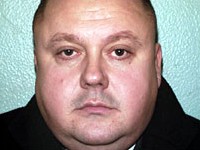 Levi Bellfield
Murderer · United Kingdom · 2003
Levi Bellfield (born 17 May 1968) was a British murderer. He was described by p…
3 victims
Levi Bellfield
Murderer · United Kingdom · 2003
Levi Bellfield (born 17 May 1968) was a British murderer. He was described by p…
3 victims
 Mark Martin
Murderer · United Kingdom · 2004
Mark Martin (born 1981 in Nottingham, England) was a British murderer. He kille…
3 victims
Mark Martin
Murderer · United Kingdom · 2004
Mark Martin (born 1981 in Nottingham, England) was a British murderer. He kille…
3 victims
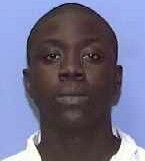 Raphael Leon Holiday
Murderer · USA · 2000
Raphael Leon Holiday (TDCJ Number 999419) was born on 07/20/1979 and was 22 whe…
3 victims
Raphael Leon Holiday
Murderer · USA · 2000
Raphael Leon Holiday (TDCJ Number 999419) was born on 07/20/1979 and was 22 whe…
3 victims
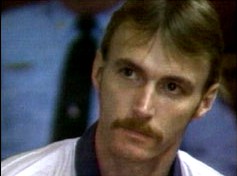 Nicholas Ingram
Murderer · USA · 1983
Nicholas Lee Ingram was convicted of the June 3, 1983 malice murder of J.C. Saw…
1 victim
Nicholas Ingram
Murderer · USA · 1983
Nicholas Lee Ingram was convicted of the June 3, 1983 malice murder of J.C. Saw…
1 victim
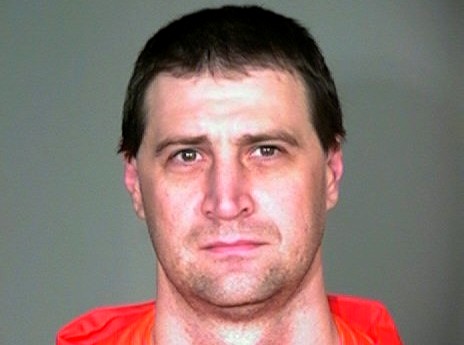 Michael Apelt
Murderer · USA · 1988
Michael Apelt and his brother, Rudi, came to Arizona from West Germany and bega…
1 victim
Michael Apelt
Murderer · USA · 1988
Michael Apelt and his brother, Rudi, came to Arizona from West Germany and bega…
1 victim
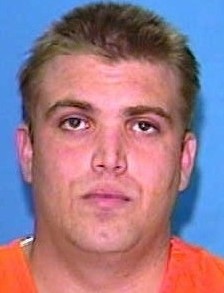 Andrew Lukehart
Murderer · USA · 1996
Andrew Lukehart was convicted in Duval County, Florida, of first-degree murder…
1 victim
Andrew Lukehart
Murderer · USA · 1996
Andrew Lukehart was convicted in Duval County, Florida, of first-degree murder…
1 victim
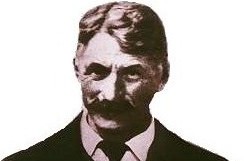 Simone Pianetti
Mass murderer · Italy · 1914
Simone Pianetti was an Italian mass murderer born in 1858. He was born in Camer…
7 victims
Simone Pianetti
Mass murderer · Italy · 1914
Simone Pianetti was an Italian mass murderer born in 1858. He was born in Camer…
7 victims
- Gender
- male
- Country
- United Kingdom
- Location
- London, England, United Kingdom
- Date of birth
- May 15, 1976
- Age at first offence
- 23
- Characteristics
- anarchist, hate crime, white supremacist
- Victim profile
- Andrea Dykes, 27 (pregnant); Nick Moore, 31, and John Light, 32
- Method of murder
- Homemade nail bombs
- Date(s) of murder
- April 30, 1999
- Years active
- 1999
- Date of arrest
- Same day
- Status
-
Life imprisonment
Sentenced to six concurrent terms of life imprisonment on June 30, 2000
Case record: David John Copeland
Background
David John Copeland was born in Isleworth, in the London Borough of Hounslow, and lived for most of his childhood in Yateley, Hampshire. He attended Yateley School and passed seven GCSEs when he left school in 1992. He was given the nickname "Mr. Angry" because he resented that he was small for his age.
Copeland left school in 1992 to be an apprentice engineer. He became involved in petty crime, drinking, and taking drugs, including heroin. He also took part in acts of football hooliganism with Portsmouth Football Club’s hooligan firm, the 657 Crew.
In court, it was reported that Copeland never had a girlfriend, and this caused him to fear that people might think he was a homosexual.
In May 1997, at the age of 21, Copeland joined the British National Party. He acted as a steward at some BNP meetings, where he came into contact with the BNP leadership and was photographed standing next to John Tyndall, the then leader of the BNP. During this period, Copeland read The Turner Diaries and first learned how to make bombs using fireworks with alarm clocks as timers after downloading a so-called terrorists’ handbook from the internet.
In 1998, Copeland left the British National Party after it rejected political violence. He then joined the smaller, violent and openly neo-Nazi National Socialist Movement, becoming its regional leader for Hampshire just weeks before the start of his bombing campaign.
Around this time, Copeland visited his family doctor and was prescribed anti-depressants after telling the doctor he felt he was "losing his mind".
After his arrest, Copeland told psychiatrists that he had started having sadistic dreams when he was about 12, including dreams or fantasies that he had been reincarnated as an SS officer with access to women as slaves.
During police interviews, Copeland admitted holding neo-Nazi views and talked of a desire to spread fear and trigger a race war. He later told BBC correspondent Graeme McLagan about his views and described racist obsessions.
The offence
On 2 May 1999, London police charged white supremacist David Copeland with murder in a nail-bombing campaign against gays and ethnic minorities. The campaign killed three people and wounded at least 116.
Copeland placed homemade nail bombs at targets in London on three occasions before he was arrested. The bombs each contained up to 1,500 four-inch nails. No warnings were given.
17 April 1999 — Copeland planted a nail bomb outside a supermarket in Electric Avenue, Brixton, an area of South London with a large black population. The bomb was made from explosives from fireworks, taped inside a sports bag before priming it and planting it outside the Iceland supermarket. The bomb detonated at 5:25 in the evening after traders became suspicious and moved it several times. Fifty people were injured, many seriously due to the nails packed around the bomb. One victim was a 23-month-old toddler who had a nail driven through his skull into his brain, though he was reported to have made a full recovery.
24 April 1999 — Copeland planted a nail bomb in Brick Lane in the East End of London, where there was a large South Asian community. There is a famous Brick Lane street market on Sundays, but Copeland mistakenly tried to plant the bomb on Saturday when the street was less busy. Unwilling to change the timer on the bomb, he left it instead in Hanbury Street, where it exploded. Thirteen people were injured and there were no fatalities.
30 April 1999 — Copeland planted and detonated a nail bomb in the evening in the crowded Admiral Duncan pub in Soho’s Old Compton Street, the centre of London’s gay community. Andrea Dykes, 27, who was four months pregnant with her first child, died along with Nick Moore, 31, and John Light, 32. Andrea Dykes’s husband, Julian, was seriously injured. The four friends from Essex had met up in the Admiral Duncan to celebrate Andrea’s pregnancy. The bomb detonated after being taped inside a sports bag and left near the bar. Seventy-nine people were injured, many seriously; four survivors had to have limbs amputated.
Investigation
The Anti-Terrorist Branch of the Metropolitan Police Service identified Copeland from CCTV footage of Brixton. The image was given wide publicity on April 29, which caused Copeland to bring forward his bombing of the Admiral Duncan to Friday evening.
Paul Mifsud, a work colleague of Copeland, recognized him and alerted police about an hour and 20 minutes before the Admiral Duncan bombing.
Detectives began scanning CCTV coverage of Brixton after the first explosion. The decisive movement included Copeland wandering around Brixton for more than an hour before planting the first bomb. After trawling through thousands of hours of tape, police singled him out, enhanced the pictures and released them in a public appeal.
In the Brick Lane incident, a member of the public spotted the bomb in Hanbury Street and called the police. Copeland was later described as having been spotted by police by CCTV and bringing forward the next attack by a day.
Arrest
Copeland was arrested that night once police obtained his address, a rented room in Farnborough, Hampshire. He admitted carrying out the three bombings as soon as he was arrested.
His mental state was assessed at Broadmoor Hospital. The matter remained a dispute at his trial.
After Copeland was arrested, he led officers to his bedroom, where two red-and-black Nazi flags were hanging on a wall alongside a collage of photos and newspaper stories with a theme of bomb blasts.
In the room, police found a Nazi shrine with swastika flags and photos of atrocities and bombings from around the world, including some from his own bombings at Brixton and Brick Lane, referred to as his "handiwork". Explosives and weaponry were also found, including a crossbow, hunting knives, and a lethal gas-powered pistol.
When asked by police the next day why he attacked blacks and Asians, Copeland replied:
"Because I don't like them, I want them out of this country, I'm a national socialist, Nazi, whatever you want to call me, I believe in the master race."
Trial
The jury convicted Copeland of three murders and three offences of planting bombs. The trial resulted in a conviction of murder on June 30, 2000.
During the trial, prosecutors did not accept Copeland’s plea of diminished responsibility. The prosecution was under pressure not to concede to his pleas of guilty to manslaughter.
The trial involved mental health evidence. Copeland had been diagnosed by five psychiatrists as having paranoid schizophrenia, while a consultant concluded he had a personality disorder.
After six hours’ deliberation, the jury returned verdicts of guilty for the murders of Andrea Dykes, 27, Nik Moore, 31, and John Light, 32.
The trial judge, Judge Michael Hyam, told Copeland that anyone who had heard the facts would be "appalled and horrified at the atrocity of the crimes". He also stated:
"On your own admission you set out to kill, to maim and to cause terror in the community and that is what you did,"
and: "As a result of your wicked intentions you have left three families bereaved and many people who were so severely injured by the explosions you caused that they are reminded every day, and perhaps many times every day, that you alone are accountable for ruining their lives."
He added: "The public must be protected from you and must be assured that if you are ever released it will not be for a very long time."
Sentencing
Copeland was sentenced to six concurrent terms of life imprisonment on June 30, 2000.
The judge spoke of doubt that it would ever be safe for Copeland to be released.
Appeals
Almost seven years after the sentencing, the High Court decided on 2 March 2007 that Copeland should remain in prison for at least 50 years, effectively ruling out his release until at least 2049 at the age of 73.
Copeland was described as currently confined in Broadmoor Hospital.
Motivation
Copeland maintained he had worked alone and had not discussed his plans with anyone.
During police interviews, he admitted holding neo-Nazi views and discussed a desire to spread fear and trigger a race war. In police interviews, he said:
"My main intent was to spread fear, resentment and hatred throughout this country, it was to cause a racial war."
He also said: "There'd be a backlash from the ethnic minorities, I'd just be the spark that would set fire to this country."
After his arrest, Copeland wrote to BBC correspondent Graeme McLagan. His letter included:
"I bomb the blacks, 'pakkies', degenerates. I would have bombed the Jews as well if I'd got a chance."
When asked by the police why he targeted Black and Asian ethnic minorities he replied:
"Because I don't like them, I want them out of this country, I believe in the master race."
He also wrote:
"The Jew, devil's disciples and peoples of mud must be driven out of our land,"
and: "It is God's law and we must obey. "
He wrote that "Zog", described as the Zionist Occupation Government, was trying to sweep him under the carpet by pumping him full of drugs.
During sentencing coverage, it was stated that Copeland told detectives the bombs were designed to start a race war across Britain.
Copeland was described as sexually confused and driven by homophobia, Nazism, and deep-seated racism.
Other details
Copeland became known as the "London Nail Bomber" after a 13-day bombing campaign in April 1999 aimed at London’s black, Bangladeshi, and gay communities.
Officials said 22-year-old David Copeland operated alone and was not linked to neo-Nazi groups that claimed responsibility.
Copeland was captured on closed-circuit TV in the neighborhood where the first blast occurred.
Copeland had been brought up in Yately, Hampshire, with a father who was an engineer and a mother who was described as a part-time helper in a centre for the handicapped.
After his arrest, Copeland was described as having been planning to bomb Southall in west London, which has a large Asian population, the following week.
After 29 September 2002, the News of the World revealed that Copeland had sent a letter full of racially offensive words to two members of a gang linked to the 1993 murder of black London teenager Stephen Lawrence following their conviction and imprisonment for attacking a black policeman. He had been allowed to send a letter to the pair despite being supervised by staff at Broadmoor while he typed out the letter on a computer and having his letter vetted before it was sent in the post.
Nik Moore’s father, Robert, 69, said after the verdict: "We have had 14 months of hell. I just Copeland rots in hell."
John Light’s brother, Mike, 43, said: "The most important thing is Copeland never has the opportunity to do that again."
Copeland’s father, Stephen, was in court with another of Copeland’s three sons and said he would be considering an appeal. Copeland’s father Stephen also stated, "I just believe he was easily influenced by people who saw they could indoctrinate him with their views. I just don't believe he went looking for it himself," and also said: "You have got to support your son no matter what he has done, no matter how wrong it may have been."
Copeland’s sentencing and confinement included treatment at Broadmoor for a time after conviction and thereafter.
Compilations of biographical material described Copeland’s bombing campaign as constructed from instructions downloaded from anarchist publications on the internet and with materials bought from DIY stores and high street shops.
Copeland wrote to BBC correspondent Graeme McLagan while on remand in prison and at Broadmoor special hospital.
The record described a profile of Copeland as a quiet introvert obsessed with Hitler and bombs, and described him as caught largely because he wandered around Brixton for more than an hour before planting his first bomb.
Spotted an error, or have more information about this case?