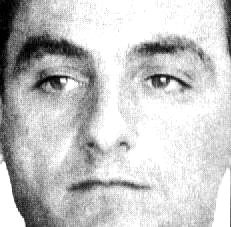
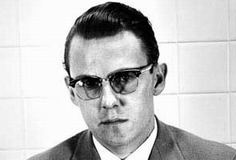
Carl Coppolino
Murderer Ervil LeBaron
Murderer · USA · 1972
Ervil Morrell LeBaron (1925 to August 16, 1981) was the leader of a polygamous…
35 victims
Ervil LeBaron
Murderer · USA · 1972
Ervil Morrell LeBaron (1925 to August 16, 1981) was the leader of a polygamous…
35 victims
 Marvin Gray
Murderer · USA · 1975
Marvin Gray was convicted killer who claimed responsibility for 23 slayings and…
23 victims
Marvin Gray
Murderer · USA · 1975
Marvin Gray was convicted killer who claimed responsibility for 23 slayings and…
23 victims
 Charles Manson
Murderer · USA · 1969
Charles Milles Manson (born November 12, 1934) was an American criminal and mus…
9 victims
Charles Manson
Murderer · USA · 1969
Charles Milles Manson (born November 12, 1934) was an American criminal and mus…
9 victims
 Robert Reldan
Murderer · USA · 1974
Name: Robert Reldan Robert Reldan was sentenced to life in prison on two counts…
8 victims
Robert Reldan
Murderer · USA · 1974
Name: Robert Reldan Robert Reldan was sentenced to life in prison on two counts…
8 victims
 Dennis Duane Webb
Murderer · USA · 1973
Defendant: Dennis Duane Webb · Victims: John Rainwater and Lori Rainwater · Cou…
7 victims
Dennis Duane Webb
Murderer · USA · 1973
Defendant: Dennis Duane Webb · Victims: John Rainwater and Lori Rainwater · Cou…
7 victims
 Gary Gene Tison
Murderer · USA · 1967
Gary Gene Tison was serving life sentences at the Arizona state prison. He had…
7 victims
Gary Gene Tison
Murderer · USA · 1967
Gary Gene Tison was serving life sentences at the Arizona state prison. He had…
7 victims
 Richard Wayne Snell
Murderer · USA · 1983
Richard Wayne Snell (1931 – April 19, 1995) was executed in Arkansas on April 1…
2 victims
Richard Wayne Snell
Murderer · USA · 1983
Richard Wayne Snell (1931 – April 19, 1995) was executed in Arkansas on April 1…
2 victims
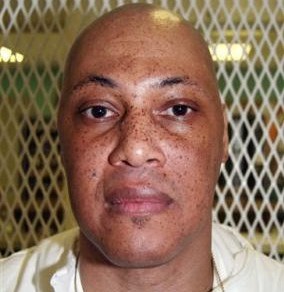 Frank Moore
Murderer · USA · 1994
Frank Moore became involved in a confrontation with Samuel Boyd and Patrick Cla…
2 victims
Frank Moore
Murderer · USA · 1994
Frank Moore became involved in a confrontation with Samuel Boyd and Patrick Cla…
2 victims
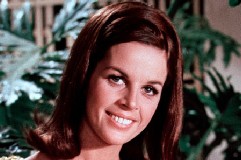 Claudine Longet
Homicide · USA · 1976
Claudine Georgette Longet (born 29 January 1942) was a French singer, actress,…
1 victim
Claudine Longet
Homicide · USA · 1976
Claudine Georgette Longet (born 29 January 1942) was a French singer, actress,…
1 victim
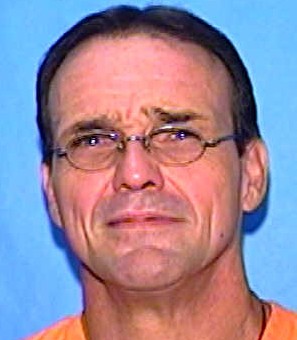 Michael Gordon Reynolds
Murderer · USA · 1998
Michael Gordon Reynolds had a prior dispute with Danny Ray Privett over a trail…
3 victims
Michael Gordon Reynolds
Murderer · USA · 1998
Michael Gordon Reynolds had a prior dispute with Danny Ray Privett over a trail…
3 victims
- Gender
- male
- Country
- USA
- Location
- New Jersey/Florida, USA
- Date of birth
- 1933
- Age at first offence
- 32
- Characteristics
- poisoner, parricide
- Victim profile
- His wife, Dr. Carmela Musetto, 32
- Method of murder
- Poisoning (anaesthetic succinylcholine chloride)
- Date(s) of murder
- August 28, 1965
- Years active
- 1965
- Date of arrest
- —
- Status
-
Released
Sentenced to life in prison on April 28, 1967; paroled in 1979
Case details
Carl Anthony Coppolino was a retired physician and an anesthesiologist.
Timeline
- July 30, 1963 — Marjorie Farber telephoned the Coppolinos in a state of panic; William Farber was unconscious in the bedroom, and Carmela Coppolino was sent to the house where she found Farber dead.
- 1963 — A 1963 death of William Farber arose during testimony in the New Jersey murder trial.
- April 1965 — The Coppolinos moved to Sarasota, Florida; Carmela Coppolino failed the state's medical examination and could not work as a doctor.
- April 3, 1967 — Coppolino's second trial in Naples, Florida opened before Justice Lynn Silvertooth.
- April 28, 1967 — The jury returned a guilty verdict for second-degree murder and Coppolino was sentenced to life imprisonment.
- 1979 — Coppolino was paroled.
Background
Carl Coppolino lived with his wife, Dr. Carmela Musetto, in New Jersey. He developed a romantic relationship with his neighbor, Marjorie Farber.
Coppolino's wife, Dr. Carmela Musetto, earned $16,000 a year as a physician in a research laboratory while the Coppolinos were living in New Jersey. Coppolino developed a heart condition, and the Coppolinos moved to Sarasota, Florida, in April 1965 because of it. Carmela Coppolino failed the state's medical examination after they moved and could not work as a doctor, leaving the family to live on Coppolino's $22,000-a-year disability insurance. The case described losses in real estate speculations amounting to $15,500 that year, and Coppolino's high-living tastes were characterized as not being sustainably met by the disability insurance.
After his wife's death, Coppolino married Mary Gibson six weeks after Carmela's death. Before the marriage, Coppolino dated Mary Gibson; Schaub portrayed Coppolino as needing money and eying Carmela's life insurance policy. Coppolino was also described as running short of cash while living in Florida.
The case also described Coppolino as refusing to consent to a divorce sought by him, and it described Carmela as a devout Italian Catholic.
The offence
Death of William Farber
The case described that on the evening of July 30, 1963, Marjorie Farber telephoned the Coppolinos in panic because William Farber was unconscious in the bedroom. Coppolino, wary of losing benefits if caught practicing, sent Carmela instead. Carmela found Farber dead and, at Coppolino's urging, signed the death certificate citing coronary thrombosis as the cause.
The case described no outward sign of distress to the body, including that Farber was “all blue down one side.”
In later testimony during the New Jersey murder trial, Marjorie Farber testified about being hypnotized and about events preceding and during the killing. She said she had a syringe filled with a deadly solution and instructions to inject Farber when he was asleep. She testified that at the last moment her nerve failed but that she injected a minute amount of the fluid into Farber's leg. She testified that when he became ill she summoned Coppolino, that he administered a sedative, and that Coppolino attempted to suffocate Farber by wrapping a plastic bag around his head. She testified that the two men struggled and that she begged Coppolino to stop, but instead Coppolino smothered Farber with a pillow.
The trial described that the prosecution alleged succinylcholine chloride and that there were toxicological and forensic findings relating to drug presence and injury patterns.
Death of Carmela Coppolino
The case described that Carmela Coppolino died at 6:00 A.M. on August 28, 1965. The prosecution theory in the second trial was that Coppolino injected Carmela with succinylcholine chloride.
The case described that Coppolino increased by $10,000 the $55,000 in life insurance policies covering Carmela only three weeks before her death. It also described that Carmela's death was initially wrongly ascribed to a heart attack because Coppolino persuaded a physician that she had suffered chest pains earlier. It further described that Coppolino claimed an autopsy had proved that a heart attack was the cause of death, while in fact no autopsy had been performed at the time.
A later account described Carmela's death as occurring in her sleep, followed by Carl marrying Mary Gibson five weeks later.
Investigation
New Jersey actions
The case described that New Jersey authorities exhumed Carmela's body.
In the New Jersey trial narrative, the autopsy revealed a needle puncture mark in the left buttock and a healthy heart, with no discernible cause of death.
Toxicological and forensic findings in Florida
The case described that dual charges of homicide were filed against Coppolino after autopsies were performed by Dr. Milton Helpern, New York's chief medical examiner.
The case described that Dr. Helpern found evidence of succinylcholine chloride in both bodies. It further described that Farber's cricoid cartilage in the larynx was fractured, indicating that he had been strangled. It described these findings as leading to the homicide charges.
In the Florida case, toxicological testimony was described as vital evidence. The prosecution's theory was that Coppolino injected his victims with succinylcholine, described as a curare-like drug.
The case included verbatim testimony and quotations from experts about the toxicological methods:
“worked on the tissues for a long time. [I]t was impossible by the methods of toxicologic analysis to find the original substance in the body, as succinylcholine is broken down within minutes to succinic acid and choline. Although these two compounds are normally present in dead tissue, they are there in such small quantities that ordinary techniques fail to detect them. Joe Umberger devised a method that would show up abnormally large amounts of the two substances but would not react with the minute quantities normally present. Using this technique, he eventually proved to his satisfaction that there was an abnormally high concentration of succinic acid in the organs of the body. He could not show that there was an excess in the left buttock itself, as he could not apply the technique to fatty tissue.”
Milton Helpern, Autopsy 30-31 (1977).
The case also included a quotation attributed to Dr. Bert LaDu:
“found a positive reaction for [a monocholine derivative of succinylcholine that is stable in fat] around the needle track and a less intense reaction in the surrounding fat of the buttock, fading out as the distance from the needle puncture increased.”
Id. at 32.
Frye-related appellate discussion
The case included verbatim appellate language about reliability and admissibility:
“In this case, unlike those involving lie detector tests or intoxication tests, there is a dearth of literature and specific case law to guide the trial and appellate courts. The trial court listened to the testimony of the expert witnesses and in an exercise of his discretion ruled that the tests in question were sufficiently reliable to justify their admission. On appeal it is incumbent for defendant to show that the trial judge abused his discretion. This the defendant has failed to do.”
223 So. 2d at 70-71.
The case also included an additional verbatim statement about this issue:
“This attempt to reconcile the admission of the toxicological tests with Frye is unconvincing, and the case is an extreme example of how courts in a Frye jurisdiction can overlook the general acceptance requirement when the evidence is too good to resist.”
Arrest
The case narrative described that after the Florida verdict, Coppolino was led from the courtroom to prison to start serving his sentence of life.
Trial
First trial (New Jersey)
The first trial occurred in Monmouth County, New Jersey, with dates December 5-15, 1966. It involved a charge of murdering William Farber.
- Chief Defense Lawyers: Joseph Afflitto, F. Lee Bailey, and Joseph Mattice
- Chief Prosecutors (first trial): Vincent Keuper
- Judges (first trial): Elvin R. Simmill
- Verdict (first trial): Not guilty
The case described that Bailey's defense strategy focused on discrediting Marjorie Farber so that Helpern's words would fall on deaf ears.
The case included verbatim statements by prosecutor Vincent Keuper:
“Thou shalt not covet thy neighbor's wife”
and “Thou shalt not covet thy neighbor's life.”
The case included verbatim statements by defense counsel F. Lee Bailey in his opening address:
“This woman drips with venom on the inside, and I hope before we are through you will see it drip on the outside. She wants this man so badly that she would sit on his lap in the electric chair while somebody pulled the switch, just to make sure that he dies. This is not a murder case at all. This is monumental and shameful proof that hell hath no fury like a woman scorned.”
The case described the prosecution witness as Marjorie Farber. It described that she testified about being under Coppolino's spell ever since Coppolino hypnotized her, and it described Bailey's cross-examination as brutal and at times belligerent.
The case included verbatim cross-examination lines attributed to Bailey:
“This whole story is a cock-and-bull story, isn't it?”
“Didn't you make this all up, Mrs. Farber?”
“Did you fabricate this story?”
The case described Bailey ridiculing Farber's claim and repeatedly reminding the jury of her age, including the phrasing:
“This 52-two year-old woman …”
The case described Milton Helpern as being called as a witness after Farber, and it described that the issues included whether William Farber had terminal heart disease and whether the cricoid fracture occurred before or after death.
The case described Bailey drawing from Helpern a grudging admission that there was no bruising about the neck as would normally have been present if strangulation had occurred, and Bailey speculating that rough handling during disinterment, including a clumsy grave-digger's shovel, had caused the cricoid fracture.
The case also described that Bailey called expert witnesses Dr. Joseph Spelman and Dr. Richard Ford, both experienced medical examiners, who expressed the view that the cricoid fracture was caused postmortem and that William Farber's heart showed clear signs of advanced coronary disease, certainly enough to have killed him.
Carl Anthony Coppolino testified during the first trial and was described as answering his accusers without noticeable guile.
Judge Elvin Simmill commented on the vast array of conflicting medical evidence and instructed the jury to be satisfied of Coppolino's guilt "beyond a reasonable doubt."
After deliberating for less than five hours, the jury returned a verdict of not guilty.
Second trial (Florida)
The second trial occurred in Naples, Florida before Justice Lynn Silvertooth, with dates April 3-28, 1967. It involved a charge that Coppolino murdered his own wife, Carmela Coppolino.
- Chief Defense Lawyers (second trial): F. Lee Bailey (and others listed)
- Chief Prosecutors (second trial): Frank Schaub
- Judges (second trial): Lynn Silvertooth
- Verdict (second trial): Guilty, second-degree homicide
The case described that on April 28, 1967, the jury found Coppolino guilty of second-degree murder and he was sentenced to life in prison.
The case described that Schaub recognized there was no direct evidence to link Carl Coppolino with Carmela's death and instead piled up inconsistencies and motives for murder that the defense couldn't counter. It described Schaub leaning heavily on money and portraying Coppolino as aiming to wed Mary Gibson for her fortune.
The case described Schaub's use of a quoted phrase about motive:
“There's your motive,”
The case described that Coppolino's reputation preceded him and that Milton Helpern received a far more favorable hearing than in the New Jersey trial.
The case described that Marjorie Farber testified to overhearing Coppolino on the phone after his wife's death and included the verbatim quote attributed to Coppolino:
“They have started the arterial work and that won't show anything.”
The case included a further clarification described in the narrative that this referred to the fluid used by embalmers to replace the blood.
The case described that Coppolino refused to testify on his own behalf. It also described Bailey as later calling the refusal "a terrible mistake," including the verbatim quoted characterization:
"a terrible mistake."
The case described the effect of the guilty verdict and the sentencing:
- Coppolino was led away to begin a life sentence at the state prison at Raiford, Florida.
- The case described that his conviction saved him from Death Row.
After the verdict, the case included Coppolino's verbatim statement:
“I just don't understand.”
Sentencing
Coppolino was sentenced to life in prison on April 28, 1967, after being found guilty of second-degree murder in Florida.
After serving 121/2 years, Coppolino was paroled in 1979.
Appeals
The case included citation and appellate procedural outcomes:
- State v. Coppolino 223 So.2d 68 (Fla. Dist. Ct. App. 1968), app. dismissed, 234 So.2d 120 (Fla. 1969)
- cert. denied, 399 U.S. 927 (1970)
Outcome
The Florida jury returned a verdict of guilty for second-degree murder, leading to a life sentence, followed by parole in 1979.
The New Jersey trial resulted in an acquittal.
Other details
Lawyers, prosecutors, and judges
In the case narrative, the following individuals were named in connection with the trials:
- First trial chief prosecutor: Vincent Keuper
- Second trial chief prosecutor: Frank Schaub
- First trial judge: Elvin R. Simmill
- Second trial judge: Lynn Silvertooth
- Defense counsel named across the trials: Joseph Afflitto, F. Lee Bailey, and Joseph Mattice
- Defense counsel in narrative: F. Lee Bailey
Significance and “love triangle” framing
The case narrative described that Coppolino held a unique position as the only person ever charged with two entirely separate “love triangle” murders. It stated that one case alone might have resulted in acquittal, but that the two came in quick succession.
The case also described that:
- In 1966, a conversation between two women in Florida sparked a contested debate in American legal history about whether Coppolino murdered his wife and his ex-lover's husband, or whether he was the victim of jealous revenge.
- Two trials in two states arrived at very different answers.
Comparisons to other homicide acquittals
The case described that Bailey gained fame for winning acquittals for Dr. Sam Sheppard and Coppolino in the earlier period. It also described that Bailey had an impressive string of 19 victories in homicide cases, and that with the conviction in the present matter he had a string of two well advertised losses, while noting that Bailey vowed to appeal the verdict.
Additional cross-examination and courtroom quotes
The case included a quote attributed to Bailey during summation of the evidentiary debate:
“Are these experiments good enough for a jury to make a decision which can strike this defendant from the face of the earth?”
The case also included a description that Bailey vowed to appeal the verdict, and it described a stunned Coppolino led from the courtroom to prison.
Other named individuals
The case narrative named additional people:
- Dr. Juliette Karow, who was awakened by a phone call and signed the death certificate.
- Dr. Milton Helpern, who conducted autopsies and testified.
- Toxicologist Charles Joseph Umberger, who worked on the tissues and devised a method.
- Dr. Carmela's father, whom Schaub called to relate how Coppolino claimed an autopsy had proved the cause of death.
- Carmela Coppolino's former mistress was not described; rather, Marjorie Farber was described as Coppolino's former mistress.
- Dr. Bert LaDu, a pharmacologist on the NYU medical faculty.
- Doctors Joseph Spelman and Richard Ford, who were experienced medical examiners.
- Prosecutors and defense lawyers already listed above.
- Joseph Umberger is referred to as “Joe Umberger” in one quoted passage.
Marriage and relationship details
The case described:
- Coppolino's affair with Marjorie Farber began with a hypnotic influence described during testimony.
- The Coppolinos were described as living in New Jersey before moving to Sarasota.
- Coppolino married Mary Gibson six weeks after Carmela's death.
Exhumation and autopsy actions
The case described that both New Jersey and Florida ordered exhumations. It described that the autopsies were performed by Dr. Milton Helpern and that evidence of succinylcholine chloride was found in both bodies. It also described that Farber's cricoid cartilage was fractured, indicating strangulation.
Medical examination and disability and finances
The case described:
- Carmela failed the Florida medical examination and could not work as a doctor.
- Coppolino's disability insurance was $22,000 a year.
- Carmela earned $16,000 a year as a physician in a research laboratory while in New Jersey.
- Coppolino's finances were described as deteriorating, with losses in real estate speculations amounting to $15,500 that year.
- Coppolino increased by $10,000 the $55,000 in life insurance policies covering Carmela only three weeks before her death. It also described Coppolino had been running short of cash.
Family and age details included in the narrative
The case described:
- Coppolino as 34 at the time of the Florida verdict.
- Carmela Coppolino's death occurring at the age of 32.
- Marjorie Farber as 53.
- Mary Gibson as 39.
- William Farber as retired Army Colonel William Farber.
Crime charges and verdict descriptors in the case record narrative
The New Jersey trial involved murder of William Farber and ended with a verdict of not guilty. The Florida trial ended with a verdict of guilty of second-degree murder.
Spotted an error, or have more information about this case?