
Michael Apelt
Murderer Brian Kevin Rosenfeld
Murderer · USA · 1985
Brian Kevin Rosenfeld Brian Kevin Rosenfeld was sentenced to three concurrent l…
23 victims
Brian Kevin Rosenfeld
Murderer · USA · 1985
Brian Kevin Rosenfeld Brian Kevin Rosenfeld was sentenced to three concurrent l…
23 victims
 Yahweh ben Yahweh
Murderer · USA · 1980
Yahweh ben Yahweh was born and legally named Hulon Mitchell Jr. (October 27, 19…
23 victims
Yahweh ben Yahweh
Murderer · USA · 1980
Yahweh ben Yahweh was born and legally named Hulon Mitchell Jr. (October 27, 19…
23 victims
 Russell Ellwood
Murderer · USA · 1991
Russell Ellwood was a former taxi driver. Authorities suspected him of killing…
20 victims
Russell Ellwood
Murderer · USA · 1991
Russell Ellwood was a former taxi driver. Authorities suspected him of killing…
20 victims
 Robert Martines Perez
Murderer · USA · 1994
Name: Robert Martines Perez · Other name used in proceedings: Robert Martinez P…
15 victims
Robert Martines Perez
Murderer · USA · 1994
Name: Robert Martines Perez · Other name used in proceedings: Robert Martinez P…
15 victims
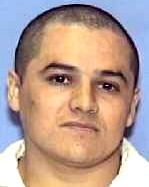 Felix Rocha Estrada
Murderer · USA · 1997
Felix Rocha Estrada was a Hispanic male with hair color not recorded, and he wa…
1 victim
Felix Rocha Estrada
Murderer · USA · 1997
Felix Rocha Estrada was a Hispanic male with hair color not recorded, and he wa…
1 victim
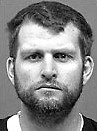 Keith Jesperson
Serial killer · USA · 1990
Name: Keith Jesperson · Also known as: “Happy Face Killer” · Born: April 6, 195…
8 victims
Keith Jesperson
Serial killer · USA · 1990
Name: Keith Jesperson · Also known as: “Happy Face Killer” · Born: April 6, 195…
8 victims
 Gaile Owens
Murderer · USA · 1985
Gaile Kirksey Owens was convicted of accessory before the fact to wit: murder i…
1 victim
Gaile Owens
Murderer · USA · 1985
Gaile Kirksey Owens was convicted of accessory before the fact to wit: murder i…
1 victim
 Christian Oliver
Murderer · USA · 1998
Christian Oliver was a male prison inmate executed by lethal injection in Texas…
1 victim
Christian Oliver
Murderer · USA · 1998
Christian Oliver was a male prison inmate executed by lethal injection in Texas…
1 victim
 Gary Black
Murderer · USA · 1998
Gary W. Black was convicted of first-degree murder and sentenced to death in 19…
1 victim
Gary Black
Murderer · USA · 1998
Gary W. Black was convicted of first-degree murder and sentenced to death in 19…
1 victim
 Robert Newland
Murderer · USA · 1986
Robert Newland (male) was convicted and sentenced to death in Georgia for the k…
1 victim
Robert Newland
Murderer · USA · 1986
Robert Newland (male) was convicted and sentenced to death in Georgia for the k…
1 victim
- Gender
- male
- Country
- USA
- Location
- Pinal County, Arizona, USA
- Date of birth
- August 1, 1963
- Age at first offence
- 25
- Characteristics
- parricide
- Victim profile
- Cynthia Monkman, 30 (his wife)
- Method of murder
- St abbing with knife
- Date(s) of murder
- December 23, 1988
- Years active
- 1988
- Date of arrest
- —
- Status
-
Sentenced to death
Sentenced to death on August 10, 1990
Background
Michael Apelt and his brother, Rudi, came to Arizona from West Germany and began “courting” numerous women. Michael eventually met Cynthia Monkman and married her in October 1988. Michael applied for $400,000 in life insurance on Cynthia one month after they married.
The offence
The policies became effective on December 22, 1988. On the night of December 23, Michael and Rudi took Cynthia into the desert near Apache Junction and killed her by stabbing her numerous times in the chest and back and cutting her throat. Michael and Rudi returned to Mesa. In the early morning hours of December 24, Michael called the police and reported that Cynthia had disappeared. A citizen found the body in the desert later that day.
Investigation
A citizen found Cynthia’s body in the desert later on December 24 after Michael called the police earlier that day and reported that Cynthia had disappeared.
Trial
Michael Apelt’s case was before Presiding Judge Robert R. Bean, with Prosecutor Catherine Hughes.
The trial started on April 18, 1990. The verdict was reached on May 11, 1990.
Rudi Apelt was tried separately. Rudi was convicted of first degree murder and sentenced to death.
Sentencing
Michael Apelt was sentenced on August 10, 1990.
The aggravating circumstances were: Procured commission of the offense; Pecuniary gain; Especially heinous/cruel/depraved. The mitigating circumstances were: None sufficient to call for leniency.
Appeals
PUBLISHED OPINIONS: State v. Apelt (Michael), 176 Ariz. 349, 861 P.2d 634 (1993). The later outcome referenced was that the Arizona Supreme Court overturned a ruling that “none of Apelt’s actions after turning 18 counts as evidence.”
Outcome
Michael Apelt was sentenced to death on August 10, 1990.
Aftermath
A New Times article by Sarah Fenske discussed the case and stated: “A con man may be smart enough to escape death row by pretending he’s mentally retarded. Are we dumb enough to buy it?”
The article also included multiple statements about later proceedings involving a hearing in “next week’s” timeframe, in which Michael Apelt claimed that he was mentally retarded, and referenced that “the judge who heard his case in 1990 is dead.” It stated that Maricopa County Superior Court Judge Silvia Arrellano replaced the judge and that Arrellano had earned a reputation for being sympathetic to the defense. The article also described that Arrellano “has already made several rulings” and referenced that one “bizarre decision” was overturned by the Arizona Supreme Court.
The article quoted or attributed statements and descriptions involving:
- Kathy Monkman, who was described as Cindy’s older sister and as a witness who would testify about what she saw.
- Cathy Hughes, described as a 40-year-old Pinal County prosecutor when she secured convictions against the Apelt brothers, and as having come out of retirement to volunteer her time.
The article provided an IQ-related discussion, including that “When Apelt was 8 years old, he took an IQ test and scored an 88,” and that “Only after the U.S. Supreme Court ruled in 2002 that it was unconstitutional to execute people with mental retardation did Michael Apelt score a 65.” It also stated that Kent Cattani, who “runs the capital crimes unit for Arizona Attorney General Terry Goddard,” said that “more than a dozen death row inmates in Arizona have petitioned to be declared retarded since the court's 2002 ruling,” and that “IQ scores can swing wildly.” The article described advocates’ “two prongs” as low IQ and an inability to adapt successfully to life.
Other details
- Michael Apelt was described as arriving in the United States from his native Germany in 1988, and as being 25.
- The New Times article described his insurance scheme and later communications, including references to “letters he’s written in fluent English to prison officials,” and complaints including “his mail being opened, his need for a typewriter, and even the prison's ‘sandy, unwashed, filthy and rotten breakfast potatoes.’”
- The article stated that Michael Apelt attended a school for students with learning disabilities in Germany and “wasn't particularly successful, even there.”
- The article referred to Maricopa County Superior Court Judge Silvia Arrellano and the Arizona Supreme Court overturning the ruling about actions after turning 18 not counting as evidence.


Spotted an error, or have more information about this case?