Lonnie Davis
Murderer Russell Ellwood
Murderer · USA · 1991
Russell Ellwood was a former taxi driver. Authorities suspected him of killing…
20 victims
Russell Ellwood
Murderer · USA · 1991
Russell Ellwood was a former taxi driver. Authorities suspected him of killing…
20 victims
 Robert Martines Perez
Murderer · USA · 1994
Name: Robert Martines Perez · Other name used in proceedings: Robert Martinez P…
15 victims
Robert Martines Perez
Murderer · USA · 1994
Name: Robert Martines Perez · Other name used in proceedings: Robert Martinez P…
15 victims
 Billy Frank Vickers
Murderer · USA · 1993
Billy Frank Vickers Vickers was executed by lethal injection in Texas on Januar…
14 victims
Billy Frank Vickers
Murderer · USA · 1993
Billy Frank Vickers Vickers was executed by lethal injection in Texas on Januar…
14 victims
 Javier Cruz
Murderer · USA · 1991
Javier Cruz was convicted of capital murder in October 1992 for strangling Loui…
2 victims
Javier Cruz
Murderer · USA · 1991
Javier Cruz was convicted of capital murder in October 1992 for strangling Loui…
2 victims
 Larry Hatten
Murderer · USA · 1995
Larry Hatten, 34, was condemned for fatally shooting a 5-year-old boy nearly 14…
1 victim
Larry Hatten
Murderer · USA · 1995
Larry Hatten, 34, was condemned for fatally shooting a 5-year-old boy nearly 14…
1 victim
 Darius Kimbrough
Murderer · USA · 1991
Defendant: Darius Mark Kimbrough DC#: 374123 Date of birth: 12/04/72 Age at the…
1 victim
Darius Kimbrough
Murderer · USA · 1991
Defendant: Darius Mark Kimbrough DC#: 374123 Date of birth: 12/04/72 Age at the…
1 victim
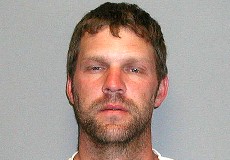 Edward Davidson
Murderer · USA · 2008
Edward Davidson “Fast Eddie”, “the Spam King” Edward “Eddie” Davidson (July 29,…
2 victims
Edward Davidson
Murderer · USA · 2008
Edward Davidson “Fast Eddie”, “the Spam King” Edward “Eddie” Davidson (July 29,…
2 victims
- Gender
- male
- Country
- USA
- Location
- Seattle, Washington, USA
- Date of birth
- 1977
- Age at first offence
- 22
- Characteristics
- parricide, crime spree
- Victim profile
- His mother, Sheila Lindsey, 46, his sister's son, Kahari Prince, 18 months, and Erma Spence, 63
- Method of murder
- St abbing with knife / Beating with a garden tool
- Date(s) of murder
- May 26, 1999
- Years active
- 1999
- Date of arrest
- —
- Status
-
Died in custody
Killed by a police sniper the same day; inquest jury decided the sniper shot was justified
Case information
- Defendant: Lonnie Davis Jr.
- Victims: Lonnie Davis Jr.’s mother and toddler nephew; a motorcyclist; three women
- Age (defendant): 21-year-old
- Location (incident): Brier and Shoreline neighborhood on Seventh Avenue Northeast, in King County
Timeline
- Friday morning (May 1999) — Lonnie Davis Jr. stabbed to death his mother, Sheila Lindsey (46), and his sister’s son, Kahari Prince (18 months).
- Friday (May 1999), about 1:30 p.m. — Lonnie Davis Jr. drove his mother’s black Honda station wagon and swerved into a motorcycle on Interstate 5 in Shoreline; motorcyclist Anthony Venegas (64) had his leg amputated below the knee.
- Friday (May 1999) — Lonnie Davis Jr. fled on foot into a nearby neighborhood.
- Soon after (Friday, May 1999) — Lonnie Davis Jr. beat one woman to death; Erma Spence (63) was found in her yard in a pool of blood and pronounced dead at a local hospital.
- attacked Irene Hilton (82) in her yard, hitting her with an object and breaking her neck; she was critically injured.
- took refuge in a house containing eight guns and hundreds of rounds of ammunition and fired on police for several hours, wounding one officer in the head.
- Saturday (May 28, 1999) — A sniper with the King County Sheriff’s Office shot and killed Lonnie Davis Jr. after a standoff; the inquest was held in Shoreline District Court.
- Tuesday, September 21, 1999 — A jury decided the sniper shot was justified.
Background
Lonnie Davis Jr. was shot and killed by a police sniper in a northern suburb of Seattle, after a standoff with police. The jury decided that the sniper shot was justified.
In the King County inquest process for police shootings, juries reviewed whether law enforcement actions were proper and provided a public airing. The jury’s decision was unanimous and was to be forwarded to King County prosecutors, who then had to decide whether charges should be filed in connection with the police shooting.
Lonnie Davis Sr., the dead man’s father, attended parts of the inquest and expressed frustration over the proceedings and the testimony of law enforcement officials. He said he doubted that the son he knew could have done what authorities described.
Police believed Lonnie Davis Jr.’s violent rampage began in Brier, where he allegedly stabbed to death his mother and toddler nephew. Police then believed he took a car and fled south on Interstate 5 and ran into a motorcyclist. He then ran into a Shoreline neighborhood on Seventh Avenue Northeast, where he attacked multiple people and then took refuge in a heavily armed house.
The offence
Police believed Lonnie Davis Jr. committed multiple attacks during a deadly rampage:
- He stabbed to death his mother, Sheila Lindsey (46), and his sister’s son, Kahari Prince (18 months) with a three-inch paring knife.
- He drove and swerved into motorcyclist Anthony Venegas (64) on Interstate 5 in Shoreline, and Venegas had his leg amputated below the knee.
- In a Shoreline neighborhood, within minutes, he beat Erma Spence (63) to death.
- He attacked Irene Hilton (82) in her yard by hitting her with an object described as not yet known what he used, breaking her neck, and critically injuring her.
- He fired on police for several hours from a house containing eight guns and hundreds of rounds of ammunition.
- Police said Deputy Diana Russell was hit in the head by flying glass and a ricocheting bullet.
Jurors wondered what sparked the attack and noted that the only time Lonnie Davis Jr. communicated with police was when he emerged from the house to shoot at two SWAT officers.
Investigation and police response
Authorization and marksmen
More than an hour before the fatal shot, top officials gave authorization for a “marksman's resolution,” meaning the marksmen deployed could shoot Lonnie Davis Jr. if he still presented a deadly threat. The marksmen were trained to aim for the head.
Negotiations and tear gas
Police negotiators phoned the home where Lonnie Davis Jr. was, but he never picked up the receiver. Negotiators left messages for Lonnie Davis Jr. on an answering machine.
Officers planned to use tear gas earlier, but neighborhood evacuation delayed that plan. The SWAT team fired tear gas only after Lonnie Davis Jr. was shot. Officers fired three rounds of tear gas into the home, at 15 minute intervals, to make sure he was down.
Jurors questioned police tactics and wondered whether better efforts could have been made to negotiate the gunman’s surrender and whether tear gas should have been fired into the heavily armed house. Prasad described jury deliberations as involving going “around and around on that” regarding what could have been done to get Davis to surrender.
Jurors also speculated that Lonnie Davis Jr. may have been watching the incident on live television and wondered whether police should have tried to communicate through that medium.
Shooting sequence and fatal shot
The only time Lonnie Davis Jr. One officer reported hearing Davis swear at police.
A short time later, Davis appeared in an open window with a .45-caliber pistol in his hand. From the back room of a nearby home, Deputy Don Ellis took his shot. The bullet hit Davis in the face, and Davis died within seconds.
Named officials and participants
- Deputy Don Ellis — SWAT team marksman who took the fatal shot; Ellis had never been involved in a police shooting in more than eight years.
- Jury foreman Ram C. Prasad
- Shoreline Police Chief Sue Rahr — Prasad thanked her for “protecting the community.”
- Juror Louis Peterman
- King County Sheriff Dave Reichert — described officers’ response and asserted the sniper’s shot was meant to kill and that it was the right thing to do.
- Brier Police Chief Gary Minor
- Attorney Michael Jacobson — said Lonnie Davis’s family might file a lawsuit, but that decision had not been made.
- Deputy Diana Russell — reported hit in the head by flying glass and a ricocheting bullet.
Trial (inquest) and jury decision
The inquest was held in Shoreline District Court, where nothing was presented or said to answer why Davis snapped that day. The jury heard a week of testimony.
The jury’s decision was unanimous, with jurors finding little fault with what Deputy Don Ellis did. Prasad stated:
“Don Ellis was trained to do a certain thing. And he did what he was trained to do,”
After the decision, Ellis said:
“I'm glad it's over,”
Ellis also said:
“It's unfortunate these events have to occur.”
Prasad said the deliberations lasted more than three hours and included these comments:
“What could have been done to get Mr. Davis to surrender? We went around and around on that,”
Prasad said:
“protecting the community.”
Prasad described jurors’ questioning of whether better negotiation was possible and whether tear gas should have been used earlier, but noted deliberations about what could have been done to get surrender.
Juror Louis Peterman said:
“This was a really violent incident,” “What happened?”
Rahr spoke with jurors after the decision.
Sentencing
No sentencing occurred because this was an inquest into a police shooting.
Appeals
No appeals were described.
Outcome
A jury decided that a sniper with the King County Sheriff’s Office was justified when he shot and killed Lonnie Davis Jr., ending a deadly crime spree. The jury’s decision was to be forwarded to King County prosecutors to decide whether charges should be filed in the police shooting.
Aftermath
Lonnie Davis Sr. expressed frustration over the inquest proceedings and the testimony of law enforcement officials. The family of Lonnie Davis Jr. could file a lawsuit; attorney Michael Jacobson said no decision had been made at that time.
King County had been using inquests after police shootings since the mid-1980s, and juries typically sided with officers. The Davis case was described as unusual because of the marksman’s resolution authorization being given more than an hour before the fatal shot.
Other details
- Multiple people were described as dead or critically injured during the rampage.
- Police described the incident as involving a “violent rampage” and “deadly crime spree.”
- Police described Lonnie Davis Jr. as having some brushes with the law, and family members described him as “sweet.”
- Brier Police Chief Gary Minor said:
“I don't think we're ever going to know what set him off. At this point, we don't have a clue,” “We don't know that he had a history of any mental problems.”
- The vehicle involved was described as Lonnie Davis Jr.’s mother’s black Honda station wagon.
- The car and motorcycle collision was described as violent, and papers described the car as being “torn in half and burned.”
- A resident called 911 when Erma Spence was heard screaming for help; Spence was found lying in her yard with what looked like a broken posthole digger near her body.
- Deputy Diana Russell was reported in serious condition that Saturday night.
Spotted an error, or have more information about this case?