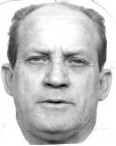
Billy Frank Vickers
Murderer Brian Kevin Rosenfeld
Murderer · USA · 1985
Brian Kevin Rosenfeld Brian Kevin Rosenfeld was sentenced to three concurrent l…
23 victims
Brian Kevin Rosenfeld
Murderer · USA · 1985
Brian Kevin Rosenfeld Brian Kevin Rosenfeld was sentenced to three concurrent l…
23 victims
 Russell Ellwood
Murderer · USA · 1991
Russell Ellwood was a former taxi driver. Authorities suspected him of killing…
20 victims
Russell Ellwood
Murderer · USA · 1991
Russell Ellwood was a former taxi driver. Authorities suspected him of killing…
20 victims
 Robert Martines Perez
Murderer · USA · 1994
Name: Robert Martines Perez · Other name used in proceedings: Robert Martinez P…
15 victims
Robert Martines Perez
Murderer · USA · 1994
Name: Robert Martines Perez · Other name used in proceedings: Robert Martinez P…
15 victims
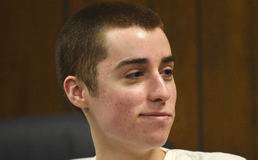 Thomas Lane
Homicide · USA · 2012
Thomas Michael “T. J.” Lane III was a 17-year-old juvenile when he shot student…
3 victims
Thomas Lane
Homicide · USA · 2012
Thomas Michael “T. J.” Lane III was a 17-year-old juvenile when he shot student…
3 victims
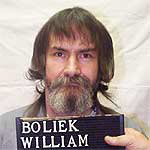 William Boliek
Murderer · USA · 1983
In August 1983, William T. Boliek lived in Linda Turner’s home. Other residents…
1 victim
William Boliek
Murderer · USA · 1983
In August 1983, William T. Boliek lived in Linda Turner’s home. Other residents…
1 victim
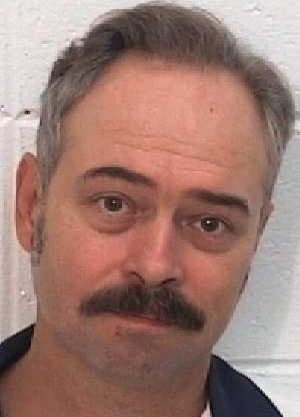 William Mark Mize
Murderer · USA · 1994
Name: William Mark Mize · Known aliases: Hattrup; Samuel Jr · Gender: Male · Ra…
1 victim
William Mark Mize
Murderer · USA · 1994
Name: William Mark Mize · Known aliases: Hattrup; Samuel Jr · Gender: Male · Ra…
1 victim
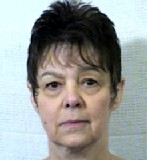 Mary Ellen Samuels
Murderer · USA · 1988
Mary Ellen Samuels was convicted of arranging the murders of her husband, Rober…
2 victims
Mary Ellen Samuels
Murderer · USA · 1988
Mary Ellen Samuels was convicted of arranging the murders of her husband, Rober…
2 victims
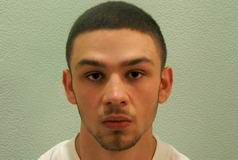 Jake Fahri
Murderer · United Kingdom · 2008
Jake Fahri was convicted in March 2009 of the murder of Jimmy Mizen. Jimmy Mize…
1 victim
Jake Fahri
Murderer · United Kingdom · 2008
Jake Fahri was convicted in March 2009 of the murder of Jimmy Mizen. Jimmy Mize…
1 victim
- Gender
- male
- Country
- USA
- Location
- Lamar County, Texas, USA
- Date of birth
- J uly 30, 1945
- Age at first offence
- 48
- Characteristics
- attempt to collect insurance money, motive unclear, torture
- Victim profile
- Phillip Kinslow, 50 - ???
- Method of murder
- Shooting ( .38 caliber handgun)
- Date(s) of murder
- ???? - 1993
- Years active
- 1993
- Date of arrest
- March 13, 1993
- Status
-
Executed
Executed by lethal injection in Texas on January 28, 2004
Case identification
Billy Frank Vickers
Status / outcome
Vickers was executed by lethal injection in Texas on January 28, 2004.
Timeline
- March 12, 1993 — Phillip Kinslow was fatally shot during an attempted robbery in Arthur City, Texas.
- Aug. 18, 1993 — A grand jury indicted Vickers in the 6th Judicial District Court of Lamar County, Texas, for the capital offense of murdering Phillip Kinslow while in the course of committing or attempting to commit the offense of robbery.
- Oct. 8, 1993 — A jury found Vickers guilty of capital murder.
- Oct. 13, 1993 — Following a separate punishment hearing, the court assessed a sentence of death.
- Dec. 18, 1996 — Vickers' conviction and sentence were affirmed by Texas Court of Criminal Appeals in an unpublished opinion.
- Oct. 14, 1997 — The United States Supreme Court denied certiorari review.
- Jan. 22, 1998 — Vickers filed an application for writ of habeas corpus in the state trial court.
- Oct. 7, 1998 — The Court of Criminal Appeals denied habeas relief.
- Mar. 10, 1999 — Vickers filed second application for habeas writ in Court of Criminal Appeals.
- June 9, 1999 — The Court of Criminal Appeals dismissed the second state habeas application.
- July 14, 1999 — Vickers filed a petition for writ of habeas corpus in the U.S. District Court.
- Mar. 20, 2001 — The federal district court denied habeas relief.
- July 8, 2003 — The Fifth Circuit denied permission to appeal.
- Aug. 19, 2003 — The trial court entered an order setting the execution date for Dec. 9, 2003.
- Oct. 6, 2003 — Vickers petitioned the United States Supreme Court for certiorari review.
- Dec. 8, 2003 — Vickers and two other inmates filed suit in federal court challenging the use of one of the drugs used to execute prisoners in Texas; a Houston federal judge dismissed the suit the day it was filed.
- Dec. 9, 2003 — The U.S. Supreme Court denied Vicker's petition for a writ of certiorari.
- Dec. 9, 2003 — The Fifth Circuit Court of Appeals rejected the appeal by Vickers and two other inmates.
- Dec. 10, 2003 — The Fifth Circuit Court of Appeals declined request for suit to be considered by full court.
- Dec. 9, 2003 — Vickers' execution date of Dec. 9, 2003 arrived; the execution warrant expired at midnight after a scheduled appeal was not resolved by midnight, and Vickers was returned to death row.
- Jan. 28, 2004 — Vickers was executed by lethal injection in Texas; he was pronounced dead at 6:21 p.m. after the lethal dose began at 6:15 p.m.
The offence
Phillip Kinslow ran a small combination gas station/grocery store in Arthur City, Texas. Kinslow brought home the day's receipts in a satchel-type bag after closing for the evening and openly carried a loaded revolver for protection while transporting large sums of money between his store and his rural, Lamar County home.
On the evening of March 12, 1993, as Kinslow's wife Dania awaited his arrival, she heard what sounded like “rapid gun fire” coming from the area in front of her home. She watched as Kinslow drove his truck toward the house, veered off the road, and crashed into a tree. Kinslow's family found him slumped in the seat with a fatal gunshot wound to his chest. Inside the truck, the family found Kinslow's money bag and Kinslow's handgun, which had recently been fired and contained six spent .38 caliber shells.
Medical findings reported in the advisory included that Kinslow had been shot once in his chest and twice in his right arm, and a .22 caliber bullet lodged in Kinslow's spine was recovered during the autopsy. Another .22 caliber bullet recovered from Kinslow's spinal column was identified as a .22 caliber. A bullet that had lodged in Kinslow's spine was recovered during the autopsy, and a medical examiner confirmed Kinslow died of a gunshot wound to the chest, with the bullet traveling through his right lung and spinal cord.
The attempted robbery involved three men: Vickers, Jason Martin, and Tommy Perkins. Jason Martin testified pursuant to a plea agreement that he, Vickers, and Perkins decided to rob Kinslow, and that the men went to Kinslow's store on at least four occasions in preparation for the robbery. Martin testified that during preparation they watched from across the street as the store closed, noted the times the lights were turned off and Kinslow left for home, and on at least one occasion followed Kinslow home to discover where he lived. Martin testified that Martin drove Vickers and Perkins back to Kinslow's house on at least two occasions to look around and that they discovered two locked gates leading up to the house, which Perkins suggested provided a good place to ambush Kinslow.
On the day of the murder, Martin testified that he observed Vickers with a .22 caliber pistol and Perkins with a .38 caliber pistol. Martin testified that Vickers and Perkins collected toboggans, duct tape, and a police scanner, and the men left for Kinslow's property. The plan was for Martin to drive the getaway car while Vickers and Perkins would rush Kinslow at the gate, tie him up, and drive Kinslow's truck to a vacant lot where Martin would be waiting.
Martin testified that as Martin waited in his truck for Vickers and Perkins to return, he heard a gunshot; Martin spent the rest of the evening driving around the area but never saw either Vickers or Perkins. Around 8 o'clock the next morning, Perkins went to Martin's house and told him Vickers had been shot, and that Perkins explained that he and Vickers had waited for Kinslow and when Kinslow got out of his pickup, Perkins saw that Kinslow had a gun. Perkins then described that Vickers rushed Kinslow and both Vickers and Kinslow fired shots. Perkins told Martin that Perkins attempted to help Vickers out of the area, but Vickers had been shot in the knee and could not move quickly. Martin testified that Vickers then told Perkins to go find Martin and bring the truck back for him.
A statement by Perkins to Perkins's girlfriend, Latricia Dangerfield, was included in the advisory. Dangerfield testified that Perkins told her that he and Vickers “went out to rob this guy and it didn't go the way it was supposed to,” and that Perkins told her the man had a gun when he went to open the gate. Dangerfield testified that Perkins told her that Vickers asked Kinslow “did he want to die,” and that Kinslow asked Vickers the same question, whereupon both men started shooting. Dangerfield testified that Perkins told her Kinslow jumped in his truck and drove off and that Vickers and Perkins ran away.
Investigation
Approximately twenty-two hours after the shooting, police received a report of a suspicious person about two miles from the Kinslow residence. Officers found Vickers walking with the help of makeshift crutches constructed out of tree branches because Vickers had been shot twice in his left leg. A bullet recovered from Vickers' knee was confirmed to have been fired from Kinslow's .38 caliber handgun.
Investigators discovered a shoe print near Kinslows' gate that was made by the same size, brand, and style of shoe that Vickers was wearing when he was found. Police also located a toboggan hat and a roll of duct tape in a nearby wooded area. The hat contained hairs consistent with those collected from Vickers' head.
When police searched Vickers' home, investigators located several .22 caliber, long rifle, hollow point shells that were of the same sort as the bullet that killed Phillip Kinslow.
Arrest / custody
Vickers was found walking about two miles from the Kinslow residence and was shot twice in his left leg.
Trial
Vickers was charged by indictment under Tex. Penal Code Ann. § 19.03(a)(2) for the capital offense of murdering Phillip Kinslow while in the course of committing or attempting to commit the offense of robbery.
At the guilt/innocence phase, the jury found Vickers guilty as charged. At the sentencing phase, the jury answered two special issues affirmatively: that there was a probability that Vickers would constitute a continuing threat to society, and that Vickers caused Kinslow's death, intended to kill Kinslow, or anticipated the loss of a human life. The trial court imposed a sentence of death after the jury did not find sufficient mitigating circumstances to warrant a sentence of life imprisonment.
Sentencing
Following a separate punishment hearing on Oct. 13, 1993, the court assessed a sentence of death.
Appeals / post-conviction
Vickers's conviction and sentence were affirmed by the Texas Court of Criminal Appeals in an unpublished opinion on Dec. 18, 1996. On Oct. 14, 1997, the United States Supreme Court denied certiorari review.
Vickers filed an application for writ of habeas corpus in the state trial court on Jan. 22, 1998, and the Court of Criminal Appeals denied habeas relief on Oct. 7, 1998. Vickers filed a second application for habeas writ in the Court of Criminal Appeals on Mar. 10, 1999, and the Court of Criminal Appeals dismissed the second state habeas application on June 9, 1999.
Vickers filed a petition for writ of habeas corpus in the U.S. District Court on July 14, 1999, and the federal district court denied habeas relief on Mar. 20, 2001. On July 8, 2003, the Fifth Circuit denied permission to appeal.
Vickers petitioned the United States Supreme Court for certiorari review on Oct. 6, 2003, and a Houston federal judge dismissed a suit filed Dec. 8, 2003 on the day it was filed. Vickers appealed to the Fifth Circuit, which rejected the appeal on Dec. 9, 2003. The Fifth Circuit declined request for full-court consideration on Dec. 10, 2003. The U.S. Supreme Court denied Vicker's petition for a writ of certiorari on Dec. 9, 2003.
In Vickers v. Cockrell, 72 Fed. Appx. 40 (5th Cir. 2003) (Habeas), the Court of Appeals held that there was sufficient evidence that petitioner personally shot and killed victim in the course of an armed robbery to support conviction; that to establish a miscarriage of justice, petitioner had to show he was actually rather than legally innocent; and that petitioner's failure to present his ineffective-assistance of appellate counsel claim to the state courts precluded him from establishing that his procedural default should be excused through cause and prejudice. The application was denied.
Other convicted participants / outcomes
Jason Martin, an accomplice and the getaway driver, testified pursuant to a plea agreement. Perkins was sentenced to Life in prison for capital murder. Martin received a 25 year sentence for robbery.
Tommy Perkins was sentenced to life in prison for capital murder. Jason Martin was sentenced to 25 years for robbery.
Latricia Dangerfield testified at trial as Perkins's girlfriend.
Execution / final statements
The lethal dose began at 6:15 p.m. and Vickers was pronounced dead at 6:21 p.m. after he was strapped to a gurney in the Texas death chamber.
Vickers made final remarks, including the following quoted statement:
Vickers tried to exonerate two accomplices to his crime, an inmate imprisoned for a separate killing and even Texas millionaire Cullen Davis, who was tried for the murder of his wife and acquitted in a notorious 1970s case.
Vickers said he or someone else committed the crimes for which they were accused or convicted. "Yes. I would just like to say to my family that I am sorry for all the grief I have caused. I love you all. Tell Mama and the kids I love you; I love all of you. And I would like to clear some things up if I could. Tommy Perkins, the man that got a capital life sentence for murdering Kinslow -- he did not do it. I did it. He would not even have had anything to do with it if he had known I was going to shoot the man. He would not have gone with me if he had known. I was paid to shoot the man. And Martin, the younger boy, did not know what it was about. He thought it was just a robbery. I am sorry for that. It was nothing personal. I was trying to make a living. A boy on Eastham doing a life sentence for killing Jamie Kent - I did not do it, but I was with his daddy when it was done. I was there with him and down through the years there were several more that I had done or had a part of. And I am sorry and I am not sure how many - there must be a dozen or 14 I believe all total. One I would like to clear up is Cullen Davis - where he was charged with shooting his wife. And all of these it was never nothing personal. It was just something I did to make a living. I am sorry for all the grief I have caused. I love you all. That is all I have to say."
Final meal was recorded as a four-egg omelet with cheese and onions, a bowl of chili, four slices of fried bologna, four pieces of toast, four slices of cheese, fried potatoes with a bowl of gravy, sliced tomato, hot coffee and black walnut or vanilla ice cream.
Other details
Vickers was previously convicted of burglary, being a felon in possession of burglary tools, and burglary with intent to commit theft in Hunt County. Vickers also had a federal conviction for being a felon in possession of a firearm. Further, Vickers was convicted of arson and conspiracy to commit arson in Lamar County.
Vickers was previously scheduled for execution on Dec. 9, 2003; the execution warrant expired at midnight when the scheduled execution was not carried out by that time after a legal challenge was not resolved by midnight, and Vickers was returned to death row.
Vickers tried to exonerate two accomplices to his crime and referenced:
- an inmate imprisoned for a separate killing,
- Texas millionaire Cullen Davis, who was tried for the murder of his wife and acquitted in a notorious 1970s case. Vickers also referenced a person “on Eastham” doing a life sentence for killing Jamie Kent.
Spotted an error, or have more information about this case?