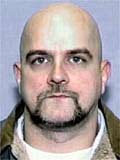
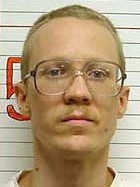
Fred Kornahrens
Murderer Brian Kevin Rosenfeld
Murderer · USA · 1985
Brian Kevin Rosenfeld Brian Kevin Rosenfeld was sentenced to three concurrent l…
23 victims
Brian Kevin Rosenfeld
Murderer · USA · 1985
Brian Kevin Rosenfeld Brian Kevin Rosenfeld was sentenced to three concurrent l…
23 victims
 Marvin Gray
Murderer · USA · 1975
Marvin Gray was convicted killer who claimed responsibility for 23 slayings and…
23 victims
Marvin Gray
Murderer · USA · 1975
Marvin Gray was convicted killer who claimed responsibility for 23 slayings and…
23 victims
 Yahweh ben Yahweh
Murderer · USA · 1980
Yahweh ben Yahweh was born and legally named Hulon Mitchell Jr. (October 27, 19…
23 victims
Yahweh ben Yahweh
Murderer · USA · 1980
Yahweh ben Yahweh was born and legally named Hulon Mitchell Jr. (October 27, 19…
23 victims
 Russell Ellwood
Murderer · USA · 1991
Russell Ellwood was a former taxi driver. Authorities suspected him of killing…
20 victims
Russell Ellwood
Murderer · USA · 1991
Russell Ellwood was a former taxi driver. Authorities suspected him of killing…
20 victims
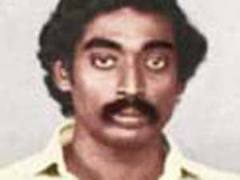 Auto Shankar
Serial killer · India · 1988
Auto Shankar was an Indian serial killer known as “Auto Shankar”. · 27 April 19…
9 victims
Auto Shankar
Serial killer · India · 1988
Auto Shankar was an Indian serial killer known as “Auto Shankar”. · 27 April 19…
9 victims
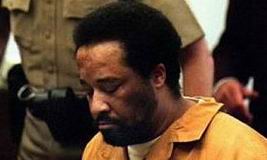 Gerald Parker
Serial killer · USA · 1978
Gerald Parker was sentenced to death on January 22, 1999. Gerald Parker was an…
5 victims
Gerald Parker
Serial killer · USA · 1978
Gerald Parker was sentenced to death on January 22, 1999. Gerald Parker was an…
5 victims
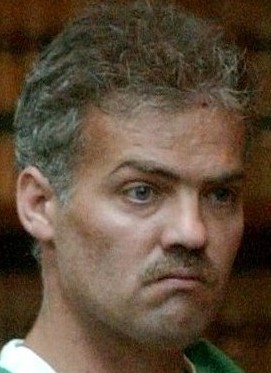 William Downs
Murderer · USA · 1991
William Downs was executed by lethal injection in South Carolina on July 14, 20…
2 victims
William Downs
Murderer · USA · 1991
William Downs was executed by lethal injection in South Carolina on July 14, 20…
2 victims
- Gender
- male
- Country
- USA
- Location
- Charleston, South Carolina, USA
- Date of birth
- 1949
- Age at first offence
- 36
- Characteristics
- parricide, armed robbery
- Victim profile
- Patti Jo Avant, 35 (his ex-wife) , Harry Wilkerson, 69 (her father) and Jason Avant, 10 (her stepson)
- Method of murder
- Shooting / Stabbing with knife
- Date(s) of murder
- February 9, 1985
- Years active
- 1985
- Date of arrest
- Next day
- Status
-
Executed
Executed by lethal injection in South Carolina on July 19, 1996
Case record
Case name: Fred H. Kornahrens, III v. Parker Evatt; T. Travis Medlock Court: United States Court of Appeals for the Fourth Circuit Docket number: No. 94-4008 Judges: HAMILTON, WILLIAMS, and MOTZ Argued: April 4, 1995 Decided: October 3, 1995 Opinion by: WILLIAMS, Circuit Judge
People
- Fred H. Kornahrens, III — petitioner-appellant; executed for killings of his ex-wife, her father, and her 10-year-old stepson
- Parker Evatt — Commissioner, South Carolina Department of Corrections; respondent-appellee
- T. Travis Medlock — Attorney General of the State of South Carolina; respondent-appellee
- Patti Jo Kornahrens (Patti) — ex-wife; victim; age 35
- Harry Wilkerson — Patti’s father; victim; age 69
- John Avant — Patti’s boyfriend; involved while awaiting return and during preparation for police contact; referenced as Avant’s boyfriend
- Jason Avant — Patti’s 10-year-old stepson; victim; age 10
Timeline
- February 9, 1985 — Kornahrens killed his ex-wife, her elderly father, and her boyfriend’s ten-year-old son.
- June 10, 1985 — Kornahrens was indicted for the triple murder of Patti, Wilkerson, and Jason.
- November 16, 1985 — Kornahrens was convicted of all three murders.
- November 18, 1985 — the jury returned a recommendation of death, which the trial judge accepted.
- 1986 — State v. Kornahrens, 350 S.E.2d 180 (S.C. 1986) affirmed his conviction and sentence.
- 1987 — the United States Supreme Court denied his petition for certiorari (Kornahrens v. South Carolina).
- August 29, 1988 — the state trial court denied Kornahrens’s state petition for post-conviction relief.
- May 13, 1991 — the Supreme Court denied Kornahrens’s second petition for certiorari.
- 1991 — 500 U.S. 929 (1991) corresponds to the denial of certiorari.
- September 19, 1991 — Kornahrens filed this federal habeas action.
- March 31, 1994 — the magistrate judge entered a 97-page report and recommendation.
- July 19, 1996 — Kornahrens was executed by lethal injection in South Carolina.
- October 3, 1995 — the Court of Appeals decided the case (decided this date).
- July 20, 1996 — publication date of “Man Who Killed 3 in Family Is Executed” (AP - July 20, 1996).
The offence
Kornahrens killed his ex-wife, his ex-wife’s father, and his ex-wife’s boyfriend’s ten-year-old son.
Armament and confrontation
On the morning of February 9, 1985, Kornahrens confronted his ex-wife, Patti Jo Kornahrens (Patti), her boyfriend John Avant, and Avant’s ten-year-old son, Jason. Kornahrens was armed with a handgun and a bayonet. While Avant remained in the car to gather belongings and to awaken his sleeping son, Kornahrens confronted Patti as she exited from the passenger side. Kornahrens looked at Avant, pointed the gun at him, and said, "I'm going to kill you." (PCR App. 801).
Killing Patti
Patti called out Avant’s name. Kornahrens shot Patti in the chest. The wound was not fatal.
Patti ran inside, calling to Wilkerson for help. Kornahrens followed her into the trailer, encountered Wilkerson, and fatally stabbed him.
Still pursuing Patti, Kornahrens followed her back outside. After catching up with her near the car, Kornahrens stabbed Patti to death.
Killing Harry Wilkerson
Harry Wilkerson, Patti’s father, lived in a house trailer next door. Kornahrens followed Patti into the trailer and fatally stabbed Wilkerson.
Killing Jason
Meanwhile, Avant ran into his and Patti’s home next to Wilkerson’s trailer to get and load his gun. He began to hear screams from outside. Avant left the house and saw Kornahrens drag Jason across the yard, pin him down, and crouch over him. Kornahrens then dragged Jason out of sight.
When the police arrived, all three bodies were gone. The bodies of Patti, Wilkerson, and Jason were discovered two days later when Kornahrens, after retaining counsel, drew police a map showing the location of their common grave.
Jason was found with his hands and feet bound with packing tape. Stabbing was the immediate cause of death for all three victims. Jason showed defensive wounds, and Kornahrens inflicted multiple knife wounds on the boy.
Investigation and arrest
Avant ran to a neighbor’s trailer and called the police. Kornahrens was arrested the next day when an officer spotted him walking down a road near Wilkerson’s trailer.
The bodies were discovered two days later after Kornahrens drew a map showing the location of their common grave.
Trial
Indictment and conviction
On June 10, 1985, Kornahrens was indicted for the triple murder of Patti, Wilkerson, and Jason.
In November 1985, a trial was held. On November 16, 1985, Kornahrens was convicted of all three murders.
Sentencing hearing and verdict
Two days later, on November 18, 1985, a sentencing hearing was held. The jury returned a recommendation of death, which the trial judge accepted.
State supreme court and certiorari
Kornahrens appealed to the South Carolina Supreme Court, which affirmed his conviction and sentence in State v. Kornahrens, 350 S.E.2d 180 (S.C. 1986).
The United States Supreme Court denied his petition for certiorari in Kornahrens v. South Carolina (1987).
Kornahrens filed a state petition for post-conviction relief, which the state trial court denied on August 29, 1988. The South Carolina Supreme Court denied discretionary review. On May 13, 1991, the Supreme Court denied Kornahrens’s second petition for certiorari, 500 U.S. 929 (1991).
On September 19, 1991, Kornahrens filed a federal habeas action under 28 U.S.C. § 2254 (1988). A magistrate judge denied his request for an evidentiary hearing. The magistrate judge entered a 97-page report and recommendation on March 31, 1994, and the district court adopted it after plenary review three months later.
Appeals
Claims raised
Kornahrens appealed to the Court of Appeals and focused on seven arguments.
During the guilt phase, he argued:
- The trial court erred in refusing to give the jury an instruction on the lesser included offense of voluntary manslaughter.
- The trial court erroneously defined reasonable doubt as “substantial doubt.”
During the sentencing phase, he argued: 3. The evidence was insufficient to show that Patti and Jason were murdered in the commission of a kidnapping, pursuant to S.C. Code Ann. § 16-3-20(C)(a)(1)(c) (Law. Co-op. 1994). 4. The jurors likely misconstrued the unanimity requirement. 5. The trial court erroneously refused to instruct the jury on the mitigating circumstance of lack of a significant criminal history. 6. He was entitled to a new trial because state law unconstitutionally prevented him from introducing evidence of his future adaptability to prison.
Finally, he argued: 7. His sentencing counsel was constitutionally ineffective.
Because the district court found that issues 2, 4, and 5 were procedurally defaulted, the Court of Appeals reserved discussion of these claims for last.
Voluntary manslaughter instruction (guilt phase)
The Court of Appeals held that Kornahrens was not entitled to an instruction on voluntary manslaughter because he presented no evidence to support it.
The Court quoted principles and definitions:
- “A defendant is not entitled to have the jury instructed as to lesser degrees of the crime simply because the crime charged is murder.” (Briley v. Bass, 742 F.2d 155, 164 (4th Cir.) (analyzing Virginia's lesser included offense doctrine under the Due Process Clause), cert. denied, 469 U.S. 893 (1984)).
- “the Circuit and the Supreme Courts agree that lesser included offense instructions are not required where . . . there is no support for such instructions in the evidence.” (Briley v. Bass, 742 F.2d 155, 165 (4th Cir.)).
- Under Beck, “due process requires that a lesser included offense instruction be given only when the evidence warrants such an instruction.” (Hopper v. Evans, (1982)).
- The elements definition included:
- “Voluntary manslaughter is the unlawful killing of a human being in sudden heat of passion upon sufficient legal provocation.”
- “Sudden heat of passion upon sufficient legal provocation” that mitigates a felonious killing to manslaughter must be “such as would naturally disturb the sway of reason, and render the mind of an ordinary person incapable of cool reflection, and produce what, according to human experience, may be called "an uncontrollable impulse to do violence."” (State v. Lowry, 434 S.E.2d 272, 274 (S.C. 1993)).
- In discussing provocation, the Court stated it was required that victims’ actions could be construed as provocation and concluded they could not.
The Court recited Kornahrens’s evidence he argued supported voluntary manslaughter:
- Kornahrens testified that he did not go to Patti’s house to hurt anyone.
- When Patti showed up, Kornahrens panicked when she said, “Freddie's here; get the gun!”
- Patti pushed her father on to Kornahrens, and her father started to attack Kornahrens.
- Kornahrens’s response was to attack both of them out of self defense.
- Kornahrens thought Jason Avant was actually John Avant attacking him, so he turned quickly and stabbed him.
The Court then found that no victims’ actions could be construed as provocation to murder. It concluded:
- Patti and her father reacted to the presence of an armed assailant.
- Patti’s reaction to Kornahrens, at most, would not have been sufficient provocation.
- Wilkerson attacked only after Kornahrens had shot Patti in the chest and chased her into Wilkerson’s home, and nothing Wilkerson did pushed Kornahrens into the heat of passion.
- The Court found no legal provocation for Kornahrens to have attacked Jason, including because of the multiple knife wounds inflicted on a ten-year-old and the defensive wounds.
Based on that, it held the trial court properly denied the voluntary manslaughter instruction.
Sentencing challenges
The Court summarized Kornahrens’s sentencing arguments:
- He argued the evidence was not sufficient to show he murdered Patti and Jason “in the commission of a kidnapping,” S.C. Code Ann. § 16-3-20(C)(a)(1)(c) (Law. Co-op. 1994).
- He argued he was entitled to present evidence of his future adaptability to prison pursuant to Skipper v. South Carolina, 476 U.S. 1 (1986), decided six months after his sentencing.
- He raised ineffective assistance of counsel allegations during sentencing.
The Court ultimately affirmed denial of habeas relief.
Outcome
For the foregoing reasons, the Court of Appeals affirmed the judgment of the district court denying the writ of habeas corpus. The case was affirmed.
Aftermath
Kornahrens was executed by lethal injection in South Carolina on July 19, 1996.
Other details
Facts of the killings as set out in the case narrative
Kornahrens killed:
- Patti Jo Kornahrens (Patti) — age 35, shot in the chest and then stabbed to death.
- Harry Wilkerson — age 69, stabbed to death after Patti ran inside calling to him for help.
- Jason Avant — age 10, stabbed to death after his hands and feet had been bound with packing tape; he was dragged across the yard, pinned down, crouched over, and then dragged out of sight.
Kornahrens said later that the slayings were attributable to the breakup of his marriage, and he said he went out of control when his marriage broke up.
Spotted an error, or have more information about this case?