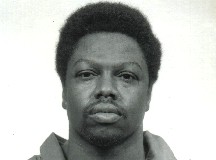
Walter Dye
Murderer Russell Ellwood
Murderer · USA · 1991
Russell Ellwood was a former taxi driver. Authorities suspected him of killing…
20 victims
Russell Ellwood
Murderer · USA · 1991
Russell Ellwood was a former taxi driver. Authorities suspected him of killing…
20 victims
 Robert Martines Perez
Murderer · USA · 1994
Name: Robert Martines Perez · Other name used in proceedings: Robert Martinez P…
15 victims
Robert Martines Perez
Murderer · USA · 1994
Name: Robert Martines Perez · Other name used in proceedings: Robert Martinez P…
15 victims
 Billy Frank Vickers
Murderer · USA · 1993
Billy Frank Vickers Vickers was executed by lethal injection in Texas on Januar…
14 victims
Billy Frank Vickers
Murderer · USA · 1993
Billy Frank Vickers Vickers was executed by lethal injection in Texas on Januar…
14 victims
 Antti Olavi Taskinen
Serial killer · Finland · 1997
Antti Olavi Taskinen (born 1976) was a Finnish serial killer responsible for th…
3 victims
Antti Olavi Taskinen
Serial killer · Finland · 1997
Antti Olavi Taskinen (born 1976) was a Finnish serial killer responsible for th…
3 victims
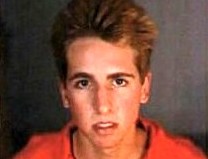 David Attias
Homicide · USA · 2001
David Attias was described as an 18-year-old student at the University of Calif…
4 victims
David Attias
Homicide · USA · 2001
David Attias was described as an 18-year-old student at the University of Calif…
4 victims
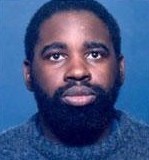 Anthony McKnight
Serial killer · USA · 1985
Anthony McKnight was sentenced to death for murdering five young women and girl…
5 victims
Anthony McKnight
Serial killer · USA · 1985
Anthony McKnight was sentenced to death for murdering five young women and girl…
5 victims
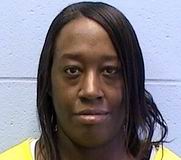 LaTosha Cunningham
Murderer · USA · 2011
LaTosha Cunningham was an Illinois woman from Belleville who was convicted of t…
1 victim
LaTosha Cunningham
Murderer · USA · 2011
LaTosha Cunningham was an Illinois woman from Belleville who was convicted of t…
1 victim
 China Arnold
Murderer · USA · 2005
China Arnold (born March 29, 1980, in Dayton, Ohio) was a defendant in a murder…
1 victim
China Arnold
Murderer · USA · 2005
China Arnold (born March 29, 1980, in Dayton, Ohio) was a defendant in a murder…
1 victim
- Gender
- male
- Country
- USA
- Location
- Marion County, Indiana, USA
- Date of birth
- October 2, 1964
- Age at first offence
- 32
- Characteristics
- revenge
- Victim profile
- Hannah Clay, 14 (wife's daughter), Celeste Jones, 7 , Lawrence Cowherd, 2 (wife's grandchildren)
- Method of murder
- Beaten with pry bar, strangled, and stabbed
- Date(s) of murder
- July 22, 1996
- Years active
- 1996
- Date of arrest
- —
- Status
-
Sentenced to death
Sentenced to death on January 20, 1998.
Case record: Walter Dye
Background
Walter L. Dye was sentenced to death on January 20, 1998.
Sentencing and legal issues
Dye conceded that giving an instruction that tells the jury that the governor has the power to commute a sentence does not violate the Eighth Amendment, applicable to the states through the Fourteenth Amendment. Dye referenced California v. Ramos, 463 U.S. 992, 103 S. Ct. 3446, 77 L. Ed. 2d 1171 (1983).
The Governor’s powers were described as follows:
“The Governor may grant reprieves, commutations, and pardons, after conviction, for all offenses except treason and cases of impeachment, subject to such regulations as may be provided by law.” Ind. Const. art. V, § 17.
Such applications were described as being filed with the parole board, which shall make a recommendation to the Governor after (1) notifying (A) the sentencing court, (B) the victim of the crime or next of kin, and (C) the prosecuting attorney for the county where the conviction was obtained and (2) conducting an investigation and (3) hearing.
Ind. Code § 11-9-2-1 to -2 (1998).
The State also alleged, on a separate charging instrument filed on the same day, that Dye killed Lawrence after murdering Hannah. However, the jury was not presented with this second aggravating circumstance and the trial court made no mention of it in its sentencing statement or sentencing order.
Evidence and mitigation findings
A Marion County probation officer testified that Dye was compliant during his probationary sentence for a Class A misdemeanor battery offense against Myrna.
“He did what he was supposed to do. He finished his counseling and he paid his money and he kept his appointments.”
Dr. Odie Bracy, III, a clinical neuropsychologist, testified that overall Dye presented fairly normally.
“presented fairly normally. . . . [H]e was very cooperative, very friendly, presented no problems whatsoever during the entire day. . . . He showed a good capability to learn, to comprehend, to follow instructions, and exhibited an excellent memory.”
Three Marion County corrections officers testified that they had never had any problems with Dye during his pretrial incarceration.
A public information officer from the Department of Correction testified about inmates convicted of multiple killings and those on death row.
- The officer testified that 186 of the 1536 men serving sentences in the general prison population for murder were convicted of multiple killings.
- The officer testified that twenty-seven of the fifty men on death row were there for multiple murders. On cross-examination, the witness testified that “multiple murder means two or more” and the witness “did not have the statistics for those who committed three murders.”
The trial court found that the State had proven an aggravating circumstance beyond a reasonable doubt and found as a mitigating circumstance that:
“[A]lthough he defendant's history of prior criminal conduct cannot be considered significant, the circumstances surrounding [his] battery conviction [against Myrna in 1992 was] significant.”
Dye’s arguments regarding sentencing
Dye contended that the evidence presented to the jury primarily painted him as an average Joe with no serious psychopathology. Dye pointed to his stable work history and compliance with probation terms and corrections officers while awaiting trial, his brother’s testimony that he was not capable of the killings, and a letter from his daughter telling him that she missed and loved him.
Dye argued that only one potentially mitigating circumstance alleged to have been overlooked by the trial court was based on this evidence. Dye cited Skipper v. South Carolina, 476 U.S. 1, 106 S. Ct. 1699, 90 L. Ed. 2d 1 (1986), and contended that the trial court apparently overlooked the testimony from corrections officers about his compliant behavior because:
“it does not appear in [the] sentencing order.”
Dye described Skipper’s holding about excluding testimony from jailers and a “regular visitor” to the jail:
The Supreme Court held that it was error for a state trial court to exclude the testimony of jailers and a “'regular visitor' to the jail to the effect that petitioner had 'made a good adjustment' during his time spent in jail.”
Dye quoted the Court’s observation in Skipper about exclusion of relevant mitigating evidence:
“The Court observed that the exclusion of this “relevant mitigating evidence impeded the sentencing jury's ability to carry out its task of considering all relevant facets of the character and record of the individual offender.”
Dye contrasted Skipper’s jury with Dye’s jury, stating that “Unlike Skipper's jury, Dye's jury heard this testimony and nevertheless recommended that death be imposed.”
Dye argued that Skipper presented no basis for reversal here.
Other details
The record included the line “Walter L. Dye home last updates contact,” which did not contribute additional case facts.
Spotted an error, or have more information about this case?