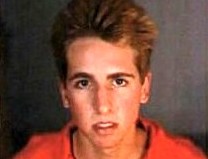
David Attias
Homicide David Koresh
Homicide · USA · 1993
David Koresh (born Vernon Wayne Howell; August 17, 1959 – April 19, 1993) led t…
79 victims
David Koresh
Homicide · USA · 1993
David Koresh (born Vernon Wayne Howell; August 17, 1959 – April 19, 1993) led t…
79 victims
 Todd Hall
Homicide · USA · 1996
Todd Hall was described by neighbors as "mentally slow" and was said to have su…
9 victims
Todd Hall
Homicide · USA · 1996
Todd Hall was described by neighbors as "mentally slow" and was said to have su…
9 victims
 Joshua Jenkins
Homicide · USA · 1996
Joshua Jenkins was a 15-year-old American killer who killed five members of his…
5 victims
Joshua Jenkins
Homicide · USA · 1996
Joshua Jenkins was a 15-year-old American killer who killed five members of his…
5 victims
 Alex Baranyi
Homicide · USA · 1997
Alex Baranyi and David Anderson were 17-year-old high-school dropouts from Bell…
4 victims
Alex Baranyi
Homicide · USA · 1997
Alex Baranyi and David Anderson were 17-year-old high-school dropouts from Bell…
4 victims
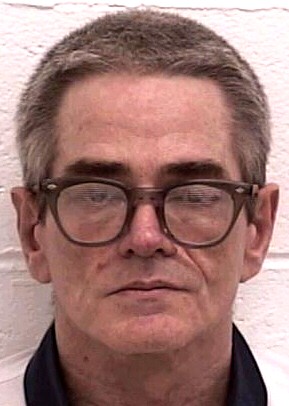 James Willie Brown
Murderer · USA · 1975
James Willie Brown was a white male who was scheduled for execution in Georgia…
1 victim
James Willie Brown
Murderer · USA · 1975
James Willie Brown was a white male who was scheduled for execution in Georgia…
1 victim
 Larry McKay
Murderer · USA · 1981
Larry McKay was convicted of two counts of felony murder each for the shooting…
2 victims
Larry McKay
Murderer · USA · 1981
Larry McKay was convicted of two counts of felony murder each for the shooting…
2 victims
 Gregory Ruseau
Murderer · USA · 2001
Gregory Russeau (Gregory Lynn Russeau, “Gregory Russeau, Appellant”) was receiv…
1 victim
Gregory Ruseau
Murderer · USA · 2001
Gregory Russeau (Gregory Lynn Russeau, “Gregory Russeau, Appellant”) was receiv…
1 victim
 Dean Corll
Serial killer · USA · 1970
Dean Corll was shot dead by his accomplice Elmer Henley on August 8, 1973. Dean…
27 victims
Dean Corll
Serial killer · USA · 1970
Dean Corll was shot dead by his accomplice Elmer Henley on August 8, 1973. Dean…
27 victims
 Alexander Tchayka
Spree killer · Russia · 1994
Alexander Tchayka (born in 1974 in Sumy, USSR (now, Ukraine)) was a Russian ser…
4 victims
Alexander Tchayka
Spree killer · Russia · 1994
Alexander Tchayka (born in 1974 in Sumy, USSR (now, Ukraine)) was a Russian ser…
4 victims
 Masahiro Kanagawa
Murderer · Japan · 2008
Masahiro Kanagawa (金川 真大; Kanagawa Masahiro; born 1983) was a Japanese man. · M…
2 victims
Masahiro Kanagawa
Murderer · Japan · 2008
Masahiro Kanagawa (金川 真大; Kanagawa Masahiro; born 1983) was a Japanese man. · M…
2 victims
- Gender
- male
- Country
- USA
- Location
- Santa Barbara County, California, USA
- Date of birth
- May 6, 1982
- Age at first offence
- 19
- Characteristics
- drugs
- Victim profile
- Nicholas Bourdakis, Christopher Divis, Elie Israel and Ruth Levy
- Method of murder
- R un over with car
- Date(s) of murder
- February 23, 2001
- Years active
- 2001
- Date of arrest
- Same day
- Status
-
Found guilty and legally insane on June 11, 2002; sentenced to a mental hospital in a placement hearing on July 12, 2002, with a maximum term of 60 years
Background
David Attias was described as an 18-year-old student at the University of California, Santa Barbara. He was known as “Crazy Dave” by classmates and neighbors in the building where he lived, and they said he behaved erratically, including barge-ins into rooms, following people into elevators for companionship, and inviting himself into dining groups at the cafeteria. Zack Chancer told the Los Angeles Times: “He was always fidgeting. He looked like he was kind of whacked-out,” and a friend of Attias told the Times he had spoken with him by phone over the weekend, saying Attias sounded calm but sad. Richard Ramsey of Compton said: “He said, 'There's been an accident. Four people are dead,'” and Ramsey said that Attias called him from jail.
David Attias was the son of Daniel Attias, who directed episodes of Ally McBeal, The Practice and The Sopranos.
The offence
On February 23, 2001, David Attias killed Nicholas Bourdakis, Christopher Divis, Elie Israel and Ruth Levy and seriously injured Levy’s brother Albert. Attias was alleged to have sped down Sabado Tarde Road at speeds estimated as high as 60 miles per hour, and authorities said he crashed into several cars before barreling into the group at twice the 25 mph speed limit in Isla Vista, an unincorporated hamlet near the University of California, Santa Barbara.
Witnesses said Attias shouted “I am the Angel of Death” moments after the Isla Vista collision. Multiple eyewitnesses described that he accelerated to speeds in excess of 60 mph as he raced down Sabado Tarde Road packed with weekend revelers. Daniel Conway, a 20-year-old UCSB sophomore, said: “I heard him punch the gas right about mid-block there,” and Conway said he and his girlfriend, Heather Vaniman, also 20, were going up the stairs of Vaniman’s apartment when Attias allegedly sideswiped the first parked car. Conway said: “It happened really fast,” and he said: “At first we didn't know he had hit anyone.” Vaniman said: “It was my first instinct, you know, to help the driver,” and she said: “It happened really fast,” and later: “I don't know if he was on drugs or if it was just alcohol and adrenaline, but I left him and went to the first victim I saw.” Vaniman said the victim had severe neck injuries and was bleeding profusely and said: “Any air that you would blow in would immediately come out,” and: “At first I wanted to attempt CPR, but immediately saw that it was no use because of his wounds.” Vaniman said: “Any air that you would blow in would immediately come out,” and she also said: “I left him and went to the first victim I saw.”
Authorities believed that the victims were walking back to their car when they were hit. The CHP found a car belonging to the deceased San Francisco man parked on Embarcadero del Mar, a nearby street often referred to as “the loop.”
Residents and eyewitnesses described the accident scene as grisly, with bodies and body parts scattered in the middle of the street in plain view and the impact knocking some victims out of their shoes and socks.
Investigation
Authorities arrested David Attias on suspicion of four counts of vehicular homicide. Investigators believed Attias was under the influence of drugs, but Attias refused to take a Breathalyzer test, according to CHP officer Mike Muell. Muell said: “He refused to take a Breathalyzer test,” and authorities forced him to take a blood test with results not ready for several days. A drug-recognition expert believed Attias was under the influence of controlled substances based on Attias’ rapid heart rate and dilation of his pupils, and Muell said: “Based on Attias' rapid heart rate and the dilation of his pupils, a drug-recognition expert believes he was under the influence of controlled substances.”
Authorities said the footage captured the chaos and that it was seized by the sheriff’s deputies in the morning as evidence, but filmmakers retained a copy. Sevan Matossian and Greg Shields were described as two filmmakers with a cable access show on Isla Vista. Shields said: “It was like nothing I've ever seen before,” and Shields added: “It just seemed like piles of bodies. And there were all these people surrounding the guy (Attias).”
Arrest
David Attias was arrested on Friday night after he allegedly sped through a stop sign, sideswiped nine parked vehicles on Sabado Tarde Road, and then hit pedestrians. He remained in custody at the County Jail.
Trial
The murder trial began in April and lasted eight weeks.
After the incident, a jury convicted David Attias of four counts of second-degree murder. The material stated that David Attias was previously convicted on four counts of second-degree murder and awaited sentencing. A week later, the same 12 jurors found that Attias was legally insane on February 23, 2001, when he killed Nicholas Bourdakis, Christopher Divis, Elie Israel and Ruth Levy and seriously injured Levy’s brother Albert, a jury found on Thursday, June 6, 2002. The material stated that after the insanity verdict, Judge Thomas Adams read the verdict on June 19.
The verdict was described as a finding that Attias was unable to tell the difference between right and wrong that night in Isla Vista. The jury spent two days deliberating on the verdict, and the packed courtroom included Attias’ parents and grandmother, as well as Patricia Bourdakis, Bourdakis’ mother, and one of the jurors who was also crying.
The material identified Judge Thomas Adams as the Santa Barbara Superior Court Judge who read the verdict. It also identified assistant district attorney Patrick McKinley as the prosecutor and noted that the Bourdakis family expressed gratitude and disappointment through statements by Anthony Bourdakis and McKinley.
David Attias’s defense attorneys were identified as Jack Earley and Nancy Haydt. One of the attorneys, Nancy Haydt, said: “David said he was so pleased,” and she said: “And he was looking forward to seeing his family on the weekend when he has visiting hours.”
Anthony Bourdakis, Bourdakis’ father, said: “First let me say how incredibly disappointed we are with the outcome of the trial,” and he added: “By rendering the insanity verdict, the state of California has once again demonstrated to the rest of the country that you can twist the facts to your advantage and get away with murder.” He further said: “The tragedy of what happened can’t be undone and, in our opinion, David Attias will not serve the appropriate time for killing four young people and horribly injuring a fifth.”
Patrick McKinley later said outside the courthouse: “As you can imagine, this is very fresh in their minds.” He continued: “It’s been a difficult grind for them. No matter what the verdict is, now … this serves as a catalyst to either go on with their life or sink again,” and McKinley said the Bourdakis family was devastated by the jury’s decision.
Daniel Attias said outside the courthouse: “We want to first express gratitude to the jury and court. We are grateful for the decision. We think it was just,” and he added: “We’re mindful that this was a horrible, horrible tragedy. The losses that were incurred on February 23 were permanent and we were shaken and saddened. We’re grateful that the tragedy wasn't compounded today.”
Jack Earley said: “We’re grateful to the jury,” and Earley said: “David will probably spend the rest of his life in a mental institution, and that’s an appropriate place for this to end.” Earley added: “We hope cases like this make people realize mental illness does affect everybody and can have tragic consequences.” Earley also argued: “David will probably spend the rest of his life in a mental institution,” and: “We hope cases like this make people realize mental illness does affect everybody and can have tragic consequences.”
Earley said of the jury’s decision: “tells me that they realized it was not a drug thing, it was not a hate thing, it was a mental health issue.” He said: “The problem with this case, as with anything else, is that it’s random. It was a car accident.” Earley said Attias “wouldn’t have lasted” in a penitentiary and said: “The state mental hospital is not a pretty picture,” and he said: “Patton State Hospital [in San Bernadino] is an old, overcrowded unit - there are no frills - … but they are dealing with treatment there.” Earley said what could happen: “What will happen is in 180 days they’ll say he’s not ready to be released and there will be no action taken,” and he said: “He has the right to file [for a court appearance], but there’s no reason to file until he makes significant improvement. We can expect it will be years before we see anything.”
McKinley said his view of the future: “anybody’s guess,” and he said: “I think nobody knows,” and continued: “He’ll stay there for six months, he may stay there forever. Historically speaking, he will not spend the rest of his life there.” McKinley said: “I think nobody knows,” and he stated: “His history indicates that him going off his meds has been going on since 1995, and unless something changes, that will happen again.” McKinley said: “After the jury went out in the sanity phase, I was thinking a lot about what to do and say if they found him sane, because he is very sick and everyone knows it.” McKinley said: “But this isn't like the other 20 murder trials I’ve sat in on; … this defendant doesn’t belong on that chain … but I think he’s very dangerous if he’s out because of his non-compliance with his medication.” He said: “If he drives again, it will be scary.”
The material also stated that Attias was charged with 13 felony counts, including four counts of murder and five counts of driving while under the influence and causing great bodily injury, and that he was also charged with vehicular manslaughter while intoxicated and driving under the influence of drugs. It also stated that his defense attorney was granted postponement until next week at an arraignment in Santa Barbara Superior Court.
The arraignment was described as postponed. The material said Attias was held without bail.
Sentencing
After evaluation and recommendation, the court placed Attias in Patton State Hospital.
A material entry described that Attias underwent evaluation by psychiatrists and psychologists at the Ventura County Health and Behavior Unit after the insanity verdict. The doctors said Attias’ crimes were particularly severe and violent and that he should be placed in a state hospital specializing in the care and treatment of mental disorders.
Patton State Hospital was described as a major forensic mental health facility in San Bernardino operated by the California Department of Mental Health, housing between 1,100 and 1,200 people committed by the judicial system for treatment.
On July 12, Judge Thomas Adams agreed with the recommendation and placed Attias in Patton, pending restoration of his sanity. It was stated that if Attias did not fully recover, he would be released in 60 years, the time he would have served in prison had the jury found him legally sane at the time of the crime.
Under California law, Attias was allowed to request a court hearing after only 180 days of treatment at Patton. The material stated that it was highly unlikely there would be any reason to return to the courtroom that soon, as expressed by Jack Earley: “He has the right to file [for a court appearance], but there’s no reason to file until he makes significant improvement.
Outcome
The jury found Attias guilty of four counts of second-degree murder and found him legally insane on February 23, 2001. Attias was placed in Patton State Hospital pending restoration of his sanity.
Aftermath
On September 20, 2002, the material stated that David Attias was in Patton State Hospital and would spend a maximum of 60 years.
The material described courtroom statements by Abby Pollack, Israel’s mother, who expressed disappointment: “I’m just going to assume there will be enough of us present each time David Attias comes up for appeal that Judge Adams will pay close attention to everything and everybody before he says, ‘You’re cured,’” Pollack said.
Judge Thomas Adams addressed the courtroom after the placement hearing. He said: “I have been involved with this case since the moment it occurred. By coincidence, I happened to be the on-call judge contacted [on the night of the incident],” and he continued: “The parents and loved ones, know you have been in my thoughts and prayers ever since that terrible, fateful early morning.” Adams said: “I also said the scope of the trial extended far beyond Sabado Tarde Road, where the incident occurred.” He added: “It was a tragedy for all concerned and it has touched the hearts of people all across the nation,” and he wished luck to the courtroom and to Attias.
Abby Pollack said she was “puzzled” by the jury’s decision and said: “I’ll probably never know quite what happened in the [insanity phase] of the trial. People have given me different ways to interpret how he’s guilty of murder and insane,” and she added: “I don’t fault the jury. I think they worked really hard. … But given the way California law works and other sanity cases that have been held recently in California, I was surprised.” She also praised the district attorney’s office’s work and said: “McKinley did a hell of a job,” and: “That whole office, they worked so hard. Months and months and months of work on [McKinley’s] part, [CHP investigating officer] Dave Robertson, his staff and the county of Santa Barbara … all that painstaking work sort of tossed, gone.”
A wrongful death and personal injury civil case was filed in February by the four families of the victims and Albert Levy against Attias and his parents, Daniel and Diane, alleging the parents acted negligently when they entrusted Attias with a car. Ronald Rouda, the Levy family attorney heading up the lawsuits, said the case was not set to go to trial until May 2003.
The material also described public memorial activities after the crash, including a quiet memorial service where hundreds of people returned to the street holding candles.
Victims and injuries
The material stated that killed in the crash were:
- Nicholas Bourdakis, 20
- Christopher Divis, 20
- Ruth Dasha Golda Levy, 20
- Elie Israel, 27
It stated that Attias seriously injured Albert Arthur Levy, 27, who was Ruth Levy’s brother and whose injuries were described as critical with major head and leg injuries.
The material also said one of the dead was a 27-year-old male from San Francisco.
The material stated the remaining dead were not identified immediately, pending notification of next of kin. It also stated that the fourth person killed was believed to be a Santa Barbara City College student and reportedly Levy’s sister.
Other details
People at the scene and statements
The material described crowd behavior and some fight elements after Attias fled the car scene and tried to subdue himself. Witnesses described that after the collision a crowd of about 100 people rushed to the scene and some tried to subdue Attias. Vaniman said Attias “ripped off his seat belt and got out of the car,” and she said: “Wide-eyed and belligerent,” he ripped off his seat belt and got out of the car. Witnesses said that immediately after he got out, he “was jumping around his car, pulling at his clothes, yelling and taking swings at the crowd that was gathering around the accident scene.”
UCSB student Ryan Martin, who lived in an apartment in front of the accident scene, said: “He was trying to punch everyone,” and Martin said: “He was yelling out satanic stuff. Fights were breaking out. The whole thing was bizarre.” It was also stated that several witnesses heard him say: “I am the Angel of Death,” while he flailed around.
Another statement in the material attributed to a person heard on videotape said: “Good thing they got him in the car or someone would have killed him.”
The material described a UCSB chancellor Henry T. Yang arriving at the scene and hugging and comforting crying students. Yang said: “This is a terrible tragedy,” and “I have never seen anything this bad.”
The material stated UCSB set up a counseling center at the Isla Vista theater and arranged for counselors to meet with distraught students at the Student Health Center over the weekend, and that counselors said about a handful of students had been to the health center seeking assistance. It also stated that at a UCSB basketball game, fans were asked to devote a moment of silence to remember the victims.
The material described county Supervisor Gail Marshall proposing permits for Isla Vista residents if they wanted parties attended by more than 100 people to help control the atmosphere. It also described UCSB dean of students Dr. Yonie Harris saying: “I think we knew, sensed and felt that there were safety issues in this community,” and “No one ever wants this to happen.”
Immediately after the accident, Yang said: “I think safety in Isla Vista is of the utmost importance,” and “We will intensify our efforts to solve alcohol-related problems.”
Residents discussed prevention and randomness. Steve Podosek said: “You can't instigate programs to prevent this,” and “You can't protect yourself from something like this. It is so random.” Brandon Brooks, a 19-year-old sophomore on a balcony in front of his apartment, said: “This was an act of one crazy person,” and he said: “This wasn't a riot at an out-of-control party. It was some idiot going out of control down a street.”
Witness descriptions of hearing and seeing
Heather Hicks said: “It's something I'll never forget,” and she said: “It was so surreal.” She said: “We thought it was just some jerk hitting a Dumpster,” and she said she and Steve Podosek saw bodies and were overwhelmed, calling their parents and weeping. She said: “No one could go to bed,” and she also said she heard the driver shout: “I am the Angel of Death.”
Vaniman described that she had recently completed a first aid and CPR course at school.
Vaniman said: “All I heard was him screaming 'angel something,'Ê” and she said: “But he was wired.”
Daniel Conway’s description
Daniel Conway said: “It happened really fast,” and he said: “At first we didn't know he had hit anyone.” He also said: “At first we didn't know he had hit anyone.”
Investigative claims about drugs and alcohol testing
The CHP investigated Attias and believed he was under the influence of drugs. It was stated he refused a Breathalyzer test and took a blood test, and based on heart rate and pupil dilation, a drug-recognition expert believed controlled substances were involved. It was also stated that Vaniman said she did not know whether he was on drugs or “just alcohol and adrenaline.”
Spotted an error, or have more information about this case?