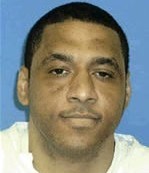
Kenneth Foster
Murderer Russell Ellwood
Murderer · USA · 1991
Russell Ellwood was a former taxi driver. Authorities suspected him of killing…
20 victims
Russell Ellwood
Murderer · USA · 1991
Russell Ellwood was a former taxi driver. Authorities suspected him of killing…
20 victims
 Robert Martines Perez
Murderer · USA · 1994
Name: Robert Martines Perez · Other name used in proceedings: Robert Martinez P…
15 victims
Robert Martines Perez
Murderer · USA · 1994
Name: Robert Martines Perez · Other name used in proceedings: Robert Martinez P…
15 victims
 Billy Frank Vickers
Murderer · USA · 1993
Billy Frank Vickers Vickers was executed by lethal injection in Texas on Januar…
14 victims
Billy Frank Vickers
Murderer · USA · 1993
Billy Frank Vickers Vickers was executed by lethal injection in Texas on Januar…
14 victims
 Yang Xinhai
Serial killer · China · 2000
Yang Xinhai (simplified Chinese: 杨新海; pinyin: Yáng Xīnhǎi; 17 July 1968–14 Febr…
67 victims
Yang Xinhai
Serial killer · China · 2000
Yang Xinhai (simplified Chinese: 杨新海; pinyin: Yáng Xīnhǎi; 17 July 1968–14 Febr…
67 victims
 Winnie Ruth Judd
Murderer · USA · 1931
Winnie Ruth Judd (January 29, 1905 – October 23, 1998) was a Phoenix, Arizona m…
2 victims
Winnie Ruth Judd
Murderer · USA · 1931
Winnie Ruth Judd (January 29, 1905 – October 23, 1998) was a Phoenix, Arizona m…
2 victims
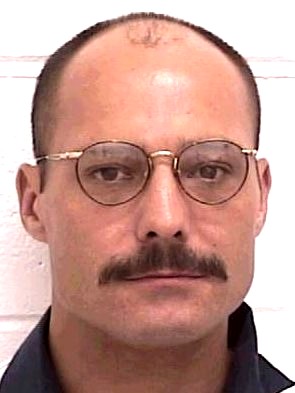 Stephen Anthony Mobley
Murderer · USA · 1991
Stephen Anthony Mobley · Sex: Male · Race: White · Age: 39 at execution · Date…
1 victim
Stephen Anthony Mobley
Murderer · USA · 1991
Stephen Anthony Mobley · Sex: Male · Race: White · Age: 39 at execution · Date…
1 victim
 David Randitsheni
Serial killer · S outh Africa · 2004
David Randitsheni (born 1964/5) was a South African rapist and serial killer. ·…
10 victims
David Randitsheni
Serial killer · S outh Africa · 2004
David Randitsheni (born 1964/5) was a South African rapist and serial killer. ·…
10 victims
 Jose Luis Calva Zepeda
Serial killer · Mexico · 2004
Jose Luis Calva Zepeda was an aspiring horror writer in Mexico City who was acc…
3 victims
Jose Luis Calva Zepeda
Serial killer · Mexico · 2004
Jose Luis Calva Zepeda was an aspiring horror writer in Mexico City who was acc…
3 victims
- Gender
- male
- Country
- USA
- Location
- Bexar County, Texas, USA
- Date of birth
- October 22, 1976
- Age at first offence
- 20
- Characteristics
- robbery
- Victim profile
- Michael T. LaHood, Jr., 25
- Method of murder
- Shooting
- Date(s) of murder
- August 15, 1996
- Years active
- 1996
- Date of arrest
- —
- Status
-
Life imprisonment
Sentenced to death on July 1, 1997; commuted to life in prison on August 30, 2007
Case overview
Kenneth Foster, Jr. (born October 22, 1976) was a prisoner formerly on death row in Texas. He was convicted under the law of parties and was sentenced to death for murdering Michael LaHood in August 1996.
The death sentence was contested because Foster was convicted under a law of parties, not for physically committing the crime. Texas Governor Rick Perry commuted Foster’s death sentence to life imprisonment only three hours before the execution was scheduled on August 30, 2007. Foster was eligible for parole in 2037. He was located at the Byrd Unit of the Texas Department of Criminal Justice to be reprocessed as a general population prisoner.
Timeline
- August 14, 1996 — Kenneth Foster, Mauriceo Brown, DeWayne Dillard, and Julius Steen embarked on a series of armed robberies around San Antonio, Texas, beginning with Brown announcing he had a gun and asking whether the others wanted to rob people: “I have the strap, do you all want to jack?”
- August 15, 1996 — Foster began following a vehicle driven by Mary, and Mary and Michael LaHood, Jr. returned to his house; a gunshot killed Michael LaHood.
- May 1997 — Foster and Brown were tried jointly for capital murder committed in the course of a robbery; both were sentenced to death.
- July 2006 — Mauriceo Brown was executed.
- July 1, 1997 — Foster was sentenced to death.
- August 30, 2007 — Texas Governor Rick Perry commuted Foster’s death sentence to life in prison three hours before the scheduled execution.
- August 31, 2007 — A report described the commutation and discussed legal issues regarding the law of parties used to convict Foster.
- June 2009 — A legislative timeline point was referenced as a future meeting regarding the joint-trial issue.
The offence
On the evening of 14 August 1996, Kenneth Foster, Mauriceo Brown, DeWayne Dillard, and Julius Steen embarked on a series of armed robberies around San Antonio, Texas. The sequence began when Brown announced he had a gun and asked whether the others wanted to rob people, saying: “I have the strap, do you all want to jack?”
The four men divided the stolen property equally after robbing two different groups at gunpoint. The criminal conduct continued into the early hours of the next day (15 August). During this period, Foster began following a vehicle driven by a young woman named Mary.
At trial, Mary testified that she and Michael LaHood, Jr. were returning in separate cars to his house. She arrived, noticed Foster’s vehicle turn around at the end of the street, and stop in front of Michael LaHood’s house. Mary approached Foster’s car to ascertain who was following her. She briefly spoke to the men in the vehicle, then walked away towards Michael LaHood, who had reached the house and exited his vehicle.
Mary testified that she saw a man with a scarf across his face and a gun in his hand exit Foster’s vehicle and approach her and Michael. Mary heard Michael tell her to go inside the house, and she ran towards the door but tripped and fell. She looked back and saw the gunman pointing a gun at Michael’s face, demanding his keys, money, and wallet. Michael responded that Mary had the keys, and Mary heard a loud bang.
Mary testified that Michael LaHood died from a gunshot wound to the face. The barrel of the gun was no more than six inches from Michael’s head when he was shot, and it was likely closer than that. Brown had similarly stuck his gun in the faces of some of the night’s earlier robbery victims.
Investigation and arrests
Later that day, all four men were arrested. Each gave a written statement to police identifying Brown as the shooter.
In admitting being the shooter, Brown denied intent to kill. At trial, Brown testified that he approached Michael LaHood to obtain Mary’s telephone number and only drew his weapon when he saw what appeared to be a gun on Michael LaHood and heard what sounded to him like the click of an automatic weapon.
Trial
Foster and Brown were tried jointly in May 1997. Foster and Brown were tried for capital murder committed in the course of a robbery. Both were sentenced to death.
During the guilt/innocence phase of Foster’s trial, Steen testified that he rode in the front seat, looking for potential victims, while Foster drove. Steen and Brown testified to robbing two different groups at gunpoint, and the four men divided the stolen property equally.
Key trial testimony about the robbery and shooting
Mary testified to the sequence leading to the shooting of Michael LaHood, including the gunman demanding keys, money, and wallet, and the gun being pointed at Michael’s face.
Brown denied intent to kill and testified that he drew his weapon based on seeing what appeared to be a gun and hearing what sounded like the click of an automatic weapon.
A prosecutor perspective and family statements were included in the case materials: Jack McGinnis, one of the prosecutors in the cases against Brown and Foster, said, “They were out pretty much on a rampage, stoned to the bone, victimizing people.” Norma LaHood, Michael’s mother, said, “It is painful for us,” and also said, “Our wounds will never heal. You don't heal from the loss of a child.”
Sentencing
Foster and Brown were sentenced to death in May 1997. Foster was sentenced to death on July 1, 1997.
Appeals and legal dispute
Foster’s conviction and execution were contested because he was convicted under the law of parties, not for physically committing the crime.
The commutation discussion described that under Texas law, the law of parties authorized capital punishment for accomplices who either intended to kill or “should have anticipated” a murder. The materials also described international protests regarding this law as it was applied in capital cases.
The case materials described arguments and legal concepts referenced in relation to Foster’s sentencing:
- The US Supreme Court ruling in Enmund vs. Florida was cited as violating the constitution to sentence someone to death who did not himself kill, attempt to kill, or intend to kill.
- The materials also referenced the exception under Tison vs. Arizona, for cases involving major personal involvement and reckless indifference to human life.
Foster’s position was described as contending he did not know the killing was going to happen and that he was not the trigger man. Officials described a competing view: First Assistant District Attorney Cliff Herberg said, “Mr. Foster is as guilty as if he fired the gun himself.”
The materials also described that the Texas Court of Criminal Appeals upheld Foster’s sentence for a final time “this month.”
A law-related concern was also discussed in relation to Foster’s joint trial and the legislative process:
- House Corrections Committee Chairman Jerry Madden said he expected “a lot of hearings, a lot of information provided” for lawmakers on the joint-trial issue when they next meet in 2009.
- Madden said the law of parties was probably here to stay and added: “That's been in effect for a long time,” and “said Mr. Madden, R-Richardson.”
- Sen. Rodney Ellis said he may try to pass legislation and stated: “Someone facing the possibility of the death penalty at the very least deserves their own fair and separate trial.”
Commutation and outcome
Texas Governor Rick Perry blocked the execution and reduced Foster’s sentence to life in prison on August 30, 2007, only three hours before the scheduled execution.
A report described the Texas Board of Pardons and Paroles vote that recommended commutation: the materials stated the board voted 6-1 to recommend that the sentence be commuted.
The materials also included Foster’s parole eligibility: Foster would be eligible for parole in 30 years, and he would be eligible for parole in 2037.
Foster was to be moved to more comfortable prison confines and was expected to be reprocessed as a general population prisoner at the Byrd Unit of the Texas Department of Criminal Justice.
Other events and related executions
The materials included the execution of Mauriceo Brown:
- An update described that Mauriceo Brown was executed in July of 2006.
- Brown spoke to victim witnesses and told them he was “sorry you lost a brother, a loved one and friend.”
- The materials stated Brown looked toward another window where his mother and two siblings were among the witnesses and said, “He told them he loved them.”
- Brown said, “Keep your heads up and know that I will be in a better place,” and apologized a second time that you “lost a loved one this way. God bless you all.”
A campaign statement and requests were included in the materials. A letter began: “We are turning to you because we are deeply concerned about Mr. Kenneth E. Foster, a death row inmate at Polunsky Unit in Livingston, who has an execution date on August 30, 2007.” The letter included multiple statements, including:
- “We feel deep sympathy for the family of victim Michael LaHood. Their loss is tremendous.”
- “However we do not believe that taking the life of Kenneth Foster will ease the LaHood family’s pain and suffering.”
- “Mauriceo Brown, the man who shot Michael LaHood, is dead already. He was executed for this crime last year.”
- “The execution of Kenneth Foster - who was convicted after the law of parties - would be an unnecessary act of violence that does not serve justice but only vengeance.”
- “Kenneth Foster grew up in poverty, both his parents were drug addicts and often in jail.”
- “He went to high school and graduated in 1995, but at the same time surrounded himself with the wrong crowd.”
- “On the night of August 14th, 1996 Kenneth Foster was together with three other young men: Mauriceo Brown, Julius Steen, and Dwayne Dillard.”
- “He was driving a car rented by his grandfather.”
- “According to Dillard, the role of 19-years old Kenneth Foster was “just to drive”.“
- Dillard’s testimony was quoted as: “He told me that he wanted to stop and he felt like if he told me that I would tell them and that they would listen to me.”
- The letter stated, “If considering the events of this night as a whole and the role Kenneth Foster played within these events, you will come to the conclusion that his execution would be completely disproportionate to his guilt.”
- It concluded with: “What we ask you for is to take a deep look into the case of Kenneth Foster and especially in the testimonies of Julius Steen and Dwayne Dillard. We are asking you to grant Mr. Foster a stay of execution and give him a chance for a punishment measured by his liability.”
- The letter ended with: “Sincerely, Petitiononline.com home last updates contact”
Statements made by people about Foster
The materials described Foster’s demeanor and behavior on death row. In an interview on death row in Livingston, Foster appeared “calm and resigned to his fate” and said he would not be an “active participant” in his execution. He said he had stopped eating in protest and described distracting himself with “books, letters and silent prayers that Mr. Perry would take his case seriously.” Foster also said: “I know a lot of eyes are on me right now,” and: “I just feel like I'm in a plane, and the engines went out, and all I've got is a parachute that won't open.”
At a rally outside the Governor's Mansion, Keith Hampton, Foster’s attorney, was quoted saying Foster had “a long road ahead of him” and was “not confident he'll ever be paroled.” Hampton said Foster would “be moved to more comfortable confines promptly – perhaps somewhere he can earn a college degree.” Hampton also said: “People should not underestimate the hardship of a life in prison,” and that he spent much of the week “a total basket case.” Hampton said: “He will find a way to contribute," and then also said: "to the prison world and the free world.”
Nico LaHood was quoted reacting to the commutation: “It’s not justice,” and “I don't think an independent jury's verdict should be questioned.”
Dana Cloud, a spokeswoman for the Save Kenneth Foster campaign, said: “We're all a little numb – it's almost disbelief,” and: “It is a historic turning point for Kenneth. But it's also a historic turning point in Texas, and indeed, with regard to death penalty in general.”
Other details
People involved
- Kenneth Foster, Jr. — defendant; getaway driver; convicted under the law of parties; sentenced to death and later commuted to life imprisonment.
- Michael LaHood, Jr. — victim; died from a gunshot wound to the face.
- Mauriceo Brown — co-defendant; shooter per written statements; executed in July 2006.
- DeWayne Dillard — co-defendant; testified regarding Foster’s role.
- Julius Steen — co-defendant; testified that he rode in the front seat while Foster drove.
Places mentioned
- San Antonio, Texas
- Livingston (death row interview location; also referenced in the materials as Polunsky Unit context)
- Huntsville (where Foster’s family and supporters were gathered for the possible execution)
- Byrd Unit of the Texas Department of Criminal Justice
Parole eligibility detail
The materials stated Foster would be eligible for parole in 30 years and also said he would be eligible for parole in 2037.
Sentence and commutation timing
The commutation occurred on August 30, 2007, described as happening three hours before the scheduled execution.
Spotted an error, or have more information about this case?