
Winnie Ruth Judd
Murderer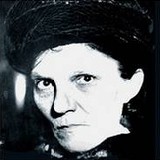 Martha Wise
Murderer · USA · 1924
Martha Wise (born 1885; died June 28, 1971), also known as “the Borgia of Ameri…
3 victims
Martha Wise
Murderer · USA · 1924
Martha Wise (born 1885; died June 28, 1971), also known as “the Borgia of Ameri…
3 victims
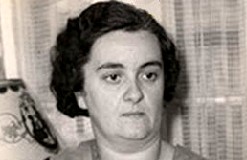 Mary Frances Creighton
Murderer · USA · 1923
Mary Frances Creighton (c. 1898 - July 16, 1936) was a housewife and was execut…
3 victims
Mary Frances Creighton
Murderer · USA · 1923
Mary Frances Creighton (c. 1898 - July 16, 1936) was a housewife and was execut…
3 victims
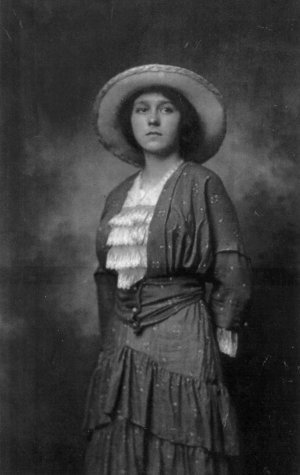 Inez Palmer
Murderer · USA · 1926
Inez Palmer — defendant; lived at the Stout farmhouse and pleaded guilty to a f…
2 victims
Inez Palmer
Murderer · USA · 1926
Inez Palmer — defendant; lived at the Stout farmhouse and pleaded guilty to a f…
2 victims
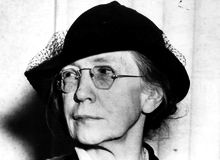 Alice Wynekoop
Murderer · USA · 1933
Name: Alice Wynekoop Alice Wynekoop was sentenced to 25 years in prison on Marc…
1 victim
Alice Wynekoop
Murderer · USA · 1933
Name: Alice Wynekoop Alice Wynekoop was sentenced to 25 years in prison on Marc…
1 victim
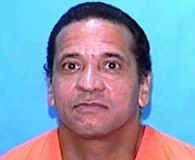 Juan Roberto Melendez-Colon
Murderer? · USA · 1983
Juan Roberto Melendez-Colon was born May 24, 1951. He lived in Brooklyn, New Yo…
1 victim
Juan Roberto Melendez-Colon
Murderer? · USA · 1983
Juan Roberto Melendez-Colon was born May 24, 1951. He lived in Brooklyn, New Yo…
1 victim
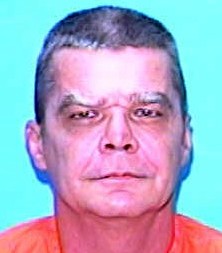 William L. Thompson
Murderer · USA · 1976
William L. Thompson was convicted and sentenced to death for the 03/30/76 kidna…
1 victim
William L. Thompson
Murderer · USA · 1976
William L. Thompson was convicted and sentenced to death for the 03/30/76 kidna…
1 victim
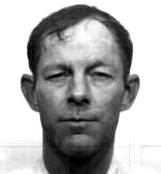 Harold Amos Barnard
Murderer · USA · 1980
June 6, 1980 — Harold Amos Barnard, Jr., killed sixteen-year-old Tuan Nguyen du…
1 victim
Harold Amos Barnard
Murderer · USA · 1980
June 6, 1980 — Harold Amos Barnard, Jr., killed sixteen-year-old Tuan Nguyen du…
1 victim
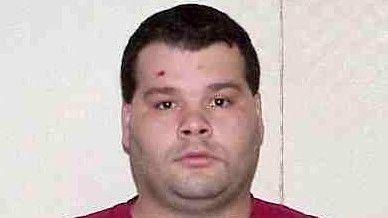 Robert Keith Woodall
Murderer · USA · 1997
Robert Keith Woodall (date of birth 3-19-74) was sentenced to death on Septembe…
1 victim
Robert Keith Woodall
Murderer · USA · 1997
Robert Keith Woodall (date of birth 3-19-74) was sentenced to death on Septembe…
1 victim
 Amber Bray
Murderer · USA · 1996
Amber Bray was a 20-year-old former Burbank high school honor student and cheer…
1 victim
Amber Bray
Murderer · USA · 1996
Amber Bray was a 20-year-old former Burbank high school honor student and cheer…
1 victim
 Nathan Ybanez
Homicide · USA · 1998
Nathan Ybanez was a 16-year-old defendant convicted of first-degree murder in h…
1 victim
Nathan Ybanez
Homicide · USA · 1998
Nathan Ybanez was a 16-year-old defendant convicted of first-degree murder in h…
1 victim
- Gender
- female
- Country
- USA
- Location
- Phoenix, Maricopa County, Arizona, USA
- Date of birth
- January 29, 1905
- Age at first offence
- 26
- Characteristics
- dismemberment, torture
- Victim profile
- Agnes Anne LeRoi, 32, and Hedvig Samuelson, 24
- Method of murder
- Shooting ( .25 caliber handgun)
- Date(s) of murder
- October 16, 1931
- Years active
- 1931
- Date of arrest
- October 23, 1931 ( surrendered to police)
- Status
-
Released
Died on October 23, 1998; sentenced to death on February 17, 1933; the death sentence was repealed after a ten-day hearing found her mentally incompetent, and she was then sent to Arizona State Asylum for the Insane on April 24, 1933; paroled and released on December 22, 1971
Case identification
Winnie Ruth Judd (January 29, 1905 – October 23, 1998) was a Phoenix, Arizona medical secretary.
Characteristics
She shot her two room mates, hacked their bodies into pieces, and hid them into travel trunks.
The offence
Victims and relationships
- Agnes Anne LeRoi, an X-Ray Technician and roommate of Judd.
- Hedvig Samuelson (“Sammy”), a roommate of Judd.
At the time of the murders Judd was 26 years old, LeRoi 32, and Samuelson 24.
Place and weapon
The murders occurred in a rented bungalow at 2929 (now 2947) N. 2nd Street.
According to police, on the night of October 16, 1931, LeRoi and Samuelson were murdered by Judd after an alleged fight among the three women. The prosecution would suggest that quarrels over men and the relationship between the three women broke up their friendship, and that jealousy was the motive for the killings.
The two victims were killed with a .25 caliber handgun.
Dismemberment and disposal
After the two women were murdered, Judd and an accomplice dismembered the body of Samuelson and stuffed the head, torso, and lower legs into a black shipping trunk, with the upper legs being placed in a beige valise and hatbox. LeRoi’s body was stuffed intact into a second black shipping trunk.
Background
While employed at the Grunow Medical Clinic in Phoenix, Judd met Agnes Anne LeRoi and her roommate, Hedvig Samuelson. LeRoi and Samuelson had become close friends while living in Alaska and then moved together to Phoenix for its drier climate after Samuelson contracted tuberculosis.
In August 1931, Dr. Judd left Phoenix to start a practice in Los Angeles, leaving his wife in Phoenix. At this time, Judd moved in with LeRoi and Samuelson, but in early October she moved out in order to be nearer to the Grunow Clinic where she was employed.
Investigation
Discovery of the trunks and bodies
Two days after the murders, on Sunday, October 18, Judd boarded the Golden State Limited passenger train from Phoenix’s Union Station with the trunks containing the bodies; with her left hand bandaged from a gunshot wound, she traveled overnight to Los Angeles.
Upon arrival at 7:45 the next morning, station personnel suspected the trunks because of the foul odor detected and fluids escaping from the trunks. Baggage agent Arthur V. Anderson wanted the trunks opened and tagged them to be held. He asked Judd for the key, but she stated she didn’t have it with her.
Burton McKinnell, Judd’s brother and a junior at the University of Southern California, picked Judd up from the train station unaware of the crime or the bodies. At around 4:30 that afternoon, Anderson called the Los Angeles Police Department to report the suspicious trunks. The police picked the locks of each trunk, and the bodies were discovered.
A janitor in the ladies’ restroom at the depot discovered that evening a beige valise and hatbox hidden behind the door of the ladies’ restroom. Police recovered the items and removed them to the morgue, where they were searched.
In the valise was the remaining lower torso, wearing shreds of pink pajamas, bundled in blankets. The matching hatbox contained:
- a surgeon’s kit of instruments (the type used to dissect),
- a Colt .25 caliber automatic pistol,
- one box of .25 caliber Winchester cartridges,
- a bread knife,
- and an assortment of cosmetics.
Police verified that the pieces of luggage belonged to passenger Winnie Ruth Judd who had boarded the train Sunday evening in Phoenix.
Crime scene entry and subsequent public access
On Monday evening, October 19, Phoenix police entered the bungalow where LeRoi and Samuelson resided for the first time. Neighbors and reporters were also allowed in, and the original integrity of the crime scene was destroyed.
The following day the bungalow’s landlord took out ads to be placed in The Arizona Republic and The Phoenix Evening Gazette informing the public that tours of the home were available for ten cents per person. During the next three weeks, hundreds of curiosity seekers toured the bungalow.
The state argued that Judd acted with pre-meditation, and that the relationships among the three women deteriorated over some weeks, culminating in the murders.
Missing mattresses
The two mattresses were missing the night the police entered. Although one mattress was later found with no blood stains on it miles away in a vacant lot, the other remained missing. No explanation was ever offered as to why one was found so far away nor what became of the other mattress.
Arrest / surrender
Judd hid out until she surrendered to police in a funeral home the following Friday, October 23, 1931.
Trial
Charge and scope of trial
The jury found her guilty of first-degree murder on February 8, 1932.
She had been tried only of the murder of Mrs. LeRoi, whose body was not dismembered; none of the dismembering aspect of the double slaying was addressed in court because of that limitation.
Trial date and court proceedings
The trial began January 19, 1932, three months after the bodies had been discovered in the trunks.
Judd did not take the stand in her own defense.
The defence protested by stating: “By the advertisements in the newspapers, the entire population of Maricopa County visited that place.”
The police maintained the two women were shot while asleep in their beds.
Verdict and sentence
The jury found her guilty of first-degree murder. Before the session ended, they elected that she should hang by the neck.
She was placed on death row at the Arizona State Prison at Florence. She was sentenced to be hanged on February 17, 1933.
An appeal was unsuccessful.
Appeals
An appeal was unsuccessful.
Co-defendant: Jack Halloran
Indictment and preliminary hearing
When it was discovered during the course of the trial that Halloran and Judd had been involved in an illicit affair, Halloran also became suspect of having complicity in the killings.
He was indicted by a grand jury as an accomplice to murder on December 30, 1932 following new testimony from Judd. A preliminary hearing on the charge against Halloran was held in mid-January 1933; Judd was the star witness. The testimony lasted almost three days.
Judd referred to the new testimony as “the whole truth”.
Judd’s testimony and quoted statements
Judd told her story and said: “I am going to be hanged for something Jack Halloran is responsible for ... I was convicted of murder, but I shot in self-defense. Jack Halloran removed every bit of evidence. He is responsible for me going through all this. He is guilty of anything I am guilty of.”
She testified that she had gone to the apartment on an invitation to play bridge, and that a fourth woman invited to the get-together had already left. She testified that there was an argument about Judd’s introduction of Halloran to another woman, and that she killed LeRoi and Samuelson in self-defense after they physically attacked her.
According to Judd, she met up with Halloran shortly after the killings and returned with him to the apartment. After seeing the bodies he went out to the garage, returned with a “great, heavy trunk” and told her not to tell anyone.
Under cross-examination, Judd admitted repacking Samuelson’s dismembered body in a trunk and other luggage two days after the murders.
Halloran’s defence and dismissal
Halloran did not take the stand in his own defense. His attorney told the court that Judd’s story was nothing more than the story of an insane person and argued that since Judd had testified that the two women were killed in self-defense, there was, in fact, no crime committed, therefore Halloran could not be tried for anything.
Halloran’s attorney asked for the charges against his client to be dismissed.
On January 25, 1933 the judge freed Halloran, saying that the state’s case was inconsistent, and that trying him would be “an idle gesture”.
Sentencing and mental competence proceedings
Original death sentence and repeal
Judd was sentenced to be hanged February 17, 1933, and sent to Arizona State Prison in Florence, Arizona.
The death sentence was repealed after a ten-day hearing found her mentally incompetent; she was then sent to Arizona State Asylum for the Insane on April 24, 1933.
Escape history and later release
Escapes while committed (1933 to 1963)
After her death sentence was repealed, Judd was committed to the state’s only mental institution, Arizona State Hospital in Phoenix.
From 1933 to 1963, Judd escaped from the institution six times. One instance involved walking all the way to Yuma, Arizona, along the old Southern Pacific railroad tracks.
Final escape on October 8, 1963 and return in 1969
She escaped for the final time on October 8, 1963, using a key to the front door of the hospital that a friend had given her.
Judd ended up in the San Francisco Bay Area where she became a live-in maid for a wealthy family living in a mansion overlooking the bay, using the name Marian Lane.
Her freedom lasted six and a half years. Her identity in California was eventually discovered and she was taken back to Arizona on August 18, 1969.
Parole and absolute discharge
Judd hired famed San Francisco defense attorney Melvin Belli. Belli needed an Arizona-licensed attorney to help him, so he hired then “unknown Phoenix attorney” Larry Debus.
Gov. Jack Williams was going to sign for Judd’s release as long as the meeting was kept “hush, hush”. In the following days, Belli called a press conference calling for the immediate release of Judd, therefore Debus had to fire Belli from getting in the way of Judd’s release.
Judd was paroled and released on December 22, 1971 after two years of legal wrangling. Judd moved to Stockton, California.
In 1983, the state of Arizona issued her an “absolute discharge,” meaning she was no longer a parolee.
Outcome
Judd died on October 23, 1998.
Other details
Additional statements and quotations involving Halloran and others
- “great, heavy trunk”
- “the whole truth”
- “an idle gesture”
- “By the advertisements in the newspapers, the entire population of Maricopa County visited that place.”
- “I had to do it.”
Reported cultural impact and later media references
The murder was reported in headlines across the country, and Judd was referred to in the press as “Tiger Woman” and “The Blonde Butcher”. The case was known in the media as “The Trunk Murders”.
A 2007 film titled “Murderess” was described as loosely based on the Judd case. A 2005 British film titled “Keeping Mum” was also described as loosely based on the story.

Spotted an error, or have more information about this case?