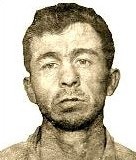
Donald Henry Gaskins
Serial killer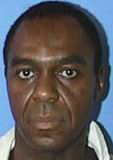 Carl Eugene Watts
Serial killer · USA · 1974
Carl Eugene Watts (born November 7, 1953; died September 21, 2007), also known…
100 victims
Carl Eugene Watts
Serial killer · USA · 1974
Carl Eugene Watts (born November 7, 1953; died September 21, 2007), also known…
100 victims
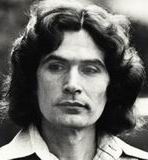 Rodney Alcala
Serial killer · USA · 1977
Rodney James Alcala (born August 23, 1943) was also known as Rodrigo Jacques Al…
100 victims
Rodney Alcala
Serial killer · USA · 1977
Rodney James Alcala (born August 23, 1943) was also known as Rodrigo Jacques Al…
100 victims
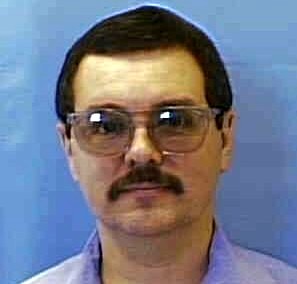 Donald Harvey
Serial killer · USA · 1970
Donald Harvey was known as an American serial killer and a self-professed “Ange…
87 victims
Donald Harvey
Serial killer · USA · 1970
Donald Harvey was known as an American serial killer and a self-professed “Ange…
87 victims
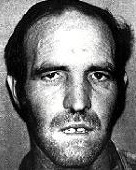 Ottis Toole
Serial killer · USA · 1961
Ottis Elwood Toole (sometimes misspelled as “Otis”) was an American serial kill…
65 victims
Ottis Toole
Serial killer · USA · 1961
Ottis Elwood Toole (sometimes misspelled as “Otis”) was an American serial kill…
65 victims
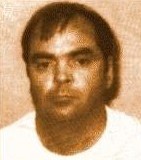 Donald Leroy Evans
Serial killer · USA · 1975
Donald Leroy Evans (born July 5, 1957) was an American serial killer who murder…
60 victims
Donald Leroy Evans
Serial killer · USA · 1975
Donald Leroy Evans (born July 5, 1957) was an American serial killer who murder…
60 victims
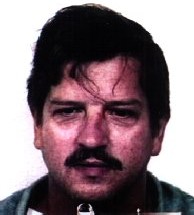 William George Bonin
Serial killer · USA · 1972
William George Bonin was executed by lethal injection in California on February…
44 victims
William George Bonin
Serial killer · USA · 1972
William George Bonin was executed by lethal injection in California on February…
44 victims
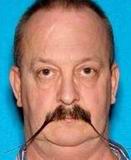 William Clyde Gibson
Serial killer · USA · 2002
October 26, 2013 — A jury in New Albany found William Clyde Gibson guilty of th…
3 victims
William Clyde Gibson
Serial killer · USA · 2002
October 26, 2013 — A jury in New Albany found William Clyde Gibson guilty of th…
3 victims
- Gender
- male
- Country
- USA
- Location
- South Carolina, USA
- Date of birth
- March 13, 1933
- Age at first offence
- 36
- Characteristics
- rape
- Victim profile
- Young men and women (hitchhikers)
- Method of murder
- St abbing with knife
- Date(s) of murder
- 1969 - 1975
- Years active
- 1969–1975
- Date of arrest
- December 1975
- Status
-
Executed
Executed by electrocution in South Carolina on September 6, 1991
Case details
Donald Henry Gaskins, also known as Donald “Pee Wee” Gaskins, was a serial killer in South Carolina. He was executed by electrocution in South Carolina on September 6, 1991. At the time of Tyner’s death, he was serving nine life sentences for previous murders he had committed.
Timeline
- March 13, 1933 — Donald Henry Gaskins was born in Florence County, South Carolina.
- 1946 — At age 13, Gaskins was arrested for assault with a deadly weapon and intent to kill after a girl attacked him with an ax while he was burglarizing a home.
- March 1951 — Gaskins was released from the South Carolina Industrial School for Boys on his 18th birthday.
- September 1969 — Gaskins picked up a female hitchhiker in North Carolina and beat her until she was unconscious; he then raped, sodomized, and tortured her, and sank her weighted body into a swamp where she drowned.
- November 1970 — Gaskins offered his 15-year-old niece Janice Kirby and her friend Patricia Alsobrook a ride home from a bar and instead drove them to an abandoned house, where he raped, beat, and drowned them in separate locations.
- Feb. 12, 1975 — Gaskins kidnapped and murdered Silas Yates after being paid $1,500 to kill him.
- November 14, 1975 — Gaskins returned from Georgia; police staked out his house, and he made his way to the local bus station.
- Dec. 4, 1975 — Victims Bellamy and Knight were unearthed.
- Dec. 10, 1975 — The graves of Doreen Dempsey and her child were found.
- April 27, 1976 — Following a Florence County coroner’s inquest, Gaskins and Walter Neely were each charged with eight counts of first-degree murder.
- May 24, 1976 — A jury found Gaskins guilty of murdering Dennis Bellamy; his sentence was death.
- November 1976 — The U.S. Supreme Court invalidated South Carolina’s death penalty statute, and Gaskins’ sentence was commuted to life with seven consecutive life terms.
- September 6, 1991 — Gaskins was executed by electrocution in South Carolina at 1:05 a.m.
Background
Donald “Pee Wee” Gaskins was also known as “Junior Parrott” early in life because of his small body frame. He was born in Florence County, South Carolina on March 13, 1933.
Gaskins’ mother was not married when she became pregnant with Donald, and lived on and off with several men during his childhood. Many of the men treated the young boy with disdain, and sometimes beat him. After his mother married, his stepfather beat him and his four half-siblings regularly. His mother did little to protect him from her lovers, and he was left alone to raise himself.
Gaskins was given the nicknames “Junior Parrott” and “Pee Wee” at a young age. When he began attending school, the violence he experienced at home followed him into the classrooms. He fought daily with other boys and girls and was constantly punished by teachers.
At age eleven, he quit school, worked on cars at a local garage, and helped around the family farm.
He described having “them aggravated and bothersome feelings,” which pushed him into criminal activity. He found little relief from these feelings until September 1969 when he picked up a female hitchhiker in North Carolina and committed a homicide.
Gaskins worked with author Wilton Earl on his book Final Truth, which was published in 1993. In the book, he talked about his murders and his feelings of something “bothersome” inside of him throughout his life.
The offence
Assault with a deadly weapon and intent to kill (1946)
In 1946, at age 13, a girl he knew interrupted him burglarizing a home. She attacked him with an ax. Gaskins managed to get away, striking her in the head and arm with the ax before running away. The girl survived and identified him, and he was arrested.
He was tried and found guilty of assault with a deadly weapon and intent to kill and was sent to the South Carolina Industrial School for Boys until he turned 18 years old.
Rape, torture, and murder of victims
Gaskins committed offenses including rape, sodomy, torture, kidnapping, murder, and other acts described in the case record. His crimes included killing female victims and male victims, and he sometimes kept victims alive for days while torturing them. He also cannibalized severed parts while victims watched or forced them to participate in eating.
The record described the following named victims and events:
- Janice Kirby (15-year-old) and Patricia Alsobrook: In November 1970, he offered them a ride home from a bar and instead drove them to an abandoned house, where he raped, beat, and drowned them in separate locations.
- Peggy Cuttino (13-year-old): A month after the double disappearance of Janice Kirby and Patricia Alsobrook, he kidnapped, raped, and murdered Peggy Cuttino.
- Martha Dicks (20-year-old): He killed Martha Dicks, described as the first African American he killed.
- Doreen Dempsey (23-year-old) and her two-year-old baby: He took Doreen Dempsey from a ride she accepted to the bus station and drove her to a wooded area, where he raped and killed her. The record stated he then raped and sodomized her baby, and buried the two together.
- Kim Ghelkins (13-year-old): The record stated she was killed after sexually rejecting him.
- Silas Yates: The record stated he was hired to kill Silas Yates, a wealthy farmer from Florence County, for $1,500.
- Johnny Knight and Dennis Bellamy: The record stated these men robbed his repair shop and were later killed and buried.
- Sellars (36-year-old): The record stated Gaskins shot Johnny Sellars with a rifle.
- Jessie Ruth Judy (22-year-old): The record stated Gaskins stabbed her to death.
- Avery Howard: The record stated Gaskins shot Avery Howard.
- Walter Neely: Neely was described as someone who helped dispose of a van and who later led authorities to the cemetery where bodies were found.
Murder for hire: Rudolph Tyner
Gaskins was convicted and sentenced to death for the murder of fellow death-row inmate Rudolph Tyner.
Rudolph Tyner had previously been convicted of the capital murders of Mr. and Mrs. Warren Moon and sentenced to be executed. Tony Cimo, a stepson of the Moons, seeking to avenge the murders, contacted an acquaintance who put him in touch with Gaskins. Telephone toll records produced at trial showed that thereafter Gaskins made a number of collect calls to Cimo or Cimo’s acquaintance.
Gaskins served ten life sentences at the time, nine for murder and one for burglary.
The record stated that Gaskins made multiple failed attempts to poison Tyner, and then resolved to kill Tyner by means of an explosive device.
In testimony, James Arthur Brown said that on the afternoon of the murder Gaskins asked Brown to deliver a device to Tyner. Brown described the device as a radio-type speaker built into a plastic cup through which Tyner could communicate with Gaskins in the adjoining cell. The bottom of the cup had a female-electrical socket adapted for connection to an extension cord, and Brown was to tell Tyner that “ 'the wire was in the bottom vent in his cell.' ”
The record stated that Tyner plugged the cup-speaker into the vent and that the cup exploded, blowing off part of Tyner’s head and killing him. Brown testified that after the explosion he went to Gaskins’ cell and saw Gaskins pulling a wire from the common vent in his own cell.
Investigation and arrest
The record stated the investigation into the disappearance of Kim Ghelkins was turning up enough leads pointing to Gaskins. After a search of Gaskins’ apartment uncovered clothing worn by Ghelkins, he was indicted for contributing to the delinquency of a minor.
While awaiting trial, Walter Neely broke down under police pressure and showed authorities Gaskins’ personal cemetery.
Following the coroner’s inquest on April 27, 1976, charges were brought: Gaskins and Walter Neely were each charged with eight counts of first-degree murder. The record also stated police detained James Judy, husband of murdered Jessie, on one count of murder and an accessory charge.
Trial
Conviction for murdering Dennis Bellamy
The record stated that on May 24, 1976, a jury found Gaskins guilty of murdering Dennis Bellamy and sentenced him to death.
Tyner murder trial and sentencing
Gaskins was convicted of murdering Rudolph Tyner for hire and sentenced to death by a jury.
The record also stated that the South Carolina Supreme Court affirmed the conviction and sentence on direct appeal, and that post-conviction relief was unsuccessful.
During Gaskins’ federal appeal, a panel of the United States Court of Appeals for the Fourth Circuit affirmed the district court’s denial of relief.
Sentencing
Gaskins’ sentence was death in relation to Dennis Bellamy’s murder, and Gaskins was also sentenced to death for Rudolph Tyner’s murder.
In November 1976, the U.S. Supreme Court invalidated South Carolina’s death penalty statute, and Gaskins’ death sentence was commuted to life with seven additional consecutive life terms.
Appeals and post-conviction proceedings
Gaskins sought habeas corpus relief, which was denied by the district court.
He appealed to the United States Court of Appeals for the Fourth Circuit:
- The Fourth Circuit affirmed the district court’s denial of an evidentiary hearing and dismissal of his 28 U.S.C. § 2254 petition for failure to show entitlement to federal collateral relief.
- The Fourth Circuit stated it affirmed on the issues discussed in the opinion, including claims involving evidentiary rulings, alleged trial judge bias, jury selection, prosecutorial misconduct, and challenges to jury instructions during guilt and sentencing phases.
The record also stated that Gaskins filed a new petition seeking a stay of execution, which was denied.
Quotes
Donald Gaskins said:
“I have walked the same path as God, by taking lives and making others afraid, I became God's equal. Through killing others, I became my own master. Through my own power I come to my own redemption..”
Gaskins said:
“Them aggravated and bothersome feelings,”
Gaskins said:
“I truly don’t mind dying,”
Gaskins said:
“I’ve lived a damned full and good life.”
Gaskins said:
“I have walked the same path as God,”
Gaskins said:
“By taking lives and making others afraid, I became God’s equal. Through killing others, I became my own master. Through my own power I come to my own redemption..”
Gaskins said:
“When they put me to death, I’ll die remembering the freedom and pleasure of my life. I’ll die knowing that there are others coming along to take my place, and that most of them won’t never get caught.”
James Arthur Brown testified:
“the wire was in the bottom vent in his cell.”
Outcome
Gaskins’ death sentence was commuted to life with seven consecutive life terms in November 1976 due to the U.S. Supreme Court invalidation of South Carolina’s death penalty statute, and later the death penalty statute and death sentence proceedings proceeded again in connection with Rudolph Tyner’s murder.
Gaskins was executed by electrocution in South Carolina at 1:05 a.m. on September 6, 1991.
Other details
- The record described Gaskins as having a small frame and using the nicknames “Junior Parrott” and “Pee Wee.”
- The record described the execution attempt on September 6, 1991: Gaskins slashed his wrists in an effort to postpone his execution, and prison medics stitched his wounds.
- The record stated Gaskins was pronounced dead by electrocution.
- The record included references to state and federal courts, including citations to:
- State v. Gaskins, 284 S.C. 105, 326 S.E.2d 132 (1985)
- Gaskins v. McKellar, 916 F.2d 941 (1990) and cert. denied
- Evatt v. Gaskins, 943 F.2d 49 (Fourth Circuit) and its disposition
- an appeal and dismissal connected to his 28 U.S.C. § 2254 petition.

Spotted an error, or have more information about this case?