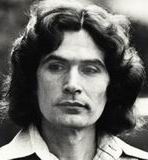
Rodney Alcala
Serial killer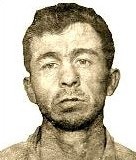 Donald Henry Gaskins
Serial killer · USA · 1969
Donald Henry Gaskins, also known as Donald “Pee Wee” Gaskins, was a serial kill…
200 victims
Donald Henry Gaskins
Serial killer · USA · 1969
Donald Henry Gaskins, also known as Donald “Pee Wee” Gaskins, was a serial kill…
200 victims
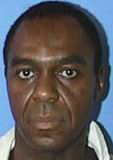 Carl Eugene Watts
Serial killer · USA · 1974
Carl Eugene Watts (born November 7, 1953; died September 21, 2007), also known…
100 victims
Carl Eugene Watts
Serial killer · USA · 1974
Carl Eugene Watts (born November 7, 1953; died September 21, 2007), also known…
100 victims
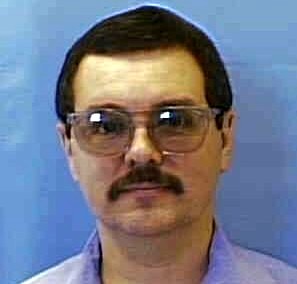 Donald Harvey
Serial killer · USA · 1970
Donald Harvey was known as an American serial killer and a self-professed “Ange…
87 victims
Donald Harvey
Serial killer · USA · 1970
Donald Harvey was known as an American serial killer and a self-professed “Ange…
87 victims
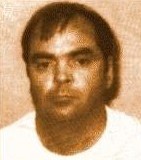 Donald Leroy Evans
Serial killer · USA · 1975
Donald Leroy Evans (born July 5, 1957) was an American serial killer who murder…
60 victims
Donald Leroy Evans
Serial killer · USA · 1975
Donald Leroy Evans (born July 5, 1957) was an American serial killer who murder…
60 victims
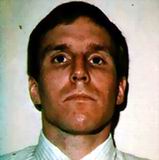 Michael Swango
Serial killer · USA · 1981
Michael Swango (Joseph Michael Swango) was a physician and American serial kill…
60 victims
Michael Swango
Serial killer · USA · 1981
Michael Swango (Joseph Michael Swango) was a physician and American serial kill…
60 victims
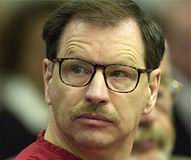 Gary Ridgway
Serial killer · USA · 1982
Gary Leon Ridgway Ridgway was born 18-February-1949 in Salt Lake City, UT. He w…
49 victims
Gary Ridgway
Serial killer · USA · 1982
Gary Leon Ridgway Ridgway was born 18-February-1949 in Salt Lake City, UT. He w…
49 victims
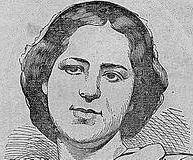 Lizzie Lloyd King
Murderer · USA · 1873
Elizabeth “Lizzie” Lloyd King (born 1847) was accused of murdering Charles Good…
1 victim
Lizzie Lloyd King
Murderer · USA · 1873
Elizabeth “Lizzie” Lloyd King (born 1847) was accused of murdering Charles Good…
1 victim
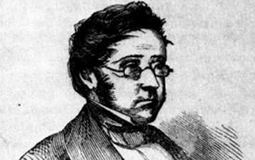 John White Webster
Murderer · USA · 1849
John White Webster (May 20, 1793–August 30, 1850) was born in Boston, Massachus…
1 victim
John White Webster
Murderer · USA · 1849
John White Webster (May 20, 1793–August 30, 1850) was born in Boston, Massachus…
1 victim
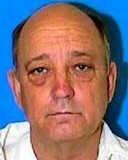 Hilton Lewis Crawford
Murderer · USA · 1995
Hilton Lewis Crawford was executed by lethal injection in Texas on July 2, 2003…
1 victim
Hilton Lewis Crawford
Murderer · USA · 1995
Hilton Lewis Crawford was executed by lethal injection in Texas on July 2, 2003…
1 victim
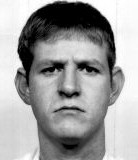 William Kitchens
Murderer · USA · 1986
William Joseph Kitchens was convicted of the capital murder of Patricia Webb an…
1 victim
William Kitchens
Murderer · USA · 1986
William Joseph Kitchens was convicted of the capital murder of Patricia Webb an…
1 victim
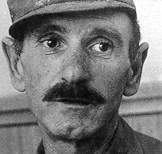 James William Miller
Serial killer · Australia · 1976
James William Miller was convicted of six counts of murder in the Truro murders…
7 victims
James William Miller
Serial killer · Australia · 1976
James William Miller was convicted of six counts of murder in the Truro murders…
7 victims
 Debra Kay Washington
Murderer · USA · 2011
Debra Kay Washington was 49 at sentencing in Augusta County Circuit Court. Wash…
1 victim
Debra Kay Washington
Murderer · USA · 2011
Debra Kay Washington was 49 at sentencing in Augusta County Circuit Court. Wash…
1 victim
- Gender
- male
- Country
- USA
- Location
- California, USA
- Date of birth
- August 23, 1943
- Age at first offence
- 34
- Characteristics
- rape, convicted rapist, serial rapist
- Victim profile
- Robin Samsoe, 12 /Jill Barcomb, 18 / Georgia Wixted, 27 / Charlotte Lamb, 32 / Jill Parenteau, 21
- Method of murder
- Beating / Strangulation
- Date(s) of murder
- 1977 - 1979
- Years active
- 1977–1979
- Date of arrest
- July 27, 1979
- Status
-
Sentenced to death
Sentenced to death March 30, 2010
Case record: Rodney Alcala
Identifying information
Rodney James Alcala (born August 23, 1943) was also known as Rodrigo Jacques Alcala-Buquor, Rod Alcala, John Berger, and John Burger. He was sometimes labeled the "Dating Game Killer".
Legal status and sentence
Alcala was sentenced to death in California in 2010. The sentencing occurred on March 30, 2010.
Background
Alcala was born in San Antonio, Texas to Raoul Alcala Buquor and Anna Maria Gutierrez. He and his sisters were raised by his mother in suburban Los Angeles. His father abandoned the family. He joined the United States Army in 1960, where he served as a clerk. In 1964, after what was described as a "nervous breakdown", he was diagnosed with antisocial personality disorder by a military psychiatrist and discharged on medical grounds.
Alcala graduated from the UCLA School of Fine Arts after his medical discharge from the Army. He later attended New York University using the alias "John Berger", where he studied film under Roman Polanski.
Other details: early criminal history and parole
Alcala committed his first known crime in 1968. A motorist in Los Angeles witnessed him luring an eight-year-old girl named Tali Shapiro into his Hollywood apartment and called police. The girl was found in the apartment raped and beaten with a steel bar, but Alcala escaped. Alcala fled to the east coast and enrolled at NYU using the name "John Berger". During the summer months he also obtained a counseling job at a New Hampshire arts camp for children using the alias "John Burger".
In 1971, after two campers noticed Alcala's FBI wanted poster at the post office and notified camp directors, he was arrested and extradited back to California. By then, Tali Shapiro's parents had relocated her family to Mexico and refused to allow her to testify at Alcala's trial. Unable to convict him of rape and attempted murder without their primary witness, prosecutors permitted Alcala to plead guilty to a lesser charge. He was paroled after 34 months in 1974 under the "indeterminate sentencing" program, which allowed parole boards to release offenders as soon as they demonstrated evidence of "rehabilitation".
Less than two months later, Alcala was arrested for violating parole and providing marijuana to a 13-year-old girl who claimed she had been kidnapped. Once again, he was paroled after serving two years of an "indeterminate sentence".
The offence: murders and alleged conduct
Alcala was convicted for five murders committed between 1977 and 1979. The convictions covered the murders of Robin Samsoe and four additional women:
- Jill Barcomb (18)
- Georgia Wixted (27)
- Charlotte Lamb (31 or 32)
- Jill Parenteau (21)
Prosecutors said Alcala "toyed" with his victims, strangling them until they lost consciousness, then waiting until they revived, sometimes repeating this process several times before finally killing them. The judge in his March 30, 2010 sentencing said Alcala had an "abnormal interest in young girls". The judge also said photos of the women taken by Alcala show he had "sadistic sexual motives" and that "some of the victims were posed after death."
A jury recommended the death penalty for Alcala after convicting him on charges of slaying four women and a teenage girl.
Investigation and evidence
Investigators learned that Alcala's DNA, sampled under a new state law (over his objections), matched semen left at the rape-murder scenes of two women in Los Angeles. Another pair of earrings found in Alcala's storage locker matched the DNA of one of the two victims. Additional evidence, including another cold case DNA match in 2004, led to Alcala's indictment for murders of four additional women: Jill Barcomb, Jill Parenteau, Georgia Wixted, and Charlotte Lamb.
During the third joined trial, a witness dispute in earlier proceedings related to a park ranger and an amnesia claim, and another appellate reversal related to improper admission of evidence about prior sex crimes. At the 2010 trial, the case focused on evidence in the Samsoe matter alongside the joined counts.
In April 2010, the Huntington Beach Police Department made public 120 of Alcala's photographs to try to identify women and determine whether any could be additional victims. Anyone willing to provide information was asked to call Det. Patrick Ellis at (714) 536-5971. In the first few weeks after the release, approximately 20 women had come forward to identify themselves.
Arrest and custody
Alcala was incarcerated since his 1979 arrest for Samsoe's murder.
Trial
Third trial and joining of charges
In 2003, prosecutors entered a motion to join the Samsoe charges with those of the four newly-discovered victims. Alcala contested the motion. In 2006, the California Supreme Court ruled in the prosecution's favor, and in 2009 Alcala stood trial once again.
At the third trial:
- Alcala acted as his own attorney.
- He told jurors that he was at Knott's Berry Farm when Samsoe was kidnapped.
- He offered no defence of any kind in the other four cases.
- As part of his closing argument, he played the portion of Arlo Guthrie's song "Alice's Restaurant" in which the protagonist tells a psychiatrist he wants to "kill."
Alcala was convicted on all five counts.
Witnesses during penalty phase
A surprise witness during the penalty phase of the trial was Tali Shapiro, Alcala's first known victim.
Sentencing
In March 2010, Alcala was sentenced to death for a third time.
An Orange County judge on March 30, 2010 sentenced serial killer Rodney Alcala to death for five killings in the 1970s. The decision was attributed to Judge Francisco Briseno. Briseno said photos of the women taken by Alcala show he had "sadistic sexual motives" and that "some of the victims were posed after death." The judge said Alcala had an "abnormal interest in young girls."
Appeals and reversals before the 2010 sentence
Alcala had been tried for Samsoe's murder, sentenced to death, and had his conviction overturned twice before the third trial.
- In 1980, he was tried, convicted, and sentenced to death for Samsoe's murder, but his conviction was overturned by the California Supreme Court because the Orange County Superior Court trial judge had allowed the jury to hear about the Tali Shapiro case and Alcala's other rape and kidnapping convictions.
- In 1986, he was convicted for a second time and again sentenced to death, but a Ninth Circuit Court of Appeals panel overthrew his conviction once again, in part because a witness was not allowed to support Alcala's contention that the park ranger who found Samsoe's body had been "hypnotized by police investigators."
- In April 2001, a federal appellate court overturned Alcala's death sentence in the Samsoe case, ruling that the Superior Court judge precluded the defence from presenting evidence “material to significant issues.”
Dating Game appearance and public remarks
In 1978, Alcala was accepted as a contestant on The Dating Game. Host Jim Lange introduced him as "...a successful photographer who got his start when his father found him in the darkroom at the age of 13, fully developed. Between takes you might find him skydiving or motorcycling."
Alcala won a date with "bachelorette" Cheryl Bradshaw, who subsequently refused to go out with him, according to published reports, because she found him "creepy."
Jed Mills, an actor who sat next to Alcala onstage as "Bachelor #2", described him as a "very strange guy" with "bizarre opinions." Criminal profiler Pat Brown said: "One wonders what that did in his mind," Brown said. "That is something he would not take too well. [Serial killers] don't understand the rejection. They think that something is wrong with that girl: 'She played me. She played hard to get.'"
Other legal matters during and after imprisonment
Alcala wrote You, the Jury, a 1994 book in which he asserted his innocence in the Samsoe case and pointed to a different suspect.
He filed two lawsuits against the California penal system for a slip-and-fall claim, and for failing to provide him a low-fat diet.
New York officials had the option of filing additional charges against Alcala in the case of Ellen Jane Hover, murdered in 1977 while Alcala was working in New York as a security guard. He was also suspected in the murder of TWA flight attendant Cornelia "Michael" Crilley, which occurred in 1971 while Alcala was enrolled at NYU. Alcala continued to maintain his innocence and remained on death row at San Quentin State Prison.
Timeline
- 1960 — Alcala joined the United States Army.
- 1964 — After a described "nervous breakdown", Alcala was diagnosed with antisocial personality disorder and discharged on medical grounds.
- 1968 — Tali Shapiro (age 8) was lured into Alcala's Hollywood apartment and was raped and beaten with a steel bar; Alcala escaped.
- 1971 — Alcala was arrested after campers noticed his FBI wanted poster and was extradited back to California.
- 1974 — Alcala was paroled after 34 months under the "indeterminate sentencing" program.
- 1974 — Alcala was arrested for violating parole and providing marijuana to a 13-year-old girl claiming she had been kidnapped; he was again paroled after serving two years of an "indeterminate sentence".
- 1977 (Nov. 10) — Jill Barcomb (age 18) was found; she had been sexually assaulted, bludgeoned, and strangled with a pair of blue pants; there were signs of sexual assault and three bite marks on her right breast.
- 1977 (Dec. 16) — Georgia Wixted (age 27) was found beaten to death at her home in Malibu; a hammer was found next to her body; she had been sexually assaulted and strangled.
- 1977 — Ellen Hover (age 24) was last seen in her New York apartment July 15, and her body was found 11 months later in a shallow grave on the Rockefeller estate; Alcala was linked as a suspect.
- 1978 (June 24) — Charlotte Lamb (age 32) was found in the laundry room of an El Segundo apartment complex; she was sexually assaulted and strangled with a shoelace.
- 1978 — Alcala appeared on The Dating Game.
- 1979 (June 13) — Jill Parenteau (age 21) was found sexually assaulted and strangled in her Burbank apartment; her nude body was found on the floor propped up by pillows.
- 1979 (June 20) — Robin Samsoe (age 12) disappeared near the Huntington Beach Pier.
- 1979 (July 24) — Rodney James Alcala was arrested at his parents' Monterey Park home.
- 1980 — Alcala was convicted of murdering Robin Samsoe and sentenced to death.
- 1984 — Alcala won a second trial after the California Supreme Court ruled that evidence of prior attacks against young girls should not have been allowed at trial.
- 1986 — For the second time, Alcala was convicted of Samsoe's murder and sentenced to death in Orange County Superior Court.
- 1994 — Alcala published You, the Jury.
- 2001 (April 2) — A federal appellate court overturned Alcala's death sentence in the Samsoe case.
- 2003 — DNA collected led to additional murder charges; prosecutors moved to join Samsoe charges with those of four newly-discovered victims.
- 2004 — Another cold case DNA match contributed to further proceedings.
- 2005 (Sept. 1/Sept. 19) — An indictment for the four Los Angeles County murders was described as being returned; hearings and motions about combining cases were discussed.
- 2006 — The California Supreme Court ruled in the prosecution's favor on joining.
- 2009 — Alcala stood trial once again.
- 2010 (Jan. 11) — Alcala's trial for the five murders began.
- 2010 (March 9) — Alcala was again sentenced to death.
- 2010 (March 30) — Alcala was sentenced to death for the five killings.
Other details
Alcala was described as sometimes being a main suspect in the murders being investigated in New York involving Ellen Jane Hover and Cornelia "Michael" Crilley.
Prosecutors alleged that Alcala carried one 18-year-old to a remote canyon road where he raped and sodomized her before bashing her head with a rock. At trial, Orange County prosecutor Matt Murphy told jurors DNA found in the bodies of three of the women proved Alcala had committed those murders.
The Samsoe case described evidence included that:
- No one saw Robin Samsoe being abducted as she rode her friend's bike to ballet class.
- Her skeletal remains were found in the Angeles National Forest 12 days after she disappeared.
- Photos of one of the girls were found in Alcala's possession.
- Gold ball earrings were found in a jewelry pouch in a storage locker in Seattle where he was arrested a month after her murder.
- Investigators found other earrings in the same pouch, including a rose-shaped stud containing trace DNA from Charlotte Lamb.
- Alcala maintained that the gold ball earrings were his and introduced as evidence a video of himself as the winning contestant on a 1978 episode of "The Dating Game."
During closing arguments in the third trial, Alcala asked jurors to spare him from the death penalty and said a sentence of life in prison without parole "would end this matter now."
Spotted an error, or have more information about this case?