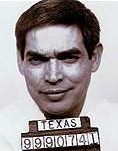
Juan Raul Garza
Murderer Glen Stewart Godwin
Murderer · USA / Mexico · 1980
August 3, 1980 — Eagle Mountain residents found a blown-up pickup truck with re…
2 victims
Glen Stewart Godwin
Murderer · USA / Mexico · 1980
August 3, 1980 — Eagle Mountain residents found a blown-up pickup truck with re…
2 victims
 Dennis Skillicorn
Murderer · USA / Mexico · 1979
Dennis Skillicorn was sentenced to death for his role in the murder of Richard…
6 victims
Dennis Skillicorn
Murderer · USA / Mexico · 1979
Dennis Skillicorn was sentenced to death for his role in the murder of Richard…
6 victims
 Dr. Wouter Basson
Murderer · 1992
Wouter Basson (born July 6, 1950) was a South African cardiologist and the form…
230 victims
Dr. Wouter Basson
Murderer · 1992
Wouter Basson (born July 6, 1950) was a South African cardiologist and the form…
230 victims
 Ershad Sikder
Murderer · Bangladesh · 1990
Ershad Sikder was an influential political figure in the south-western city of…
30 victims
Ershad Sikder
Murderer · Bangladesh · 1990
Ershad Sikder was an influential political figure in the south-western city of…
30 victims
 Brian Kevin Rosenfeld
Murderer · USA · 1985
Brian Kevin Rosenfeld Brian Kevin Rosenfeld was sentenced to three concurrent l…
23 victims
Brian Kevin Rosenfeld
Murderer · USA · 1985
Brian Kevin Rosenfeld Brian Kevin Rosenfeld was sentenced to three concurrent l…
23 victims
 Antony Baekeland
Murderer · United Kingdom · 1972
Antony Baekeland lived with his mother, Barbara Baekeland, in a penthouse flat…
1 victim
Antony Baekeland
Murderer · United Kingdom · 1972
Antony Baekeland lived with his mother, Barbara Baekeland, in a penthouse flat…
1 victim
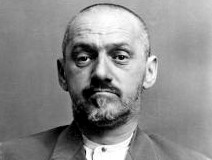 Mohammed Hadjetlaché
Murderer · Sweden · 1918
Mohammed Beck Hadjetlaché (20 May 1868, he also sometimes stated 1870 or 1872,…
3 victims
Mohammed Hadjetlaché
Murderer · Sweden · 1918
Mohammed Beck Hadjetlaché (20 May 1868, he also sometimes stated 1870 or 1872,…
3 victims
 Courtney Matthews
Mass murderer · USA · 1994
Courtney Matthews, 19, was a soldier at nearby Fort Campbell and worked at a Ta…
4 victims
Courtney Matthews
Mass murderer · USA · 1994
Courtney Matthews, 19, was a soldier at nearby Fort Campbell and worked at a Ta…
4 victims
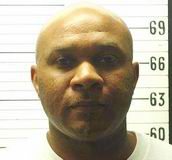 Clarence Nesbit
Murderer · USA · 1993
Clarence C. Nesbit was convicted of premeditated first degree murder in the Cri…
1 victim
Clarence Nesbit
Murderer · USA · 1993
Clarence C. Nesbit was convicted of premeditated first degree murder in the Cri…
1 victim
 Robert Bryant
Mass murderer · USA · 2002
Robert Bryant lived in California before moving to Oregon. He was described as…
5 victims
Robert Bryant
Mass murderer · USA · 2002
Robert Bryant lived in California before moving to Oregon. He was described as…
5 victims
- Gender
- male
- Country
- USA / Mexico
- Location
- Texas, USA / Mexico
- Date of birth
- 1957
- Age at first offence
- 33
- Characteristics
- —
- Victim profile
- Thomas Rumbo; Erasmo De La Fuente; Gilberto Matos; Antonio Nieto; Bernabe Sosa; Diana Flores Villareal, Oscar Cantu, and Fernando Escobar García
- Method of murder
- Shooting
- Date(s) of murder
- 1990 - 1991
- Years active
- 1990–1991
- Date of arrest
- —
- Status
-
Executed
Executed by lethal injection by U.S. Government at Indiana on June 19, 2001
Case record: Juan Raul Garza
Status / disposition
Juan Raul Garza was executed by lethal injection by the U.S. Government at Indiana on June 19, 2001.
Timeline
- 1980s — Garza built and controlled an intricate drug trafficking enterprise.
- 1992 — Garza fled to Mexico and could not be found; U.S. Customs Service mounted a sweeping interstate offensive using an assault helicopter, hundreds of agents and a S.W.A.T. team to secure and search the homes of Garza and his workers.
- February 1992 — Garza was located after he ran low on money and phoned a Michigan associate to arrange a sale; the associate cooperated with the government and agents taped record conversations; Mexican government apprehended Garza and turned him over to U.S. Customs Service.
- August 10, 1993 — Garza was sentenced to death under Federal law on August 10, 1993, in the Southern District of Texas.
- September 1, 1995 — The United States Court of Appeals for the Fifth Circuit affirmed the convictions and sentences of both Juan Raul Garza and Manuel Flores; in this consolidated appeal the court found no reversible error and affirmed.
- December 12, 2000 — Garza’s execution was originally scheduled for December 12, 2000.
- June 6, 2001 — Attorney General John Ashcroft said there was “no evidence of bias against racial or ethnic minorities” and that he would not authorize further study; he also said “I know of no reason not to proceed with the Garza execution.”
- June 18, 2001 — Attorney General John Ashcroft released a statement regarding Garza.
- June 19, 2001 — Garza was executed by lethal injection in Indiana at 7:09 a.m.
Background
Juan Raul Garza, 44, was convicted of various marijuana drug trafficking laws, money laundering, and three counts of murder in furtherance of a Continuing Criminal Enterprise.
From the early 1980’s until 1992, Garza built and controlled an intricate drug trafficking enterprise. Working with friends and associates from the tough neighborhood of his youth, Garza sold thousands of pounds of marijuana in Texas, Louisiana and Michigan, reaping hundreds of thousands of dollars in return. Garza originally bought from a supplier who imported marijuana into the United States for him, but eventually he sent his own workers into Mexico to buy the drug and drive it across the border.
Garza occasionally suffered setbacks when loads of marijuana or cash were seized by law enforcement agencies. These incidents made Garza suspicious that certain of his workers and associates were cooperating with police.
Garza’s mistrust was reflected in the killings that were at issue in his convictions. Three victims were tied to Garza’s suspected informant network and control of his enterprise:
- Gilberto Matos, an associate of drug smuggler Erasmo De La Fuente.
- Erasmo De La Fuente.
- Thomas Rumbo.
Garza was born in Brownsville, Texas, the son of Hispanic migrant workers. He had two children ages 9 and 12. Garza was sentenced to death in August 1993 and had exhausted all direct and collateral appeals for his conviction. In accordance with Federal regulations, the method of execution was lethal injection.
The offence
Drug trafficking enterprise and money laundering
Garza was convicted of five violations of various drug trafficking laws. He was also convicted of operating a continuing criminal enterprise (CCE) and money laundering. The appeal record lists the counts as:
- Count 1: conspiracy to import more than 1,000 kilograms of marijuana into the U.S. from Mexico, 21 U.S.C. Secs. 963, 952(a)(2) and 960(b)(1)(G)
- Count 2: conspiracy to possess with intent to distribute more than 1,000 kilograms of marijuana, 21 U.S.C. Secs. 846, 841(a)(1) and 841(b)(1)(A)(vii)
- Count 3: possession with intent to distribute approximately 163.6 kilograms of marijuana, 21 U.S.C. Secs. 841(a)(1) and 841(b)(1)(B)(vii); 18 U.S.C. Sec. 2
- Count 4: possession with intent to distribute approximately 95.4 kilograms of marijuana, 21 U.S.C. Secs. 841(a)(1) and 841(b)(1)(C); 18 U.S.C. Sec. 2
- Count 5: possession with intent to distribute approximately 596.3 kilograms of marijuana, 21 U.S.C. Secs. 841(a)(1) and 841(b)(1)(B)(vii); 18 U.S.C. Sec. 2
- Count 6: 21 U.S.C. Secs. 841(a), 848(c) and 848(e)(1)(A); 18 U.S.C. Sec. 2
- Count 10: 18 U.S.C. Sec. 1956(a)(1)(A)(i) and 18 U.S.C. Sec. 2
Murder in furtherance of CCE (three counts)
Garza was convicted of three counts of killing in furtherance of a CCE, identified in the appeal record as Counts 7, 8 and 9, under 21 U.S.C. Secs. 848(a), 848(c) and 848(e); 18 U.S.C. Sec. 2.
Prosecutors presented testimony that Garza ordered or carried out five more killings beyond those described in the indictment, four of them in Mexico. The attorney general’s statement later described responsibility for additional murders in the sentencing phase and characterized the jury’s findings as finding Garza responsible for eight murders.
Garza’s guilt was connected to killings ordered as part of Garza’s effort to control the enterprise and address suspected cooperation with police.
Killings described in the appeal narrative
Matos Gilberto Matos was an associate of Erasmo De La Fuente, a drug smuggler who worked with Garza. Garza suspected that De La Fuente had tipped off the police about a 1,350 pound shipment of marijuana that had been seized from one of Garza's storage houses. Garza commissioned some of his workers to murder De La Fuente, but the workers ran into trouble because De La Fuente was continually surrounded by a small entourage, which included Matos.
When Garza’s patience wore thin, Garza ordered Manuel Flores and Israel Flores to break into Matos' auto repair shop and lie in wait for either De La Fuente or Matos. If only Matos appeared, they were to kill him as a forewarning to De La Fuente. When Matos arrived at his shop alone, Israel and Manuel made him lie face down on the floor and waited about 45 minutes in case De La Fuente might show up. When the wait proved fruitless, Manuel shot Matos in the back of the head. Garza paid Israel and Manuel with cash and a car.
De La Fuente Garza did not abandon his plans to murder De La Fuente. Five months later, Garza supplied Israel Flores and Jesus Flores with guns and took them to De La Fuente's nightclub to kill him. Israel consumed too much liquor to help with the murder and had to be dropped off in an alley. Jesus picked up Manuel Flores and they went back to the nightclub.
When De La Fuente left the club and got into his car, Manuel shot him twice through the driver’s window. Jesus fired shots into the air to distract the police from chasing Manuel. Jesus hid in a ditch for a few hours, then called Garza, who picked him up. Garza paid each of the Flores brothers $10,000.
Rumbo Thomas Rumbo was the third victim. After surveillance officers watched Rumbo help load marijuana into a trailer, they stopped him and told him what they had seen. Rumbo agreed to cooperate and turned the entire 360 pound shipment over to the officers. Rumbo tried to disguise his infidelity by cutting a hole in the fence surrounding the trailer and telling one of Garza’s associates that the drugs had been stolen. Garza figured Rumbo had stolen his merchandise and went directly to Rumbo’s house, taking two of his workers with him.
Rumbo reluctantly got into Garza’s pickup truck, and they drove to another worker's house, where Garza picked up a gun. They stopped again at Jesus Flores' house; Jesus volunteered to go along because he owed Garza money for cocaine. All five got into Jesus’ car and drove around while Jesus interrogated Rumbo. Rumbo stuck to his story, so they drove out to a rural farm road. Garza told Rumbo he knew Rumbo had taken the marijuana. Rumbo was told to get out of the car and walk home; Rumbo protested that he was wearing new shoes but then climbed out.
Garza shot Rumbo in the back of the head and Rumbo fell back into the car. Garza and Jesus lugged Rumbo's body out into the brush, and Garza shot him four more times.
Investigation and law enforcement actions
Law enforcement agents tightened the net around Garza’s operations. They tapped Garza’s phone and surveilled his activities, seized more loads of drugs and money, arrested some of his workers and converted others into informants.
Garza was arrested after making a delivery to an undercover agent. In February 1992, the U.S. As a result of this raid, most associates were indicted and arrested.
While Garza was a fugitive, the government made plea agreements with most co-conspirators, allowing them to plead to lesser charges and recommend substantially reduced sentences in exchange for testimony against Garza. After the plea agreements, Garza was reindicted with the ten counts described in the appeal.
Garza fled to Mexico and could not be found, until authorities located him when he ran low on money and phoned a Michigan associate to arrange a sale. Agents taped record Garza’s conversations by using the cooperating associate. Agents traced the calls and contacted the Mexican government, which apprehended Garza and turned him over to the U.S. Customs Service.
Arrest / custody
Following the February 1992 raid, Garza fled to Mexico and could not be found. Authorities located Garza after his call to a Michigan associate arranging a sale; Mexican government apprehended Garza and turned him over to the U.S. Customs Service.
Trial
Garza’s trial was divided into a guilt phase and a punishment phase as required by 21 U.S.C. Sec. 848. After taking steps required by the statute, the jury made a binding recommendation of a death sentence for each of Garza’s Sec. 848(e) convictions.
Guilt phase findings and conduct described in the appeal
The appeal affirmed Garza’s convictions, stating he was convicted of five violations of various drug trafficking laws, operating a continuing criminal enterprise (CCE), money laundering, and three counts of killing in furtherance of a CCE. The appeal also affirmed Manuel Flores’s separate convictions.
Punishment phase findings
For each murder, the jury decided whether the government established at least one of the four aggravating “intent” factors in Sec. 848(n)(1). For the De La Fuente murder, the jury found Garza had intentionally killed De La Fuente (n)(1)(A), and that Garza intentionally engaged in conduct intending De La Fuente be killed and/or that lethal force be employed against him (n)(1)(C). For the Rumbo murder, the jury found both (n)(1)(A) and (n)(1)(C). For the Matos murder, the jury found only (n)(1)(C).
Having found the requisite aggravating intent factors for each killing, the jury then found statutory aggravating factors derived from Sec. 848(n)(2)-(12). The jury found that Garza committed all three murders after substantial planning and premeditation (n)(8), and that Garza procured De La Fuente and Matos’ killing by payment of something of pecuniary value (n)(6).
The jury then considered whether the government had proven non-statutory aggravators. It found Garza was responsible for five additional killings, that Garza procured two of these by payment of something of pecuniary value, that four were committed after substantial planning and premeditation, that two were committed in furtherance of the CCE, and that Garza represented a continuing danger to the lives of others based upon his pattern of violent and brutal acts.
The jury considered mitigating factors. Garza’s jury found statutory mitigators that Garza was under unusual and substantial duress, that Garza was youthful, that other defendants equally culpable would not be punished by death, and that the victims consented to the criminal conduct resulting in their deaths. Although it did not specify which one, the jury also found at least one mitigator from the list of non-statutory mitigators introduced by Garza. The jury then balanced aggravators against mitigators, and recommended death if aggravators sufficiently outweighed mitigators to justify a sentence of death.
The jury certified that the decision was made without considering the race, color, religion, national origin or sex of Garza or his victims. The district court imposed the death sentence as mandated by the statute.
Sentencing
After the punishment hearing, the same jury recommended a death sentence for the three killings. The court sentenced Garza to death for Counts 7, 8, and 9, and to concurrent terms of imprisonment for:
- life imprisonment (counts 1, 2, and 6)
- 40 years (counts 3 and 5)
- 20 years (count 4 and 10)
Garza also received a life term for conspiracy to import into the United States a quantity exceeding 1,000 kilos of marijuana.
Appeals
1995: United States Court of Appeals for the Fifth Circuit
Garza and Manuel Flores challenged their convictions and sentences in a consolidated appeal. The Court of Appeals for the Fifth Circuit stated: “We find no reversible error and affirm.”
Issues addressed in the appeal (Garza’s challenges)
The appeal record included extensive discussion of:
- voir dire limits and adequacy, including the court’s questionnaire approach and questioning procedure
- excusal of specific venire members and jurors for opposition to the death penalty, including jurors referenced as No. 11 and No. 19, and other dismissed jurors identified as Ms. Nieto, Ms. Martinez, Mr. Narup, and Mr. Flores
- for-cause challenges related to pretrial publicity, including Ms. Esparza and Mr. Krell
- for-cause challenges related to relationships with government witnesses or law enforcement, including Ms. Scheiner, Ms. Casas, Mr. Robles, Mr. Guevara, Mr. Medill and Mr. Moreno
- admission of tape recorded conversations between Garza and co-conspirator Daniel Bordayo
- admission of non-expert witnesses interpreting tape recordings and issues related to judge participation
- sufficiency of Count Ten of the indictment alleging money laundering, and evidentiary sufficiency for a financial transaction
- denial of a motion to suppress, including the legality of a stop and a consensual search of a Toronado, and the voluntariness of Garza’s statements
- admission of a photograph of lost evidence (gloves and keys from Matos’s car)
- discovery and scheduling matters, including a denial of a continuance and a witness list issue
- claimed Brady issues regarding a confidential informant’s criminal record
- requests for Jencks Act and Brady material regarding notes from debriefed witnesses
- admission of an undisclosed statement (Garza’s Spanish exclamation to Israel Flores) and related discovery issues
- challenges to the government’s objections during closing argument and a specific exchange concerning Garza’s failure to testify
- punishment phase jury instruction and verdict form issues, including unanimity concepts and “sufficiently outweigh” versus beyond reasonable doubt balancing
Outcome of appeal
The Fifth Circuit affirmed the convictions and sentences for both Garza and Flores.
Outcome / execution
Garza was executed by lethal injection at Indiana on June 19, 2001.
Multiple media accounts described the execution setting and Garza’s final statement. The final statement quoted in those accounts was:
“I just want to say that I'm sorry, and I apologize for all the pain and grief that I have caused,” he said. “I ask your forgiveness and God bless.”
The execution was described as occurring at 7:09 a.m. local time. Garza was strapped to the same gurney where Timothy McVeigh had been executed last week. Garza had a last requested meal consisting of steak, French fries, onion rings, diet cola and three slices of bread.
CNN journalist Karen Grunden described the execution scene and stated:
“When we walked into the media witness room, the curtains were closed. There are two windows in that room, and a metal bar that comes out from the window area that prevents us from getting up right close to the window. It was a bluish green curtain. It opened at approximately 7:00 a.m. today. We saw Mr. Garza on the gurney. He had a white sheet draped on him, draped down to the floor, to about here. And there was a white sheet on the gurney underneath him, as well. You could see that he was wearing a white T-shirt. ” “The warden did walk by our window right right after the curtain had opened. And Mr. Garza seemed to look at someone, possibly, in this inmate witness room and give a nod before the drugs were administered, before he gave his final statement. He did look around a little bit, seemed to look at each of the rooms a bit, just to kind of gauge who was there, and was given his opportunity to make the final statement. You've already heard that. ” “The sentencing information was read by Warden Lappin, and it was three counts of intentional killing in a criminal conspiracy, I believe -- something to that effect. ” “His hair was graying a bit. He did blink a few times, and this was after the first drug, apparently, had already started. He looked again at the inmate witness room, and as he laid there, his eyes, at the end, did look towards the ceiling, but his head was tilted toward that inmate witness room so that he could kind of look in there. ” “He did swallow. His eyes became drowsy. There was not really a point at any time where you could actually say he died. There was no final breath that we noticed at all. Someone had said that his feet had moved. His eyes were still open, but his left eye seemed to droop more closed than the other one. The time of death, as has been said, was 7:09.”
Attorney General statement and other contemporaneous statements
Attorney General John Ashcroft released a statement regarding Juan Raul Garza on Monday, June 18, 2001. The statement included:
“Juan Raul Garza's guilt is not in doubt. In conjunction with his activities as the leader of a drug smuggling ring. He personally committed the murder of Thomas Rumbo by shooting him five times in the head and neck. He ordered the murder of Erasmo De La Fuente and paid the killers $10,000 each. He also ordered the murder of Gilberto Matos whose killers were given money and a car. ” “In addition to these three murders, in the sentencing phase of the trial the jury found beyond a reasonable doubt that Garza was responsible for ordering the murders of Antonio Nieto, Bernabe Sosa, Diana Flores Villareal, Oscar Cantu, and Fernando Escobar Garcia. Thus, the jury found that Garza was responsible for eight murders. ”
Ashcroft also stated:
“The facts of Garza's case are important. Seven of Garza's eight victims were Hispanic; the prosecutor in the case is Hispanic; the presiding judge is Hispanic; at least six of the jurors are Hispanic and all of the jurors individually certified that race, color, religious beliefs, national origin, and sex were not involved in reaching their respective decisions. ”
The statement further included:
“Although no evidence of bias has been found in the administration of the federal death penalty, by former Attorney General Janet Reno or myself, the continuing review should serve to further instill public confidence and guarantee that our future efforts are consistent with the high standards of fairness. In the meantime, there is no evidence of racial bias in the sentence Mr. Garza received and, like former Attorney General Reno, I do not believe there is any reason to further delay his execution. His execution and the Department of Justice's ongoing efforts to review how death penalty cases are brought in the federal system serve the same goal: the preservation and protection of the public's confidence in our system of justice.”
A White House spokesman Ari Fleischer stated:
“The president found no grounds to grant clemency in this case,”
Clemency and scheduling information included in the record
Garza’s execution was originally scheduled for December 12, 2000, but he received a stay from then-President Clinton granting a six-month reprieve to allow the Justice Department to gather and properly analyze more information about racial and geographic disparities in the federal death penalty system.
On May 30th, the U.S. Court of Appeals for the 5th Circuit denied Garza’s motion for a delay.
Garza’s lawyers asked President Bush to commute Garza's sentence to life in prison without a chance for parole. President Bush had not yet acted at the time of the request. The White House later announced Bush denied Garza’s petition for clemency.
Attorney General John Ashcroft stated on June 6th:
“no evidence of bias against racial or ethnic minorities” and: “I know of no reason not to proceed with the Garza execution.”
People named in connection with the case
Victims identified in the appeal narrative
- Gilberto Matos
- Erasmo De La Fuente
- Thomas Rumbo
Other individuals named with killings responsibility described
The attorney general’s statement described murders beyond the three named in the indictment and included these additional names:
- Antonio Nieto
- Bernabe Sosa
- Diana Flores Villareal
- Oscar Cantu
- Fernando Escobar Garcia
Additionally, prosecutors’ testimony included that Garza’s son-in-law was among victims, but the record did not specify the name.
Co-conspirators and participants named
- Manuel Flores
- Israel Flores
- Jesus Flores
- Daniel Bordayo
- Richard Bordayo (named in the discussion of money received from Richard Bordayo in Michigan)
- Mark Reich (U.S. Customs Service Agent; involved in visiting Manuel Flores and agent contact)
- Trooper Jorge Castillo
- Warden Harley Lappin
- Jim Cross
- Dan Dunne (U.S. Bureau of Prisons spokesman)
- Dr. Lawrence Dahm
- Elizabeth Murillo
- Gregory Wiercioch (Garza attorney referenced in clemency and remarks)
- John Howley (Garza attorney quoted regarding race)
- Audrey Anderson (attorney quoted regarding being “outraged”)
- John Ashcroft (Attorney General; statement released June 18, 2001)
- Ari Fleischer (White House spokesman)
- Robert Litt (quoted as a former deputy assistant attorney general)
Witnesses and venire members referenced in appeal discussion
Venire members and jurors referenced included:
- Ms. Esparza
- Mr. Krell
- Ms. Nieto
- Ms. Martinez
- Mr. Narup
- Mr. Flores (as a juror-related dismissal issue)
- Ms. Scheiner
- Ms. Casas
- Mr. Robles
- Mr. Guevara
- Mr. Medill
- Mr. Moreno
Other witness-related identifiers included:
- Angel Berndt Garcia
- Baldomero Medina-Garza
- Rolando Vasquez
- Jorge Vela-Garcia
- Gregory Strader
The record also identified the Flores family relationship:
- Manuel and Jesus were brothers.
- Israel was their cousin.
Other details
Execution-related witness description
The record included additional media descriptions beyond Karen Grunden’s statements, including quotes from media observers such as Karen Hensel and Karen Grunden, and descriptions attributed to Jim Cross and Dwight Conquerwood; however, the only verbatim quoted final statement was Garza’s apology and forgiveness statement.
Anti-Death Penalty activism details
The record described about 50 anti-death penalty activists outside the U.S. Penitentiary singing “We Shall Overcome” and other protest songs.
One individual named Dwight Conquerwood of Chicago said:
“It's a personal outrage. I'm appalled and aghast. Judicial killing is theater. It's planned, it's staged and it's deliberate.”
Another protest account included a quote attributed to Wiercioch:
“as a shameful attempt to justify the unjustifiable.” and: “Some day this precise savagery will end, but not today” and: “Today President Bush had the last word. But he will not have the final say on the death penalty. History will.”
International treaty and alternative sentence claims referenced in appeal
The record stated the U.S. Supreme Court refused to delay execution, rejecting claims including that the jury should have been told that the alternative to a death sentence was life in prison with no possibility of release, and that Garza’s death sentence would violate two international treaties.
Method of execution
The method of execution was lethal injection.
Spotted an error, or have more information about this case?