Petrus Hauptfleisch
Murderer Johannes de Jager
Murderer · South Africa · 2008
Johannes Christiaan de Jager was sentenced to life in prison on May 27, 2014. ·…
2 victims
Johannes de Jager
Murderer · South Africa · 2008
Johannes Christiaan de Jager was sentenced to life in prison on May 27, 2014. ·…
2 victims
 Johan Kotze
Murderer · South Africa · 2012
Johan Kotze was sentenced to life in prison on July 16, 2013. · Johan Kotze — c…
1 victim
Johan Kotze
Murderer · South Africa · 2012
Johan Kotze was sentenced to life in prison on July 16, 2013. · Johan Kotze — c…
1 victim
 Johannes Kana
Murderer · South Africa · 2013
Johannes Kana was convicted for the rape and murder of Anene Booysen. Anene Boo…
1 victim
Johannes Kana
Murderer · South Africa · 2013
Johannes Kana was convicted for the rape and murder of Anene Booysen. Anene Boo…
1 victim
 Theunis Christian Olivier
Murderer · South Africa · 2005
Theunis Christian Olivier was sentenced to life in prison on August 8, 2007, fo…
1 victim
Theunis Christian Olivier
Murderer · South Africa · 2005
Theunis Christian Olivier was sentenced to life in prison on August 8, 2007, fo…
1 victim
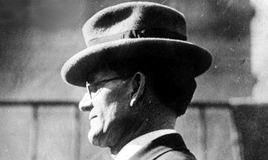 William Hale
Murderer · USA · 1921
Name: William Hale · Known as: the so-called "King of the Osage Hills" · Occupa…
24 victims
William Hale
Murderer · USA · 1921
Name: William Hale · Known as: the so-called "King of the Osage Hills" · Occupa…
24 victims
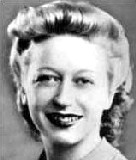 Elizabeth Jones
Murderer · United Kingdom · 1944
Elizabeth Jones was born in Neath, Wales, in 1926. At the age of thirteen, she…
1 victim
Elizabeth Jones
Murderer · United Kingdom · 1944
Elizabeth Jones was born in Neath, Wales, in 1926. At the age of thirteen, she…
1 victim
 Ronald Chris Foster
Homicide · USA · 1989
Ronald Chris Foster was an African American who was 17 years of age at the time…
1 victim
Ronald Chris Foster
Homicide · USA · 1989
Ronald Chris Foster was an African American who was 17 years of age at the time…
1 victim
 Cherrylle Dell
Murderer · Canada · 1995
Cherrylle Dell poisoned her husband, Scott Dell, with antifreeze-laced wine. Sc…
2 victims
Cherrylle Dell
Murderer · Canada · 1995
Cherrylle Dell poisoned her husband, Scott Dell, with antifreeze-laced wine. Sc…
2 victims
 Lorenzo Bahena Sanchez
Murderer · USA · 1999
Lorenzo Bahena Sanchez (convicted in Minnesota for the 1999 killing of 12-year-…
1 victim
Lorenzo Bahena Sanchez
Murderer · USA · 1999
Lorenzo Bahena Sanchez (convicted in Minnesota for the 1999 killing of 12-year-…
1 victim
- Gender
- male
- Country
- South Africa
- Location
- Richmond, Northern Cape Province, South Africa
- Date of birth
- 1886
- Age at first offence
- 39
- Characteristics
- alcoholic, parricide, to inherit
- Victim profile
- His elderly mother
- Method of murder
- Suffocation
- Date(s) of murder
- January 13, 1925
- Years active
- 1925
- Date of arrest
- 2 days after
- Status
-
Executed
Executed by hanging on 23 December 1925
Case overview
Petrus Hauptfleisch was a 40-year-old slaughterer who drank so heavily that his wife and child left him. After the break-up of his marriage, he lived with his widowed mother at her house on the outskirts of town. His mother was elderly.
Timeline
- 13 January 1925 — Petrus came running out of the house screaming that his mother had been burnt in a kitchen fire; her body was found in the kitchen with badly burnt features and without an active fire in the grate.
- 13 January 1925 — A doctor examined the body and concluded the burns and injuries were not consistent with the claimed chimney-fire accident.
- 21 September 1925 — Petrus Hauptfleisch’s trial began at the Supreme Court in Cape Town.
- 25 September 1925 — Petrus Hauptfleisch was found guilty of murder.
- 18 December 1925 — Petrus Hauptfleisch was informed that all his appeals had been turned down.
- 23 December 1925 — Petrus Hauptfleisch was hanged at seven o’clock in the morning.
- 23 December 1926 — Petrus Hauptfleisch was executed by hanging on 23 December 1926.
Background
Petrus Hauptfleisch drank so heavily that his wife and child left him. He worked as a slaughterer and lived with his elderly mother.
Shortly after the outbreak of World War 1, he gave up the property he had been farming and volunteered for the army. He was sent to Europe and fought in the trenches of Europe for four years. He returned to Richmond in 1919. By 1925 he was married and had a young child, but his constant drinking and violent temper drove his wife to leave him. After the break-up of his marriage, he went to live with his widowed mother, Barbara Hauptfleisch, at her house on the outskirts of town.
At first, Hauptfleisch worked at the local butchery, then set himself up slaughtering animals on his own. His drinking problem worsened to the point that neither bottle stores nor the hotels in town would sell him liquor. Early in December 1924, the drinking ban was temporarily rescinded, and Hauptfleisch responded by taking to the bottle once more.
On the night of 11 December 1924, Hauptfleisch became drunk and aggressive. His mother ran to a neighbour’s house out of fear for her safety and told them: “Petrus says he’s going to stone me to death”. She also said: “He was so angry he threw them on the roof of the house”.
Her neighbour, Mr Peter Theron, called the police. When Constable Strydom arrived, Hauptfleisch was still aggressive and shouted: “Surely you dont believe that old woman?” and “She’s of her head!”. Constable Strydom arrested Hauptfleisch and locked him up in the police station for the night. By the next morning, Hauptfleisch had sobered up, but he remained bitterly resentful of his mother.
When he got drunk again two days later, Richmond’s Liquor outlets black listed him again, this time at the insistence of his mother. It was understood that Hauptfleisch then felt he had no alternative but to rid himself of her. His wife and child had left him due to his drinking and violent temper.
The offence
On 13 January 1925, Petrus came running out of the house screaming that his mother had been burnt in a kitchen fire.
A neighbour saw her body lying on her side on a brick built stove, with her face and chest badly burnt. The neighbour said she had been trying to clean the chimney by burning it out with petrol but it had gone wrong.
When the doctor examined the body, he noticed lividity marks on the back of her body, suggesting she had died lying on her back. The doctor found signs that she had been suffocated and then burnt. It was concluded that Petrus had killed her in bed and then burnt the body on the stove.
Investigation
Constable ZJ.C Blom ordered everyone out of the house while he made a preliminary examination of the scene. He noted fragments of burnt clothing on the floor and a cork on a nearby table. There was a small pile of ash in the grate, within which there was an indentation where Mrs Hauptfleisch’s head had rested. The ash also contained a burnt matchbox, matches and several fragments of broken glass. There was no fire in the stove, and in the oven was a cold plate of cooked liver.
Dr Bram arrived and examined the body. He said the death did not surprise him because he knew her to be nearing seventy but always vigorous and active. Noting that her hands were semi clenched, he asked: “Is this how you found her Petrus?”
Petrus Hauptfleisch shook his head and said: “No. She was lying in the hearth with her face in the fire. I think she was trying to burn out the chimney with petrol”. He also said: “Using petrol to clean soot from the chimney was a dangerous job - not at all the thing Dr Bam would have expected from Mrs Hauptfleisch. Moreover when he glanced up the chimney, it appeared clean.”
During examination, Dr Bram initially felt alarm because the post-mortem lividity patches were in the wrong place for the claimed position. Lividity patches showed on the back of the corpse in the lumbar region and on her heels, which indicated she had died on her back rather than face-down in the hearth.
At ten o’clock the following morning, Dr Bam conducted a post-mortem and discovered she had neither burnt to death nor suffered a “heart spasm” as her son had suggested. He concluded she had suffocated. His conclusion was based on: the absence of traces or carbon either in the windpipe or in bronchial tubes; dark-coloured lungs engorged with blood and full of air; black, fluid (uncoagulated) blood indicating asphyxia; and evidence of internal haemorrhage in the lower stomach, an injury usually caused by a sharp blow or heavy pressure to the area, though he could only surmise the cause.
Although the charred neck and throat prevented visible strangulation marks, Dr Bam later concluded: “From my examination I could come to only one diagnosis, and that was that the woman died of suffocation.”
Arrest
Petrus was arrested and charged with murder shortly after his mother’s post-mortem. When he was charged with the murder of his mother, he used the money she had left him to pay for his defence.
Trial
Petrus Hauptfleisch’s trial was held at the Supreme Court in Cape Town and began Monday, 21 September 1925.
The Crown argued that the case rested on a large volume of circumstantial evidence linking Hauptfleisch to the murder. The Crown contended that his mother retired to bed for a nap at about 3 p.m on the afternoon of her death, and that he crept into her room and suffocated her, probably with a pillow. It was also contended that the internal haemorrhage noted by Dr Bam would have been caused by kneeling on her stomach to apply pressure, and that the ensuing struggle explained the clenched hands.
The Crown also contended that Mrs van Niekerk, who entered the house shortly after the body had been discovered, noticed that the bed had been slept in when she went to get a blanket to cover the body.
The Crown further contended that Hauptfleisch wandered around town to establish an alibi and then returned at around 4 p.m., carried his mother’s body into the kitchen, and contrived the accidental death scene. Mr Booysen saw Hauptfleisch in the vicinity of the house just before 5 p.m.
The Crown also said that a few days before the death, he sent a fourteen-year-old schoolboy named Daniel van Niekerk to buy sixpence-worth of petrol, yet on the afternoon of the accident he told Dr Bam he did not know where the petrol was. Another witness, Mr Conradie, testified that when he asked Hauptfleisch what had caused his mother’s death, Hauptfleisch replied: ‘She had been speaking for some days of burning out the chimney with petrol'. Conradie later remarked that he had never heard of anyone doing such a thing before.
Petrus Hauptfleisch was found guilty of murder on Friday, 25 September.
Before sentencing, Justice van Zyl asked: “Is there anything you wish to say to the court?”
Petrus Hauptfleisch replied:
“My lord and gentlemen of the jury. In this matter my learned counsel has already pointed out to you the most important facts. I really cannot say anything to supplement his address. But as this opportunity is afforded me, I would like to say something about the effect my prosecution has had on me personally. The crime with which I have been charged, matricide, is one I consider the most dastardly in the calendar. It is for me inconceivable that any man with ordinary intelligence, unless he be mentally deranged, could stoop to take the life of one who conceived his existence, nursed it and gave him life. It is a crime for which I have had great abhorrence since my puberty. That, in itself, is sufficient to justify my innocence. The very fact that I have even been suspected of murdering my mother, coupled with this prosecution, has during many months of awaiting trial - about eight months in all - caused me incomprehensible agony and, had I been guilty of the commission of this crime, I would gladly and voluntarily have made my confession to gain the punishment which would have terminated my agonized existence. I was an only son, an only child. I was spoiled and the result was bad company. All these facts, combined, strongly stimulated by extraneous influences, turned me out other than the dutiful son my mother expected. I have no compunction in acknowledging these facts. For although I am disgraced by being suspected even of such a crime, I cannot do otherwise in duty to my wife and child. Although it is a further humiliation, I cannot remain silent. I think, in analysing the various depositions, that the element of possibility of the crime is only apparent, while the rest is merely circumstantial. Such being the case, there is a doubt. I know there is a doubt. No man is convicted of a crime unless he is conclusively proved guilty. And I humbly submit that the evidence tendered by the Crown is too unfounded, too slender, too doubtful to justify a conviction. In conclusion, my lord and gentlemen of the jury, I humbly commit myself to the clemency of the court, knowing full well that I shall receive the degree of justice and mercy that I so humbly and urgently solicit.” He paused, then added, “It is not only punishing me, my lord, an innocent man. I am now condemned. It is not only I who am punished, but my innocent wife and child as well. They too must suffer.” “Is that all you wish to say?” Justice van Zyl asked. “Yes, thank, you, my lord,” Hauptfleisch responded. ”Then I have no further discretion in the matter.” So saying, he passed sentence of death on Hauptfleisch.
Sentencing
Justice van Zyl passed sentence of death on Petrus Hauptfleisch.
After sentencing, Petrus Hauptfleisch spent 83 days in the condemned cell. During that time, the body of his mother was exhumed for further investigation. The pathologist who conducted the autopsy could find no reason to argue with the State.
Appeals
On 18 December 1925, Petrus Hauptfleisch was informed that all his appeals had been turned down.
Outcome
Petrus Hauptfleisch was hanged at seven o’clock in the morning on 23 December 1925. He went to his death protesting his innocence.
Other details
Hauptfleisch was believed to have been motivated by greed. He was described as the sole benefactor named in his mother’s will and stood to inherit £600. It was suggested that the money might have been the reason for the murder, or it could have been a result of one of his regular drinking sprees.
Mrs Hauptfleisch was last seen alive at around 2 p.m. on the afternoon of 13 January 1925 when her next-door neighbour, Mrs Christina Botes, spoke to her over the back garden fence. Just after three o’clock, Petrus Hauptfleisch strolled along to the Botes’ home and chatted to Joanna, Mrs Botes’ twenty year-old daughter, who was sewing on the front stoep. Ten minutes later Petrus visited Mrs Jacoba Nieuwoudt who lived directly across the street. Mrs Nieuwoudt invited him into the house, but he declined, saying that he was on his way to the shops to buy sugar for his mother.
At around twenty minutes to four, Petrus arrived at Barend Pienaar’s store, where he was in the habit of going most days to read the newspaper for about half an hour. He left the shop just after four and was not seen for the next hour. He later said that he spent this time searching the hills outside the town in search of a blind Swiss goat and kid that he had lost. After searching, he had found the two animals and had taken them to the town’s showground. He then went to Conradies’ General Store, where he bought the sugar his mother needed and some cigarettes for himself. After chatting with the owner, he walked home in the company of Mr Hendrik Victor. He reached his mother’s house at about 5.45 p.m. He later claimed that he had been out of the house between 3.00 and 5.45 p.m.
Petrus Booysen, superintendent of the Indigent Boarding House in Richmond, saw Hauptfleisch outside his mother’s house at exactly two minutes to five. He fixed the time accurately because two minutes after Hauptfleisch passed, the church clock struck five. Hauptfleisch was seen in the house only a few seconds before he ran out again, screaming “Oh my God help!” and dashing across the street to Mrs Nieuwoudt’s house. He shouted: “My mother’s been burnt”, then rushed home again.
Mrs Botes had also heard the commotion and went to the house quickly, followed Petrus inside. Mrs Hauptfleisch was dead in the kitchen, lying half-naked on her right side on the raised stone hearth. Her head rested on a pile of ash in the fireplace and her right side was badly burnt. Petrus tenderly lifted his mother from the fireplace and placed her body on a small kitchen stool, propping her elbows up on the hearth. He left Mrs Botes and some neighbours and ran to notify the police. He went to the house of Sergeant Brooks. Brooks informed the local magistrate R.W Lambert and the district surgeon, Dr J.H Bam, and he sent Constable ZJ.C Blom back to the house with Petrus.
Constable Blom ordered everyone out of the house for the preliminary examination, during which he found evidence including burnt clothing fragments, a cork, a pile of ash with an indentation of the head’s resting position, burnt matchbox and matches, and broken glass fragments, plus a cold plate of cooked liver in the oven and no fire in the stove.
Dr Bam concluded the death was due to suffocation rather than fire-related causes.
Definitions relating to post-mortem lividity were provided: the process was described as hypostasis or liver mortis, and it was explained that lividity begins immediately after death but dark patches usually show after three to four hours and are fully evident after twelve hours, while lividity never occurs at points of direct hard surface contact or where blood flow is restricted by tight clothing.


Spotted an error, or have more information about this case?