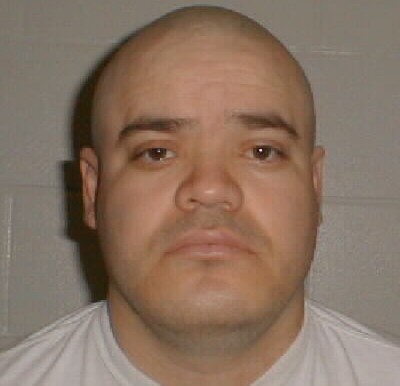
Lorenzo Bahena Sanchez
Murderer Russell Ellwood
Murderer · USA · 1991
Russell Ellwood was a former taxi driver. Authorities suspected him of killing…
20 victims
Russell Ellwood
Murderer · USA · 1991
Russell Ellwood was a former taxi driver. Authorities suspected him of killing…
20 victims
 Robert Martines Perez
Murderer · USA · 1994
Name: Robert Martines Perez · Other name used in proceedings: Robert Martinez P…
15 victims
Robert Martines Perez
Murderer · USA · 1994
Name: Robert Martines Perez · Other name used in proceedings: Robert Martinez P…
15 victims
 Billy Frank Vickers
Murderer · USA · 1993
Billy Frank Vickers Vickers was executed by lethal injection in Texas on Januar…
14 victims
Billy Frank Vickers
Murderer · USA · 1993
Billy Frank Vickers Vickers was executed by lethal injection in Texas on Januar…
14 victims
 Brenda Hodge
Murderer · Australia · 1983
Brenda Hodge was born Dorothy Brenda White in Victoria in 1951 to Beryl Nanette…
1 victim
Brenda Hodge
Murderer · Australia · 1983
Brenda Hodge was born Dorothy Brenda White in Victoria in 1951 to Beryl Nanette…
1 victim
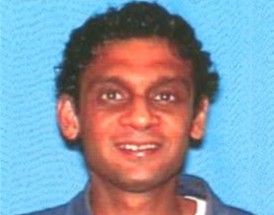 Karthik Rajaram
Mass murderer · USA · 2008
Karthik Rajaram was found dead in his Porter Ranch home along with his wife, mo…
5 victims
Karthik Rajaram
Mass murderer · USA · 2008
Karthik Rajaram was found dead in his Porter Ranch home along with his wife, mo…
5 victims
 Humberto Garza
Mass murderer · USA · 2003
Name: Humberto Garza · Also known as: “Gallo” · TDCJ number: 999495 · Date of b…
6 victims
Humberto Garza
Mass murderer · USA · 2003
Name: Humberto Garza · Also known as: “Gallo” · TDCJ number: 999495 · Date of b…
6 victims
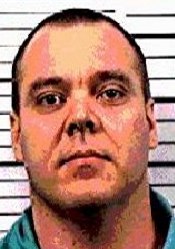 Frank Duane Welch
Murderer · USA · 1987
Name: Frank Duane Welch On February 25, 1987, Tracy Cooper arrived at his Norma…
2 victims
Frank Duane Welch
Murderer · USA · 1987
Name: Frank Duane Welch On February 25, 1987, Tracy Cooper arrived at his Norma…
2 victims
 Alec Kreider
Homicide · USA · 2007
Alec Devon Kreider (born February 4, 1991) was a Lancaster County, Pennsylvania…
3 victims
Alec Kreider
Homicide · USA · 2007
Alec Devon Kreider (born February 4, 1991) was a Lancaster County, Pennsylvania…
3 victims
- Gender
- male
- Country
- USA
- Location
- Waseca County, Minnesota, USA
- Date of birth
- November 1, 1971
- Age at first offence
- 28
- Characteristics
- rape, robbery
- Victim profile
- Cally Jo Larson, 12
- Method of murder
- St abbing with knife - Hanging
- Date(s) of murder
- April 20, 1999
- Years active
- 1999
- Date of arrest
- February 18, 2000
- Status
-
Life imprisonment
Sentenced to life in prison (minimum 30 years) on March 9, 2001, after pleading guilty
Case identification
Lorenzo Bahena Sanchez (convicted in Minnesota for the 1999 killing of 12-year-old Cally Jo Larson).
Status and outcome
Lorenzo Sanchez pleaded guilty to one count of premeditated first-degree murder in the 1999 killing of 12-year-old Cally Jo Larson. He was sentenced to life in prison (minimum 30 years) on March 9, 2001.
Timeline
- April 20, 1999 — 12-year-old Cally Jo Larson was found dead in her home after being dropped off by her school bus about an hour and a half earlier; her 17-year-old sister found her body.
- Feb. 19, 2000 — Waseca police officer Kris Markeson saw Sanchez walking in a Waseca neighborhood hit hard by burglaries, approached him, and Sanchez was searched; a screwdriver was found and Sanchez was arrested for possession of burglary tools, with an active warrant also outstanding from a Steele County drunken-driving case.
- June 27, 2000 — A grand jury was set to convene in Waseca County to hear evidence in the Cally Jo Larson homicide case.
- July 2000 — A grand jury indicted Sanchez for first-degree murder.
- November 11, 2000 — Sanchez made his first important court appearance in Waseca to litigate pre-trial issues, including challenges to his arrest and requests about venue and evidence.
- Dec. 7, 2000 — A hearing addressed Sanchez’s claim that his foreign-citizen rights under the Vienna Convention were violated because he was not told he could contact Mexican officials.
- March 5, 2001 — Sanchez pleaded guilty in court; sentencing was scheduled for Tuesday morning.
- March 9, 2001 — Sanchez was sentenced to life in prison (minimum 30 years).
The victim
Cally Jo Larson was 12 when she was found dead in her home on April 20, 1999. Her 17-year-old sister found the body.
Cause and circumstances of death
Police said Cally Jo was killed by a stab wound to the chest and was hanging by her neck. Her body was partially nude when it was found, and police said she had been sexually assaulted. Police said the attacker probably broke into the home before Larson returned from school.
Investigation and police activity
Authorities said the investigation into Cally Jo’s homicide continued without an arrest for months. The investigation was described as involving law enforcement officers from around the state, media coverage, thousands of leads, and hundreds of interviews.
Searches and leads
Authorities said that acting on a tip, they searched the bottom of Waseca’s Loon Lake. A dive team from the Le Sueur County Sheriff’s Department spent all day Aug. 17 searching a 150-square-foot area. Police did not say what they were looking for or whether they found anything, but said the tip was specific about where to search and what they might find.
Suspect pool and other investigative steps
Authorities said a man named Donald Blom was arrested on kidnapping charges in connection with the abduction of Moose Lake convenience store clerk Katie Poirer. Investigators said that when it was learned a week later that Blom had been in Waseca around the time Larson was killed, investigators zeroed in on Blom as a suspect. Waseca Police Chief Jim Staloch said there was no physical evidence to link Blom to the killing, and Blom remained among individuals investigators had not been able to exclude as suspects.
Authorities said they had not located several vehicles seen near Larson’s home on the day of killing, including a black pickup truck, nor had they found the truck’s driver, a man depicted in a composite sketch released three weeks after the murder.
Investigators asked Mankato police to follow up on several leads. The investigation was also described as being featured in a regional intelligence bulletin circulated among law enforcement agencies.
Police said they continued to check individuals after traffic stops, with patrol officers investigating “a pervert” when stops occurred.
Police said community members’ tips were sought, and Staloch said the department would continue to work on the case as long as it took.
Public statements and quotations
Waseca Police Chief Jim Staloch said:
"I think it showed the community that we're still investigating and we're still working on it," Staloch said.
Staloch said:
"We still have two [Bureau of Criminal Apprehension] agents full time and two of my staff still dedicated to this investigation."
Staloch said:
"What we've found out during the course of this investigation is that people may have seen something, but because they believe it's not relevant, they don't say anything," Staloch said.
Staloch said:
"We want people to know even at this late date that if they've seen something, even if they don't think its unusual, it is relevant. "
Staloch said:
"We're going to be working on this as long as it takes and we believe there's people out there who have seen something and can provide us with direction and insight."
Staloch said:
"I'm a little surprised that people haven't gone after those," Staloch said.
Staloch said:
"We're going to promote them and market them more and see what happens."
Ron Koble, the Waseca Police Department’s liaison to the school district, said:
"What we're hearing is the kids are afraid to baby-sit, afraid to sleep in their own rooms, and they're afraid to come home after school,"
Koble said:
"I haven't seen that the fear has subsided. The kids are aware that this person is still out there."
Koble said:
"During summer, it's easier for parents to send a kid over to a neighbor's or find something else for them to do,"
Koble said:
"With what happened to Cally, it's going to renew fears that she went home to an empty house too."
Koble said:
"There's still someone among us who has taken the life of one of our kids," Allaire said.
Koble said:
"That's something that needs some work," Koble said.
Koble said:
"The number of programs are immense. If you really try, you'll find something."
Arrest and pre-trial proceedings
Arrest for burglary tools and separate warrant
Waseca police officer Kris Markeson was on patrol in a Waseca neighborhood Feb. 19, 2000. He was told to look for suspicious activity in an area hit hard by burglaries. Markeson saw Sanchez walking down the street, approached him, asked questions, and Sanchez’s answers seemed suspicious. Markeson searched Sanchez, found a screwdriver, and placed him under arrest for possession of burglary tools. There was also an active warrant out for Sanchez’s arrest stemming from a Steele County drunken-driving case.
Indictment and grand jury
Authorities said a grand jury would convene in Waseca County to hear evidence in the Cally Jo Larson homicide case. Authorities said that individuals are often not charged or arrested before a grand jury convenes if a suspect or suspects are already incarcerated.
Authorities said that when the case proceeded, a grand jury could indict someone for the killing on first- or second-degree murder, and that the grand jury would most likely be asked to return a first-degree murder indictment. Prosecutors said that in Minnesota, prosecutors were not allowed to simply charge someone with first-degree murder, and only a grand jury indictment could do that.
Attorney General prosecution request
Upon the request of Waseca County Attorney Larry Collins, the case would be prosecuted by the Minnesota Attorney General’s Office. The report described that Attorney General prosecutors have more experience dealing with complex DNA evidence and high-profile cases.
Trial-related disputes and hearings (pre-trial issues)
Vienna Convention issue
Sanchez claimed authorities violated his rights by not specifically telling him—a Mexican citizen—about the right to contact Mexican officials for legal advice. Prosecutors argued it would have been impossible to notify him under the Vienna Convention without knowing he was a citizen of Mexico.
The proceeding involved a debate over a legal concept called the Vienna Convention: a provision requiring arresting authorities to notify a foreign citizen of the right to seek help or legal advice from the consulate of their native country.
Sanchez testified with the help of an interpreter. He said he knew he had certain rights, but that authorities never gave him an opportunity to use a phone and never provided him with the phone number or address of the Mexican consulate. He said his first attempt to contact the consulate came after another inmate in the Olmsted County Jail gave him the phone number.
Authorities said they never knew, even though Sanchez spoke limited English, that Sanchez was a citizen of Mexico. It was said Sanchez told authorities several times he was from Texas, produced a Texas identification card and birth certificate to prove it, and that it was only later—weeks after Sanchez claimed he was a U.S. citizen—that authorities obtained his true identity.
Judge Lawrence Collins decided to delay ruling on whether Sanchez’s Vienna Convention rights were violated until Sanchez and his attorneys decide whether to appeal an issue brought up Tuesday. The report said Collins ruled against Sanchez Tuesday in a request to challenge Sanchez’s original arrest on his burglary case. It said Collins denied Sanchez’s request to revisit the issue during trial, and that Sanchez and his attorneys were expected to appeal.
The report stated that if Sanchez appealed, they would need to seek a writ of Mandamus from the appeal court ordering Collins to allow them to again argue the arrest issue, and that such requests were typically handled much quicker than a months-long appeals process.
DNA evidence and document access
The parties argued over whether complex DNA evidence could be admitted and whether medical records subpoenaed from a Texas prison could be released to prosecutors.
The report stated prosecutors were willing to disclose DNA evidence but insisted on charging Sanchez’s defense team several thousand dollars to cover photocopying costs. Sanchez challenged that, and Collins ruled in favor of the defense. Collins said:
"the conditions attached ... were so prohibitive as to be tantamount to a denial of data."
Collins ordered the parties to arrange funding so that a DNA expert hired by the defense could travel cross country to inspect the data and reproduce only documents necessary to the defense.
Prison medical records and implants
The report stated prosecutors withdrew a request to inspect medical records from the Texas prison where Sanchez served a three-year term. Prosecutors had hoped a prison medical official would have noted the existence of bead-like implants in Sanchez’s genitalia, which they said could have worsened the severity of the injuries done to Cally Jo’s body. The report stated that in lieu of that documentation, prosecutors would use witness testimony to achieve the same result.
Burglary convictions and linkage to the murder case
Authorities said Sanchez was convicted in connection with a string of house burglaries and was sentenced to four years in prison. The report said this was described as happening after Sanchez was convicted last month, and that investigators had focused on Sanchez unofficially for several months even though they did not officially confirm his status as the prime suspect.
The report described that in the weeks following Sanchez’s arrest, it appeared something else was going on other than a burglary investigation. It stated Sanchez’s bail was $160,000, and that he was jailed in Rochester instead of Waseca because Rochester’s jail was more secure. It also stated that after charges were filed and he was linked to more than a dozen burglaries, authorities refused to release his jail booking photograph, saying that releasing it would hinder the investigation.
The report said Sanchez’s attorney declined to comment on whether Sanchez was being investigated for any other crimes in Waseca County. It said Sanchez was in Oak Park Heights prison, described as the most secure prison in the state.
The report said Sanchez had a history of drug and property crimes in Texas but had no history of violent crime.
Evidence reported to link Sanchez to the killing (as described in pre-trial reporting)
The report said officials said property found at Sanchez’s Waseca home linked him to the killing. It included multiple items described as possibly linked to the murder:
- An official said a compact disc case found at Sanchez’s home may have been Cally Jo’s.
- Other reports said collectible coins reported missing from the Larson home after the killing were found in Sanchez’s home. The report stated neither report had been confirmed officially.
Plea and sentencing
Guilty plea
The report stated that Lorenzo Sanchez admitted in court that he killed 12-year-old Cally Jo Larson when she arrived home from school as he was burglarizing her family’s Waseca home in April 1999. It stated he entered a surprise guilty plea.
The report described that Sanchez chose a chance at parole in 30 years rather than face a March 27 trial that could have put him behind bars for the rest of his life.
The report said a phony Texas identification card was mentioned and that Sanchez was an illegal immigrant (alien) from Mexico. It also said Sanchez told District Court Judge Lawrence Collins that he burglarized the Larson home and left, then realized he had misplaced his ID card, returned to the house, and was looking for the card when Cally Jo arrived home from school.
Charges and sentencing details
On March 5, 2001, the report stated Sanchez pleaded guilty to one count of premeditated first-degree murder in the 1999 killing of 12-year-old Cally Jo Larson, and that sentencing was scheduled for Tuesday morning. It stated Sanchez would receive a life sentence, meaning he would not be eligible for parole for 30 years.
On March 9, 2001, the report stated Sanchez was sentenced to life in prison (minimum 30 years).
Family and court participants
The report stated members of Cally Jo’s family were expected to speak in court.
Other details
School and community reaction
The report described residents wanting to move on but said many were still afraid to be home alone until Cally Jo’s killer was caught. It stated that Waseca Junior High Principal William Allaire said life in Waseca had a heightened sense of optimism early on but that it was different at the first day of classes. Allaire said:
"From some standpoints, it was a pretty normal beginning," said Waseca Junior High Principal William Allaire on Wednesday, the first day of classes at Cally Jo's school.
Allaire said:
"But it definitely was different. There's still worry, and a mild depression."
The report said students began the school year after a summer in which the killer was still at large and possibly living among them. It said few kids walked alone, some sought counseling, and community members looked for ways to ease fears.
The report stated Susan Shaffer, a Mankato psychologist, counseled Waseca students who were friends with Cally Jo. Shaffer said:
"We have a whole group of kids who have not slept in their own beds since Cally Jo was killed,"
Shaffer said:
"Some are double, triple and quadruple checking the locks on their houses, some won't let their siblings out of their sight, some kids are panicking when they don't know where their mom or dad is."
Shaffer said:
"These are typical reactions to an extraordinarily horrifying event."
Shaffer said:
"That's high risk," Shaffer said, "and it needs to be addressed."
Community safety event and neighborhood watch
The report stated that during the week of Sept. 13-17, a group called Join Hands Waseca would conduct an event called Stand Out for Safety. It described more than 100 women wearing pink hats standing at bus stops when buses dropped students off. It stated the gesture aimed to be symbolic and practical, tied to fears about walking home.
The report included quotes from Barb Penny, organizer of Join Hands Waseca:
"Some people are saying, 'Let's move on, let's get over it.' But there are some kids who are very fearful and don't want to go home alone after school,"
Penny said:
"It's hard to assure kids when, in fact, that's what happened to Cally Jo. She went home and someone was inside it."
Penny said:
"I was at an event where [Cally Jo's aunt] from Minneapolis spoke and her best advice was to be a snoopy neighbor," Penny said.
Penny said:
"Watch your neighbor's routines, watch what car they drive, delight in snoopy neighbors."
The report stated the Waseca Police Department publicly offered to help residents set up neighborhood watch groups. Staloch said a neighborhood watch group could have made the difference, and also said the department would promote and market them more.
Evidence details about the Larson home and missing items
The report said the home showed signs of forced entry and noted several items had been stolen, including some coins. No other details of the crime were released in that section.
Spotted an error, or have more information about this case?