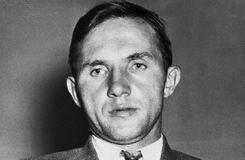
Bruno Hauptmann
Murderer?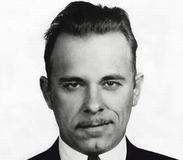 John Dillinger
Murderer? · USA · 1933
John Dillinger (John Herbert Dillinger, Jr.; June 22, 1903 – July 22, 1934) · J…
1 victim
John Dillinger
Murderer? · USA · 1933
John Dillinger (John Herbert Dillinger, Jr.; June 22, 1903 – July 22, 1934) · J…
1 victim
 Richard Allen Williams
Murderer? · USA · 1992
Boone County Prosecutor Kevin Crane dismissed the charges in August 2003 after…
10 victims
Richard Allen Williams
Murderer? · USA · 1992
Boone County Prosecutor Kevin Crane dismissed the charges in August 2003 after…
10 victims
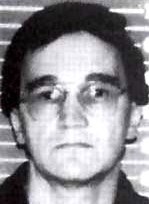 James DeBardeleben
Murderer? · USA · 1965
James DeBardeleben (James Mitchell “Mike” DeBardeleben), born March 20, 1940, w…
8 victims
James DeBardeleben
Murderer? · USA · 1965
James DeBardeleben (James Mitchell “Mike” DeBardeleben), born March 20, 1940, w…
8 victims
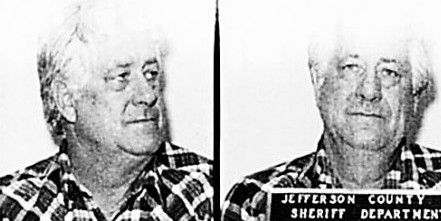 Thomas McCormick
Murderer? · USA · 1975
Thomas McCormick recruited homeless men from a Denver church mission to work on…
8 victims
Thomas McCormick
Murderer? · USA · 1975
Thomas McCormick recruited homeless men from a Denver church mission to work on…
8 victims
 Todd Warzecha
Murderer? · USA · 1972
Todd Warzecha was a prime suspect in two unsolved Mid-Michigan murders. Michiga…
6 victims
Todd Warzecha
Murderer? · USA · 1972
Todd Warzecha was a prime suspect in two unsolved Mid-Michigan murders. Michiga…
6 victims
 Dr. John Robert Hill
Murderer? · USA · 1950
Dr. John Robert Hill was a prominent Houston surgeon. His wife was Joan Robinso…
5 victims
Dr. John Robert Hill
Murderer? · USA · 1950
Dr. John Robert Hill was a prominent Houston surgeon. His wife was Joan Robinso…
5 victims
 Paul Wayne Slater
Murderer · USA · 1995
Paul Wayne Slater was an African male inmate on Texas death row. He was 26 year…
2 victims
Paul Wayne Slater
Murderer · USA · 1995
Paul Wayne Slater was an African male inmate on Texas death row. He was 26 year…
2 victims
 Lemuel Smith
Serial killer · USA · 1958
Lemuel Warren Smith was a convicted serial killer and rapist from Upstate New Y…
6 victims
Lemuel Smith
Serial killer · USA · 1958
Lemuel Warren Smith was a convicted serial killer and rapist from Upstate New Y…
6 victims
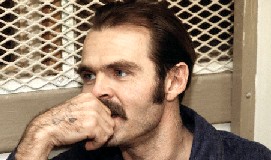 George Mercer
Murderer · USA · 1978
George C. "Tiny" Mercer (August 31, 1944 – January 6, 1989) was convicted of th…
1 victim
George Mercer
Murderer · USA · 1978
George C. "Tiny" Mercer (August 31, 1944 – January 6, 1989) was convicted of th…
1 victim
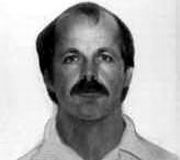 Christopher Wilder
Serial killer · USA · 1984
Christopher Bernard Wilder (March 13, 1945 – April 13, 1984) was a serial kille…
8 victims
Christopher Wilder
Serial killer · USA · 1984
Christopher Bernard Wilder (March 13, 1945 – April 13, 1984) was a serial kille…
8 victims
- Gender
- male
- Country
- USA
- Location
- Hopewell, Mercer County, New Jersey, USA
- Date of birth
- November 26, 1899
- Age at first offence
- 33
- Characteristics
- kidnapping
- Victim profile
- Charles Augustus Lindbergh, Jr. , 20-month-old (the son of famous aviator Charles Lindbergh)
- Method of murder
- B y a blow to the head ( i t has never been determined whether the head injury was accidental or deliberate )
- Date(s) of murder
- March 1, 1932
- Years active
- 1932
- Date of arrest
- September 19, 1934
- Status
-
Executed
Executed by electrocution in New Jersey on April 3, 1936
Case information
Bruno Hauptmann was a German carpenter and former criminal.
He was sentenced to death and was executed by electrocution in New Jersey on April 3, 1936.
Timeline
- March 1, 1932 — Charles Lindbergh Jr. was kidnapped from the nursery at the Lindbergh home near Hopewell, New Jersey.
- May 12, 1932 — A corpse identified as the boy’s was found in the woods near the Lindbergh home.
- June 10, 1932 — Violet Sharpe committed suicide by ingesting poison.
- September 17, 1934 — A $10 gold certificate part of the ransom was given to a gas station attendant as payment.
- September 19, 1934 — Hauptmann was placed under surveillance; a chase occurred and he was placed in handcuffs.
- January 2 to February 13, 1935 — The trial held in Flemington, New Jersey.
- February 13, 1935 — The jury returned a verdict; Hauptmann was found guilty of murder in the first degree.
- March 18, 1935 — Judge Trenchard set the execution date for this week.
- June 29, 1935 — The appeal was argued.
- October 16, 1935 — Governor Harold G. Hoffman secretly visited Hauptmann in his death row cell with Anna Bading, a stenographer and fluent speaker of German.
- Late January 1936 — Governor Hoffman directed Col. Schwarzkopf to continue a thorough and impartial investigation into the kidnapping.
- March 30, 1936 — Hauptmann’s second and final application asking for clemency from the New Jersey Board of Pardons was denied.
- April 3, 1936 — Hauptmann was executed in “Old Smokey”, the electric chair at the New Jersey State Prison.
Background
Hauptmann was born in Kamenz in the German Empire. He was the youngest of five children and had three brothers and a sister.
At age 11, he joined the Boy Scouts (Pfadfinderbund). He attended public school (Realschule) but quit at the age of 14. He worked during the day while attending trade school (Gewerbeschule) at night, studying carpentry for the first year and then switching to machine building (Maschinenschlosser) for the next two years.
In 1917, Hauptmann’s father died. The same year, he learned his brother Herman had been killed fighting in France in World War I. He was also informed that his brother Max had died in Russia. Shortly thereafter, Hauptmann was conscripted and assigned to the artillery. After receiving orders, he was sent to Bautzen and then transferred to the 103rd Infantry Replacement Regiment upon his arrival. In 1918, he was assigned to the 12th Machine Gun Company at Königsbrück.
Hauptmann claimed he was deployed to Western France with the 177th Regiment of Machine Gunners in either August or September 1918 and fought in the Battle of Saint-Mihiel. He also claimed he was gassed in either September or October 1918. He claimed that while his position was being shelled, he was hit in the helmet with a piece of metal, was knocked out for hours, and was left for dead; he later crawled back to safety and returned to the machine guns that evening.
After the war, Hauptmann and a friend robbed two women wheeling baby carriages used to transport food on the road between Wiesa and Nebelschütz. The friend wielded Hauptmann’s army pistol during the commission of this crime.
Hauptmann’s other charges included burglarizing a mayor’s house using a ladder. He was released after three years in prison and was arrested three months later on suspicion of further burglaries.
He illegally entered the United States by stowing away on a liner and landed in New York in September 1923. He was taken in by a member of the established German community and worked as a carpenter. He married a German waitress in 1925 and became a father eight years later.
He was described as slim and of medium height, but broad shouldered. His eyes were described as being small and deep-set.
The offence
The kidnapping of Charles Lindbergh Jr. occurred on the evening of March 1, 1932.
A man was believed to have climbed up a ladder placed under the bedroom window of the child’s room and quietly snatched the infant by wrapping him in a blanket. A note demanding a ransom of $50,000 was left on the radiator that formed a windowsill for the room. The ransom was delivered, but the infant was not returned.
A corpse identified as the boy’s was found on May 12, 1932, in the woods 4 miles (6.4 km) from the Lindbergh home. The cause of death was listed as a blow to the head.
It had never been determined whether the head injury was accidental or deliberate. During the opening to the jury, New Jersey Attorney General David Wilentz claimed the child died by a fall from the ladder. During the state’s summation, Wilentz claimed the child was killed in the nursery after having been hit in the head with the chisel found at the scene.
The Lindbergh kidnapping gained international infamy and became known as “The Crime of the Century”.
Investigation
The police believed a man climbed a ladder placed under the child’s bedroom window.
A note left at the scene demanded money and warned against making anything public or notifying the police. It stated: “Dear Sir! Have $50,000 ready $25,000 in $20 bills $15,000 in $10 bills and $10,000 in $5 bills. After 2-4 days we will inform you where to deliver the money. We warn you for making anything public or for notifying the Police. The child is in good care. Indication for all letters are singnature amL [and?] 3 holes.”
The ransom money included gold certificates.
On September 17, 1934, a $10 gold certificate that was part of the ransom was given to a gas station attendant as payment. The attendant wrote down the license plate number of the car and gave it to the police. The New York license plate belonged to a dark blue Dodge sedan owned by Hauptmann.
After tracing the plate, Hauptmann was placed under surveillance by members of the New York Police Department, New Jersey State Police, and the FBI.
During the course of the investigation and trial, evidence was introduced regarding handwriting, spelling similarities to ransom notes, ladder evidence, and forensic matches of wood.
Arrest
On the morning of September 19, 1934, the surveillance team followed Hauptmann as he left his apartment on Needham Avenue and East 222nd Street in the Bronx. The team was quickly noticed.
Hauptmann attempted to get away by ignoring red lights and traveling at high speed. As the chase continued, he was accidentally boxed in by a municipal sprinkler truck between 178th Street and East Tremont Avenue. He was placed in handcuffs.
Trial
The trial attracted widespread media attention and was dubbed the “Trial of the Century”. Hauptmann was also named “The Most Hated Man in the World”.
The trial was held in Flemington, New Jersey, and ran from January 2 to February 13, 1935.
Col. Henry S. Breckinridge was Lindbergh’s lawyer throughout the case and acted as an intermediary in the ransom negotiations, assisted by Robert H. Thayer.
Hauptmann pleaded not guilty.
Charges and verdict
Hauptmann was convicted and sentenced to death. A jury found him guilty of murder in the first degree.
At sentencing, Judge Trenchard set the date for the week of March 18, 1935.
Prosecution evidence and witnesses
Evidence produced against Hauptmann included $14,590 of the ransom money found in his garage and testimony alleging handwriting and spelling similarities to that found on the ransom notes.
Eight different handwriting experts called by the prosecution pointed out similarities between words and letters in the ransom notes and Hauptmann’s writing specimens, including documents written before he was arrested such as automobile registration applications. The experts included Albert S. Osborn, Elbridge W. Stein, John F. Tyrrell, Herbert J. Walter, Harry M. Cassidy, Wilmer T. Souder, Albert D. Osborn, and Clark Sellers.
Dr. Charles Mitchell provided autopsy evidence as an autopsy physician.
Other evidence included:
- the handmade ladder used in the kidnapping, together with forensic testimony by Arthur Koehler, chief wood technologist at the Forest Products Laboratory; Koehler had previously written that the ladder’s “Rail 16” probably originated from the interior of a building, possibly an attic, due to no rust in the nail holes or discoloration around the heads
- Koehler’s trial testimony that “Rail 16” matched a part of a board (S-226) from Hauptmann’s attic floor with a missing piece
- Dr. Condon’s address and telephone number found written on the inside of one of Hauptmann’s closets
- a hand-drawn sketch Wilentz suggested was that of a ladder found in one of Hauptmann’s notebooks (S-261)
- identification testimony that Hauptmann was the man to whom the ransom money was delivered
- testimony that it was Hauptmann who had spent some of the Lindbergh gold certificates
- testimony that he had been seen in the area of the estate in East Amwell, New Jersey near Hopewell on the day of the kidnapping
- testimony that he had been absent from work on the day of the ransom payment and quit his job two days later
Amandus Hochmuth testified as an eyewitness, and John Condon testified as an eyewitness.
Frank Kelly, Joseph Wolfe, and Norman Schwartzkopf (chief investigator) testified as prosecution witnesses. Dr. Charles Mitchell testified as the autopsy physician.
Defence evidence and witnesses
One expert, John M. Trendley, was called by the defense to rebut the handwriting evidence. Other handwriting experts, Samuel C. Malone and Arthur P. Meyers, declined to testify; both demanded $500 before even looking at the notes and were promptly dismissed when Fisher declined to render such an amount.
Hauptmann’s defence counsel Edward Reilly called Hauptmann’s wife Anna to corroborate the Fisch story. She later admitted that while she hung her apron every day on a hook higher than the top shelf, she could not remember seeing any shoe box there.
The defence also retained Goodspeeds, Braunlich, Foster, Farr, and Thielen; the material stated they were told they would testify but were never called by lead attorney Reilly.
Defence witnesses also included Bruno Hauptmann (defendant), John Trendley (handwriting expert), Peter Sommer (eyewitness), and Sam Streppone (eyewitness).
Contested points and Hauptmann’s testimony
Hauptmann denied being guilty.
He insisted that the box found to contain gold certificates had been left in his garage by a friend named Isidor Fisch, who had returned to Germany in December 1933 and died there in March 1934.
Hauptmann stated he had found a shoe box left behind by Fisch which he stored on the top shelf of a kitchen broom closet, later discovering the money. He claimed the money totaled $15,000. He further claimed Fisch owed him around $7,500 in business funds and that he took the money because of the alleged debt.
A ledger was found at Hauptmann’s home listing financial transactions, but no record of the alleged $7,500 debt was listed.
Hauptmann admitted in a police interview that he had written Condon’s address on the closet door: “I must have read it in the paper about the story. I was a little bit interested and keep a little bit record of it, and maybe I was just on the closet, and was reading the paper and put it down the address.”
When asked about Condon’s telephone number, he responded: “I can’t give you any explanation about the telephone number.”
In closing summation, Reilly argued the evidence against Hauptmann was entirely circumstantial, emphasizing that no reliable witness had placed Hauptmann at the scene and that fingerprints were not found on the ladder, the ransom notes, or anywhere in the nursery.
Sentencing
After conviction, Hauptmann was immediately sentenced to death by Judge Trenchard, who set the date for the week of March 18, 1935.
Appeals
The Hauptmann Defence appealed to the New Jersey Court of Errors and Appeals, delaying the execution. The appeal was then argued on June 29, 1935.
The appeals were rejected.
Governor Harold G. Hoffman granted a temporary reprieve of Hauptmann’s execution and directed the New Jersey Board of Pardons to review the case. The Board of Pardons found no reason to issue a pardon.
Hauptmann turned down a $90,000 offer from a Hearst newspaper for a confession and refused a last-minute offer to commute his execution to a life sentence in exchange for a confession.
Outcome
Hauptmann was executed by electrocution in “Old Smokey” at the New Jersey State Prison on April 3, 1936.
His last meal consisted of coffee, milk, celery, olives, salmon salad, corn fritters, sliced cheese, fruit salad, and cake.
Reporters present at the execution reported that he went to the electric chair without saying a word.
He had addressed his last words to his spiritual advisor, Rev. James Matthiesen, minutes prior to being taken from his cell to the death chamber.
He reportedly said: “Ich bin absolut unschuldig an den Verbrechen, die man mir zur Last legt”
Matthiesen told Gov. Hoffman that it meant “I am absolutely innocent of the crime with which I am burdened.”
After the execution, Hauptmann’s widow applied for and received special permission required to take his body out of state so it could be cremated at the U.S. crematory (also called the Fresh Pond Crematory) in the Maspeth neighborhood of Queens, New York.
The memorial service there was religious, with two Lutheran pastors conducted the service in German. It was private and attended by only six people, under New Jersey law, which did not permit public services for felons. A crowd of over 2,000 gathered outside.
Hauptmann’s widow planned to return to Germany with the ashes. Anna Hauptmann died in 1994 at age 95.
Other details
Hauptmann’s name appeared as Bruno Richard Hauptmann, and his lifespan was given as November 26, 1899 – April 3, 1936.
The kidnapping was believed to have occurred on the evening of March 1, 1932, with Charles Lindbergh Jr. abducted from his nursery on the second floor of the Lindbergh home near Hopewell, New Jersey.
In the kidnapping narrative:
- Betty Gow was identified as the nurse.
- The kidnapping was discovered and reported to Charles Lindbergh Sr. and his wife by the nurse at approximately 10:00 p.m.
- A search found a white envelope on the window sill above the radiator.
- One tire print was discovered in mud caused by rainy weather.
- Three pieces of a ladder were discovered in a nearby bush, described as intelligently designed but crudely constructed.
The ransom letters and intermediaries
The ransom was delivered and multiple ransom notes were exchanged.
John F. Condon, identified as a retired school teacher, became known as “Jafsie”. A classified ad was published in the New York American: “Money is Ready. Jafsie”.
A meeting between “Jafsie” and a representative of the group claimed to be the kidnappers was scheduled for late one evening at Woodlawn Cemetery. During questioning, “John” asked: “... would I burn [be executed], if the package [baby] were dead?”
The letter writing and delivery included repeated references to a man named “John,” who promised proof and stated the baby was alive.
The ransom was packaged in a wooden box custom-made in the hope it could later be identified. Serial numbers were recorded at the insistence of Bureau of Internal Revenue Intelligence Unit Chief Elmer Lincoln Irey.
Joseph Perrone was identified as a taxicab driver who delivered a note to Condon.
Evidence challenges described in the record
Multiple allegations were described concerning evidence and witness reliability after the case:
- A juror said a scrawled phone number on a board in Hauptmann’s closet was the one item that convinced him the most, but a reporter later admitted he had written the number himself.
- Allegations included that eyewitnesses who placed Hauptmann at the Lindbergh estate were untrustworthy, including one legally blind man.
- Allegations included that neither Lindbergh nor the go-between initially identified Hauptmann as the recipient.
- The police beat Hauptmann while in custody at Greenwich Street Station.
- Allegations included that police planted or doctored evidence such as the ladder.
- Claims included that police doctored Hauptmann’s time cards and ignored fellow workers who stated Hauptmann was working the day of the kidnapping.
Fingerprint testimony and ladder fingerprint removal were described:
- Erastus Mead Hudson was described as a fingerprint expert who knew a then-rare silver nitrate process; he found Hauptmann’s fingerprints were not on the wood.
- He reported this and stated an officer reacted: “Good God, don’t tell us that, Doctor!”
- The ladder was then washed of all fingerprints.
- Norman Schwarzkopf, Sr. refused to make it public that Hauptmann’s prints were not on the ladder.
Later civil action and investigative scrutiny described
Anna Hauptmann campaigned to have her husband’s conviction reversed.
In 1982, Anna Hauptmann sued the State of New Jersey, various former police officers, the Hearst newspapers, and former prosecutor David T. Wilentz for over $100 million in wrongful-death damages. The U.S. Supreme Court refused her request for disqualification of the federal judge in 1983, and the judge dismissed her claims in 1984.
In 1985, documents were found in the garage of the late Governor Hoffman, and Anna Hauptmann amended her civil complaint on July 14, 1986, continuing to assert she believed her husband was “framed from beginning to end” by the police.
In 1990, governor James Florio declined her appeal for a meeting to clear Bruno Hauptmann’s name. Anna Hauptmann died on October 10, 1994.
Statements and theories described
The record included discussion of multiple alternative theories and books questioning the evidence, including allegations that Hauptmann was framed. It included modern forensic re-examination claims:
- Kelvin Keraga concluded that the ladder used in the kidnapping was made from wood previously part of Hauptmann’s attic.
- Grant Sperry concluded it was “highly probable” the kidnapper’s notes were written by Hauptmann.
- Gideon Epstein concluded that “there was overwhelming evidence that the notes were written by one person and that one person was Richard Bruno Hauptmann.”
- Peter E. Baier wrote that Hauptmann “probably” wrote the notes, and stated: “Looking at all these findings no definite and unambiguous conclusion can be drawn.”
A statement attributed to Jim Fisher summarized his conclusion: “Today, the Lindbergh phenomena is a giant hoax perpetrated by people who are taking advantage of an uninformed and cynical public. Notwithstanding all of the books, TV programs, and legal suits, Hauptmann is as guilty today as he was in 1932 when he kidnapped and killed the son of Mr. and Mrs. Charles Lindbergh.”
Controversy about hoax claims and other figures
The record described false claims by Gaston Means and John Hughes Curtis and their later outcomes:
- Gaston Means was convicted of larceny after extorting $100,000 and was sentenced to fifteen years in prison, then died in custody in 1938.
- John Hughes Curtis confessed after the child’s body was found; he was fined and given a one year suspended sentence.
It also described Violet Sharp’s investigation and suicide, and described that after her alibi was confirmed it was determined the intense questioning drove her to commit suicide.
Cultural references included
The record included multiple artistic portrayals and references, including The Lindbergh Kidnapping Case (1976) with Anthony Hopkins playing Hauptmann, and the HBO TV movie Crime of the Century (1996) with Stephen Rea playing Hauptmann.

Spotted an error, or have more information about this case?