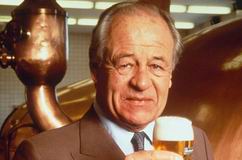
The kidnapping of Freddy Heineken
Kidnapping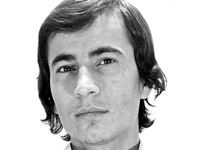 Cevdet Yilmaz
Mass murderer · Netherlands · 1983
Cevdet Yilmaz was a Dutch national of Turkish birth and was aged 27. Cevdet Yil…
6 victims
Cevdet Yilmaz
Mass murderer · Netherlands · 1983
Cevdet Yilmaz was a Dutch national of Turkish birth and was aged 27. Cevdet Yil…
6 victims
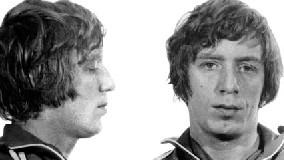 Koos Hertogs
Serial killer · Netherlands · 1979
Jacobus Dirk (Koos) Hertogs was a convicted Dutch serial killer. He was convict…
3 victims
Koos Hertogs
Serial killer · Netherlands · 1979
Jacobus Dirk (Koos) Hertogs was a convicted Dutch serial killer. He was convict…
3 victims
 Tristan Van der Vlis
Mass murderer · Netherlands · 2011
9 April 2011 — Tristan van der Vlis entered the Ridderhof mall in Alphen aan de…
6 victims
Tristan Van der Vlis
Mass murderer · Netherlands · 2011
9 April 2011 — Tristan van der Vlis entered the Ridderhof mall in Alphen aan de…
6 victims
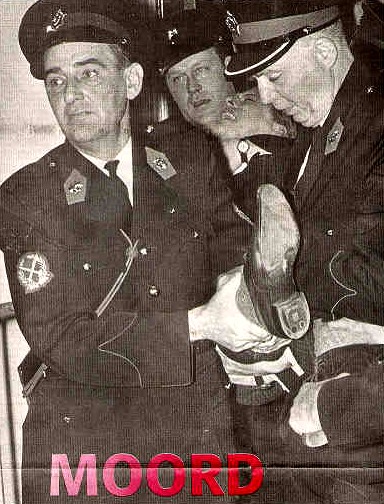 Hans Van Zon
Serial killer · Netherlands · 1964
Hans van Zon was born in Utrecht, Holland, in April 1942. He was described as a…
5 victims
Hans Van Zon
Serial killer · Netherlands · 1964
Hans van Zon was born in Utrecht, Holland, in April 1942. He was described as a…
5 victims
 Nicole Diar
Murderer · USA · 2003
Nicole Diar was convicted of aggravated murder of her 4-year-old son, Jacob Dia…
1 victim
Nicole Diar
Murderer · USA · 2003
Nicole Diar was convicted of aggravated murder of her 4-year-old son, Jacob Dia…
1 victim
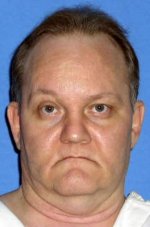 Douglas Alan Roberts
Murderer · USA · 1996
Douglas Alan Roberts was convicted of capital murder and sentenced to death for…
1 victim
Douglas Alan Roberts
Murderer · USA · 1996
Douglas Alan Roberts was convicted of capital murder and sentenced to death for…
1 victim
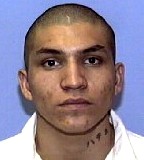 Jorge Alfredo Salinas
Homicide · USA · 2001
Jorge Alfredo Salinas TDCJ Number: 999428 Date of Birth: 04/01/1984 Native Coun…
2 victims
Jorge Alfredo Salinas
Homicide · USA · 2001
Jorge Alfredo Salinas TDCJ Number: 999428 Date of Birth: 04/01/1984 Native Coun…
2 victims
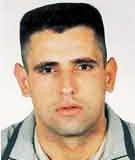 Dragan Cedic
Mass murderer · Serbia · 2002
Dragan Čedić (August 18, 1970, Leskovac, Serbia, former Yugoslavia – July, 2002…
7 victims
Dragan Cedic
Mass murderer · Serbia · 2002
Dragan Čedić (August 18, 1970, Leskovac, Serbia, former Yugoslavia – July, 2002…
7 victims
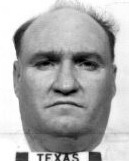 Orien Cecil Joiner
Murderer · USA · 1986
Orien Cecil "O.C." Joiner was executed by lethal injection in Texas on July 12,…
2 victims
Orien Cecil Joiner
Murderer · USA · 1986
Orien Cecil "O.C." Joiner was executed by lethal injection in Texas on July 12,…
2 victims
- Gender
- male
- Country
- Netherlands
- Location
- Amsterdam, Netherlands
- Date of birth
- —
- Characteristics
- kidnapping, abduction
- Victim profile
- Alfred Heineken, 60, and his driver Ab Doderer, 57
- Method of murder
- —
- Date(s) of murder
- November 9, 1983
- Years active
- 1983
- Date of arrest
- —
- Status
-
Kidnappers Cor van Hout, Willem Holleeder, Jan Boellaard, Frans Meijer, and Martin Erkamps were eventually caught and served prison terms
Case record: The kidnapping of Freddy Heineken
Background
The kidnapping of Freddy Heineken, chairman of the board of directors and CEO of the brewing company Heineken International and one of the richest people in the Netherlands, and his driver Ab Doderer, took place between 9 and 30 November 1983 in Amsterdam.
Freddy Heineken had long lived in fear of such an incident. The kidnapping and subsequent trials and extraditions drew national attention and received broad media coverage. Several books were published on the kidnapping and two movies were made.
Freddy Heineken secretly bought back his family firm on the stock exchange in 1954 and proceeded to turn it into a household name around much of the world. He was born on November 4, 1923 in Amsterdam. His father, Henry Pierre, had a weakness for alcohol, ran the company from 1914 until 1940, and sold the family's stake in 1942. Young Freddy attended Kennemer Lyceum before further study in America. While studying in America, he wrote his father a prophetic letter:
"I have my mind set on restoring the majority of shares in Heineken into the hands of the family," he reported.
"It's not my plan to become very rich . . . but it is a matter of pride that any children I might have can inherit a stake in Heineken, like I did from my father and you inherited from your father."
He joined Heineken at 18, shortly before his family stake was sold, beginning his career carrying sacks of barley. He later worked in the sales office in New York and met his future wife, the daughter of a Kentucky bourbon distiller. He succeeded his father as a member of the brewer's supervisory board in 1951, and after borrowing money secretly bought back a controlling stake in Heineken in 1954. He was officially appointed to the Heineken executive board 10 years later and took charge of the financial side, as well as often taking personal control of the advertising campaigns. He became chairman of the Heineken holding company in 1979.
Freddy Heineken was encouraged to keep a lower profile after the kidnapping ordeal in 1983. When asked whether he planned to write an autobiography, he replied that he would consider such a project only when he started to experience unwelcome attention from creditors—“his way of saying ‘never’.”
Freddy Heineken was married to the former Lucille Cummins, and the couple owned homes in Paris, Cap d'Antibes and St. Moritz and had an extensive art collection, including many Picassos. They were friends of the Dutch royal family. Heineken was survived by his wife Martha Lucille (nee Cummins) and his daughter Charlene, who takes over the family stake.
The offence
Several attempts to kidnap Freddy Heineken and his driver Ab Doderer at Heineken's home in Noordwijk failed when Heineken and Doderer did not show.
Freddy Heineken and Ab Doderer were kidnapped on 9 November 1983 at 18:56 in front of Heineken's office at the Weteringplantsoen (nl) in Amsterdam.
Freddy Heineken left his office building in Amsterdam with two women on Wednesday November 9, 1983. His driver Ab Doderer awaited him in an armored Cadillac Fleetwood. When Heineken walked towards the car, he was overpowered by four armed men. The women tried to intervene, but were held off with pepper spray. Ab Doderer left his car to help his boss but was attacked by Frans Meijer. Both Heineken and Doderer were thrown in the back of a van by the four kidnappers. The orange van left with the back doors still open.
A taxi driver had seen the struggle in front of the office and followed the van through Amsterdam. They eventually arrived at a bicycle tunnel where the kidnappers had removed the poles earlier. This is where they switched to two other cars. The van blocked access for other cars, buying extra time. During the transition, Willem Holleeder walked with his gun drawn towards the taxi. The taxi driver backed out and fled. The kidnappers continued their way to the western harbor area where the shed with the cells was located. They did not encounter any police.
Heineken and Doderer got pajamas on and were imprisoned in a Quonset hut at business park De Heining in Westpoort in the western part of the Amsterdam harbor area. The hut had belonged to Boellaards wood manufacturing company. The hut was prepared in advance by the creation of a double wall on one end, with two soundproof cells with a hidden door. This made the 42 meter long hut shorter on the inside by 4 meters, which went unnoticed.
The kidnappers took care of their prisoners outside working hours because the shed was still being used by construction workers. The two cells were hidden behind a wall in the shed, with a wall and secret door that was almost impossible to see. Heineken and Doderer were chained to the wall most of the day and slept on a mattress on the floor and had a chemical toilet at their disposal.
Because of disappointing negotiations, the abduction lasted three weeks. After 4 days, the kidnappers opened the doors of both cells, at which point Heineken found out that not only he, but his driver Ab Doderer, was kidnapped as well.
The captors bought food for them from Chinese and other takeout restaurants. They were allowed to talk to each other a few minutes a day, but the two men spent most of the three weeks on their own. The kidnappers and the police communicated by letter, coded newspaper ads, or they recorded Heineken or Doderer on tapes which they used to give instructions by phone.
The kidnappers demanded a ransom of 200,000 Dutch, German, French and U.S. banknotes with a total value of 35 million Dutch guilders (22 million U.S. dollars). The first attempt to transfer the ransom failed. The kidnappers demanded that the car with the ransom was a white van with two red crosses and left from a specific location; this failed because the van could not leave from that location without the press noticing. The second attempt was on November 28th. The kidnappers demanded that the driver of the car with the ransom was alone and not followed.
An anonymous tip suggested the kidnappers’ location.
Investigation
A news blackout had been imposed on the case from the start. Investigators had little to go on except a demand for ransom contained in a note dropped on the steps of police headquarters at The Hague the night of the kidnapping.
The police received an anonymous telephone tip on Nov. 16 suggesting that they pay attention to people operating the auto-wrecking and carpentry businesses in the area. Suspicions that the two men might be held in the area appeared to be confirmed on Sunday when one of the suspects ordered two meals to take out at a nearby Chinese restaurant and carried them to the warehouse.
On November 30th, after an anonymous tip, a SWAT team invaded the shed in the harbor area of Amsterdam. At first they thought that they were misled but, when police found out that there was more behind the wall, they eventually found the secret door.
Heineken and Doderer were finally freed after 3 weeks of captivity. The police said they delayed raiding the warehouse out of concern for the men's safety and then decided to move in after the payment of the ransom on Monday had brought no results.
When police entered the large warehouse built like a Quonset hut, they found evidence of a false wall. Behind it were two concrete cells—one containing Heineken and the other Doderer. The prisoners were handcuffed and tethered to the walls by long chains that allowed them to move about the small cells. Each had a bed with blankets, bottles of drinking water, a portable chemical toilet, newspapers and books.
The police later arrested 24 suspects, all Dutch citizens related to each other by blood or marriage, and said they were hunting for four others. According to the police, three of the five kidnappers were named in the tip, and the police never revealed any further information.
During house searches and arrests, police confiscated 7 million guilders. Eight million had never been found. Ten policemen raided an unguarded warehouse and freed the kidnapped brewery chairman and chauffeur from unheated concrete cells in which they had been chained for 21 days.
Arrest
Jan Boellaard and Martin Erkamps were arrested soon after the invasion of the shed. The other three kidnappers managed to escape.
Frans Meijer spent several weeks in Amsterdam but turned himself in on December 28th. Willem Holleeder and Cor van Hout fled to Paris, stayed in an apartment several months, and were arrested by French police on February 29, 1984.
Trial
Martin Erkamps was sentenced to eight years in prison in October 1984. Jan Boellaard was sentenced to 12 years in prison. Van Hout and Holleeder were sentenced to 11 years in prison in February 1987.
Because the earlier extradition was withdrawn by France, they could not be brought to trial for the indictment “written death threats,” which resulted in 1 year in prison less than Boellaard. The time held in France and the time under house arrest were deducted from their prison sentence.
Frans Meijer was given a psychiatric examination. He escaped from the mental hospital on January 1, 1985. Without his presence he was sentenced to 12 years in prison later that year.
Appeals
During the extradition process, the Conseil d'État ruled that France could not extradite or judge the two men. After a long extradition procedure, Van Hout and Holleeder were extradited to the Netherlands in October 1986, almost two years after the abduction.
Meijer’s extradition to the Netherlands was held up by red tape and appeals; an update stated that a Paraguayan appeal court upheld the Dutch extradition order and ruled that Meijer should return home to serve his sentence.
Sentencing
Martin Erkamps received an eight-year prison sentence in October 1984. Jan Boellaard received a 12-year prison sentence. Cor van Hout and Willem Holleeder received 11-year prison sentences in February 1987.
Outcome
Kidnappers Cor van Hout, Willem Holleeder, Jan Boellaard, Frans Meijer, and Martin Erkamps were eventually caught and served prison terms.
Meijer was arrested in Paraguay in 1998 and was extradited to the Netherlands 4 years later. After his release in 2005 he returned to Paraguay.
Van Hout and Holleeder stayed for more than three years in France before extradition—first on the run, then in prison, then awaiting a change of the extradition treaty under house arrest, and finally in prison again. In October 1986, they were extradited to the Netherlands.
Aftermath
Van Hout and Holleeder refused to fly to Saint Martin during a transfer, which led to them being taken to Saint-Barthélemy. The population revolted and it was not safe for the kidnappers to stay on the island. They were transferred to the French side of Saint Martin, faced problems with the population, fled at night to Tintamarre, and were brought back the next day to Guadeloupe. From Guadeloupe, they were taken to Evry in France and stayed in hotels.
Later, the Netherlands asked for extradition again. As a result, French police arrested the two kidnappers and brought them back to the tough French prison. Van Hout and Holleeder decided to resist the extradition no longer. In October 1986, almost two years after the abduction, they were extradited to the Netherlands.
During the kidnapping on the run, the kidnappers took 15 million Dutch guilders out of barrels buried in the woods: three million each. About a week later, police found the buried barrels and the rest of the 35 million guilders.
The kidnappers told the police that Frans Meijer had burned the money at the beach. There were reports of Thomas van der Bijl (who was murdered in 2006) that 7 million was buried in a forrest in Paris. According to Van der Bijl, these millions were used to purchase apartment buildings in Zaandam and brothels in Alkmaar. What happened with the money remains unclear.
The rescue ended 21 days of concern for the Dutch brewer and his chauffeur.
Timeline
- 9 November 1983 — Freddy Heineken and his driver Ab Doderer were kidnapped at 18:56 in front of Heineken's office at the Weteringplantsoen (nl) in Amsterdam.
- Nov. 16 (1983) — Police received an anonymous telephone tip suggesting attention be paid to people operating auto-wrecking and carpentry businesses.
- 27 October 2011 — The movie De Heineken ontvoering had its premiere.
- 8 January 2015 — The film Kidnapping Mr. Heineken premiered in the Netherlands.
- 30 November (1983) — A SWAT team invaded the shed; Heineken and Doderer were freed after 3 weeks of captivity.
- December 1, 1983 — Ten policemen raided an unguarded warehouse and freed Heineken and his chauffeur from cells where they had been chained for 21 days.
- December 28 (1983) — Frans Meijer turned himself in on December 28.
- February 29, 1984 — French police arrested Willem Holleeder and Cor van Hout.
- October 1984 — Martin Erkamps was sentenced to eight years in prison.
- January 1, 1985 — Frans Meijer escaped from the mental hospital.
- 1994 — Frans Meijer was found by crime reporter Peter R. de Vries in Paraguay.
- 1998 — Frans Meijer was arrested in Paraguay.
- 2001 — A May 25 update stated Franz Meijer was to be extradited to the Netherlands to serve out his 12-year sentence.
- 2002 — A January 5 obituary described Freddy Heineken’s life and marketing, and discussed the kidnapping.
- 2005 — After his release, Frans Meijer returned to Paraguay.
Other details
Kidnapping preparation and planning
Two years before the kidnapping, Cor van Hout, Willem Holleeder, Frans Meijer and Jan Boellaard decided they wanted to become rich quickly and wanted to do a kidnapping. During preparation it was initially unclear who would be the victim. Candidates included Wisse Dekker (CEO of Phillips), Albert Heijn (CEO of AHOLD), Anton Dreesmann (Director Vroom & Dreesmann), and Alfred Heineken (Major shareholder of Heineken).
The preparation required thought, time and money. The four friends invested 100,000 Dutch guilders to pay for what they needed. Jan Boellaard possessed a 140 feet Romney Shed in the western harbor area of Amsterdam, where two cells were built behind a wall with a secret door. From the workshop where the shed was located, the cells could not be seen and nobody noticed the room was now twelve feet shorter than before.
During the kidnapping, Martin Erkamps was added to the team and he had a limited role. He helped the kidnappers steal cars used during the crime.
The money transfer included ideas about pneumatic tube transport and then an alternative method to have the money thrown in the water so negotiators could collect it using diving equipment. The weight of the money was a problem for the kidnappers, who did not want to demand bills of 1000 Dutch guilders because it would decrease the chances of getting caught afterwards. They planned to use bags of smaller values with a total weight at least 800 pounds.
The kidnappers wanted police to think they were German. They bought almost all materials in Germany, including a manufactured typewriter and A4 paper with a German watermark, and materials found in the cells came from Germany.
Up until a week before the day of the kidnapping, the plan was to kidnap Heineken and his driver Doderer once they left the home of Heineken in Noordwijk. Because Heineken changed his routine and did not show up at the house when the kidnappers were in position, the plans were changed to kidnap them at the office of Heineken in Amsterdam. After two weeks observing, the plans and escape route were clear.
Negotiation and ransom delivery
The ransom instructions were made by telephone on the fourth day of the abduction. They could not be carried out because Dutch reporters had staked out the Heineken house and were likely to interfere. After the kidnappers provided photographic proof that Heineken and his driver were alive, the ransom consisting of Dutch, West German, United States and French currencies was delivered on Monday.
A lone driver carried the ransom package over a 120-mile route covering most of the nation before being given final instructions for the dropoff over a walkie talkie. He was directed to Utrecht and then to an overpass where he was instructed to slide the moneybags down through a drainage channel. The kidnappers loaded the ransom into a Mercedes Hanomag and drove away.
People and relationships mentioned
Freddy Heineken was accompanied by two women when he left his office building in Amsterdam. Police later said 24 suspects were arrested, all Dutch citizens related to each other by blood or marriage.
Freddy Heineken was married to Lucille Cummins; in later biographical material his spouse was named Martha Lucille (nee Cummins).
Thomas van der Bijl was mentioned in relation to reports about where money was buried.
Peter R. de Vries wrote De ontvoering van Alfred Heineken (1987), based on interviews with Cor van Hout and Willem Holleeder in 1986 during their hotel arrest in France. Van Hout and Holleeder asked that the book would not be published until after their trial. De Vries later added extra chapters about later events.
Books and movies
In 2010, reports were bundled and published in the book De Heineken ontvoering by journalist Nick Kivits and kidnapping expert Sjerp Jaarsma.
On 27 October 2011, the movie De Heineken ontvoering by Maarten Treurniet had its premiere. It was written by Maarten Treurniet and Kees van Beijnum. The role of Freddy Heineken was played by Rutger Hauer, with Reinout Scholten van Aschat as Rem Hubrechts, Gijs Naber as Cor van Hout, Teun Kuilboer as Frans Meijer, and Korneel Evers as Jan Boellaard. Kidnapper Willem Holleeder filed a preliminary injunction requesting that the movie be forbidden. Jan Boellaard, Frans Meijer and Martin Erkamps also required from IDTV that the movie not be shown. The injunction and requests were unsuccessful.
The film Kidnapping Mr. Heineken by Daniel Alfredson premiered in the Netherlands on 8 January 2015. It was written by William Brookfield, based on the 1987 book by Peter R. de Vries. The role of Freddy Heineken was played by Anthony Hopkins, with Sam Worthington as Willem Holleeder, Jim Sturgess as Cor van Hout, Ryan Kwanten as Jan Boellaard, and Mark van Eeuwen as Frans Meijer.
Verbatim quotations
The obituary and biographical material included the following quoted statement from Heineken:
"As things turned out", she recalled, "the introduction was very frosty indeed. Freddy was standing in a group of foreign media correspondents in the reception of the closed-down Heineken brewery on the Stadshouderskade in Amsterdam when he greeted me in his blunt, despotic style: 'We'll meet again in court', he mumbled.
A quoted statement attributed to the same biographical narrative included:
"Freddy turned nasty".
An attributed quote during the discussion with Peter de Vries included:
"It is God's will that you are here. I have been betrayed, I knew this would happen one day."
Duplicate and artefact removal note
Repetitive navigation and gallery fragments were removed, and run-on joins were repaired into complete sentences without adding new facts.
Spotted an error, or have more information about this case?