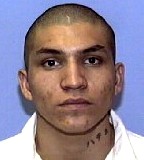
Jorge Alfredo Salinas
Homicide David Koresh
Homicide · USA · 1993
David Koresh (born Vernon Wayne Howell; August 17, 1959 – April 19, 1993) led t…
79 victims
David Koresh
Homicide · USA · 1993
David Koresh (born Vernon Wayne Howell; August 17, 1959 – April 19, 1993) led t…
79 victims
 Todd Hall
Homicide · USA · 1996
Todd Hall was described by neighbors as "mentally slow" and was said to have su…
9 victims
Todd Hall
Homicide · USA · 1996
Todd Hall was described by neighbors as "mentally slow" and was said to have su…
9 victims
 Joshua Jenkins
Homicide · USA · 1996
Joshua Jenkins was a 15-year-old American killer who killed five members of his…
5 victims
Joshua Jenkins
Homicide · USA · 1996
Joshua Jenkins was a 15-year-old American killer who killed five members of his…
5 victims
 Alex Baranyi
Homicide · USA · 1997
Alex Baranyi and David Anderson were 17-year-old high-school dropouts from Bell…
4 victims
Alex Baranyi
Homicide · USA · 1997
Alex Baranyi and David Anderson were 17-year-old high-school dropouts from Bell…
4 victims
 Victor Harry Feguer
Murderer · USA · 1960
Victor Harry Feguer (born in 1935) was executed by hanging in Iowa (federal exe…
1 victim
Victor Harry Feguer
Murderer · USA · 1960
Victor Harry Feguer (born in 1935) was executed by hanging in Iowa (federal exe…
1 victim
 Gerald Pizzuto
Murderer · USA · 1985
Gerald Pizzuto Jr. was sentenced to death in Idaho in May 1986. On February 22,…
4 victims
Gerald Pizzuto
Murderer · USA · 1985
Gerald Pizzuto Jr. was sentenced to death in Idaho in May 1986. On February 22,…
4 victims
 Cesar Roberto Fierro
Murderer · USA · 1979
Name: Cesar Roberto Fierro Court: United States Court of Appeals, Fifth Circuit…
1 victim
Cesar Roberto Fierro
Murderer · USA · 1979
Name: Cesar Roberto Fierro Court: United States Court of Appeals, Fifth Circuit…
1 victim
 Donald Wackerly
Murderer · USA · 1996
Donald Wackerly was executed by lethal injection in Oklahoma on October 14, 201…
1 victim
Donald Wackerly
Murderer · USA · 1996
Donald Wackerly was executed by lethal injection in Oklahoma on October 14, 201…
1 victim
 Preston Hughes
Murderer · USA · 1988
Preston Hughes III was convicted of capital murder for the killing of fifteen-y…
2 victims
Preston Hughes
Murderer · USA · 1988
Preston Hughes III was convicted of capital murder for the killing of fifteen-y…
2 victims
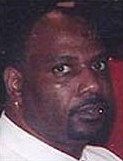 Cyrano Marks
Mass murderer · USA · 1999
Cyrano Marks committed suicide by shooting himself the same day after shooting…
6 victims
Cyrano Marks
Mass murderer · USA · 1999
Cyrano Marks committed suicide by shooting himself the same day after shooting…
6 victims
- Gender
- male
- Country
- USA
- Location
- Hidalgo County, Texas, USA
- Date of birth
- April 1, 1984
- Age at first offence
- 17
- Characteristics
- juvenile (17), robbery
- Victim profile
- Geronimo Morales, 29, and his 21-month-old child, Leslie Ann Morales
- Method of murder
- Shooting / Abandoning (dehydration, exposure to the elements, and heatstroke)
- Date(s) of murder
- July 28, 2001
- Years active
- 2001
- Date of arrest
- —
- Status
-
Life imprisonment
Sentenced to death on August 29, 2001; commuted to life in prison on June 22, 2005
Case information
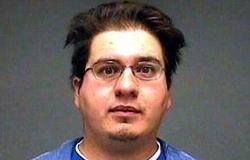
Jorge Alfredo Salinas TDCJ Number: 999428 Date of Birth: 04/01/1984 Native County: Hidalgo Native State: Texas Gender: male Race: Hispanic Hair Color: black Height: 5 ft 6 in Weight: 141 Eye Color: brown Education Level: 08/29/2002 10 Prior Occupation: Hidalgo Texas laborer Age when received: 18 Age at the offense: 17
Timeline
- 07/28/2001 — Salinas and 2 co-defendants fatally shot a 29 year old Hispanic male with a 12 gauge shotgun and caused the death of a 21 month old Hispanic female by abandoning her in an area where she was not likely to be found.
- 07/28/2001 — Salinas and 2 co-defendants carjacked the victim for his 2001 Chevy Malibu vehicle.
- 07/28/2001 — Salinas and 2 co-defendants dumped the 29 year old Hispanic male victim in an orchard and placed the 21 month old Hispanic female child, strapped in her car seat, in tall grassy area.
- 07/28/2001 — Salinas and Lorenzo took the baby out of the car, still in her car seat, and placed her in tall grass.
- 07/28/2001 — The three cohorts drove Morales' car to Maria Alma Rosa Acevedo Pineda's house in Reynosa, Mexico, arriving between 10:30 and 11:00 p.m. on July 28, 2001.
- 07/29/2001 — Reynosa police attempted to stop Salinas and the other cohorts while they were driving Morales' car; a chase ensued and they abandoned the vehicle.
- 07/29/2001 — Reynosa police seized the car and turned it over to authorities in the United States.
- 07/29/2001 — Leslie Ann's body was found by border patrol officers around 7 p.m. on July 29, 2001.
- 07/29/2001 — Salinas and the other cohorts returned to the United States on Monday after selling the shotgun.
- 08/01/2001 — Morales' body was found on August 1, 2001.
- 08/29/2002 — Salinas was convicted in August 2002 of capital murder.
- 05/18/2005 — The Court of Criminal Appeals of Texas delivered the opinion reforming the death sentence to a sentence of life imprisonment and otherwise affirming.
- 06/22/2005 — The death sentence was commuted to life in prison.
Background
Salinas and two co-defendants were at Salinas's house in Mission on the night of Saturday, July 28, 2001, smoking marijuana. Sevilla stated that he wanted to get a gun and steal a car. Salinas said, "Let's see if you have the balls; let's go." Salinas retrieved a shotgun that he had previously stolen and gave it to Sevilla.
The offence
Carjacking and robbery
Sevilla jumped out and pointed the shotgun at the first car to stop at the four-way stop. Geronimo Morales was driving the car, and his 21-month-old child, Leslie Ann Morales, was in her car seat in the back. Sevilla pounded on the window, and Morales opened the door. Sevilla got into the driver's seat and forced Morales over to the passenger's seat. Sevilla handed Salinas the gun, and Salinas pointed it at Morales. Morales cried and pleaded with them not to hurt the baby.
Sevilla asked Morales for his money, but Morales stated that he did not have any. This made Sevilla angry, and he beat Morales some more.
Sevilla stopped the car, retrieved the gun from Salinas, and dragged Morales into some orchards and shot him. He stole Morales' wallet, a gold ring, and a silver necklace with a skull on it.
Salinas suggested returning to his house and picking up his brother Lorenzo. When Lorenzo got into the car, he asked what they were going to do with the baby. Lorenzo suggested that they leave her at a store or someplace where someone would find her, but Sevilla said they were going to dump her where no one would find her.
Killing Morales
Morales was shot at close range to the right side of the head. Morales' body was found on August 1, 2001. He died from a gunshot wound at close range to the right side of the head.
Killing Leslie Ann Morales
Salinas and Lorenzo took the baby out of the car, still in her car seat, and placed her in some tall grass. The three then drove Morales' car to Maria Alma Rosa Acevedo Pineda's house in Reynosa, Mexico, arriving between 10:30 and 11:00 p.m. on July 28, 2001.
Their efforts to sell Morales' car in Reynosa were unsuccessful. On Sunday, July 29, Reynosa police attempted to stop them; a chase ensued, and they abandoned the vehicle. Reynosa police seized the car and turned it over to authorities in the United States.
Leslie Ann's body was found by border patrol officers around 7 p.m. on July 29, 2001. The officers were patrolling south of La Lomita Mission near the river, looking for illegal aliens who might be hiding in the grass. The patrol officer who testified stated that the child was in an area where she was not likely to be found. Other testimony placed her approximately fifteen feet from the road in grass that was two to three feet high.
The medical examiner testified that Leslie Ann died from dehydration, exposure to the elements, and heatstroke.
Investigation and movement after the incident
Sevilla returned to the car. Salinas and Lorenzo fled in Morales' vehicle. The three cohorts tried to sell Morales' car in Reynosa, but were unsuccessful. Later that night, Salinas told Maria Alma Rosa Acevedo Pineda that he had something he wanted to tell her, but he was afraid she would tell someone else. He then told her that they had "broken some guy," but Pineda did not believe him. Pineda stated that the phrase "broken some guy" means "to kill, to break, to shoot some person."
Salinas told his girlfriend about what they had done and took her to see Morales' body where they had left it.
The three cohorts returned to the United States on Monday after selling the shotgun.
People
Victims
- Geronimo Morales, 29 year old Hispanic male (fatally shot one time with a 12 gauge shotgun)
- Leslie Ann Morales, 21 month old Hispanic female (died after abandonment in tall grass; body found around 7 p.m. on July 29, 2001)
Defendant
- Jorge Alfredo Salinas, Hispanic male
Other named persons
- Lorenzo (Salinas's brother)
- Oscar Villa Sevilla
- Maria Alma Rosa Acevedo Pineda (husband was a first cousin to Salinas and Lorenzo)
- Pineda's husband (first cousin to Salinas and Lorenzo)
- Pineda's son
- Morales' family as part of events (Leslie Ann Morales described as Morales' 21-month-old child)
Trial
Charges and jury findings
In the Court of Criminal Appeals of Texas: AP-74,524 Jorge Alfredo Salinas, Appellant v. The State of Texas Cause No. CR-3043-01-G In the 370th District Court Hidalgo County
Appellant was convicted in August 2002 of capital murder. Tex. Penal Code Ann. § 19.03(a).
The indictment charged appellant with capital murder in three separate counts:
Count one — murder of Morales while in the course of committing or attempting to commit robbery of him. The charge required the jury to find that either:
- appellant intentionally caused Morales' death while in the course of robbing him; or
- either Lorenzo or Sevilla had done so, under circumstances rendering appellant responsible under the law of parties.
Count two — committing the murders of Morales and Leslie Ann in the same criminal transaction.
- appellant intentionally or knowingly caused their deaths; or
- either Lorenzo or Sevilla had intentionally or knowingly caused their deaths, under circumstances rendering appellant responsible under the law of parties, or because the murders were the anticipated result of a conspiracy to commit another offense (robbery).
Count three — murder of Leslie Ann, an individual younger than six years of age.
- appellant intentionally or knowingly caused the death of Leslie Ann; or
- either Lorenzo or Sevilla had intentionally or knowingly caused her death, under circumstances rendering appellant responsible under the law of parties, or because the murder was the anticipated result of a conspiracy to commit another offense (robbery).
The court submitted a separate jury charge for each count, along with a separate verdict sheet for each count. The jury found appellant guilty of each count.
Sentencing at trial
Pursuant to the jury's answers to the special issues set forth in Texas Code of Criminal Procedure Article 37.071, sections 2(b) and 2(e), the trial judge sentenced appellant to death. Art. 37.071 § 2(g). Direct appeal to this Court was automatic. Art. 37.071 § 2(h).
Direct appeal claims and rulings
Appellant raised six points of error.
Point of error two (specific intent to kill)
Appellant claimed the evidence was legally insufficient to establish a specific intent to kill. The Court addressed party participation standards and concluded the evidence supported participation and encouragement as a party in the murders. Point of error two was overruled.
The opinion referenced the principle that evidence is sufficient to convict under the law of parties where the defendant is physically present at the commission of the offense and encourages its commission by words or other agreement, citing Ransom v. State, 920 S.W.2d 288, 302 (Tex. Crim. App. 1994).
The opinion also stated:
- According to appellant's own confession, when Sevilla stated that he wanted to commit a carjacking, appellant dared him to do it and provided him with a shotgun.
- Later, the opinion described Sevilla handing the shotgun to appellant, appellant pointing it at Morales, and appellant not acting as Sevilla dragged Morales from the car and shot him.
- The opinion stated that Sevilla rejected Lorenzo's suggestion to leave Leslie Ann in a public place where she could be found.
- The opinion found sufficient evidence to infer appellant and Lorenzo removed Leslie Ann from the car and placed her in tall grass about fifteen feet from a road and outside of town.
Point of error one (ineffective assistance of counsel)
Appellant claimed ineffective assistance of counsel at trial for several reasons. To establish ineffective assistance of counsel, the Court cited Strickland v. Washington, 466 U.S. 668 (1984) and Mallett v. State, 65 S.W.3d 59, 62-63 (Tex. Crim. App. 2001), and described deferential review standards.
The Court addressed specific complaints:
Counsel did not file a motion to transfer venue. Appellant alleged he told counsel he wanted a change of venue and would file affidavits about media coverage and community sentiment, but the Court found appellant pointed to nothing in the record and presumed a reasonable strategic decision not to ask for a change of venue. The Court overruled the point as to this complaint.
Counsel failed to allow appellant to testify at the guilt phase. The Court found appellant's assertions in his brief, without trial-record support, were insufficient.
Counsel failed to file a motion to quash the indictment or request a severance. The Court stated trial counsel did file a Motion to Quash and/or Sever, complaining of the three-count indictment and requesting a severance, and alternatively asking that the indictment be quashed and that the State be required to elect the charge. The motion was addressed in a pretrial hearing, and the Court stated counsel did everything appellant contended he should have.
Counsel failed to request an instruction on the lesser-included offense of felony murder at the guilt phase. The Court held felony murder is a lesser-included offense of capital murder, but the second prong was not satisfied because the evidence did not raise any issue of felony murder. The Court concluded the evidence showed an intent to kill and therefore appellant was not entitled to a felony murder charge, and counsel was not ineffective for not requesting one.
The Court concluded point of error one was overruled.
Point of error five (media coverage restrictions)
Appellant argued the trial court erred in denying his motion to impose reasonable restrictions on media coverage of pretrial hearings. Appellant requested all pretrial hearings be held in chambers, outside presence and hearing of the public and press. He also suggested as an alternative admonishing witnesses not to read the paper or watch television.
The court stated it was not inclined to limit media as broadly as in the written motion, but agreed that a witness admonishment like appellant suggested "may be a good practice." The court said it would consider the option and asked appellant to bring it to its attention later before the Rule was invoked. Appellant did not point to any place in the record where he obtained a ruling, so the Court held the complaint as raised in the written motion was waived and the alternative solution issue was not preserved. Point of error five was overruled.
Point of error six (age and death penalty under the Eighth Amendment)
Appellant argued the assessment of the death penalty violated the Eighth Amendment because he was seventeen years old at the time of the crime. The Court discussed Roper v. Simmons and held that the Eighth and Fourteenth Amendments forbid imposition of the death penalty on offenders under 18 when their crimes were committed.
The Court stated there was evidence in the record that appellant was seventeen when he committed the offense, and that the State did not contend otherwise. The Court found appellant's birthdate was reflected as April 1, 1984 in booking sheet, arrest report, arrest warrant, and trial court's docket sheet, and found defense counsel referred to appellant as a "17-year-old" in closing argument without objection.
Pursuant to the Supreme Court's mandate, the Court reformed the death sentence to a sentence of life imprisonment. Point of error six was sustained.
Moot points and disposition in other respects
The opinion stated that in view of the reformation to life imprisonment, points three and four about punishment phase errors were moot. It also stated that other respects, the judgment was affirmed.
Appeals
The Court of Criminal Appeals delivered an opinion on May 18, 2005, with multiple judges participating as named in the caption and opinion text.
The Court's disposition was:
- The death sentence was reformed to a sentence of life imprisonment.
- The judgment of the trial court was affirmed in all other respects.
Outcome
Appellant's death sentence was reformed to life imprisonment.
Separately, the overall status information also stated: Sentenced to death on August 29, 2001; commuted to life in prison on June 22, 2005.
Other details
Medical examiner findings
Scene and distances
The opinion described testimony placing Leslie Ann approximately fifteen feet from the road in grass that was two to three feet high, and described the patrol officer testimony that she was in an area where she was not likely to be found.
Fingerprints and car seat inference
The opinion included a footnote stating this could be inferred because appellant's fingerprint was found on the bottom of the car seat, and two of Lorenzo's prints were found elsewhere on the car seat; Sevilla's prints were not found on the car seat.
Trial court motion details
Defense counsel withdrew his motion to sever after the trial court made clear it would not exclude evidence concerning the other counts, even if severed. The opinion noted appellant did not complain that counsel was ineffective in withdrawing the severance motion.
Media coverage issue footnote
The written motion also requested five other restrictions; at the hearing, the court granted some requests and denied others. Appellant did not appear to complain of rulings on the denied or granted additional restrictions.
Appellate procedure references
The opinion referenced Tex. R. App. P. 78.1 and Tex. R. App. P. 37.071 provisions regarding the special issues and automatic direct appeal in capital cases.
Spotted an error, or have more information about this case?