
Henry Eugene Hodges
Murderer Brian Kevin Rosenfeld
Murderer · USA · 1985
Brian Kevin Rosenfeld Brian Kevin Rosenfeld was sentenced to three concurrent l…
23 victims
Brian Kevin Rosenfeld
Murderer · USA · 1985
Brian Kevin Rosenfeld Brian Kevin Rosenfeld was sentenced to three concurrent l…
23 victims
 Yahweh ben Yahweh
Murderer · USA · 1980
Yahweh ben Yahweh was born and legally named Hulon Mitchell Jr. (October 27, 19…
23 victims
Yahweh ben Yahweh
Murderer · USA · 1980
Yahweh ben Yahweh was born and legally named Hulon Mitchell Jr. (October 27, 19…
23 victims
 Russell Ellwood
Murderer · USA · 1991
Russell Ellwood was a former taxi driver. Authorities suspected him of killing…
20 victims
Russell Ellwood
Murderer · USA · 1991
Russell Ellwood was a former taxi driver. Authorities suspected him of killing…
20 victims
 Robert Martines Perez
Murderer · USA · 1994
Name: Robert Martines Perez · Other name used in proceedings: Robert Martinez P…
15 victims
Robert Martines Perez
Murderer · USA · 1994
Name: Robert Martines Perez · Other name used in proceedings: Robert Martinez P…
15 victims
 Nadiyah Venable
Murderer · USA · 2010
On September 27, 2013, Nadiyah Venable was sentenced to 55 years in prison with…
1 victim
Nadiyah Venable
Murderer · USA · 2010
On September 27, 2013, Nadiyah Venable was sentenced to 55 years in prison with…
1 victim
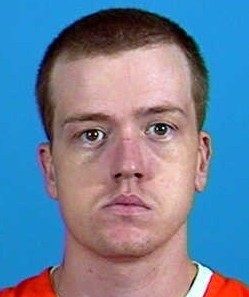 Kevin Don Foster
Murderer · USA · 1996
Kevin Don Foster was born Kevin Donald Bates on June 16, 1977, in Amarillo, Tex…
1 victim
Kevin Don Foster
Murderer · USA · 1996
Kevin Don Foster was born Kevin Donald Bates on June 16, 1977, in Amarillo, Tex…
1 victim
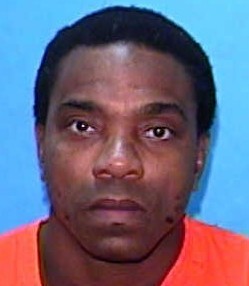 Ronnie Ferrell
Murderer · USA · 1991
Ronnie Ferrell was sentenced to death on December 17, 1993. He was indicted in…
1 victim
Ronnie Ferrell
Murderer · USA · 1991
Ronnie Ferrell was sentenced to death on December 17, 1993. He was indicted in…
1 victim
 Steven Edward Stein
Murderer · USA · 1991
Steven Edward Stein was sentenced to death on July 23, 1991. · 01/23/91 — Stein…
2 victims
Steven Edward Stein
Murderer · USA · 1991
Steven Edward Stein was sentenced to death on July 23, 1991. · 01/23/91 — Stein…
2 victims
- Gender
- male
- Country
- USA
- Location
- Davidson County, Tennessee / Fulton County, Georgia, USA
- Date of birth
- August 16, 1966
- Age at first offence
- 23
- Characteristics
- robbery, torture, child molester
- Victim profile
- Barry McDonald / Michael Whisnant, 32 / Ronald A. Bassett, 37
- Method of murder
- Strangulation with a nylon rope
- Date(s) of murder
- 1989 / May 14/16, 1990
- Years active
- 1989–1990
- Date of arrest
- May 18, 1990
- Status
-
Sentenced to death
Sentenced to death in Tennessee on January 30, 1992
Case record: Henry Eugene Hodges
Parties
- Defendant: Henry Eugene Hodges (appellant)
- Victim: Ronald A. Bassett (Nashville phone repairman)
- Victim’s mother: Phyllis Bassett
- Co-actor: Trina Brown (fifteen-year-old female companion)
- Neighbor who reported the absence: Curtis Sims
- Appellant’s half-brother: Mitchell D. Mackie
- Appellant’s mother and father: in a “common law” marriage
Timeline
- May 13, 1990 — Curtis Sims told officers that he had not seen the victim’s motor vehicle since this date.
- May 15, 1990 — The Metropolitan Police Department received a call from Curtis Sims; officers entered the victim’s residence and found Ronald A. Bassett face down in a bed with a pillow over his head and a nylon rope around his neck.
- May 18, 1990 — Henry Eugene Hodges and Trina Brown were arrested in Shelby, North Carolina. Officers recovered several items of personal property stolen from the victim’s apartment.
- January 26, 1984 — The appellant was convicted in Hamilton County of robbery with a deadly weapon, simple robbery, and attempt to commit a felony: kidnapping.
- May 1990 — The appellant was convicted of the May 1990 strangulation and robbery of Nashville phone repairman Ronald Bassett.
- July 31, 1990 — The appellant was convicted of murder in the first degree in Fulton County, Georgia.
- December 1992 — The appellant received another life sentence after pleading guilty in the 1989 stabbing death of Inglewood nurse Barry McDonald.
- January 30, 1992 — Sentenced to death in Tennessee.
Status and appeals
The Court of Criminal Appeals of Tennessee, at Nashville, reviewed the appellant’s conviction for murder in the first degree and especially aggravated robbery after his pleas of guilty to these offenses. The jury set his punishment at death by electrocution for the murder in the first degree. The judgment affirmed the conviction and death sentence.
The offence
Murder of Ronald A. Bassett (felony murder and aggravated robbery)
Henry Eugene Hodges was convicted of first degree murder and especially aggravated robbery following his pleas of guilty. A jury set his punishment at death by electrocution for the murder in the first degree.
The aggravating circumstances found by the jury were:
- The appellant was previously convicted of one or more prior felonies involving the use of violence to the person.
- The murder was especially heinous, atrocious, or cruel in that it involved torture or serious physical abuse beyond that necessary to produce death.
- The murder was committed while the appellant was engaged in committing, or was an accomplice in the commission of, attempting to commit, or was fleeing after the commission of, a robbery.
The trial court found that the appellant was a multiple offender and imposed a Range II sentence of confinement for forty (40) years for the especially aggravated robbery. The trial court also found that the appellant was a dangerous offender within the meaning of Tenn. Code Ann. § 40-35-115(4).
Death caused by strangulation and related circumstances
On the evening of May 15, 1990, Metropolitan Police Department officers entered the victim’s residence after a report that the victim’s motor vehicle had not been seen since May 13th and the front door was slightly open. Officers found the victim laying face down in a bed. A pillow was over the victim’s head and a nylon rope was wrapped around his neck. His legs were bound together with duct tape.
An autopsy revealed that the cause of death was strangulation.
Robbery and use of stolen property
The appellant and Trina Brown ransacked the victim’s residence. The appellant told Brown to look for items of value that could be easily converted to cash. The appellant obtained the victim’s secret code for his automatic teller machine card.
After the murder, the appellant took the victim’s motor vehicle. The appellant and Brown went to several automatic tellers to withdraw money from the victim’s account. They could only withdraw $400, the maximum amount the victim could withdraw within a twenty-four hour period. The security cameras recorded Brown withdrawing the money.
The investigation recovered several items of personal property that had been stolen from the victim’s apartment.
Events surrounding the murder and kidnapping/abduction features described in the judgment
Approximately one week prior to the murder, the appellant and Trina Brown went to Florida to visit a friend. During the trip, they decided to move to Florida, but they needed money if they were going to move.
While enroute to Tennessee, the appellant told Brown that he was going to kill and rob the next person who propositioned him; he repeated this statement on the day the victim was murdered. Brown stated that on both occasions the appellant was serious when he made the statement and that he did not show any emotion.
The appellant and Brown were living with the appellant’s half-brother, Mitchell D. Mackie, in Smyrna.
On the night of May 14, 1990, the appellant and Brown went to Centennial Park in Nashville. When the victim approached, the appellant talked with him, got into the victim’s motor vehicle, and left with the victim. Shortly thereafter, the appellant returned to the park in the victim’s motor vehicle; Brown got into the vehicle, and they went to the victim’s residence.
When Brown arrived, the victim was alive. He was laying on the bed, a pillow covered his head, his legs were held together with duct tape, and the victim was handcuffed behind his back. The handcuffs belonged to the appellant.
The appellant placed the nylon cord around the victim’s neck and strangled him. The appellant wore gloves while he was inside the victim’s residence and wiped Brown’s fingerprints from the door and other objects she touched. One of the appellant’s fingerprints was found on a unicorn paper weight on the coffee table in the living room.
The appellant and Brown spent the night at the Mackie home. When they awoke, they took their possessions, moved the victim’s vehicle to a remote rural area, and left Tennessee.
Subsequent Georgia murder mentioned in the Tennessee judgment
The appellant was subsequently convicted of murder in the first degree in Fulton County, Georgia, on July 31, 1990.
The Tennessee judgment noted that the appellant killed another person in Fulton County, Georgia, approximately two days after he killed the victim in Tennessee.
Investigation and arrest
On the evening of May 15, 1990, Curtis Sims reported to the Metropolitan Police Department that he had not seen the victim’s motor vehicle since May 13th and that the front door to the victim’s residence was slightly open.
Officers entered the residence and found evidence described above: the pillow over the victim’s head, nylon rope around his neck, and duct tape on his bound legs. The victim was face down in a bed.
The appellant and Trina Brown were arrested in Shelby, North Carolina, on May 18, 1990. Officers recovered several stolen personal property items from the victim’s apartment.
Additional homicide mentioned
Henry Eugene Hodges received another life sentence in December 1992 after pleading guilty in the 1989 stabbing death of Inglewood nurse Barry McDonald.
Prior convictions used as aggravating circumstances
The state proved the appellant had been previously convicted of:
- robbery with a deadly weapon
- simple robbery
- attempt to commit a felony: kidnapping
These convictions were entered on January 26, 1984 in Hamilton County.
The state also proved the appellant’s Fulton County, Georgia conviction for first degree murder on July 31, 1990.
This established the aggravating circumstance embodied in Tenn. Code Ann. § 39-13-204(i)(2), and the state also established that the murder was committed during the commission of a felony: robbery.
Trial and sentencing
Pleas and jury sentencing
The appellant was convicted of murder in the first degree and especially aggravated robbery after his pleas of guilty.
A jury of his peers set his punishment at death by electrocution for the murder in the first degree.
The trial court imposed:
- death sentence for murder in the first degree
- a Range II sentence of confinement for forty (40) years for the especially aggravated robbery
The trial court ordered that:
- the sentences for murder in the first degree and especially aggravated robbery in this case were to be served consecutively
- the consecutive sentences were also to be served consecutively to the life sentence imposed for murder in the first degree in Fulton County, Georgia
Thus, the death sentence, the forty (40) years, and the life sentence were to be served consecutively.
Medical and expert testimony
Defense expert: Dr. Barry Nurcombe
Dr. Barry Nurcombe, a child psychiatrist, testified for the defense as an expert. He described the appellant as having an anti-social personality disorder and outlined the appellant’s family life, childhood, sexual abuse incident at twelve years of age, drug dependence, the murder, relationship with Brown, difficulty coping with stress, poor judgment aggravated by marijuana use, and other facts prior to expressing his professional opinion.
Nurcombe concluded the appellant had low self-esteem and that although a grown man, the appellant reacted the same as a seven or eight-year-old child. He concluded that the appellant had established the rudiments of psychological disturbance prior to the incident involving sexual abuse.
Nurcombe opined that the stress resulting from the sexual abuse incident, coupled with fear that the appellant’s family might discover his homosexual lifestyle, motivated the appellant to kill the victim—the next homosexual that propositioned him.
The appellant told Dr. Nurcombe: “he did not wish to be thought [of as] crazy, that he felt that he did things deliberately [on the night in question, and] that any attempt to explain what he had done on psychological grounds was hogwash.”
Nurcombe also testified regarding statements the appellant made and included the following exchange during cross-examination:
Q. Henry Hodges told you exactly why he killed Mr. Bassett but you think that you have a better grasp on why he did it than Mr. Hodges does, himself, is that correct?
A. Yes, I do.
Rebuttal experts for the state: Dr. James G. Kyser and Dr. James Morgan
The state called Dr. James G. Kyser (psychiatrist) and Dr. James Morgan (psychologist) in rebuttal. They examined the appellant on several occasions, reviewed medical records, and viewed an interview the appellant gave a television station about the murder and his background.
Dr. Kyser concluded the appellant had an anti-social personality disorder and described people with the disorder as having:
- “no conscience”
- being “self-entered”
- being “notoriously dishonest and untruthful”
- having “very little regard for the feelings of others”
- being willing to use any means to get what they want, no matter who it hurts
- “know how to work the system real well”
Kyser stated: “He is at high suspicion for being untruthful; for, in fact, lying, malingering, [and] attempting to distort the truth.”
Dr. Kyser stated that Dr. Nurcombe’s psycho-dynamic theory is not universally accepted by other psychiatrists. Dr. Morgan concluded the appellant also had an anti-social personality disorder. Dr. Morgan concluded that one episode of sexual abuse, as in this case, would not cause a person to have an anti-social personality disorder, and he concluded the appellant was in complete control of his behavior when he murdered the victim.
Other witness testimony and disputed issues addressed in the appeal
Trina Brown testified that the appellant did not want to kill the victim and that it was she, not the appellant, who made the decision to kill the victim. She said she was afraid that if the victim was permitted to live, the victim would have the appellant arrested and, as a result, she would lose the appellant.
The appellant admitted on cross-examination that both he and Brown tried to manipulate each other and admitted that he had previously stated Brown “would jump off a building” if he asked her.
Dr. Harlan testified on the timeline of strangulation. The judgment stated:
- Dr. Harlan said it would take three to five minutes to kill the victim.
- Dr. Harlan said the victim would have been conscious during most of this period.
Trina Brown testified it took the appellant “about five minutes” to kill the victim. She heard the victim plead “please don’t kill me” and then moan as he was being strangled.
The appellant told a psychiatrist he was fascinated with the way the body functioned during strangulation and indicated that it took ten minutes to choke the victim.
Questions on voir dire and jury selection (appeal issues described in the judgment)
Grounds raised by the appellant regarding voir dire
The appellant argued that the conduct of voir dire proceedings denied his constitutional right to a fair and impartial jury, and he raised: (a) unduly restricting the scope of questioning (b) imposing a fifteen minute limitation during individual voir dire limited to views on death penalty and pretrial publicity (c) imposing a double standard regarding rehabilitation of prospective jurors (d) denying a motion for permission for him to personally participate in propounding questions to prospective jurors
Individual voir dire limits and trial court instructions in death cases
The trial court bifurcated the voir dire:
- prospective jurors were questioned individually about views toward capital punishment and exposure to pretrial publicity
- the trial court questioned prospective jurors to determine if they could follow law regarding capital punishment
- counsel questioned prospective jurors if they could follow the law
- later, twelve jurors and two alternates were seated after group voir dire and peremptory challenges
Only prospective jurors who could follow the law and were not infected with pretrial publicity were tentatively selected. A detailed questionnaire was required, and the clerk selected twelve for the jury box; counsel questioned them without time constraints.
Detailed quoted trial court order on time limits
The individual voir dire began on January 21, 1992. The next day, the trial court entered an order setting a time limit of fifteen minutes on counsel’s voir dire. The order stated:
In this death penalty case, the Court is allowing individual voir dire on the issue of the ability of the juror to follow this Court's instruction on the death penalty and exposure to pretrial publicity. The Court first questions the jurors on whether they are appropriate jurors under the standards of Wainwright v. Witt,. . .and Witherspoon v. Illinois,. . ., and their exposure to pretrial publicity. See Rule 24(b) Tenn. R. Crim. P. Then counsel questions the jurors. Counsel are having difficulty in restricting questions to reasonable limits, and the individual voir dire is becoming burdensome and does not contribute to the selection of fair and impartial jurors. The Court believes that a time limit should be imposed on the individual voir dire. The Court will first question each individual juror and then the State will be given fifteen (15) minutes and then the defense shall be given fifteen (15) minutes. This means that each juror will be individually questioned for at least thirty (30) minutes. It is important to keep in mind that once through the individual voir dire each juror will still be required to fill out a detailed questionnaire, a copy of which will be given to counsel and each juror will participate in group voir dire. Certainly, by the end of the entire voir dire process counsel will have been given a full opportunity to exercise [peremptory] challenges.... The objective of individual voir dire related to the death penalty is to insure that jurors can follow their oath.... It is not to proselytize the jury and to gather extraneous information.
The appellate judgment stated that the individual voir dire lasted four days and found no abuse of discretion in imposing time constraints.
Identified prospective jurors and challenges discussed
The appeal discussed several prospective jurors:
- Bonnie L. Cash stated she believed in the death penalty but said she did not “disagree with a life sentence” and would consider a life sentence; later it appeared defense counsel used a peremptory challenge to strike her during group voir dire.
- Patricia K. Williams stated she could impose either a death sentence or a life sentence but would need a “clear mind”; she later became confused and the trial court asked additional questions to ensure fairness.
- Wyman F. Creech had seen news reports but had not formed an opinion on guilt or innocence; he required the state to prove beyond a reasonable doubt and stated he would weigh aggravating factors before imposing death.
- Arvilla Harris expressed opposition to the death penalty and said she would not consider imposing a death sentence under any circumstances; the trial court granted the state’s challenge for cause.
- Susan G. Whitman stated she saw a television program about the appellant; she opined he deserved the death penalty; the trial court excused her before any further questioning and no party objected.
- Bill R. Bennett vacillated and stated “I don't actually believe in it. I don't actually believe in the life sentence, either.” He later said “I don't know if I could [impose the death penalty] or not. I'm not sure about that.” He finally said, “I don't really believe I probably could even do it. I don't know. I have to say no.” He stated his feelings against the death penalty were “pretty strong.” The trial court allowed defense counsel to rehabilitate him and then granted the state’s challenge for cause.
- Lyz N. Diaz had heard the appellant’s name at work and knew he had killed someone but did not know details; she said she would go by the law a “hundred percent”; the trial court denied the defense’s challenge for cause, and she later served on the jury that returned the death sentence because neither side used peremptory challenges to strike her.
- Leroy Thompson was challenged for cause for the same reason given for Diaz, denied, then was peremptorily challenged and did not serve on the jury that returned the death sentence.
- Patsy A. Hedgepath said she probably could not consider mitigating circumstances and would vote for death if guilty; the trial court granted the challenge for cause because Hedgepath was not “open-minded.”
The appellate judgment held that the trial court attempted to alleviate confusion when prospective jurors became confused and that there was no entitlement to relief on the raised bases.
Hybrid representation issue (defendant personally asking questions)
The appellant sought an order allowing him to pose questions to prospective jurors for “humanizing the [appellant] in the eyes of the jury.” The appellate judgment rejected the claim, holding the defendant did not have a constitutional right to hybrid representation and that the trial court did not abuse its discretion in denying the motion.
Sufficiency and aggravating circumstance disputes addressed on appeal
Especially heinous, atrocious, or cruel (Tenn. Code Ann. § 39-13-204(i)(5))
The appellant argued insufficiency of evidence for Tenn. Code Ann. § 39-13-204(i)(5). The appellate judgment described the circumstances: handcuffing, binding legs with duck tape, placing a pillow over the victim’s head, ransacking for valuable property and money, and discussions of killing the victim while the victim was immobilized and helpless.
The judgment stated:
- Dr. Harlan testified it would take three to five minutes and that the victim would have been conscious during most of the period.
- The appellant told a psychiatrist he was fascinated with strangulation and said it took ten minutes to choke the victim.
- Strangulation causes suffering, and the pressure interrupts blood flow and oxygen to the brain.
The appellate judgment stated that strangulation alone does not automatically establish the “heinous, atrocious and cruel” aggravating factor, but that the state established it beyond a reasonable doubt based on the facts presented and cited cases involving pleading for life, forced asphyxiation, and other strangulation-related scenarios.
Expert evidence and production of clinical notes
Production order for Dr. Nurcombe clinical notes
The appellant objected to an order requiring him to produce interview notes and clinical notes. The trial court relied on Tenn. R. Crim. P. 26.2 and Tenn. R. Evid. 705.
The appellate judgment described:
- the defense’s argument that clinical notes did not constitute a “statement” under Tenn. R. Crim. P. 26.2
- the defense’s argument that clinical notes were not producible under Tenn. R. Evid. 705
- the defense’s argument that providing the notes violated the constitutional privilege against self-incrimination
The appellate judgment held the trial court did not abuse its discretion by requiring the appellant to produce the notes and that the limiting instruction given to the jury was:
“Expert witnesses have testified as to what other persons have told them. This testimony may be considered only as a basis for the expert's opinion and not for the truth of these statements.”
Evidence of sentencing and witnesses’ roles
Seating of Phyllis Bassett at counsel table
Phyllis Bassett, the victim’s mother, sat next to the assistant district attorneys general at the state’s counsel table. Defense counsel objected.
The trial court ruled that Mrs. Bassett could sit at counsel table but would remain outside the courtroom if she was going to testify. The trial court stated:
I think it's been customary to allow the State's chief prosecuting witness to sit at counsel table. . . . The State's chief prosecuting witnesses oftentimes have an interest in the case that makes them. . .more than just a regular witness.
When defense counsel argued that her presence would “inflame the jury” and return a death sentence “based upon arbitrary and capricious reasons,” the trial court stated:
Well, there's going to be no testimony in this case that the family is supportive of the death penalty. That's not what I'm asked to rule on. I think there has to be some balance, and courts strive for this, to balance the rights of the criminal defendant, and there has to be sensitivity to that and sometimes that's not understood by the general public nor the family of the deceased, but I think there does [have] to be some sensitivity to the family of the deceased, a recognition of their special interest in the case.... I think my ruling strikes the correct balance. And I'll also say this, that you are free during the group voir dire to broach that subject. I mean, that the mother of the deceased will be at the counsel's table and will that affect your impartiality. So, I'll continue to adhere to the ruling I made.
The appellant later renewed a motion and sought mistrial after defense counsel said it was inflaming the jury, and the trial court denied the motion. The trial court also said:
Well, I've already ruled on your objection. And I continue to adhere to the ruling that she is allowed to stay. I appreciate Ms. Bassett's efforts at self-control under difficult circumstances, and I know she'll continue to do her very best.
Immediately after sentencing, the parties announced they would stipulate that Mrs. Bassett offered no technical assistant to the prosecution while seated at counsel table; an assistant district attorney agreed, and stated: “we did discuss certain testimony with her.”
Jury hallway incident and consolation argument
Defense counsel moved for mistrial after an incident occurred in a hallway adjacent to the courtroom. The trial court denied the motion.
Later, the appellate judgment addressed the claim that an assistant district attorney general, a victim-witness coordinator, and a friend were consoling Mrs. Bassett while the jury passed through the hallway. The appellate judgment said the appellant could not prevail for waiver and lack of evidentiary support in the record, and it referenced a limiting instruction.
Jury instructions on mitigating circumstances
The appellant argued the trial court erred by refusing to incorporate special requests of ten fact-specific, non-statutory mitigating circumstances into the jury charge.
The trial court refused to include the special requests but instructed the jury, including:
- History of childhood
- Victim of child sexual abuse
- Mental illness or mental or emotional disturbance
- Dominance by another person and/or immaturity
- Drug abuse
- Any other aspect of the Defendant's background or character or the circumstances of the offense, which you believe reduces the Defendant's blameworthiness
The appellate judgment held that the trial court was not required to mention specific nonstatutory mitigating circumstances but that it did so by bringing the nonstatutory mitigating circumstances to the attention of the jury.
Motion to continue
The appellant moved to continue the trial “for at least ninety (90) days.” The motion alleged the court-appointed investigator had to resign for health reasons and defense counsel had to employ another investigator unfamiliar with the facts.
The trial court denied the motion and stated in its order:
The motion to continue is denied.
This defendant was arraigned on April 4, 1991 and after docketing for initial settlement dates, was set for trial on October 7, 1991. On motion of the defense, the trial was continued from October 7, 1991, to January 13, 1992. The Court is [cognizant] of the illness of the investigator, however, this defendant is represented by three (3) competent attorneys and the Court has no reason to [believe] that these three attorneys cannot be ready for trial having nine (9) months to prepare.
The appellant renewed the motion before trial date, saying a defense psychiatrist was outside the United States from January 19, 1992 through January 26, 1992. The trial court denied the motion; the record reflects the psychiatrist testified during the sentencing hearing.
Execution method constitutional argument (electrocution)
The appellant contended that electrocution was cruel and unusual punishment and that the trial court refused to authorize funds to present testimony. The appellate judgment held that Tennessee’s Supreme Court precedent rejected those arguments and the issue was without merit.
Prior conviction timing argument
The appellant argued that Tenn. Code Ann. § 39-13-204(i)(2) was overbroad and that prior conviction timing should bar use because the prior Georgia offense occurred after the offense tried in Tennessee. The appellate judgment held the phrase “previously convicted” indicated the date of conviction, not the date of the offense, and found the prior conviction admissible.
Other evidentiary and sentencing instruction disputes described in the judgment
The appellate judgment addressed and rejected multiple claims, including:
- denial of funds to hire Dr. Peter Martin (drug and alcohol effects expert)
- exclusion of a computer report from the Tennessee Department of Correction listing offenders with two or more homicide convictions and comparisons in sentencing
- denial of instructions/evidence about parole if life sentence imposed, jury recommendations on consecutive/concurrent sentencing, and economic consequences of death penalty
- refusal to allow allocution in a capital case (unsworn personal plea for mercy)
- admissibility of evidence at sentencing after guilty plea, including:
- a diagram of where the murder occurred and location of items found in the residence
- photographs of where the murder occurred
- fingerprints found at the scene
- identification of fingerprints as the appellant’s
- apprehension of the appellant in Shelby, North Carolina
- items of property recovered from the appellant’s motor vehicle
- challenges to jury-exemption practices and fair-cross-section composition
- challenge to comparative proportionality review and other constitutional arguments about capital sentencing statute and appellate review methodology
Outcome
The Court held that the appellant’s conviction for murder in the first degree and the death sentence should be affirmed. The appellate judgment stated:
- the death sentence was affirmed after thorough review of the record and issues raised
- the death sentence was not imposed in an arbitrary manner
- the evidence regarding aggravating circumstances found by the jury was described as overwhelming, each circumstance proven beyond a reasonable doubt
- the appellate court’s comparative proportionality review found the death sentence neither excessive nor disproportionate to death sentences imposed in similar cases
The judges signing the opinion were:
- JOE B. JONES, JUDGE
- GARY R. WADE, JUDGE (Not Participating)
- PENNY J. WHITE, JUDGE

Spotted an error, or have more information about this case?