Allen Lane Griffin
Murderer Russell Ellwood
Murderer · USA · 1991
Russell Ellwood was a former taxi driver. Authorities suspected him of killing…
20 victims
Russell Ellwood
Murderer · USA · 1991
Russell Ellwood was a former taxi driver. Authorities suspected him of killing…
20 victims
 Robert Martines Perez
Murderer · USA · 1994
Name: Robert Martines Perez · Other name used in proceedings: Robert Martinez P…
15 victims
Robert Martines Perez
Murderer · USA · 1994
Name: Robert Martines Perez · Other name used in proceedings: Robert Martinez P…
15 victims
 Billy Frank Vickers
Murderer · USA · 1993
Billy Frank Vickers Vickers was executed by lethal injection in Texas on Januar…
14 victims
Billy Frank Vickers
Murderer · USA · 1993
Billy Frank Vickers Vickers was executed by lethal injection in Texas on Januar…
14 victims
 Christine Adewunmi
Murderer · USA · 2012
Christine Adewunmi killed herself by shooting herself the same day. Christine A…
3 victims
Christine Adewunmi
Murderer · USA · 2012
Christine Adewunmi killed herself by shooting herself the same day. Christine A…
3 victims
 David Knotek
Murderer · USA · 1994
David Knotek was a man from Raymond. He was accused of participation in the tor…
3 victims
David Knotek
Murderer · USA · 1994
David Knotek was a man from Raymond. He was accused of participation in the tor…
3 victims
 Jerry Thompson
Murderer · USA · 1991
Jerry Thompson was convicted of two counts of murder, two counts of felony-murd…
3 victims
Jerry Thompson
Murderer · USA · 1991
Jerry Thompson was convicted of two counts of murder, two counts of felony-murd…
3 victims
 Cynthia Sommer
Justice miscarriage · USA · 2002
Cynthia Sommer was convicted of first-degree murder with the “special circumsta…
0 victims
Cynthia Sommer
Justice miscarriage · USA · 2002
Cynthia Sommer was convicted of first-degree murder with the “special circumsta…
0 victims
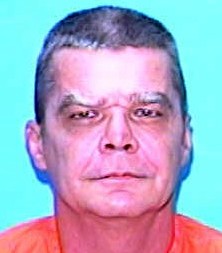 William L. Thompson
Murderer · USA · 1976
William L. Thompson was convicted and sentenced to death for the 03/30/76 kidna…
1 victim
William L. Thompson
Murderer · USA · 1976
William L. Thompson was convicted and sentenced to death for the 03/30/76 kidna…
1 victim
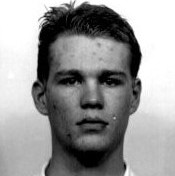 Jay Kelly Pinkerton
Homicide · USA · 1979
May 15, 1986 — Jay Kelly Pinkerton was executed by lethal injection in Texas. ·…
2 victims
Jay Kelly Pinkerton
Homicide · USA · 1979
May 15, 1986 — Jay Kelly Pinkerton was executed by lethal injection in Texas. ·…
2 victims
- Gender
- male
- Country
- USA
- Location
- Detroit, Illinois, USA
- Date of birth
- 1976
- Age at first offence
- 21
- Characteristics
- domestic violence
- Victim profile
- Stanley R. Pijanowski III, 52; James L. Isom, 25, and Stanley Hays, 77
- Method of murder
- Shooting (12 gauge shotgun)
- Date(s) of murder
- March 11, 1997
- Years active
- 1997
- Date of arrest
- —
- Status
-
Died in custody
Shot dead by the police the same day after killing three people at a Comerica bank branch, taking a hostage, and later killing a security guard’s hostage before being shot with a barrage of 200 bullets
Overview
Allen Lane Griffin was shot dead by the police the same day after he went to a Comerica bank branch in suburban Detroit, killed three people, took a hostage, and was later killed by police with a barrage of 200 bullets. At first authorities thought the incident was a failed bank robbery, but they later reclassified it as a random act of violence.
Timeline
- March 11, 1997 (about 10 a.m.) — Griffin, 21, walked into a Comerica branch at Duchess and Morang with a 12 gauge shotgun. He had already shot and wounded a 23-year-old jogger, stolen a Volvo, and driven to the bank. Once inside, he ordered everyone onto the floor and began shooting in the customer service area.
- After police arrived — Police tried to talk Griffin into releasing his hostage, but Griffin shot the hostage to death. Police then killed Griffin in a hail of gunfire with a barrage of 200 bullets.
The incident at the Comerica bank branch
Griffin went to the Comerica branch at Duchess and Morang. He was dressed in customary mass-murdering fatigues. He entered the bank and shouted, “Where's the money?” He forced everyone to lie on the floor and asked them to recite the Lord's Prayer. As he recited it with them, he started shooting.
Inside the bank, Griffin killed:
- Stanley R. Pijanowski III, 52, assistant vice president and branch manager
- James L. Isom, 25, retail services representative
Afterward, once outside, Griffin took a hostage: a man on his way to the ready teller. Police said they tried to talk him into releasing his hostage, but instead Griffin shot the hostage to death. Police then killed Griffin with a barrage of 200 bullets.
Other victims and events mentioned
More than 24 hours after the rampage, a bank janitor found an unarmed security guard cowering in the bank’s boiler room. Police said Virene Brown was found frightened and dehydrated. Police said Griffin had put his shotgun to her head and said he was going to kill her. When Griffin was distracted, she fled to the basement and stayed there for more than a day.
Separately, the incident is described as beginning before arrival at the bank: Griffin shot and wounded a 23-year-old jogger. He also stole a Volvo and drove to the bank.
The case summary also states that the shootings involved additional named victims and additional actions by Griffin:
- Griffin shot James Isom, a customer service representative, who was described as the first to die.
- Griffin walked into the office of Pijanowski and shot him in the head, “apparently without saying a word.”
- After shooting Lisa Griffin, 38, in the hand, Griffin made Virene Brown lead terrified witnesses and customers in the Lord’s Prayer.
- Griffin grabbed Stanley Hays, 77, and shot him dead before police killed Griffin.
Background and alleged motive dispute
The incident was linked to a “domestic situation,” and it was described as connected to a breakup of an alleged sex-for-money relationship.
Lawyers for the victims asserted that the killings were prompted by the breakup of an alleged sex-for-money relationship between:
- Stanley Pijanowski III (branch manager), and
- Allen Griffin Jr. (the gunman)
In the litigation, lawyers for victims said it remained difficult to prove the relationship-based motive. Two of Pijanowski’s acquaintances had recanted statements that Pijanowski had received threats from Griffin and feared for his safety.
In court-related statements quoted in the case summary:
- Cy Weiner, a lawyer of Southfield, said:
“There's a mountain of evidence pointing toward the cause of this tragic event,” Weiner said Thursday.
“But there's little motivation for the key witnesses to step forward. Their motivation is to bury the story and protect Stanley Pijanowski's memory.” - Virene Brown said:
"There wasn't enough time to get to the doors and had I cried out, he would have killed me and the other people in the bank," said Brown, who hasn't returned to work and remains on disability.
"There wasn't anything I could do. What can you do in three seconds?" - Paul Condino, a lawyer of Southfield, said:
"It's tough because the only two people who really know what happened aren't living now," Condino said Thursday.
"I think it's an uphill battle."
Weiner said he hoped someone with reliable information about the relationship would come forward. Condino said he was still trying to corroborate the claims. Weiner and Condino stated they were convinced Griffin killed Pijanowski because their relationship soured.
The case summary also described how Griffin and Pijanowski apparently met, and how witnesses characterized the relationship:
- Griffin and Pijanowski apparently met at the Jax Kar Wash on South Hunter in Birmingham, where Griffin worked before getting another job at his uncle’s car wash in Detroit.
- Weiner said the best witnesses were two of Pijanowski’s gay acquaintances who said Pijanowski had received threats from Griffin after breaking off a sex-for-money relationship.
- The men later provided a Comerica lawyer with affidavits repudiating earlier statements, including one man saying in a deposition that he had been threatened by other gays for talking about Pijanowski’s involvement with Griffin.
- Weiner said he thought the men recanted to protect Pijanowski’s memory.
Legal proceedings and civil litigation outcomes
The shootings resulted in at least six lawsuits in Wayne County Circuit Court filed by employees, customers, or their estates. The lawsuits claimed Comerica, Guardsmark, or both failed to provide adequate security.
The case summary described that:
- The bank had several robberies in the months before the shooting.
- Employees had expressed concern about their safety.
- The suits said Comerica or Guardsmark failed to take adequate preventive steps.
- The suits argued that the bank should have armed its guards, assigned more to the bank, and enclosed the customer service area with bulletproof glass.
- Several suits were critical of Brown, stating that she saw Griffin get out of the car with a weapon but made no attempt to lock the doors or cry out so customers or workers could flee to a bulletproof teller cage.
Comerica and Guardsmark declined to comment because of pending litigation. The case summary also stated that Comerica said Michigan law does not require businesses to protect customers and employees from random criminal acts committed by third parties or provide a 100-percent crime-free environment.
Settlements referenced in the case summary
Despite two years of litigation, the cause of the 1997 shooting remained a mystery in the case summary and the litigation proceeded with settlements:
- Weiner said he had settled a lawsuit against Guardsmark Inc. for hundreds of thousands of dollars to be paid to the estate of James Isom, 25, who was killed in the shooting. The settlement was described as soon to be submitted to Wayne County Circuit Judge Michael Callahan.
- The case summary stated that Comerica and Guardsmark settled two other lawsuits for nominal amounts.
Other details
- Griffin was described as living nearby with his uncle before the bank incident.
- The “Lord’s Prayer” was recited with witnesses and customers during the shooting.
- The case summary stated that Brown spent the night hiding in the basement and remained on disability.
- Lawyers described the main dispute as centered on witness statements about threats and fear tied to the alleged sex-for-money relationship.
Spotted an error, or have more information about this case?