
Shannon Johnson
Murderer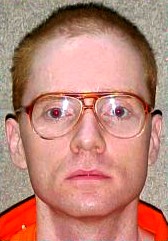 Robert Glen Jones
Murderer · USA · 1996
Defendant: Robert Glenn Jones (ADC#070566) · Co-defendant: Scott Nordstrom (ADC…
7 victims
Robert Glen Jones
Murderer · USA · 1996
Defendant: Robert Glenn Jones (ADC#070566) · Co-defendant: Scott Nordstrom (ADC…
7 victims
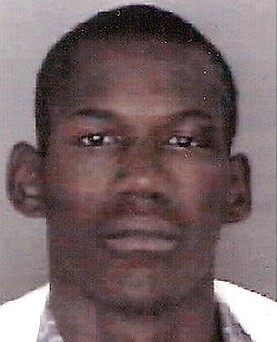 Joshua Wayne Andrews
Murderer · USA · 2000
Joshua Wayne Andrews was a serial killer accused of killing several people in V…
5 victims
Joshua Wayne Andrews
Murderer · USA · 2000
Joshua Wayne Andrews was a serial killer accused of killing several people in V…
5 victims
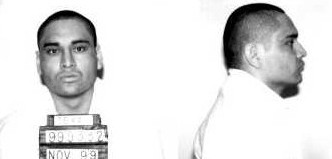 Juan Carlos Alvarez
Murderer · USA · 1998
Juan Carlos Alvarez, born on March 9, 1977, in San Luis, Mexico, was a Hispanic…
5 victims
Juan Carlos Alvarez
Murderer · USA · 1998
Juan Carlos Alvarez, born on March 9, 1977, in San Luis, Mexico, was a Hispanic…
5 victims
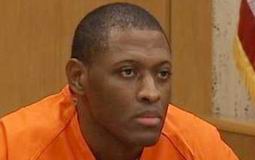 Leon Davis Jr.
Murderer · USA · 2007
Leon Davis Jr. was sentenced to death on April 29, 2011, for the execution-styl…
5 victims
Leon Davis Jr.
Murderer · USA · 2007
Leon Davis Jr. was sentenced to death on April 29, 2011, for the execution-styl…
5 victims
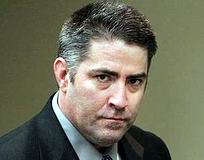 Raymond Lee Oyler
Murderer · USA · 2006
Raymond Lee Oyler was convicted for starting the 2006 Esperanza fire in Riversi…
5 victims
Raymond Lee Oyler
Murderer · USA · 2006
Raymond Lee Oyler was convicted for starting the 2006 Esperanza fire in Riversi…
5 victims
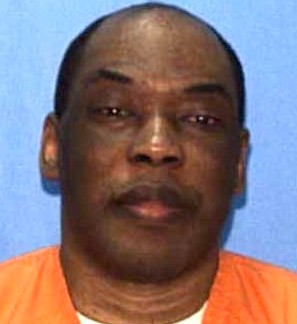 Sonny Boy Oats
Murderer · USA · 1979
Name: Sonny Boy Oats, Jr. DOB: 05/25/57 Case identifiers: DC# 051769, Fifth Jud…
2 victims
Sonny Boy Oats
Murderer · USA · 1979
Name: Sonny Boy Oats, Jr. DOB: 05/25/57 Case identifiers: DC# 051769, Fifth Jud…
2 victims
 Milton E. Taylor
Murderer · USA · 2000
Milton E. Taylor was convicted of Murder 1st and sentenced to death on July 6,…
1 victim
Milton E. Taylor
Murderer · USA · 2000
Milton E. Taylor was convicted of Murder 1st and sentenced to death on July 6,…
1 victim
 Thomas Hamilton
Mass murderer · United Kingdom · 1996
Thomas Hamilton committed suicide by shooting himself on 13 March 1996. · 13 Ma…
17 victims
Thomas Hamilton
Mass murderer · United Kingdom · 1996
Thomas Hamilton committed suicide by shooting himself on 13 March 1996. · 13 Ma…
17 victims
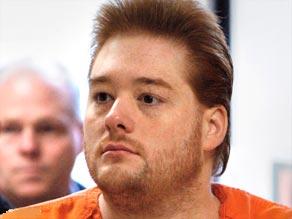 Kevin Underwood
Murderer · USA · 2006
Kevin Ray Underwood (born December 19, 1979) was a convicted murderer from Purc…
1 victim
Kevin Underwood
Murderer · USA · 2006
Kevin Ray Underwood (born December 19, 1979) was a convicted murderer from Purc…
1 victim
- Gender
- male
- Country
- USA
- Location
- New Castle County, Delaware, USA
- Date of birth
- November 18, 1983
- Age at first offence
- 23
- Characteristics
- rape, domestic violence, attempt to collect insurance money
- Victim profile
- Cameron Hamlin, 26
- Method of murder
- Shooting (handgun)
- Date(s) of murder
- September 24, 2006
- Years active
- 2006
- Date of arrest
- November 15, 2006
- Status
-
Executed
Executed by lethal injection in Delaware on April 20, 2012
Case identification
Shannon Johnson (Black male) was executed by lethal injection in Delaware on April 20, 2012. He was sentenced to death in Delaware.
Shannon Johnson’s date of birth was 11/18/1983.
Timeline
- September 24, 2006 — Cameron Hamelin was shot and killed while seated in his vehicle at the intersection of Jessup and Vandever Streets in Wilmington; Lakeisha Truitt, in the passenger seat, was not struck.
- September 24, 2006 — Lakeisha Truitt called 911 and identified Shannon Johnson, the father of her child, as the shooter.
- September 24, 2006 — Johnson was not apprehended immediately.
- August 5, 2003 — Johnson pled guilty to one count of Rape in the Fourth Degree.
- December 19, 2002 — Q.T. saw Johnson driving; Q.T. was seven or eight months pregnant.
- December 13, 2007 — A letter written by Johnson to Stewart was dated.
- December 19, 2002 — Q.T. saw Johnson driving on the street.
- March 27, 2008 — The jury returned a verdict of guilty on all counts, reducing the Attempted Murder in the First Degree (9/24/06) to Reckless Endangering in the First Degree and reducing the second Attempted Murder in the First Degree (11/10/06) to Assault in the First Degree.
- Early April 2008 — A four-day penalty hearing was held; the jury unanimously recommended that Johnson be sentenced to death.
- September 5, 2008 — The Superior Court judge sentenced Johnson to death.
- September 10, 2007 — (Material included procedural references to “Ms. Stewart” and trial matters; no dated event established beyond what is already listed in the record.)
- November 10, 2006 — Weeks later, Lakeisha Truitt was driving in Wilmington near her home on 35th Street when she was shot intentionally; she survived and identified Johnson as the person who shot her.
- November 15, 2006 — Johnson was arrested in Wilmington at the home of a female friend, Rima Stewart.
- December 6, 2007 — The Attorney General issued a subpoena directing prison officials to give the State copies of all incoming and outgoing mail beginning on the first date of Johnson’s incarceration in this case, November 15, 2006.
- January 2008 — Detective Ciritella heard from two informants incarcerated in the same prison unit as Johnson; the informants stated that Johnson had been soliciting people to kill Truitt and instructing them to visit Stewart after release.
- April 25, 2007 — A letter dated April 25, 2007 was State’s Exhibit 43.
- November 10, 2007 — (The record refers to a plea and statement “at the time of her plea on November 10, 2007”; this date is included as referenced by the court in the mail-subpoena discussion.)
- April 20, 2012 — Johnson was executed by lethal injection in Delaware at 2:55 a.m., after legal challenges.
Background
Johnson had been dating Truitt from when Truitt was seventeen years old until 2003. Truitt gave birth to a son, Shannon Johnson, Jr., when she was nineteen years old. Truitt testified that her relationship ended in 2003 because of “fights, abuse, and different girls.”
In September 2006, Hamelin began dating Johnson’s ex-girlfriend, the mother of a child by Johnson. Johnson had hoped for reconciliation after years apart.
In early 2008, Detective Ciritella was unable to contact Truitt about a matter involving Johnson’s contact with her, and the Attorney General issued a subpoena on December 6, 2007 to copy Johnson’s incoming and outgoing mail beginning November 15, 2006.
Johnson’s long criminal history included a 2002 rape of a teenager who was seven months pregnant.
The offence
Murder of Cameron Hamelin (September 24, 2006)
Cameron Hamelin was shot and killed intentionally while seated in his vehicle at the intersection of Jessup and Vandever Streets in Wilmington.
Lakeisha Truitt was in the passenger seat of Hamelin’s vehicle and was not struck.
Truitt called 911 and identified Shannon Johnson, the father of her child, as the shooter.
A brief exchange occurred between Johnson and Truitt’s ex-girlfriend, in front of her home, where Hamelin was sitting in a car; Johnson then pulled out a gun and began firing into the car.
Hamelin, though fatally injured, managed to put the car in gear and step on the accelerator, crashing a short distance away, allowing the woman to flee and saving her life.
Shooting of Lakeisha Truitt (November 10, 2006)
Weeks later, on November 10, 2006, Truitt was driving her vehicle in Wilmington, near her home on 35th Street, when she was shot intentionally.
Truitt survived and identified Johnson as the person who shot her.
Truitt testified that after Hamelin’s death, she crossed paths with only one individual in the minutes before Johnson came around a corner and shot her: Stewart.
Prosecutors said Johnson sometimes dressed in the all-covering garb of a Muslim woman with only his eyes exposed when he shot at and hit the ex-girlfriend, smashed the window of her car, and pulled her out.
Prosecutors said the only reason Johnson stopped the assault and fled is because his gun jammed.
Investigation
Lakeisha Truitt was identified to 911 as having been shot and Johnson was identified as shooter.
During the investigation, Stewart disclosed to Detective Ciritella, the chief investigating officer of the Hamelin murder, that Johnson was in contact with Truitt. Detective Ciritella confirmed that Johnson had been in contact with Truitt.
In early December 2007, Detective Ciritella was unable to contact Truitt to discuss this matter.
In January 2008, Detective Ciritella heard from two informants incarcerated in the same prison unit as Johnson. The informants stated that Johnson had been soliciting people to kill Truitt and had instructed them to visit Stewart once released from prison, and that Stewart would provide assistance in killing Truitt.
Arrest
On November 15, 2006, Johnson was arrested in Wilmington at the home of a female friend, Rima Stewart.
Charges
An indictment was filed in the Superior Court charging Johnson with the following regarding the September 24, 2006 incident:
- Murder in the First Degree (Cameron Hamelin)
- Attempted Murder in the First Degree (Lakeisha Truitt)
- Possession of a Firearm During the Commission of a Felony (two counts)
- Possession of a Deadly Weapon by a Person Prohibited
The indictment also charged Johnson regarding the November 10, 2006 incident:
- Possession of a Firearm During the Commission of a Felony
Trial
Verdict (March 27, 2008)
On March 27, 2008, the jury returned a verdict of guilty on all counts.
The jury reduced:
- Attempted Murder in the First Degree (9/24/06) to Reckless Endangering in the First Degree
- The second Attempted Murder in the First Degree (11/10/06) to Assault in the First Degree
Penalty hearing recommendation
After a four-day penalty hearing held in early April 2008, the jury unanimously recommended that Johnson be sentenced to death.
Sentencing decision (September 5, 2008)
On September 5, 2008, the Superior Court trial judge sentenced Johnson to death.
In sentencing, the judge noted details of the murder and Johnson’s character and history.
The sentencing judge described the murder as follows:
[It] involves the selfish act of a callous man, who stole a promising future from a nice, young man; who stole a loving son and companion from a family; who denied the community the future contributions of a positive, family-oriented man. Further, he did so in an attempt to continue to direct and control the life of Ms. Truitt, who made a choice, a number of years ago, to enter into a relationship with him, which she had ended. He endangered her life in one of the offenses, and caused her serious injury in the other. He used a firearm on both occasions charged in this indictment. He had a total disregard for anyone but himself in each instance.
In addition to the statutory aggravating factor, the Superior Court found each of the seven nonstatutory aggravators alleged by the State.
The sentencing judge considered:
- The particular circumstances and details of Hamelin’s murder and the other crimes in the indictment
- Johnson’s character and propensities
- The impact of the crimes on the Hamelin family and the victim’s friends
- Johnson’s prior criminal history
- Johnson’s institutional record, shown as lack of amenability to lesser sanctions and failure at previous rehabilitative efforts
- Acts of domestic violence against his former girlfriend
- Johnson’s future dangerousness
The judge balanced those aggravating factors against multiple mitigating factors proposed by the defendant. The ten mitigating circumstances focused on Johnson’s age, disadvantaged upbringing, and certain mental and emotional issues, including:
- Diagnoses for learning disabilities and mental illness
- The impact his execution would have on his family
- His love for children, especially his young son, Shannon, Jr.
- The nature and circumstances of Johnson’s imprisonment for life
Evidence and courtroom proceedings
Johnson’s letters from prison and suppression motion
Johnson argued that during the guilt phase the Superior Court erred when it denied his motion to suppress letters written by Johnson to Rima Stewart (“Stewart”) while he was incarcerated awaiting trial.
Stewart was Johnson’s girlfriend at the time he was arrested and was charged with and convicted of hindering Johnson’s prosecution.
Stewart disclosed to Detective Ciritella that Truitt visited Johnson while he was incarcerated and also spoke with him over the telephone. Detective Ciritella confirmed Johnson had been in contact with Truitt.
The Attorney General issued a subpoena on December 6, 2007 directing prison officials to give the State copies of all of Johnson’s incoming and outgoing mail beginning November 15, 2006.
The Department of Corrections intercepted, opened, and copied Johnson’s mail, forwarded the copies to the Attorney General’s office, and sent the originals to the intended recipients.
Johnson challenged the State’s use of five outgoing letters to Stewart, including a letter dated December 13, 2007 and another dated December 17, 2007; the date of the other letters was not provided.
The trial judge denied Johnson’s suppression motion, ruling that the seizure was justified by the State’s legitimate interest in ensuring that Truitt would be “able and available to cooperate” as a witness at trial.
At the time of the State’s inspection and copying, Johnson was a pre-trial detainee. Johnson argued his communications with Stewart were private and that the State violated his First and Fourth Amendment rights.
Trial evidence (verbatim letter passage and exchange)
April 25, 2007 letter (State’s Exhibit 43)
Truitt testified and read from several letters Johnson sent while detained awaiting trial.
A letter dated April 25, 2007 was State’s Exhibit 43. Truitt read the passage shown to the jury:
I want to know from your mouth, if I was to die how would you—if I was to die how would your life be after that? Think hard about that before you answer. I don't know how you're going to go about my case, but I'm going to put it just like this. If you show up at court, that's on you, meaning that's something that you'll have to live ... [page turned] ... to live with. But if you're not going to, then just—then you just can't show up at court. The state may ride to your house and your Grandmom house to try to find you but, if they can't, then they'll have to let me go. If—has to let me go. It's just like how that situation went with my mom and my little sister that time when they told on me and my mom husband got shot. [Prosecutor interrupts to move witness to different portion of exhibit]. (emphasis added).
The emphasized sentence was addressed the next day at a recess, and the following exchange occurred:
[Prosecutor # 1]: The second issue is with regard to an exhibit that's already been entered into evidence. Your Honor, as you may recall, Lakeisha Truitt was reading a letter that was sent to her by the defendant. And it was put on the overhead and she read a portion of the letter. And Prosecutor # 2 stopped her at some point during—
The Court: I was wondering when I would hear about this. I've been waiting to see. Have you reviewed those letters? I thought that the defense had an opportunity to review those letters for content, and they would have asked that certain portions be redacted. I was surprised they had not.
[Prosecutor # 2]: They did have the letters, Your Honor.
The Court: I thought so. And I just—I don't know—you're talking about the previous incident where his stepfather was shot or something?
[Prosecutor # 1]: Yes, Your Honor. And I guess it's the State's position at this point that the defense take a position with regards to whether they want a curative instruction or whether—we're amenable to redacting that part. It hasn't gone back to the jury yet. I mean, part of it was read and it was on the overhead, but, I mean, the State wouldn't oppose taking that out at this point.
The Court: Defense?
[Defense Attorney # 1]: Your Honor, I did discuss the issue with Prosecutor # 1 yesterday at the end of the day and then again today. We did have the letters. They were provided to us. And, quite frankly, Your Honor, I'm not sure why an objection wasn't made. Having seen it as soon as it was on the screen, Ms. Truitt was actually I don't want to say a slow reader, but as it wasn't her handwriting, she was reading slowly. And I know I was able to read ahead before—more quickly.
The Court: I did not read it. I don't know what else is in there. Does he confess to another crime in there or anything?
[Defense Attorney # 1]: Well, Your Honor, it indicates that—
The Court: Is he the one that was alleged to have done the shooting?
[Defense Attorney # 1]: It says that his sister and mom told on him and that they didn't show up for court.
The Court: Right.
[Defense Attorney # 1]: And so at any rate, Your Honor, I certainly would have—should have told the State in advance that I wanted that redacted and removed.
The Court: Well, it will be now. And if you wish a curative instruction, draft one up. I don't know that I want to draw any more attention to it when the defense didn't object at the time. I thought—I think at that time there should have been a curative instruction if at any time, but, you know, it's possible the jury thought, Oh, we're not going to see it again and will not recall it. I don't know.
[Defense Attorney # 1]: Well, Your Honor, I'll discuss it with Defense Attorney # 2 and prepare a draft instruction if we choose to present one.
The Court: Very well. Mr. [Defense Attorney # 2]?
[Defense Attorney # 2]: Your Honor, my view is somewhat different than [Defense Attorney # 1].
The Court: Well, why don't you two talk and tell me what you decide together rather than have you disagree on the record. Okay? And you can let me know tomorrow morning.
[Defense Attorney # 2]: No, I thought we—we do not have a disagreement, Your Honor.
The Court: Okay. That's good news.
[Defense Attorney # 2]: We do not wish the item—we do not wish a curative instruction, but we would like to have the—
The Court: Well, why don't you go through the other letters and make sure there's nothing else you want redacted? Okay?
[Defense Attorney # 2]: Okay. No problem.
A redacted version of the letter was entered into evidence during the guilt phase.
Johnson later argued for a curative instruction to strike information pointing to his prior shooting of his stepfather from jurors’ notes; the issue was reviewed for plain error and was treated as waived.
Truitt’s cross-examination and strategic ruling
During Truitt’s cross-examination, the trial judge addressed the effect of questioning Truitt about relationships she had between 2003 and 2006 with men other than Hamelin.
The trial judge explained that the question would “open the door” to questions about Johnson’s conduct regarding Truitt and her other relationships.
The court also questioned Johnson about strategy and the consequences of the line of inquiry, and the defendant responded “Yes” to understanding the ruling and the evidence possibilities. The trial judge and defendant confirmed the defendant’s request “To pursue it.”
Prior rape conviction evidence (penalty phase)
During the penalty phase, the State presented evidence supporting the underlying facts of Johnson’s Rape in the Fourth Degree conviction.
The State called Q.T. and Detective Hall.
Q.T. testified that she knew Johnson from the neighborhood. On December 19, 2002, Q.T. Q.T. Q.T. got into his car; Johnson locked the car door and would not let her out. Q.T. said Johnson drove off, parked behind a building in Wilmington, and began reaching over to kiss her; Q.T. said she pushed him off and he proceeded on doing it, and “he got on top of me and held me down with my arms like this (indicating).”
Q.T. testified that Johnson put his stuff in her and continued to penetrate without her consent, and that when she told him to stop he did not. Q.T. testified that Johnson then “inserted his penis into her vagina and had vaginal sex with her.”
Q.T. testified on re-direct that Johnson forced himself by attempting to kiss her and she told him numerous times to stop and wanted to go home; he then began rubbing her vagina area and overpowered her and pulled her pants down; then he inserted his penis into her vagina and had vaginal sex with her.
Detective Hall testified about Q.T.’s account, including that Q.T. was invited inside the car, that Johnson locked the doors and drove off, and that they then made their way to the 1300 block of Stockton across Washington Street from the Wilmington Hospital; Hall testified that Q.T. said he forced himself, pulled her pants down, and had vaginal sex with her.
Johnson argued on appeal that the Superior Court should have prohibited Detective Hall from testifying to Q.T.’s account; the claim was reviewed for plain error and treated as waived.
Brother Damien’s excluded testimony (penalty phase)
The State had given notice that Johnson’s 2003 rape conviction would be used to show the existence of one statutory aggravator, conviction of a violent or forcible felony.
During the penalty phase, Johnson intended to call his brother Damien Johnson. The prosecutrix objected, arguing it would be inappropriate to allow Johnson to challenge the voluntariness of the 2003 plea.
The judge sustained the objection and ruled the testimony inadmissible hearsay, stating:
The purpose of offering this testimony is to establish that the defendant did not accept the plea because he was guilty but rather because he wasn't willing to risk additional jail time. How do you intend to establish that by other than the defendant's testimony since anything he said to his brother is hearsay?
and:
I can't allow the testimony, it's hearsay. Your objection has been consistent with regard to hearsay. Additionally, because I rule on that, don't necessarily need to reach the issue of whether this jury is to determine whether that conviction is of good validity, so I do not reach that issue because you, unless or until you present admissible valid testimony regarding the challenge to the entry of the plea, the record will establish the conviction.
The appellate court treated the evidentiary ruling as proper under the rules governing hearsay, including double hearsay and the requirements for admission of statements relating to then-existing state of mind under Rule 803(3).
Unadjudicated misconduct evidence (stepfather incident)
During the penalty phase, Truitt was recalled and testified about an incident around the end of August of 2003 involving Johnson’s stepfather.
Truitt testified she saw Johnson running into and out of his stepfather’s house, and that people were saying the stepfather was shot and that he shot the stepfather.
The court sustained a hearsay objection at one point, with the prosecutrix attempting to keep Truitt to personal observations.
Truitt testified that Johnson later wrote her letters about the incident, and that in those letters he said for her not to come to court to testify on him and for her to hide at his mom’s or leave the State because if she wouldn’t show, the charges would be dropped “just like the charges was dropped against him with his stepfather's incident.”
Johnson argued that admitting evidence of unadjudicated misconduct was error and should have included a reliability determination. The appellate court found no plain error and held that the evidence satisfied the plain, clear, and convincing standard.
“Cameron’s Law” testimony
During victim impact testimony, Hamelin’s father Vandrick Hamelin Sr. testified about efforts to cope with Hamelin’s death and to pass a law in Hamelin’s name.
Hamelin Sr. testified:
But since Cameron['s death] we have turned the negative into a positive. Our family has worked hard down at the Dover Legislation Hall to pass a law in Cameron's name ... .... [which] stiffens the penalties for convicted gun felons who continue to commit crimes with guns. So, we are trying to curb the gun violence here in Wilmington, and we hope that no one else would lose their [sic] life to gun violence here in Wilmington with this new law. I mean, I really do hope this law do [sic] make criminals think about committing crimes because they don't know the devastation that it causes families and some people, you know, they hold pictures of their child or little ones and fail to realize they're killing other peoples' children in the process.
Johnson acknowledged he made no objection, and the claim was treated as waived unless plain error.
Appeals
Direct appeal (Johnson v. State, 983 A.2d 904 (Del. 2009))
Shannon Johnson appealed his convictions and the automatic appeal of his death sentence was docketed.
The cases were consolidated.
The Supreme Court considered multiple issues, including:
- Whether the Superior Court erred when it denied Johnson’s motion to suppress letters seized and copied by the State.
- Whether the Superior Court erred when it failed to sever the two “Possession of a Deadly Weapon by a Person Prohibited” charges.
- Whether the Superior Court erred when it admitted evidence suggesting Johnson had been involved in a prior shooting of his stepfather.
- Whether the Superior Court erred when it ruled Johnson’s cross-examination about Truitt’s prior romantic relationships would open the door for rebuttal evidence about Johnson’s prior abuse of Truitt.
- Whether the Superior Court erred in the penalty phase by allowing hearsay evidence about Johnson’s prior Rape in the Fourth Degree conviction.
- Whether the Superior Court erred in the penalty phase by prohibiting Johnson from submitting hearsay evidence from his brother Damien Johnson about Johnson’s state of mind at the time he accepted the rape plea.
- Whether the Superior Court erred in the penalty phase by admitting evidence suggesting some involvement in a prior shooting of his stepfather.
- Whether the Superior Court erred in the penalty phase by admitting narrative testimony from Cameron Hamelin’s father about “Cameron’s Law” pending as House Bill 163.
- Whether statutory review of the death sentence should raise concern.
The Supreme Court held:
- No reversible error occurred during the guilt phase or penalty phase.
- The judgments of conviction were affirmed.
- The sentence of death was properly imposed and must be affirmed.
Outcome
Execution details and last words (April 20, 2012)
Johnson was executed by lethal injection in Delaware on April 20, 2012 at 2:55 a.m.
A witness account described Johnson strapped to a table with his arms outstretched, eyes closed, and not raising his head after curtains were opened.
When Warden Perry Phelps told him it was time for his last words, Johnson spoke briefly and then said:
“Loyalty is important. Without loyalty you have nothing. Death before dishonor,”
He then made a statement in Arabic, closed his eyes, and never reopened them.
After a few moments, his chest began to heave for a few seconds and then slowed and stopped.
The witness room then remained quiet while the curtains were closed. A consciousness check followed with:
“Inmate Johnson, can you hear me? Inmate Johnson can you hear me?”
There was no response, and after the curtains were opened briefly again, Johnson never moved. Curtains were then closed, and it was over.
Last meal
Johnson’s last meal was chicken lo mein, carrots, cake, wheat bread and margarine, and iced tea.
Other details
Johnson’s execution came after federal public defenders’ efforts to spare him, including appeals to the U.S. Third Circuit Court of Appeals twice overturning stays granted by a district judge.
The U.S. Third Circuit twice overturned stays granted by a district judge.
Johnson had abandoned his appeals process and was executed after he forgo further appeals; federal public defenders still appealed on his behalf once on Thursday and again early on Friday.
Governor Jack Markell’s spokesman Brian Selander said Johnson died by lethal execution at 2:55 a.m.
Vandrick Hamlin Sr., accompanied by his wife Cynthia and their two children, Vandrick Jr. and Jasmine, stated:
“We waited patiently,” Vandrick Hamlin Sr. said. “We waited almost six years, so a few hours wasn’t going to bother us. We just knew, it was a matter of time, Mr. Johnson would be put to death tonight.”
He also stated:
“We can begin healing … this morning.”
Johnson’s sister Lakeisha Truitt led the effort to spare his life with the aid of the Federal Defenders office.
Demonstrators gathered outside the state penitentiary at Smyrna during the execution, with protesters both for and against the death penalty.
Johnson’s attorney, Jennifer-Kate Aaronson, said:
“And it is just as important for an attorney to be loyal to a client. That was my responsibility, to be loyal and I did that,” she said.
Religious leader Rev. Bruce Gillette stated:
“Tonight I grieve the death of a person, the tragic waste of a life,”
and:
“I don’t think this will give ultimate comfort to them, nor do I think it will reduce violent crime.”
Sherry Steller stated:
“We’re here for the victims,”
and:
“Somebody has to speak up for the victims.”

Spotted an error, or have more information about this case?