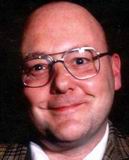
Thomas Hamilton
Mass murderer Richard Fielding
Mass murderer · United Kingdom · 1999
Richard Fielding Richard Fielding was detained indefinitely at Rampton Hospital…
7 victims
Richard Fielding
Mass murderer · United Kingdom · 1999
Richard Fielding Richard Fielding was detained indefinitely at Rampton Hospital…
7 victims
 George Stephenson
Mass murderer · United Kingdom · 1986
George Stephenson — defendant · John Daly — co-defendant · George Daly — co-def…
5 victims
George Stephenson
Mass murderer · United Kingdom · 1986
George Stephenson — defendant · John Daly — co-defendant · George Daly — co-def…
5 victims
 Kenneth Regan
Mass murderer · United Kingdom · 2003
Kenneth Regan (born 1953) was a British murderer and drug dealer. He was found…
5 victims
Kenneth Regan
Mass murderer · United Kingdom · 2003
Kenneth Regan (born 1953) was a British murderer and drug dealer. He was found…
5 victims
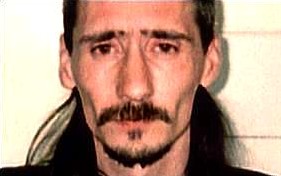 Lee Ford
Mass murderer · United Kingdom · 2000
Lee Ford · Lesley Ford (wife) · Michael Tranter (natural father of four childre…
5 victims
Lee Ford
Mass murderer · United Kingdom · 2000
Lee Ford · Lesley Ford (wife) · Michael Tranter (natural father of four childre…
5 victims
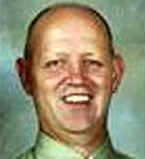 Robert Mochrie
Mass murderer · United Kingdom · 2000
Robert Mochrie unlawfully killed his family at their home in Barry, near Cardif…
5 victims
Robert Mochrie
Mass murderer · United Kingdom · 2000
Robert Mochrie unlawfully killed his family at their home in Barry, near Cardif…
5 victims
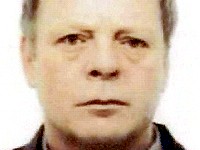 William Horncy
Mass murderer · United Kingdom · 2003
William Horncy (born 1954) was a British murderer. He was convicted of murderin…
5 victims
William Horncy
Mass murderer · United Kingdom · 2003
William Horncy (born 1954) was a British murderer. He was convicted of murderin…
5 victims
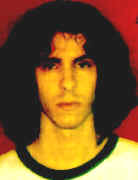 Kermit Smith
Murderer · USA · 1980
Kermit Smith, Jr. was executed by the state of North Carolina for the kidnap, r…
1 victim
Kermit Smith
Murderer · USA · 1980
Kermit Smith, Jr. was executed by the state of North Carolina for the kidnap, r…
1 victim
 Jesse Jacobs
Murderer · USA · 1986
Jesse Jacobs (#872) was the offender. He was executed in Texas on January 4, 19…
1 victim
Jesse Jacobs
Murderer · USA · 1986
Jesse Jacobs (#872) was the offender. He was executed in Texas on January 4, 19…
1 victim
 Martha Ann Johnson
Murderer · USA · 1977
Martha Ann Johnson (also known as Martha Ann Bowen) was an American serial kill…
4 victims
Martha Ann Johnson
Murderer · USA · 1977
Martha Ann Johnson (also known as Martha Ann Bowen) was an American serial kill…
4 victims
 Toney Deron Davis
Murderer · USA · 1992
Toney Deron Davis (DOB: 03/12/70) was tried in the Fourth Judicial Circuit, Duv…
1 victim
Toney Deron Davis
Murderer · USA · 1992
Toney Deron Davis (DOB: 03/12/70) was tried in the Fourth Judicial Circuit, Duv…
1 victim
 Mark Allen Geralds
Murderer · USA · 1989
Mark Allen Geralds was a carpenter who helped remodel the Pettibone home prior…
1 victim
Mark Allen Geralds
Murderer · USA · 1989
Mark Allen Geralds was a carpenter who helped remodel the Pettibone home prior…
1 victim
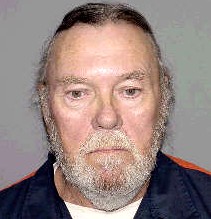 John Rodney McRae
Serial killer? · USA · 1950
John Rodney McRae was a defendant in a first-degree murder case tried in 1998.…
5 victims
John Rodney McRae
Serial killer? · USA · 1950
John Rodney McRae was a defendant in a first-degree murder case tried in 1998.…
5 victims
- Gender
- male
- Country
- United Kingdom
- Location
- Dunblane, Stirling, Scotland, United Kingdom
- Date of birth
- May 10, 1952
- Age at first offence
- 44
- Characteristics
- school shooting
- Victim profile
- Sixteen children and one adult
- Method of murder
- Shooting (two 9 mm Browning HP pistols and two Smith & Wesson .357 Magnum revolvers)
- Date(s) of murder
- March 13, 1996
- Years active
- 1996
- Date of arrest
- —
- Status
-
Died in custody
Committed suicide by shooting himself on 13 March 1996
Case details
Thomas Hamilton committed suicide by shooting himself on 13 March 1996.
Timeline
- 13 March 1996 — Thomas Hamilton walked into Dunblane Primary School armed with two 9 mm Browning HP pistols and two Smith & Wesson .357 Magnum revolvers; he fired 109 times, then shot and killed himself with one of his revolvers pointing upwards into his mouth.
- 14 March 1998 — The Memorial Garden at the town’s cemetery was dedicated.
- 19 March 1996 — The body of Thomas Hamilton was cremated in private.
- 11 April 1996 — The gym where the massacre took place was demolished.
- 9 October 1996 — A memorial service was held.
- 3 October 2005 — The partial lifting of restrictions quelled some of the more outlandish theories.
- December 9, 1996 — A recording of a revised version of “Knockin’ on Heaven’s Door” was released in the UK and reached number 1.
- July 1996 — “A Child’s Prayer” was first performed in Westminster Abbey.
- 2003 — George Robertson launched a landmark 'e-libel' action against the Sunday Herald; he won an apology and damages.
- 2004 — The Dunblane Youth and Community Centre, funded by donations made after the shootings, was opened in September 2004.
- In 2006 (Tenth Anniversary in March) — Channel 5 screened 'Dunblane - a decade on' and BBC Scotland showed 'Remembering Dunblane'.
The offence
On 13 March 1996, unemployed former shopkeeper and former Scout leader Thomas Watt Hamilton (born Thomas Watt 10 May 1952) walked into Dunblane Primary School in Dunblane, Scotland, armed with two 9 mm Browning HP pistols and two Smith & Wesson .357 Magnum revolvers. He carried 743 cartridges and fired 109 times.
After gaining entry to the school, Hamilton made his way to the gymnasium and opened fire on a class of five- and six-year-olds, killing or wounding all but one person. Fifteen children and a teacher, Gwen Mayor, died at the scene. Hamilton then left the gymnasium through the emergency exit.
In the playground outside, Hamilton fired a number of shots into a mobile classroom. A teacher in the mobile classroom had previously realised that something was wrong and told the children to hide under the tables. A number of bullet holes were found in the children’s chairs. Hamilton also fired at a group of children walking in a corridor, injuring one teacher.
Hamilton went back into the gym and fired one shot with one of his two revolvers pointing upwards into his mouth, killing himself instantly.
A further eleven children and three adults were rushed to the hospital as soon as emergency services arrived; one of these children was pronounced dead on arrival at the hospital.
Victims
Sixteen children and one adult were killed, in addition to the attacker, Thomas Watt Hamilton who committed suicide.
List of those killed
Victoria Elizabeth Clydesdale Emma Elizabeth Crozier Melissa Helen Currie Charlotte Louise Dunn Kevin Allan Hasell Ross William Irvine David Charles Kerr Mhairi Isabel MacBeath Brett McKinnon Abigail Joanne McLennan Gwen Mayor (schoolteacher) Emily Morton Sophie Jane Lockwood North John Petrie Joanna Caroline Ross Hannah Louise Scott Megan Turner
Other casualty and survivor details
A further eleven children and three adults were rushed to hospital. One of the additional children was pronounced dead on arrival at the hospital.
Investigation and evidence at the scene
Police investigation revealed that Hamilton had loaded the magazines for his Browning with an alternating combination of full metal jacket and hollow point ammunition.
A total of 58 gunshot wounds were sustained by the victims; 26 of these wounds were of such a nature that individually they would have proved fatal. The deaths of the victims were caused by gunshot wounds caused by Thomas Hamilton’s actions in shooting them.
All of the victims died within the gym, with the exception of the sixteenth child, Mhairi Isabel MacBeath, who was found to be dead on arrival at Stirling Royal Infirmary at 10.30 am.
It was likely that the shootings occurred within a period of 3–4 minutes, starting between 9.35 am and 9.40 am.
The survivors were taken to Stirling Royal Infirmary and consisted of the remaining 12 members of the class; two pupils aged 11 who were elsewhere than in the gym when they were injured; and Mrs Harrild, Mrs Blake and Mrs Tweddle. Thirteen of them had sustained gunshot wounds, 4 being serious, 6 very serious and 3 minor. Of the remaining 4, 2 had sustained minor injuries and 2 were uninjured.
Detailed sequence within the school (as described)
Before the attack, Thomas Hamilton was seen scraping ice off a white van outside his home at 7 Kent Road, Stirling. He then drove off in the van in the direction of Dunblane.
At about 9.30 am, he parked the van beside a telegraph pole in the lower car park of Dunblane Primary School and used pliers to cut telephone wires at the foot of the telegraph pole.
He then crossed the car park, carrying the weapons, ammunition and other equipment, and entered the school by way of a door on its north west side next to the toilets beside the gym. He did not use the main entrance.
On 13 March, primary 1, 2 and 3 classes attended assembly from 9.10 am to 9.30 am. Primary 1/13 had 28 pupils and Mrs Gwen Mayor as teacher, and 25 members of the class were 5 years of age while 3 were 6 years of age. Mrs Mayor was 47 years of age.
At the conclusion of assembly, primary 1/13 with Mrs Mayor made their way to the gymnasium, passing the entrance used by Thomas Hamilton.
A physical education teacher, Mrs Eileen Harrild, had already arrived there along with Mrs Mary Blake, a supervisory assistant. The children had been instructed to go to the centre and away from the equipment at the south end.
Mrs Harrild was talking to Mrs Mayor for a few minutes when she heard a noise behind her, “probably the sound of Thomas Hamilton firing two shots into the stage of the Assembly Hall and the girls toilet outside the gym.” He then entered the gym wearing a dark jacket, black corduroy trousers and a woolly hat with ear defenders, and fired indiscriminately and in rapid succession with a pistol. Mrs Harrild was hit in both forearms, the right hand and left breast and stumbled into an open-plan store area adjoined to the gym followed by a number of the children. Mrs Mayor was shot several times and died instantly. Mrs Blake was then shot but managed to reach the store, ushering some children ahead of her.
From his position near the entrance doorway of the gym, Hamilton fired a total of 29 shots in rapid succession and killed one child and injured others. During this shooting, four injured children made their way to the store, where Mrs Blake and Mrs Harrild tried to console and calm the terrified children.
Thomas Hamilton walked up the east side of the gym firing six shots. Midway along it he discharged 8 shots toward the opposite side. He advanced to the middle of the gym and walked in a semi-circle systematically firing 16 shots at a group of children. He stood over them and fired at point-blank range.
A child from Primary 7 class sent on an errand by his teacher was walking along the west side when he heard loud banging and screaming, looked in and saw Hamilton shooting, and Hamilton shot at him. The child was struck by flying glass and ran off.
It appeared that Hamilton then advanced to the south end of the gym and fired 24 rounds in various directions. He shot through a window adjacent to the fire escape door at the south-east end of the gym and then opened the fire escape door and discharged four shots in the same direction from within the gym. He then fired four more shots towards the library cloakroom, striking Mrs Grace Tweddle, a member of staff, with a glancing blow on the head.
Mrs Catherine Gordon and her Primary 7 class using hut number 7 which was the classroom closest to the fire escape door saw and heard Hamilton firing from that direction, and she instructed her class to get down on the floor just in time before he discharged 9 shots into her classroom.
Hamilton then re-entered the gym, shot again, released the pistol and drew a revolver. He placed the muzzle of the revolver in his mouth, pointing upwards, and pulled the trigger; his death followed quickly.
Mrs Mayor and 15 children lay dead in the gym and one further child was close to death.
Response by school staff and emergency services
School staff actions
Mrs Agnes Awlson, Assistant Headmistress, ran across the playground toward the gym after hearing sharp metallic noises and screaming, saw what she thought were cartridges outside its doorway, then ran back to the office of Headmaster Mr Ronald Taylor.
Mr Taylor was making a telephone call that began at 9.38 am. He made an emergency call to the police, received at 9.41 am, then ran to the gym. He heard no further noises on the way. On being told the gunman had been seen shooting himself, Mr Taylor estimated that about 3 minutes had lapsed between his first hearing the noises and being told this.
Mr Taylor described the gym as “a scene of unimaginable carnage, one's worst nightmare” and asked a student teacher to take the less injured crying children out and comfort them. Mr Taylor instructed Deputy Headmistress Mrs Fiona Eadington to telephone for ambulances; that call was made at 9.43 am. He moved through the gym with janitor Mr John Currie and noticed Hamilton lying at the south end. He noticed a gun on the floor beside Hamilton and told Mr Currie to kick it away. He also removed the revolver from Hamilton’s hand and threw it aside.
Emergency services staff and medical teams were involved once police and medical teams arrived. Attention turned to identifying the children. Since Mrs Mayor was dead, help was sought from staff including nursery staff. The class register had not been marked for Mrs Mayor’s class as the class proceeded directly to the gym after assembly. A difficulty was also encountered when one child was wearing clothing with the name tag of another child. Mrs Mayor’s record card for another child was not in its expected place, but this did not delay identification.
Emergency services timeline
An ambulance arrived at the school at 9.57 am in response to the call at 9.43 am. It left at 10.15 am with the first patient for Stirling Royal Infirmary and returned later for more patient transfers.
A team of doctors and a nurse from the Health Centre at Dunblane arrived at about 10.04 am, followed by a community nursing sister. They were involved in resuscitation of injured teachers and children, joined by doctors from Doune Health Centre and Callander.
At 9.48 am, the accident and emergency department at Stirling Royal Infirmary was notified, multiple casualties or fatalities were possible, and a major incident response was put into operation. At 10.15 am, teams from Stirling Royal Infirmary arrived to take up triage. Operating theatres had been cleared of planned surgical cases.
At about 10.35 am, a team from Falkirk and District Royal Infirmary also arrived. All injured victims had arrived at Stirling Royal Infirmary by about 11.10 am. After initial examination, some were sent to Falkirk and District Royal Infirmary and others required transfer to the Royal Hospital for Sick Children, Yorkhill, Glasgow, for specialist treatment.
Aftermath and memorials
Memorial service
A memorial service was held on 9 October 1996.
James Whyte, former Moderator of the General Assembly of the Church of Scotland, conducted a memorial service held on 9 October 1996.
Cremation
On 19 March 1996, the body of Thomas Hamilton was cremated in private.
Demolition and rebuilding
The gym where the massacre took place was demolished on 11 April 1996, and within two years the whole school was rebuilt.
Plaque and memorial garden
Dunblane Primary School gymnasium was demolished shortly afterwards and replaced by a small garden: a simple plaque bears the names of the victims.
A Memorial Garden was created at the town’s cemetery, where most of those who were killed were buried. The central feature was a fountain designed by Maggie Howarth. The Garden was dedicated at a ceremony on 14 March 1998.
Stained glass windows in memory of the victims were placed in three local churches: St Blane’s and the Church of the Holy Family in Dunblane, and the nearby Lecropt Kirk. A Clashach standing stone was later erected in Dunblane Cathedral.
Flowers and named roses/snowdrop
At least three flowers had been named after victims of the shootings. Two roses, developed by Cockers of Aberdeen, were named “Gwen Mayor” and “Innocence” in memory of the teacher and the children. A variety of snowdrop discovered ten years earlier in the garden of a house close to Dunblane Primary School was named after Sophie North.
Youth and community centre
The Dunblane Youth and Community Centre, funded by donations made after the shootings, was opened in September 2004.
Other people mentioned
Notable survivor
British tennis player Andy Murray was a pupil at the school at the time of the massacre, but was in a higher year group than the one which fell victim to Hamilton.
Memorial service connection
James Whyte was the former Moderator of the General Assembly of the Church of Scotland.
Medical and first responders (named)
John McEwan, divisional manager of the local ambulance service, described the scene in a quote included as: “I cannot tell you what stopped him shooting. Whether he ran out of bullets I could not tell you” (attributed in the narrative to William Wilson, chief constable of Central Scotland).
William Wilson, chief constable of Central Scotland, said: Whether he ran out of bullets I could not tell you”.
One paramedic quote included in the narrative was: “I thought I had seen death in all its forms, but I was wrong,” paramedic Thomas Urquhart said yesterday.
A later paramedic quote included as: “I can only describe what I saw ... as a medieval vision of hell,” paramedic John McEwan told The Sun, a London tabloid.
Family relationships, ages and named staff
Gwen Mayor was the schoolteacher and described as the mother of two student daughters aged 20 and 21. Mrs Gwen Mayor was also stated as 44 in one account and as 47 years of age in another account.
Other staff named included: Mrs Eileen Harrild, Mrs Mary Blake, Mrs Agnes Awlson, Mr Ronald Taylor, Mrs Fiona Eadington, Mr Stuart McCombie, Mr John Currie, Mrs Grace Tweddle, Mrs Catherine Gordon, and Mr Ronald Taylor.
Thomas Hamilton: background and activities
Thomas Hamilton was born in Glasgow on 10 May 1952. He was the son of Thomas Watt and Agnes Graham Hamilton or Watt. His parents separated shortly after his birth and they were divorced in 1955. He and his mother moved to the home of his maternal grandparents in Cranhill, Glasgow. On 26 March 1956 he was adopted by them and his name was changed to Thomas Watt Hamilton. He grew up in the belief that his natural mother was his sister. In 1987 he and his adoptive parents moved to 7 Kent Road, where he lived until 13 March 1996. His adoptive mother died in August 1987, and five years later his adoptive father moved into sheltered housing, leaving Thomas Hamilton in sole occupation. He remained in contact with his natural mother, visiting her about twice a week.
After primary education in Cranhill and Stirling, Thomas Hamilton attended Riverside Secondary School, Stirling and Falkirk Technical College, obtaining a number of O Grades in 1968. In that year, he became an apprentice draughtsman in the County Architect’s Office in Stirling.
In 1972, he opened a shop at 49 Cowane Street, Stirling known as “Woodcraft,” specializing in the sale of DIY goods and supplies, ironmongery, and latterly the sale of fitted kitchens. After about 13 years he gave up the shop and registered as unemployed. He received state benefits until November 1993. He also carried on buying and selling cameras and camera equipment and carrying out some free-lance photography.
Scouts involvement and allegations of unstable behavior
In July 1973, Thomas Hamilton, then a Venture Scout, was appointed as Assistant Scout Leader of the 4th/6th Stirling Troop. He was later seconded in the autumn of 1973 to be leader of the 24th Stirlingshire troop to be revived at Bannockburn.
Complaints were made about his leadership, including two occasions when boys who were in his charge were forced to sleep overnight in his company in a van during very cold weather at Aviemore; he gave an excuse for one occasion that accommodation had been double-booked, and on the latter occasion no booking had been made by him. The County Commissioner, Mr Brian D Fairgrieve, and District Commissioner, Mr R C H Deuchars, agreed he should be asked to resign. Mr Fairgrieve considered him “not particularly stable,” said in evidence: “I formed the impression that he had a persecution complex, that he had delusions of grandeur and I felt his actions were almost paranoia.”
Thomas Hamilton was informed that his warrant was being withdrawn and on 13 May 1974 Mr Deuchars wrote requiring him to return his warrant book. He did not do so for some months despite repeated requests.
Mr Fairgrieve wrote to Scottish Scout Headquarters on 29 June 1974 stating: “While unable to give concrete evidence against this man I feel that too many 'incidents' relate to him such that I am far from happy about his having any association with Scouts. He has displayed irresponsible acts on outdoor activities by taking young 'favourite' Scouts for weekends during the winter and sleeping in his van, the excuse for these outings being hill-walking expeditions. The lack of precautions for such outdoor activities displays either irresponsibility or an ulterior motive for sleeping with the boys...... His personality displays evidence of a persecution complex coupled with rather grandiose delusions of his own abilities. As a doctor, and with my clinical acumen only, I am suspicious of his moral intentions towards boys”.
The Scout files included a copy of what purported to be a letter dated 28 April 1974 addressed to Mr Deuchars in which Hamilton tendered resignation and stated intent to transfer districts; Mr Deuchars had no recollection and there was no record on Scout files. The copy was retrieved from Central Regional Council records. It was said that Hamilton did not write or send the letter on the date it bore and it was written to create a false impression.
In February 1977 after making attempts to return to Scouting, Thomas Hamilton requested the Scout Association to hold a Committee of Inquiry into his complaint that he had been victimised; that request was denied. In April 1977 he stated he was discontinuing the thought of holding a warrant “as I do not want my good name to be part of this so-called organisation in this district”.
Mr Fairgrieve’s and Mr Deuchars’ evidence included the position that Hamilton’s attempt to become a Scout leader in Clackmannanshire was prevented by entry on a “blacklist”.
Boys’ clubs and conduct
After withdrawal of his warrant, Thomas Hamilton became increasingly involved in the setting up and running of boys clubs, including “Dunblane Rovers” in the Duckburn Centre in Dunblane and a Rovers Group in Bannockburn.
The record stated that during the period from November 1981 until his death he organized and operated 15 boys clubs for various periods using school premises in Central, Lothian, Fife and Strathclyde Regions. The clubs aimed mainly at boys between the ages of 7 and 11.
The clubs’ activities included games such as football along with gymnastics. Thomas Hamilton held a Grade 5 certificate from the British Amateur Gymnastics Association. He was sometimes assisted by people with sporting qualifications or volunteer helpers, but this was not regularly the case, and he generally ran each club entirely on his own. In some instances he represented that there was a club committee, but there was no satisfactory evidence that members controlled or managed anything. From about 1989, he used the title “Boys' Clubs Sports Group Committee,” said to create the impression others were participating though it was a title for his own activities.
The evidence described his approach as over-regimented and even militaristic, with too much shouting and witnesses saying it suggested he was getting something out of dominating boys. Parents were concerned he was running clubs without apparent adult help, while he claimed he was authorized to be in sole charge of up to 30 boys but this was said to be untrue.
The evidence also said he took photographs of boys without their parents’ knowledge or consent and he made misleading claims, including about his leaving the Scouts. It further stated he could be abusive to parents who withdrew their sons.
Mr D G McGregor, a former employee, recalled: “he was interested in running camps during the summer months, but in order to ...get recruits, you might say, along to the camps he felt it necessary that he would have to run clubs during the winter”.
Firearms activity and ammunition
Hamilton’s firearm certificate did not record any purchase of ammunition between 22 October 1987 and 22 September 1995. The evidence indicated he did not reload ammunition and purchased commercially-made ammunition. Purchases between 22 September 1995 and 27 February 1996 included 1700 rounds of 9 mm and 500 rounds of .357 ammunition. On 11 September 1995 and 23 January 1996, he purchased a 9 mm Browning pistol and a .357 Smith & Wesson revolver. The two handguns were among the weapons taken to the school on 13 March 1996, and the 9 mm Browning pistol was identified as the competition model (pistol A) used to shoot victims.
In January 1996 he bought two holsters for the revolvers.
On 2 March he was taken by car to Largs where club members were to shoot, and he used red or orange stickers on paper targets as guides; Mr G S Crawford told him this was not what they were there for and took them down. Mr Crawford also said it was “out of order” when Hamilton fired 12 rounds on one target using a service pistol discipline with three rounds at each of two targets at 10 metres in 6 seconds.
Quotations about his behavior around guns and others
At one meeting, Mr W P Campbell recalled that Hamilton’s cousin Alexis Fawcett said: “That is a right weirdo, that one” and she added that Hamilton had referred to stroking his gun, and she added: “He talks about guns as though they were babies.”
Cultural impact and political impact (as described)
Select Committee and Inquiry recommendations and conclusions
The Home Affairs Select Committee concluded in 1996 that a ban on handguns would be “panic legislation” and would do little to prevent a repeat of the Dunblane incident, and it said rules governing gun ownership must be changed to prevent people such as Thomas Hamilton from owning weapons.
The Cullen Inquiry recommended tighter control of handgun ownership and other changes in school security and vetting of people working with children under 18.
Parliamentary petition and firearms legislation outcome details
Mrs. Ann Pearson founded a campaign named the Snowdrop Petition which gained 705,000 signatures and was successful in pressing Parliament and the then-current Conservative government to introduce a ban on all cartridge ammunition handguns with the exception of .22 calibre single-shot weapons in England, Scotland and Wales.
Following the 1997 General Election, the Labour government of Tony Blair introduced the Firearms (Amendment) (No. 2) Act 1997, banning the remaining .22 cartridge handguns in England, Scotland and Wales, leaving only muzzle-loading and historic handguns legal, plus certain sporting handguns (e.g. “Long-Arms”) outside the Home Office Definition of a “Handgun” due to their dimensions. The ban did not affect Northern Ireland, the Isle of Man, or the Channel Islands.
Other tragedies and references
The narrative stated that security in schools improved in response to the Dunblane massacre and two other tragedies around the same time: the murder of London headmaster Phillip Lawrence and the wounding of six toddlers and a nursery nurse at a Wolverhampton nursery school.
The narrative also stated that Martin Bryant killed 35 people in the Port Arthur massacre in Tasmania, Australia, a month later.
Media, arts, music, and books (as described)
Music
With the consent of Bob Dylan, a Dunblane musician named Ted Christopher wrote a new verse for “Knockin' on Heaven's Door” in memory of the Dunblane school children and their teacher. The recording of the revised version of the song, including brothers and sisters of the victims singing the chorus and Mark Knopfler on guitar, was released on December 9, 1996 in the UK and reached number 1. The proceeds went to charities for children.
The Living End had a song on their self-titled album about the Dunblane massacre called “Monday”. Chris Cheney said: “It was such a senseless act. I just felt compelled to write a song about it.”
The band History Of Guns got their name from an early song inspired by the Dunblane shootings. U.K. Subs feature a song titled “Dunblane”, and lead singer Charlie Harper said in the chorus: “After Dunblane, how can you hold a gun and say you're innocent?”
Pipe Major Robert Mathieson of Shotts and Dykehead composed “The Bells of Dunblane” in memoriam.
James MacMillan wrote “A Child's Prayer” using the words “remembered by the composer from childhood”. It was first performed in Westminster Abbey in July 1996 and recorded on the album 'ikon' by The Sixteen, conducted by Harry Christophers, in 2005.
Yusuf Islam sang “The Little Ones” at the Voices for Darfur gala performance at the Royal Albert Hall, London, in December 2004, and said: “one of the earliest songs inspired by the Dunblane shootings” (no, the quote included was about writing for children of Dunblane and Bosnia; that narrative included “a song which he said he wrote for the children of Dunblane and Bosnia.”)
Eric Bogle wrote and recorded “One Small Star” in tribute.
The Nationalist rock band Brutal Attack released a song titled The Angels of Dunblane on their album, When Odin Calls.
Books
Two books were listed: “Dunblane: Our Year of Tears” by Peter Samson and Alan Crow (Mainstream, 1996) and “Dunblane: Never Forget” by Mick North (Mainstream, 2000).
Another book was listed: “Dunblane Unburied” by Sandra Uttley (Book Publishing World 2006). The publication was said to have been funded by a shooters' organisation, the Sportsman's Association, and it examined Hamilton’s relationship with members of Central Scotland Police and presented an alternative account calling for a new Public Inquiry to establish the truth.
Television and broadcast events
On the Sunday following the shootings, the morning service from Dunblane Cathedral conducted by Rev. Colin MacIntosh was broadcast live by the BBC.
The BBC also broadcast a live transmission of the Memorial Service on 9 October 1996 at Dunblane Cathedral.
A documentary “Dunblane: Remembering our Children” produced by Chameleon Television, featuring many of the parents of the children who had been killed, was broadcast by ITV at the time of the first anniversary.
At the time of the Tenth Anniversary in March 2006, two documentaries were broadcast: Channel 5 screened 'Dunblane - a decade on' and BBC Scotland showed 'Remembering Dunblane'.
Conspiracy theories and disputes (as described)
Questions had been raised about the actions of Central Scotland Police, and numerous Internet conspiracy theories were described regarding alleged involvement by Freemasonry, George Robertson, MI6, supporters of the Snowdrop Petition and Northern Ireland terrorist organisations. The narrative stated these theories were fuelled by the 100-year restriction on publication of parts of the Cullen Inquiry into the massacre, and the partial lifting of these restrictions on 3 October 2005 quelled some of the more outlandish theories.
The narrative also included the statement that “One of the victims' parents, who read the full version of all the documents before they were released, concluded there was no evidence for any conspiracy, but they do include some sensitive information.” It also stated that Dunblane conspiracy sites still persisted on the web.
Police activity prior to 13 March 1996 (as described)
Prior to the events of 13 March 1996, Hamilton was said to have been well known to Central Scotland Police, with a number of investigations and reports compiled whose exact number and content could not be verified as they were still unavailable. Some police involvement was described as known.
In October 1994, Hamilton was cautioned by Lothian and Borders Police in Calton Hill, Edinburgh, when he was found with his trousers down in a “compromising position” with a young man.
In 1991, following Hamilton's Loch Lomond summer camp, complaints were made to Central Scotland Police and were investigated by the Child Protection Unit. Hamilton was reported to the Procurator Fiscal for consideration of 10 charges including assault, obstructing police and contravention of the Children and Young Persons (Scotland) Act of 1937, and no action was taken.
References listed in the narrative
“Dunblane Unburied” by Sandra Uttley. ISBN 1-905553-05-6. Wikipedia.org Massacre in Scotland.
Quotations reproduced verbatim
— Mr Brian D Fairgrieve
— Mr Brian D Fairgrieve
“I do not want my good name to be part of this so-called organisation in this district” — Thomas Hamilton
— William Wilson, chief constable of Central Scotland
“a scene of unimaginable carnage, one's worst nightmare” — Mr Ronald Taylor
“out of order” — Mr G F Smith (as attributed to his remark during the narrative)
— Alexis Fawcett
— Alexis Fawcett
“It was such a senseless act. — Chris Cheney
“panic legislation” — Home Affairs Select Committee (as quoted)
“remembered by the composer from childhood” — Description included for James MacMillan’s “A Child’s Prayer”
— Charlie Harper, in the chorus of “Dunblane”
Spotted an error, or have more information about this case?