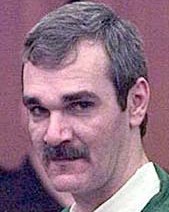
Richard Charles Johnson
Murderer Brian Kevin Rosenfeld
Murderer · USA · 1985
Brian Kevin Rosenfeld Brian Kevin Rosenfeld was sentenced to three concurrent l…
23 victims
Brian Kevin Rosenfeld
Murderer · USA · 1985
Brian Kevin Rosenfeld Brian Kevin Rosenfeld was sentenced to three concurrent l…
23 victims
 Marvin Gray
Murderer · USA · 1975
Marvin Gray was convicted killer who claimed responsibility for 23 slayings and…
23 victims
Marvin Gray
Murderer · USA · 1975
Marvin Gray was convicted killer who claimed responsibility for 23 slayings and…
23 victims
 Yahweh ben Yahweh
Murderer · USA · 1980
Yahweh ben Yahweh was born and legally named Hulon Mitchell Jr. (October 27, 19…
23 victims
Yahweh ben Yahweh
Murderer · USA · 1980
Yahweh ben Yahweh was born and legally named Hulon Mitchell Jr. (October 27, 19…
23 victims
 Russell Ellwood
Murderer · USA · 1991
Russell Ellwood was a former taxi driver. Authorities suspected him of killing…
20 victims
Russell Ellwood
Murderer · USA · 1991
Russell Ellwood was a former taxi driver. Authorities suspected him of killing…
20 victims
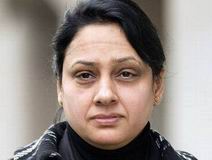 Lakhvir Singh
Murderer · United Kingdom · 2009
Defendant: Lakhvir Singh Known alias/nickname: "The Curry Killer" Method used:…
1 victim
Lakhvir Singh
Murderer · United Kingdom · 2009
Defendant: Lakhvir Singh Known alias/nickname: "The Curry Killer" Method used:…
1 victim
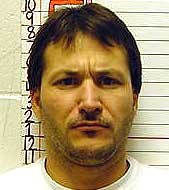 Carman Deck
Murderer · USA · 1996
Carman L. Deck was convicted of two counts of first degree murder, two counts o…
2 victims
Carman Deck
Murderer · USA · 1996
Carman L. Deck was convicted of two counts of first degree murder, two counts o…
2 victims
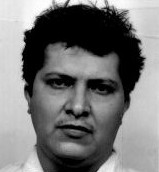 Angel Rivera
Murderer · USA · 1984
Angel Rivera was sentenced to death on December 1, 1986.
2 victims
Angel Rivera
Murderer · USA · 1984
Angel Rivera was sentenced to death on December 1, 1986.
2 victims
 Julia Surbaugh
Murderer · USA · 2009
Julia Ann Surbaugh was married to Michael Surbaugh at the time of the shootings…
1 victim
Julia Surbaugh
Murderer · USA · 2009
Julia Ann Surbaugh was married to Michael Surbaugh at the time of the shootings…
1 victim
 Galareka Harrison
Murderer · USA · 2007
Galareka Harrison was a former University of Arizona student from Chinle. Mia H…
1 victim
Galareka Harrison
Murderer · USA · 2007
Galareka Harrison was a former University of Arizona student from Chinle. Mia H…
1 victim
- Gender
- male
- Country
- USA
- Location
- South Carolina, USA
- Date of birth
- February 18, 1963
- Age at first offence
- 22
- Characteristics
- robbery, hitchhiking
- Victim profile
- Dan Swanson / Bruce Kenneth Smalls, 30 (South Carolina state trooper )
- Method of murder
- Shooting (.357 caliber gun)
- Date(s) of murder
- September 27, 1985
- Years active
- 1985
- Date of arrest
- Same day
- Status
-
Executed
Executed by lethal injection in May 3, 2002; clemency was denied by Gov. Jim Hodges on Thursday
Case record: Richard Charles Johnson
Other details
Richard Charles Johnson was hitchhiking when he was picked up in September 1985. He was executed by lethal injection on May 3, 2002.
Johnson was sentenced to death twice for killing Trooper Bruce Smalls during a 1985 traffic stop along Interstate 95 in Jasper County. He was also serving a life sentence for killing Daniel Swanson. Johnson pleaded guilty in the Swanson case.
Gov. Jim Hodges denied clemency for Johnson. Hodges said he had spoken with the sister and the son of slain state trooper Bruce Smalls, and they expressed “their belief that the jury and court's decision should not be disturbed.” Hodges stated: “Upon a thorough review of the record and careful consideration of all information provided, I am convinced that Mr. Johnson is guilty as charged. The jury's sentence must be carried out. Clemency is not granted.”
Johnson was white, and Trooper Bruce Smalls was black.
Johnson was scheduled to die by lethal injection on May 3, 2002, after the U.S. Supreme Court denied the last appeal. A South Carolina Supreme Court posture had previously stopped an execution that had been scheduled for October 1999. The state Supreme Court stayed that execution after Connie Sue Hess claimed she killed the trooper, then later allowed the execution to proceed after ruling that Hess was not a credible witness due to numerous conflicting statements.
Johnson’s execution occurred at 6:18 p.m. on Friday, May 3, 2002, at the S.C. Department of Corrections’ Capital Punishment Facility off Broad River Road in Columbia.
Johnson wore a green jumpsuit and was strapped to a gurney during the lethal injection. Media representatives reported that at 6:03 p.m. he uttered a loud groan, then turned his face to the side and closed his eyes. He appeared calm and relaxed until his death 15 minutes later. Before dying, Johnson mouthed the words, “I love you,” and, “See you later” to his younger brother, John Johnson. At one point, Richard Johnson put his hand to his chest in an apparent signal to his brother. Johnson’s lawyer John Blume read a handwritten statement by Johnson to the witnesses:
“I would like to thank Trooper Smalls' mother, Thelma Blue, and other members of the Smalls' family who asked the governor to commute my sentence. If everyone in the world had the courage and compassion they have shown, it would be a much better place.
‘Keep up the fight against the death penalty,’ Johnson added.”
John Blume also described what Johnson said as he was being strapped down:
“It's been a helluva ride,” Blume said.
Lori Crawford, Johnson’s only sister, spoke to him for the last time at 5:05 p.m. Friday. Crawford said: “He was crying when he called me. He said he wanted to tell me goodbye. He was trying to control himself. He tried to hang up. I wasn't going to let him. I'd rather hear him cry than to hang up.”
Johnson’s mother, Nelda Johnson, did not speak at the vigil and cried quietly with relatives, defense attorneys and others who turned out with signs proclaiming, “Don't kill for me” or wore pins bearing Johnson’s photograph and the words, “An innocent man murdered by the state of S.C.”
About 75 death-penalty opponents attended an hourlong protest outside the Governor’s Mansion on historic Arsenal Hill in Columbia. No members of Smalls’ family attended the vigil.
Through his attorneys, Johnson thanked his supporters and lawyers for their efforts to spare his life Thursday afternoon, after Hodges refused to stop the execution. The U.S. Supreme Court denied three applications from Johnson’s lawyers on Friday morning.
Earlier in the day, The Rev. Jesse Jackson denounced Hodges for refusing to grant clemency. Jackson said:
“Tonight the state of South Carolina is gearing up for the execution of a man who well could be innocent of the charges for which he has spent the last 16 years on death row,” Jackson said.
Jackson further stated:
“As I contrast Gov. Ryan's leadership with what is happening in my home state of South Carolina under Gov. Jim Hodges, my heart grows heavy. I am left wondering what possible good can come from Gov. Hodges' refusal to do what is right,” Jackson said.
Jackson also said:
“Sadly, it appears that election-year politics may be playing a larger role in Gov. Hodges' decision than factual analysis. Politicians like Gov. Hodges, guided by what they perceive to be popular opinion, sacrifice an opportunity to come down on the right side of history,” Jackson said.
In addition, death penalty opponents demonstrated outside the Governor’s Mansion Friday, and another group marched outside the state prison on Broad River Road where Johnson was executed.
Timeline
- September 1985 — Dan Swanson was traveling through North Carolina in his recreational vehicle on his way to Florida when he picked up Richard Johnson, who was hitchhiking.
- Following day (September 1985) — Swanson and Johnson picked up hitchhikers Curtis Harbert and Connie Hess (alias Julie Smith) on Interstate 95; the group made stops and later Swanson parked along the interstate to rest.
- During Swanson’s sleep (September 1985) — Johnson fatally shot Dan Swanson with a .357 caliber gun; Johnson and Harbert wrapped Swanson’s body in blankets and sheets, tied it with wire, and concealed the corpse in the vehicle underneath a mattress.
- September 1985 — Johnson, Harbert, and Hess continued their journey in Swanson’s RV with Johnson driving erratically; a truck driver notified Trooper Bruce Smalls.
- During questioning by Trooper Smalls (September 1985) — Trooper Smalls stopped the RV and, during questioning, Johnson shot Trooper Smalls six times, killing him.
- 1986 — Johnson was convicted and sentenced to death for the murder of Trooper Bruce Smalls.
- 1987 — The Supreme Court, Finney, J., reversed and remanded for a new trial.
- March 1988 — Johnson was retried; the jury found him guilty of murder and sentenced him to death.
- June 2000 — A divided court ruled Johnson did not deserve a new trial and Hess was not a credible witness because she gave numerous conflicting statements.
- 1999 — The state Supreme Court stopped Johnson’s execution one day before it was scheduled when Connie Sue Hess claimed she killed the trooper.
- April 9, 2002 — South Carolina Supreme Court set Friday, May 3, 2002 as the execution date.
- Thursday (before May 3, 2002) — Gov. Jim Hodges denied clemency.
- Friday (May 3, 2002) — The U.S. Supreme Court denied Johnson’s last appeals; Johnson was put to death at 6:18 p.m. by lethal injection.
Background
Richard Johnson was twice convicted and sentenced to death for the fatal shooting of State Trooper Bruce Smalls during a 1985 traffic stop on Interstate 95 in Jasper County. He also had been serving a life sentence for killing Daniel Swanson. The execution occurred after the state resumed capital punishment.
The offence
In September 1985, Dan Swanson was driving through North Carolina in his recreational vehicle on his way to Florida when he picked up Johnson, who was hitchhiking. The following day, Swanson and Johnson picked up hitchhikers Curtis Harbert and Connie Hess (alias Julie Smith) on Interstate 95. The group made stops before parking along the interstate to rest. As Swanson slept, Johnson fatally shot him with a .357 caliber gun.
Johnson and Harbert wrapped Swanson’s body in blankets and sheets, tied it with wire and concealed the corpse in the vehicle underneath a mattress. Johnson, Harbert and Hess continued their journey in Swanson’s vehicle with Johnson driving.
Johnson had been drinking liquor and began driving erratically. Several motorists noticed his reckless operation of the RV, including a truck driver who notified police. Trooper Smalls stopped the RV and during questioning Johnson shot Smalls six times, killing him.
Investigation and trial
Johnson was indicted for the murder of Bruce K. Smalls, a South Carolina State Trooper. A jury convicted Johnson of murder and sentenced him to death.
After Johnson’s conviction, the Supreme Court, Finney, J., held that the solicitor’s improper reference to Johnson’s lack of remorse was error; that the admission of extensive evidence in detail of Johnson’s prior criminal conduct constituted reversible error; that the trial court’s failure to comply with requirements for clarifying the jury’s concern about parole during the sentencing phase was error; and that Johnson was denied fair trial. The case was reversed and remanded for new trial.
Johnson was retried in March 1988. The jury found him guilty of murder and sentenced him to death, and the conviction and sentence were affirmed on appeal.
Johnson pleaded guilty in Swanson’s death.
Appeals
Johnson’s direct appeal outcomes included:
- State v. Johnson , 360 S.E.2d 317 (S.C. 1987) (Direct Appeal) — reversed and remanded for a new trial.
- State v. Johnson , 410 S.E.2d 547 (S.C. 1991) (Direct Appeal II) — conviction and sentence were affirmed.
- Johnson v. South Carolina , 503 U.S. 993, 112 S.Ct. 1691, 118 L.Ed.2d 404 (1992) (Cert. Denied) — certiorari was denied.
- Johnson v. Moore , 164 F.3d 624 (4th Cir. 1998) — federal habeas proceedings were resolved, with outcome reflected in the listing.
- Johnson v. Catoe , 520 S.E.2d 617 (S.C. 1999) (State Habeas) — state habeas proceedings were resolved.
The state Supreme Court postponed Johnson’s execution in 1999 after Connie Sue Hess claimed she killed the trooper. The court later ruled in June 2000 that Hess was not a credible witness due to numerous conflicting statements.
On the final day before execution, the U.S. Supreme Court denied Johnson’s last appeals on Friday morning.
Sentencing
Johnson was sentenced to death twice for killing Trooper Bruce Smalls:
- He was first convicted and sentenced to die in 1986.
- His conviction was reversed on appeal, and he was retried in March 1988.
- In the second trial, the jury again sentenced him to death.
Clemency and execution
Gov. Jim Hodges denied clemency, stating he was convinced Johnson was guilty as charged and that “The jury's sentence must be carried out. Clemency is not granted.”
Johnson was executed on May 3, 2002 at 6:18 p.m.
The Associated Press reported that the U.S. Supreme Court denied three applications from Johnson’s lawyers that could have stopped the execution.
Spotted an error, or have more information about this case?