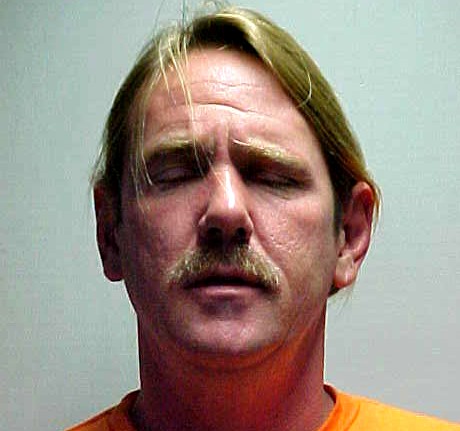
Frank Dale McCray
Murderer Brian Kevin Rosenfeld
Murderer · USA · 1985
Brian Kevin Rosenfeld Brian Kevin Rosenfeld was sentenced to three concurrent l…
23 victims
Brian Kevin Rosenfeld
Murderer · USA · 1985
Brian Kevin Rosenfeld Brian Kevin Rosenfeld was sentenced to three concurrent l…
23 victims
 Yahweh ben Yahweh
Murderer · USA · 1980
Yahweh ben Yahweh was born and legally named Hulon Mitchell Jr. (October 27, 19…
23 victims
Yahweh ben Yahweh
Murderer · USA · 1980
Yahweh ben Yahweh was born and legally named Hulon Mitchell Jr. (October 27, 19…
23 victims
 Russell Ellwood
Murderer · USA · 1991
Russell Ellwood was a former taxi driver. Authorities suspected him of killing…
20 victims
Russell Ellwood
Murderer · USA · 1991
Russell Ellwood was a former taxi driver. Authorities suspected him of killing…
20 victims
 Abby Grason
Homicide · USA · 2004
Abby Grason was a 25-year-old woman of Chicago. Her history included mental ill…
2 victims
Abby Grason
Homicide · USA · 2004
Abby Grason was a 25-year-old woman of Chicago. Her history included mental ill…
2 victims
 Michael Duane Zack
Murderer · USA
Michael Duane Zack was convicted and sentenced to death for the 06/13/96 murder…
1996 victims
Michael Duane Zack
Murderer · USA
Michael Duane Zack was convicted and sentenced to death for the 06/13/96 murder…
1996 victims
 James Roszko
Murderer · Canada · 2005
James Roszko was a Canadian man operating a hydroponic marijuana grow-op in Roc…
4 victims
James Roszko
Murderer · Canada · 2005
James Roszko was a Canadian man operating a hydroponic marijuana grow-op in Roc…
4 victims
 Steen Christensen
Murderer · Finland · 1997
Steen Viktor Christensen (born 1964) was a Danish criminal. He was sentenced in…
2 victims
Steen Christensen
Murderer · Finland · 1997
Steen Viktor Christensen (born 1964) was a Danish criminal. He was sentenced in…
2 victims
 Peter Lundin
Murderer · USA / Denmark · 1991
Peter Lundin was born in Solrød Strand, Denmark in 1971. His family migrated to…
4 victims
Peter Lundin
Murderer · USA / Denmark · 1991
Peter Lundin was born in Solrød Strand, Denmark in 1971. His family migrated to…
4 victims
- Gender
- male
- Country
- USA
- Location
- Maricopa County, Arizona, USA
- Date of birth
- January 30, 1959
- Age at first offence
- 28
- Characteristics
- convicted rapist, rape
- Victim profile
- Chestene “Tina” Ramsey Cummins, 23
- Method of murder
- Ligature strangulation
- Date(s) of murder
- May 21, 1987
- Years active
- 1987
- Date of arrest
- 2000
- Status
-
Sentenced to death
Sentenced to death on November 29, 2005
Case identification
Frank Dale McCray was convicted in Maricopa County Superior Court and sentenced to death for a first-degree felony murder in 1987.
Timeline
- 1980 — McCray was convicted of rape.
- 1992 — McCray committed a sexual assault and kidnapping for which he later received an 18-year prison sentence.
- 1993 — McCray’s 1993 conviction for a 1992 sexual assault with a dangerous enhancement qualified as a prior violent crime aggravator.
- 1987 — McCray committed first-degree felony murder for which he was later tried and convicted.
- November 29, 2005 — McCray was sentenced to death.
- 2008 — The Arizona Supreme Court upheld the conviction and death sentence in State v. (Frank) McCray, 218 Ariz. 252, 183 P.3d 503 (2008).
The offence
McCray raped and strangled 23-year-old Chestene “Tina” Ramsey Cummins. McCray forced his way into the victim’s apartment, physically assaulted her, raped her, and strangled her with a cord.
The medical examiner testified that the victim probably died one to five minutes after the strangulation began, and concluded from both the nature of her injuries and the condition of the apartment that a struggle probably occurred.
The court found that the victim was conscious during a substantial part of the “murder transaction” and that she suffered intense physical pain and mental anguish during that time. The court also found that McCray should have known that attacking, raping and strangling the victim would cause her severe physical and mental pain.
Background
McCray was serving an 18-year prison sentence for a 1992 sexual assault and kidnapping when DNA from the murder of Cummins was matched to McCray. The case included McCray’s earlier rape conviction in 1980.
Trial
McCray was convicted by a Maricopa County Superior Court jury of first-degree felony murder committed in 1987.
The jury found that the state had proved the prior violent crime aggravator (A.R.S. §13-751(F)(2)(1978 & Supp. 1987)) and the cruel, heinous and depraved aggravator (A.R.S. §13-751(F)(2)). The jury determined that McCray should be sentenced to death.
Sentencing
The jury imposed a death sentence.
Aggravating circumstances
(F)(2) (PRIOR CONVICTION OF VIOLENT CRIME) – UPHELD McCray’s 1993 conviction for a 1992 sexual assault with a dangerous enhancement qualified as a (F)(2) prior violent crime aggravator. Before July 16, 1993, the aggravator provided: “[t]he defendant was previously convicted of a felony in the United States involving the use or threat of violence on another person.”
To determine whether the prior offense involved the threat or use of violence, the court considered the specific statutory subsection under which the defendant was convicted, even if other subsections of the same statute might not qualify for the aggravator. The court also considered that the prior conviction included an enhancement for dangerousness because it was analogous to focusing on the particular statutory subsection underlying the prior conviction.
The court concluded that a sexual assault involving the use or exhibition of a deadly weapon or dangerous instrument is necessarily one that involves the use or threat of violence.
(F)(6) (ESPECIALLY HEINOUS, CRUEL OR DEPRAVED) – UPHELD Especially Cruel: The court found that this aggravator was proved beyond a reasonable doubt.
The evidence showed McCray forced his way into the victim’s apartment, physically assaulted her, raped her, and strangled her with a cord. The medical examiner testified that the victim probably died one to five minutes after the strangulation began, and he concluded from both the nature of her injuries and the condition of the apartment that a struggle probably occurred. The court found that McCray should have known that attacking, raping and strangling the victim would cause her severe physical and mental pain.
Mitigating circumstances
Difficult family history Difficult family history was accorded less weight because McCray was 28 when he murdered the victim and did not show a causal connection with the crime.
Mental health problems Mental health problems were also accorded little weight because McCray presented evidence only of an undiagnosed mental illness and failed to establish that it caused the crime or inhibited his ability to appreciate the wrongfulness of his conduct or conform his conduct to the law. He did not offer any expert testimony that he suffered from any mental illness, but only testimony from family and other witnesses about his behavior.
Drug use Drug use was given minimal weight because there was no evidence that McCray was using drugs near the time of the murder.
The court found that the mitigation was not sufficiently substantial to call for leniency.
Appeals
McCray’s procedural posture included direct appeal of the death sentence with independent review.
State v. (Frank) McCray, 218 Ariz. 252, 183 P.3d 503 (2008) (Death penalty upheld) involved independent review of aggravating and mitigating factors.
Judgment on appeal
Conviction and death sentence affirmed.
Other details
Victim: Chestene “Tina” Ramsey Cummins, age 23. DNA evidence: DNA from the murder of Cummins was matched to McCray while he was serving an 18-year sentence. Aggravator statute: A.R.S. §13-751(F)(2)(1978 & Supp. 1987) and A.R.S. §13-751(F)(2).


Spotted an error, or have more information about this case?