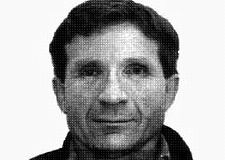
James Roszko
Murderer Derek Jensen
Murderer · Canada · 2011
Derek Jensen was the ex-boyfriend of Tabitha Stepple. Jensen had encountered St…
3 victims
Derek Jensen
Murderer · Canada · 2011
Derek Jensen was the ex-boyfriend of Tabitha Stepple. Jensen had encountered St…
3 victims
 Douglas Donald Moore
Murderer · Canada · 2003
Douglas Donald Moore died of an apparent suicide in a cell at the Maplehurst De…
3 victims
Douglas Donald Moore
Murderer · Canada · 2003
Douglas Donald Moore died of an apparent suicide in a cell at the Maplehurst De…
3 victims
 Jeremy Steinke
Murderer · Canada · 2006
Jeremy Allan Steinke was sentenced to three life sentences on December 15, 2008…
3 victims
Jeremy Steinke
Murderer · Canada · 2006
Jeremy Allan Steinke was sentenced to three life sentences on December 15, 2008…
3 victims
 Shawn Lamb
Murderer · Canada · 2011
Shawn Cameron Lamb was 54 at sentencing. He was described as a chronic drug add…
3 victims
Shawn Lamb
Murderer · Canada · 2011
Shawn Cameron Lamb was 54 at sentencing. He was described as a chronic drug add…
3 victims
 Travis Baumgartner
Murderer · Canada · 2012
Sentenced to life in prison with no chance of parole for 40 years on September…
3 victims
Travis Baumgartner
Murderer · Canada · 2012
Sentenced to life in prison with no chance of parole for 40 years on September…
3 victims
 The kidnapping of Freddy Heineken
Kidnapping · Netherlands · 1983
The kidnapping of Freddy Heineken, chairman of the board of directors and CEO o…
2 victims
The kidnapping of Freddy Heineken
Kidnapping · Netherlands · 1983
The kidnapping of Freddy Heineken, chairman of the board of directors and CEO o…
2 victims
 George Jo Hennard
Mass murderer · USA · 1991
George Jo Hennard carried out a mass killing at a Luby’s Cafeteria in Killeen,…
23 victims
George Jo Hennard
Mass murderer · USA · 1991
George Jo Hennard carried out a mass killing at a Luby’s Cafeteria in Killeen,…
23 victims
 Charlie Mason Alston
Murderer · USA · 1990
Charlie Mason Alston was convicted for the murder of Pamela Renee Perry and was…
1 victim
Charlie Mason Alston
Murderer · USA · 1990
Charlie Mason Alston was convicted for the murder of Pamela Renee Perry and was…
1 victim
 Robert Jurado
Murderer · USA · 1991
Robert Jurado Jr. was sentenced to death on October 13, 1994. · May 15, 1991 —…
1 victim
Robert Jurado
Murderer · USA · 1991
Robert Jurado Jr. was sentenced to death on October 13, 1994. · May 15, 1991 —…
1 victim
- Gender
- male
- Country
- Canada
- Location
- Rochfort Bridge, Alberta, Canada
- Date of birth
- 1959?
- Age at first offence
- 46
- Characteristics
- murder-suicide, drug dealer, drugs, fugitive, serial rapist, convicted rapist
- Victim profile
- Royal Canadian Mounted Police Constables Peter Schiemann, Anthony Gordon, Lionide Johnston, and Brock Myrol
- Method of murder
- Shooting (Heckler & Koch 91, a civilian version of a military battle rifle)
- Date(s) of murder
- March 3, 2005
- Years active
- 2005
- Date of arrest
- —
- Status
-
Died in custody
Committed suicide by shooting himself the same day
Background
James Roszko was a Canadian man operating a hydroponic marijuana grow-op in Rochfort Bridge, Alberta at the time of the incident. The Mayerthorpe incident occurred on March 3, 2005 on the property of James Roszko in Rochfort Bridge, northwest of Edmonton near the town of Mayerthorpe, in the Canadian province of Alberta.
He was prohibited from legally possessing firearms at the time of the incident. Police seized seven growing marijuana plants, and 88 harvested plants from the residence, plus a further 192 growing marijuana plants along with growing equipment from the quonset. Numerous stolen vehicle parts and a marijuana grow-op were found on the premises. Police also found lists containing the names and call signs of RCMP officers from the detachments in Mayerthorpe, Whitecourt and Evansburg, Alberta, and the cellular numbers assigned to their vehicles.
Police found a .308 calibre Heckler & Koch 91 semi-automatic rifle, and a 300 Magnum which had been reported missing by Shawn Hennessey’s grandfather, and a 9 mm Beretta. The .308 and the 9 mm were not registered.
At the time of his death, he was facing two charges of mischief to property. His last criminal charge was in August 2004 for mischief against property. His spike belts had ruined the tires on the vehicles of two provincial election enumerators.
The offence
RCMP officers were executing a property seizure on the farm when James Roszko shot and killed four Royal Canadian Mounted Police Constables: Peter Schiemann, Anthony Gordon, Lionide Johnston, and Brock Myrol. The four officers were ambushed inside a Quonset shed on the farm. After fatally shooting the four officers, Roszko emerged from the shed and fired on two other officers who had just arrived and were preparing to examine the vehicles on the property. The officers were not hit, and returned fire.
Roszko was wounded during either the intitial exchange of gunfire or during the exchange with the two officers outside, then retreated into the shed. After losing radio contact with the officers in the shed, RCMP Emergency Response Teams and an armoured vehicle from the Canadian Forces' Edmonton Garrison were called in, and the airspace over the property was closed. The four officers and Roszko were all found fatally shot; it had since been confirmed that Roszko killed all four officers, and then turned his weapon on himself.
The incident occurred while officers were investigating a marijuana grow operation and allegations of stolen property. The incident was described as Canada’s deadliest police shooting in 120 years and as the worst one-day loss of life for the RCMP in 100 years.
Investigation
Police went to the property on Wednesday afternoon to investigate a suspected grow op and, while there, saw stolen car parts and stolen property. Search warrants were obtained and executed.
Constables Gordon and Johnston were providing scene security. Constable Schiemann arrived to drop off Constable Myrol. The four officers were killed inside a Quonset hut, and RCMP spokesman Cpl. Wayne Oakes said, when asked if the victims had been ambushed, “I don't know.”
After losing contact with the officers, emergency response teams from Edmonton and Red Deer were rushed to the area, along with reinforcements from Edmonton police. The Canadian military was put on alert but later told it wasn’t needed.
On March 20, 2005, a six-page report with a chronology of events was released. Oakes said later that there was no new information that contradicted the original news releases and that the officers were killed inside, not outside. He said, “I feel very confident that that is a factual, truthful statement.”
RCMP officials also stated that when tactical officers entered the Quonset hut, they pulled out two of the shot officers so they might receive medical attention outside of any possible line of fire. RCMP spokesman Cpl. Wayne Oakes said this was why news photographs of the crime scene, taken after the tactical team’s entry, showed slain officers on the ground outside the Quonset hut.
Ongoing investigations included a federal government probe that took place whenever federal employees were killed on the job and an RCMP investigation that could lead to criminal charges against anyone who helped Roszko commit his crime.
Arrest
No arrest was described for James Roszko; he was found fatally shot after killing the four officers and committing suicide by shooting himself the same day.
Trial
No trial of James Roszko was described in the provided material.
Sentencing
No sentencing was described for James Roszko in relation to the March 3, 2005 incident.
Appeals
No appeals were described in relation to the March 3, 2005 incident.
Outcome
James Roszko was found fatally shot after the shootout. It was confirmed that he killed the four officers and then turned his weapon on himself.
The RCMP incident was memorialized as the loss of four officers in modern Canadian history, described as having a magnitude such that it was said to require going back to 1885, to the Northwest Rebellion, to find a loss of this magnitude.
The incident also triggered extensive public discussion and disagreement about the events leading up to the killings, including disputes connected to coverage by The Fifth Estate.
Contested accounts and documentary disputes
A documentary aired as part of the CBC program “Mayerthorpe” and later “The Fifth Estate” coverage. The CBC program “the fifth estate” made a documentary about the incident which first aired on December 7, 2005. The full documentary was described as downloadable from the CBC website.
The Fifth Estate contradicted the RCMP’s official chronology of events and questioned the training and competence of the four slain officers. Reporter Linden MacIntyre suggested the four junior officers were unaware of the danger posed by Roszko so that they allowed him to sneak into the Quonset hut while they were feeding the dogs drugged meat that morning of March 3, saying: “It was almost as if they had forgotten about the man who owned the place.”
In The Fifth Estate version, the gunfight happened outside the Quonset hut, not inside. MacIntyre stated that the reconstruction was based on photographs and other sources and described Brock Myrol shot first; Anthony Gordon drawing his gun before he and Peter Schiemann were cut down; and Leo Johnston taking cover behind a police car, firing on Roszko before being killed.
Relatives of the slain officers criticized The Fifth Estate. Rev. Don Schiemann said: “I can't believe what The Fifth Estate has done,” and added, “It's kind of like we're down and they just went and kicked us in the groin on top of it, with all the misinformation and the lies and the misrepresentation, implying that all four of them were untrained junior officers that didn't know any better, and that they weren't even aware of this Roszko, which is just bizarre.”
Constable Anthony Gordon’s wife, Kim, taped the CBC documentary but later erased it, saying she did not want her two boys to ever see this “fictional” account of their father’s death: “I will not have them hear how some reporters thought their dad was playing with a bunch of dogs and ignorant to his surroundings before he was murdered.”
Gordon said she knew The Fifth Estate’s reconstruction to be false because MacIntyre stated her husband drew his gun. Gordon said, “They (The Fifth Estate) literally must have made it up on their own, just pulled things out of the air, I guess.”
The Fifth Estate’s executive producer David Studer said: “We believe that our story was both correct in its statements of fact and clear in labelling theses and scenarios as such. ... It is impossible to respond to allegations of error based on secret RCMP information which we can neither assess or even know.”
MacIntyre and producer Scott Anderson said: “We attempted to do so without any assistance from and in spite of some obstruction from the RCMP.”
Comments about experience and possibility of different actions
Gordon said it was inconsequential whether the four men were ambushed inside or outside the Quonset hut, saying: “He (Roszko) still would have got them.” She added: “If they had 20 years experience, he still would have got them. It wouldn't change the end result.”
Rev. Schiemann and others said the officers had little they could do against a suicidal killer. Schiemann said: “If they had done things differently I'm sure Roszko would have found another way to take them out.”
Aftermath
A memorial service for the slain officers was held in Edmonton on March 10, 2005 and televised nationally on CBC. Prime Minister Paul Martin and Governor General Adrienne Clarkson both spoke at the service. Many police officers from Canada and the United States were in attendance.
On May 19, 2005, Queen Elizabeth II attended a ceremony in honour of the slain officers at the RCMP Training Academy in Regina, Saskatchewan.
A by-product described in the provided material was the halt to marijuana decriminalization legislation in the Canadian Parliament. It was stated that days before the massacre, the leader of the Marijuana Party endorsed the Liberal Party after the government introduced a bill to decriminalize use and possession of marijuana. It was stated that in the wake of the tragedy, the Liberals shelved the bill, it was predicted that no action would take place for at least a year, and that before a year had elapsed the Martin government was defeated and the Conservative Party elected.
The material also stated that many media commentators suggested the massacre was an argument against marijuana decriminalization, while some argued the incident only occurred because the officers were on a drug raid. It stated that as details of Roszko's violent history and hatred for the police became apparent, those arguments generally faded.
The Fallen Four Memorial Society was founded to honour the slain policemen. The group initiated the building of the Fallen Four Memorial Park in Mayerthorpe, scheduled to open on July 4, 2008.
Other details
Victims
One of the deceased officers, Constable Brock Warren Myrol, graduated a month before from the RCMP Academy, Depot Division, and had been on duty only 17 days.
Another deceased officer was described as Constable Leo Johnston, a 33-year-old ace marksman. Johnson had been on the force about four years and received Crown Pistols and Crown Rifles badges. In the provided material, Constables were identified as junior officers.
Police have not officially named the deceased officers, but it said one of them had been identified as 29-year-old Const. Broack Myrol, originally of Red Deer, Alta., and friends said he had joined the Mayerthorpe detachment a mere two weeks ago and had recently become engaged to his girlfriend. It also said a national newspaper identified one of the deceased as Const. Leo Johnston, a 33-year-old ace marksman.
RCMP Assistant Commissioner Bill Sweeney said: “It's my sad duty to inform you that four members of the RCMP were killed today in the line of duty – four brave young members.”
Suspect family and background remarks
When the suspect in the killings was identified as Jim Roszko, it said he apparently killed himself after the shootout. His father Bill Roszko said his son was on a dangerous path and they hadn’t spoken in nine years, and said: “He's not my son, he's a wicked devil.”
Bill Roszko described his son to reporters, saying: “A wicked devil.” The material stated Bill Roszko said his son was on a dangerous path since he started experimenting with drugs and guns as a teenager.
A neighbour told CBC News that Roszko had a reputation and people generally stayed out of his way. Dianne Romeo said: “He never wanted anybody to come on his land,” and “He had two really mean dogs. So nobody really bothered him much there.”
A psychiatric profile done in 2000 said Roszko refused to accept responsibility for his crimes and was preoccupied with legal proceedings and recommended keeping him locked up.
Prior criminal history and charges mentioned
The material described a criminal history including break and enter and possession of stolen property charges beginning in February 1976, with sentencing to one year’s probation in April 1979. It described three charges of failing to comply with a probation order earning him 45 days in jail in December 1993. Dismissed charges included counselling to commit murder and pointing a firearm; of assault; and of impersonating a police officer.
It stated that in 1994 he was charged with sexually assaulting a young male and later spent 2½ years in prison. It stated that in September 1999 there was another weapons charge which was dropped.
It stated that in total, Roszko was charged with 36 crimes, including driving and trespassing offences, and convicted of 12 of them. It stated that he was imprisoned for two-and-a-half years after being convicted in April, 2000, for sexually assaulting a young boy between January, 1983, and December, 1989, and that the boy was 10 when the assaults began. It said that his troubles began at the age of 12 when his mother left the family home leaving his father Bill to raise eight children alone. It also stated that at 14 he was caught with marijuana in his room.
It stated that in December 2000, when he applied for parole nine months into his sentence, the National Parole Board wrote: “You vigorously deny responsibility for the sexual assaults.” It also stated that after being released, he was thrown back in prison for refusing to accept treatment or co-operate with his parole officer.
It stated that in 1993 a confrontation with a local school trustee over a school bus stop being moved led to Roszko being charged with 12 offences, he only went to trial on seven charges and was acquitted.
It described that he terrorized a young male acquaintance at gunpoint in the fall of 1993, eventually coercing the man into a sexual encounter, and that he forced the man to perform several sexual acts with him in front of a camera. It said a dozen offences connected to these assaults were laid but some were dismissed. The material said that the trial eventually collapsed when the alleged victim refused to testify. It quoted: “Mike” (a pseudonym) told The Globe that Roszko had threatened to kill his family.
It described that in 1993 Roszko tried to convince another man to kill for him and that according to court documents he offered the man $10,000 to kill a Mayerthorpe man with an automatic assault rifle that may have been the same one used to shoot the Mounties. It said he was charged with counselling another person to commit murder but the charge was dropped when the judge ruled that talking about killing someone is not the same thing as plotting to kill someone.
It stated that after his arrest on the charge and six other firearms-related charges, one condition of his initial release was that he stay away from the RCMP. It also stated that he was later acquitted of the six firearms-related charges when the witness didn’t appear in court.
It stated that in 2001 Roszko was charged with five offences in response to a 1999 incident in which he shot and wounded one man and missed a second, and that those charges were dismissed in 2003.
It stated that at the time of the incident he was facing two charges of mischief to property.
Firearms, policing and confrontations
The material included statements about warning signs and police handling. RCMP spokesman Cpl. Wayne Oakes said: “Any time we have an incident such as this, there is an automatic review of what was done,” and “The whole process was put under the microscope, and really, it's a way of improving and developing your best practices.”
It included a quote attributed to RCMP spokesperson Cpl. Wayne Oakes and a quote from lawyer Guy Fontaine, who represented Roszko on many of the charges and knew him for 20 years. Fontaine said: “He felt he was being persecuted rather than prosecuted,” and: “I could see fire in his eyes whenever we reviewed the evidence of one or more of the Crown witnesses, and more particularly police witnesses. He had a definite hatred for the RCMP.” Fontaine also said: “These police officers were completely mindful, they were completely aware of Roszko's history, of his files, of his involvement with the law,” and “They were completely aware of his potentiality towards violence.”
Bailiff Brenda Storm told CTV News: “James Roszko is one of the worst psychopaths it has ever been my misfortune to run across.” She also said: “... He blamed all of his problems on the RCMP,” and described earlier seized cattle from his farm while wearing body armour.
Retired RCMP officer Kim Connell was quoted saying: “Every time you met him, it was a violent confrontation,” and: “The members would stop him and the argument would be on, the screaming and yelling and spitting.”
In a 1999 report, a bailiff sent to seize cattle wrote: “Called a number of informants, including the RCMP, about this debtor. Learned he was quite dangerous ... in possession of a number of firearms.”
An affidavit signed by Storm concluded Roszko was likely to shoot anyone he found on his property and wrote: “Learned that he was quite dangerous,” and “has a long history of assaults, in possession of a number of firearms, would most likely shoot anyone on the property on sight, is known to have booby-trapped land and used a spike belt to discourage vehicles.”
Charges involving other men
On July 9, 2007, two men were charged as parties to offences committed by James Roszko: Shawn Hennessey, 28, and Dennis Cheeseman, 23. The material stated that in 2006, Hennessey denied any links to the crime. It stated the RCMP spent more than $2-million investigating the incident, using between 40 and 200 officers on the case since 2005. The material stated the charges were the result of an undercover investigation. It stated that the two accused men appeared in court on July 12. It stated the murder charges against Hennessey and Cheeseman are controversial due to the fact neither man was present at the crime scene of the incident, although if they did transport James Roszko back to his farm and did not inform police officers about giving James Roszko a ride even after the incident, they could still face murder charges.
Scene timeline details with real dates mentioned
The incident date was March 3, 2005. The memorial service occurred on March 10, 2005. The ceremony attended by Queen Elizabeth II occurred on May 19, 2005. The CBC documentary first aired on December 7, 2005. The made-for-TV movie “Mayerthorpe” aired on February 10, 2008. The Fallen Four Memorial Park was scheduled to open on July 4, 2008. Charges against Shawn Hennessey and Dennis Cheeseman were laid on July 9, 2007, and they appeared in court on July 12. A chronology report with events was released on March 20, 2005. Another reference said the incident unfolded early Thursday morning after police returned around 10 a.m. local time Thursday, and that bodies were discovered at about 2:20 p.m.
Spotted an error, or have more information about this case?