
Dennis McGuire
Murderer Brian Kevin Rosenfeld
Murderer · USA · 1985
Brian Kevin Rosenfeld Brian Kevin Rosenfeld was sentenced to three concurrent l…
23 victims
Brian Kevin Rosenfeld
Murderer · USA · 1985
Brian Kevin Rosenfeld Brian Kevin Rosenfeld was sentenced to three concurrent l…
23 victims
 Yahweh ben Yahweh
Murderer · USA · 1980
Yahweh ben Yahweh was born and legally named Hulon Mitchell Jr. (October 27, 19…
23 victims
Yahweh ben Yahweh
Murderer · USA · 1980
Yahweh ben Yahweh was born and legally named Hulon Mitchell Jr. (October 27, 19…
23 victims
 Russell Ellwood
Murderer · USA · 1991
Russell Ellwood was a former taxi driver. Authorities suspected him of killing…
20 victims
Russell Ellwood
Murderer · USA · 1991
Russell Ellwood was a former taxi driver. Authorities suspected him of killing…
20 victims
 Robert Martines Perez
Murderer · USA · 1994
Name: Robert Martines Perez · Other name used in proceedings: Robert Martinez P…
15 victims
Robert Martines Perez
Murderer · USA · 1994
Name: Robert Martines Perez · Other name used in proceedings: Robert Martinez P…
15 victims
 Timothy Krajcir
Serial killer · USA · 1977
Timothy Krajcir was a convicted American serial killer from Allentown, Pennsylv…
9 victims
Timothy Krajcir
Serial killer · USA · 1977
Timothy Krajcir was a convicted American serial killer from Allentown, Pennsylv…
9 victims
 Robert Consalvo
Murderer · 1991
Defendant: Robert Consalvo Victim: Lorraine Pezza · 09/27/91 — Date of offense.…
1 victim
Robert Consalvo
Murderer · 1991
Defendant: Robert Consalvo Victim: Lorraine Pezza · 09/27/91 — Date of offense.…
1 victim
 Reginald Clemons
Murderer · USA · 1991
Reginald Clemons was prosecuted in the case State of Missouri v. and was senten…
2 victims
Reginald Clemons
Murderer · USA · 1991
Reginald Clemons was prosecuted in the case State of Missouri v. and was senten…
2 victims
 Tracie Andrews
Murderer · United Kingdom · 1996
Tracie Marguerite Andrews (born 1969) was an English woman who murdered her fia…
1 victim
Tracie Andrews
Murderer · United Kingdom · 1996
Tracie Marguerite Andrews (born 1969) was an English woman who murdered her fia…
1 victim
 Thomas Andy Barefoot
Murderer · USA · 1978
Thomas Andy Barefoot (offender; also identified as Thomas Barefoot #621) was ex…
1 victim
Thomas Andy Barefoot
Murderer · USA · 1978
Thomas Andy Barefoot (offender; also identified as Thomas Barefoot #621) was ex…
1 victim
 Patrick Tissier
Murderer · Franc e · 1971
Patrick Tissier was born on 24 August 1952 in Bourges. He was one of six childr…
3 victims
Patrick Tissier
Murderer · Franc e · 1971
Patrick Tissier was born on 24 August 1952 in Bourges. He was one of six childr…
3 victims
- Gender
- male
- Country
- USA
- Location
- Preble County, Ohio, USA
- Date of birth
- February 10, 1960
- Age at first offence
- 29
- Characteristics
- kidnapping, rape, drug addict
- Victim profile
- Joy Stewart, 22 (30-weeks pregnant)
- Method of murder
- Slashing her throat
- Date(s) of murder
- February 11, 1989
- Years active
- 1989
- Date of arrest
- December 22, 1993
- Status
-
Executed
Executed by lethal injection in Ohio on January 16, 2014
Case record: Dennis McGuire
Status and execution details
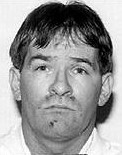
Dennis McGuire was executed by lethal injection in Ohio on January 16, 2014. He was scheduled to die for the 1989 rape and fatal stabbing of Joy Stewart in Preble County in western Ohio.
The execution used a two-drug lethal injection method. McGuire received an injection at 10:29 a.m., and about four minutes later he started struggling and gasping loudly for air, making snorting and choking sounds which lasted for at least 10 minutes. His chest heaved and his left fist clinched as deep, snorting sounds emanated from his mouth. For the last several minutes before he was pronounced dead, he was still. The execution process lasted 24 minutes, and he died at 10:53 a.m.
McGuire died from an injection of midazolam, a sedative, and hydromorphone, a morphine derivative. The combination was chosen because pentobarbital, the single drug previously used, was no longer available. The combination had never before been used in a U.S. execution.
In his final statement, McGuire said:
“I'd like to say to Joy's family, thanks for the letter and the kind words. They meant a lot ... To my children, I love you. I'm going to heaven. I will see you there when you get there.”
Joy Stewart’s sister, Carol Avery, also witnessed the execution. McGuire ordered a last meal of roast beef, fried chicken, fried potatoes with onions, potato salad, toasted onion bagel with cream cheese, butter pecan ice cream and a Coke. He was the first person to be executed in Ohio that year. A news media contingent was present, and a handful of anti-death penalty protestors demonstrated outside.
People
- Dennis McGuire (condemned killer)
- Joy Stewart (victim; 22 years old)
- Amber (adult child of Dennis McGuire; witnessed)
- Dennis (adult child of Dennis McGuire; witnessed)
- Dennis’ wife (witnessed)
- Carol Avery (victim’s sister; witnessed)
- Joy Stewart’s family (issued a three-paragraph statement)
- Joy Stewart’s husband, Kenny Stewart
- Jerry Richardson (brother-in-law of McGuire)
- Joseph Goodwin (corrections officer who initially talked to McGuire)
- Investigator David Lindloff (Preble County Prosecutor’s Office)
- Deputy Swihart (deputy sheriff involved in the audiotaped interview)
- Larry Swihart (deputy sheriff who noted a “blood wipe mark” at the scene)
- Jack Stapleton (fellow inmate at Preble County Jail; testified)
- Willie Reeves (inmate at Madison Correctional Institute; testified)
- Shawn Baird (childhood friend who visited McGuire in prison)
- Allen Bohnert (federal public defender; attorney for McGuire)
- Judge Gregory Frost (U.S. District Judge who ruled on execution-related litigation)
- Professor David Waisel (Harvard Medical School; discussed air hunger)
- Gov. John Kasich (governor who rejected McGuire’s plea for clemency)
The offence
Joy Stewart was about 30 weeks pregnant when she was killed. She was last seen alive on February 11, 1989. On that day, she visited Juanita Deaton, whose son had hired Dennis McGuire to clean the ice out of the Deatons’ gutters.
After the events that followed, Joy Stewart’s body was found in some woods near Bantas Creek by two hikers. Her body was found the next day after discovery by two hikers. The front of her shirt was saturated with blood, and a deputy sheriff noted what appeared to be a “blood wipe mark” on her right arm.
The autopsy revealed that Joy Stewart had been stabbed twice. One wound above the left collarbone caused no significant injury. The critical wound was a four-and-a-half-inch-deep cut in the throat that completely severed the carotid artery and jugular vein. The doctor determined that Joy Stewart was alive when she received the wound and that such a wound could have been caused by a single-edged blade shorter than four and a half inches, due to “how soft and moveable the tissues are in the neck.”
The autopsy also revealed abrasions around the neck, impressed with the cloth pattern of Joy Stewart’s shirt. The coroner’s office took vaginal, oral, and anal swabs. The coroner found an abundant amount of sperm on the anal swab, some sperm on the vaginal swab, and none on the oral swab. The coroner indicated that sperm could be detected in the vagina for days or sometimes weeks after ejaculation. The coroner also indicated that sperm in the rectum could be detected for a lesser time “because the environment is fairly hostile for sperm, and ․ a bowel movement ․ usually will purge the rectum of any sperm.”
McGuire discussed the killing with law enforcement officials and described sexual contact with Joy Stewart as forcible. He was convicted of the kidnapping, rape and aggravated murder of Joy Stewart, and he was sentenced to death.
Timeline
- February 11, 1989 — Joy Stewart visited Juanita Deaton; she had breakfast with her neighbors between 9 and 10 and then visited Juanita Deaton; she went there alone because her husband, Kenny Stewart, worked approximately 7:00 a.m. to 5:00 p.m.
- February 12, 1989 — Two hikers found Joy Stewart’s body in woods near Bantas Creek; the front of her shirt was saturated with blood.
- December 22, 1989 — Investigator David Lindloff talked to McGuire; McGuire stated that Richardson committed the murder and described being stabbed twice in the neck.
- December 22, 1993 — McGuire was indicted on one count of aggravated murder and one felony-murder specification for rape; he was also indicted on two counts of rape (vaginal and anal) and one count of kidnapping.
- December 8, 1994 — The jury returned a guilty verdict on the aggravated murder and specification charge; McGuire was also convicted of anal rape and kidnapping.
- April 15, 1996 — The Court of Appeals of Ohio affirmed McGuire’s conviction.
- 1996 — The Court of Appeals affirmed McGuire’s conviction (No. CA95-01-001, 1996 WL 174609 (Ohio Ct.App. Apr. 15, 1996)).
- June 1992 — The Montgomery County Coroner’s Office sent Joy Stewart’s swabs and a cutting from her underpants for DNA testing using the PCR technique.
- December 20, 2013 — The state parole board recommended against clemency.
- December 31, 2013 — A federal appeals court rejected McGuire’s latest appeal.
- January 15, 2014 — Pre-execution litigation and reporting discussed the execution method and the concept of “air hunger.”
- January 16, 2014 — McGuire was executed by lethal injection.
Investigation
Investigators initially pursued the murder “but to no immediate avail.” Investigator David Lindloff was later notified in December 1989 that McGuire wanted to talk to him about information concerning a murder in Preble County. McGuire was in jail on an unrelated offense.
McGuire told corrections officer Joseph Goodwin that he needed to talk to Investigator Lindloff and Deputy Swihart. Goodwin took McGuire to a private room to talk. In that conversation, McGuire stated that Jerry Richardson had killed Joy Stewart with a knife and that appellant could lead investigators to it.
McGuire explained that Richardson wanted to have sex with Joy Stewart but she refused. McGuire claimed that Richardson pulled a knife on her and forced her to have oral sex. McGuire then said Richardson anally sodomized her because he “couldn’t have regular sex with her because she was pregnant.” McGuire also said Richardson stabbed her “in the shoulder bone” and “cut her throat.”
Based on these details, Goodwin contacted Investigator Lindloff. Lindloff talked to McGuire on December 22, 1989. McGuire told Lindloff that Richardson committed the murder, that he stabbed Joy twice in the neck, and that “the first time it didn’t go in. He pulled the knife back out and stuck her again.” Lindloff considered it significant that the detail about Joy being stabbed twice in the neck and being anally sodomized had not been revealed to the public at that time.
McGuire described in detail the area where Joy Stewart’s body had been found. He then led Lindloff and deputies to the murder weapon at a local farm where he and Richardson had occasionally worked. McGuire led officers to a hayloft and showed them where a knife was hidden behind a beam.
A subsequent audiotaped interview by Deputy Swihart elicited further details. McGuire claimed that Richardson choked Joy Stewart before stabbing her and wiped his bloody hands off on her, which Swihart considered consistent with the state of Joy Stewart’s body at the crime scene. Swihart believed these details were significant because they had never become a matter of public knowledge.
McGuire was later transferred to Madison Correctional Institute.
Arrest and custody
McGuire was in jail at the time he sought to talk to Investigator Lindloff and Deputy Swihart. The narrative also describes that he later received prison visits and conversations while incarcerated, including a visit from his childhood friend Shawn Baird on December 24, 1989, and testimony by fellow inmates.
Trial
Charges and verdicts
On December 22, 1993, McGuire was indicted on one count of aggravated murder and one felony-murder specification for rape. He was also indicted on two counts of rape (vaginal and anal) and one count of kidnapping.
On December 8, 1994, the jury returned a guilty verdict on the aggravated murder and specification charge. McGuire was also convicted of anal rape and kidnapping. At sentencing, the jury recommended a sentence of death for the aggravated murder, and the trial judge sentenced McGuire to death. The court of appeals affirmed.
Evidence presented
Witness testimony and jail statements
Jack Stapleton testified at trial that he overheard a conversation between McGuire and another inmate in which McGuire claimed that he had seen his brother-in-law rape and murder Joy Stewart. Stapleton testified that, while describing the murder, McGuire “had his hand like this describing [ sic ], telling the guy how she was killed. And he said I-he goes I mean he. Stabbed her like this. Hit a bone. It didn’t kill her. So he stabbed her again.”
Willie Reeves testified that McGuire told him that while cleaning gutters Joy Stewart showed up asking whether McGuire had any marijuana. McGuire offered to share some, and they left in his car. Reeves testified that McGuire asked whether she wanted to have sex and she refused, but McGuire later told Reeves he did it anyway. Reeves testified that McGuire explained that because she was so pregnant it was difficult to engage in sex with her, so he anally sodomized her. Reeves testified that Joy Stewart then became “hysterical,” which made McGuire nervous, and that McGuire said he ended up killing Joy Stewart for fear that he would go to jail for raping a pregnant woman.
Shawn Baird testified that in prison on December 24, 1989, McGuire told him that he knew about a murder in Preble County. When Baird asked who did it, McGuire said he and Jerry Richardson had done it and he was going to blame it all on Jerry.
DNA testing and forensic findings
In June 1992, DNA testing used the PCR technique on vaginal, anal, and oral swabs collected from Joy Stewart’s body and a cutting from her underpants. A forensic scientist compared DNA extracted from samples with blood samples taken from Dennis McGuire, Jerry Richardson, Joy Stewart, and Joy Stewart’s husband, Kenny Stewart.
The scientist determined that McGuire could not be eliminated as a source of the sperm, while Kenny Stewart and Richardson could be eliminated unless there were two sperm sources, “e.g., multiple assailants.” The sperm analyzed contained a DQ Alpha type 3, 4, with a trace amount of DQ Alpha type 1.1, 2. McGuire’s DNA was DQ Alpha type 3, 4, while Richardson, Stewart, and the victim’s DNA was DQ Alpha type 1.1, 2. The forensic scientist testified that the trace amount of 1.1, 2 could have resulted either from Joy Stewart’s epithelial cells taken in the swab or from a secondary sperm source. The sperm DNA analyzed had characteristics that appear in about one in one hundred nineteen males in the white population.
Excluded statement and hearsay ruling
Over McGuire’s objection, the trial court excluded a statement by Kenny Stewart to law enforcement officials that he had engaged in anal intercourse with Joy Stewart three or four days before the murder. The Supreme Court of Ohio later held the statement was inadmissible hearsay. Kenny Stewart committed suicide before trial began, and his statement was excluded.
Sentencing and jury instructions
At sentencing, McGuire’s family and a psychologist testified about his traumatic youth, childhood marijuana use, and school difficulties. The trial court instructed the jury to consider “all the relevant evidence” and set out an aggravating circumstance and mitigating factors.
The trial court described the aggravating circumstance as:
“The offense was committed while the Defendant was committing, or attempting to commit, or fleeing immediately after committing or attempting to commit rape and was the principal offender in the commission of the aggravated murder.”
The trial court instructed the jury to consider mitigating factors including:
- Any residual or lingering doubts about the Defendant's guilt of the offense charged or an aggravating circumstance.
- The Defendant's potential for rehabilitation.
- The Defendant's ability to make a well-behaved and peaceful adjustment to life in prison.
- The Defendant's ability to lead a useful life behind bars if sentenced to life imprisonment.
- The Defendant's devotion to, and care of, his family members.
- Whether the Defendant was the victim of childhood abuse.
- The Defendant was deprived of parental nurturing.
McGuire’s counsel requested an instruction “to advise the jury that they could come up with their own mitigating factor, based upon any of the evidence that was presented to them.” The trial court declined to give this catch-all mitigation instruction.
The jury recommended a death sentence and the trial court imposed that sentence.
Appeals
Supreme Court of Ohio
The Supreme Court of Ohio denied McGuire’s appeal and held that the hearsay statement was not admissible. The Supreme Court of Ohio also held that the trial court erred in not instructing the jury on a catch-all mitigation factor but concluded that the error was harmless under the circumstances. The Supreme Court of Ohio independently reweighed aggravating circumstances and mitigating factors and affirmed the conviction and sentence.
The Supreme Court of Ohio independently weighed mitigation and aggravation and stated that residual doubt was not a proper mitigating factor. It continued to weigh mitigating evidence, including testimony from McGuire’s mother Doris Newton and his half-sister Tonya Cross about his turbulent childhood. The Supreme Court of Ohio described that McGuire was born in 1960, and his parents divorced two years later, leaving him in the sole care of his mother. It described that his father took his older brother away, and McGuire had little contact with them after that except when he ran away to see them. It stated that McGuire lived with his mother until he was eighteen.
It described that during that time McGuire’s mother was involved with several men, some who physically beat her in front of the appellant, and McGuire was required on occasion to run for help. The Supreme Court of Ohio stated that those men did not abuse McGuire physically but inflicted mental abuse by calling him names, yelling at him, and treating him poorly. It described that some men were good to McGuire and one remained available to help him even after the marriage with McGuire’s mother ended.
It also stated that McGuire was moved frequently, attended various schools, dropped out after ninth grade, and began using marijuana at age nine, continuing until incarceration in 1990. It stated that while imprisoned he took steps to improve his education and committed only minor infractions. It concluded that the mitigation evidence was insufficient to overcome the aggravating circumstance that he committed rape in conjunction with murder.
Federal habeas and Sixth Circuit
After Ohio courts denied post-conviction relief, McGuire petitioned for relief under 28 U.S.C. § 2254. The district court denied habeas relief and granted a certificate of appealability on three grounds: excluding Kenny Stewart’s statement, omission of a catch-all mitigation factor in jury instructions, and sufficiency of evidence for rape.
On appeal, the Sixth Circuit affirmed denial of habeas relief. The Sixth Circuit held the Supreme Court of Ohio did not unreasonably apply federal law in excluding Kenny Stewart’s statement and that any error regarding omission of a catch-all mitigation instruction was cured by independent reweighing by the Supreme Court of Ohio. It also held the Supreme Court of Ohio did not unreasonably determine the facts supporting the jury’s verdict of rape and thus upheld aggravated murder findings and death eligibility.
Other details
Prosecutors’ characterization and plea issues
The parole board ruling said McGuire’s crime involved the rape and slaying of a nearly eight-month pregnant woman. It criticized McGuire’s attempts over the years to evade responsibility and questioned his claims of childhood abuse while focusing on Joy Stewart’s stabbing death. It referenced a recent letter McGuire sent Gov. John Kasich describing the slaying as a lovers’ quarrel gone wrong, calling it “disingenuous.”
Prosecutors said a death sentence was appropriate for the crime described as “a shocking crime.” Prosecutors characterized the sequence as kidnapping and rape of a young pregnant woman followed by murder, and they said DNA tests over the years established McGuire as the killer.
McGuire’s attorneys argued that a plea bargain offered to him but rejected should be considered because it showed the state at one time didn’t believe a death sentence was necessary. Prosecutors responded that McGuire’s decision not to accept the offer was part of his refusal to accept responsibility.
Clemency
The state parole board recommended against clemency. Kasich had the final say on whether it proceeded. The parole board described arguments from McGuire’s lawyers about his chaotic and abusive childhood and alleged failure of original attorneys, including claims about his impaired brain function and impulsive behavior.
The account also states that Kasich rejected McGuire’s plea for clemency.
Scheduling of execution method
The state Department of Rehabilitation and Correction was expected to announce which of two types of lethal-injection processes it would use. The account described that the Ohio supply of pentobarbital expired and additional doses were not available because the manufacturer put it off limits for executions, leaving two choices: pentobarbital produced by compounding pharmacies registered with the state but not federally regulated, or a two-drug combination of midazolam and hydromorphone. The combination had never been used in a U.S. execution.
Prior concerns raised in litigation about “air hunger”
McGuire’s attorneys alleged that midazolam and hydromorphone could lead to “air hunger.” Judge Gregory Frost ruled that McGuire did not present enough evidence of a “substantial risk” he would experience severe pain violating the ban on cruel and unusual punishment. Professor David Waisel testified that McGuire was at a substantial risk of experiencing terror of air hunger during the first five minutes.
Names, relations, and court references preserved in the record narrative
The narrative includes references to “United States Court of Appeals For the Sixth Circuit Dennis B. McGuire v. Warden, Chillicothe Correctional Institution,” “Supreme Court of Ohio The State of Ohio v. McGuire,” and “Clemency Report” alongside the execution reporting. It also includes mention of “United States District Judge Gregory Frost” and “6th U.S. Circuit Court of Appeals in Cincinnati.”
Spotted an error, or have more information about this case?