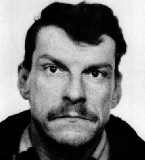
Christer Pettersson
Murderer Juha Valjakkala
Murderer · Sweden · 1988
Juha Veikko Valjakkala (born June 13, 1965) was convicted of the murder of a fa…
3 victims
Juha Valjakkala
Murderer · Sweden · 1988
Juha Veikko Valjakkala (born June 13, 1965) was convicted of the murder of a fa…
3 victims
 Mohammed Hadjetlaché
Murderer · Sweden · 1918
Mohammed Beck Hadjetlaché (20 May 1868, he also sometimes stated 1870 or 1872,…
3 victims
Mohammed Hadjetlaché
Murderer · Sweden · 1918
Mohammed Beck Hadjetlaché (20 May 1868, he also sometimes stated 1870 or 1872,…
3 victims
 Peter Mangs
Murderer · Sweden · 2003
Peter Mangs was sentenced to life in prison for murder and attempted murder con…
3 victims
Peter Mangs
Murderer · Sweden · 2003
Peter Mangs was sentenced to life in prison for murder and attempted murder con…
3 victims
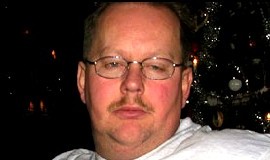 Anders Eklund
Murderer · Sweden · 2000
Anders Eklund (born August 6, 1965) was a Swedish murderer and rapist. He was c…
2 victims
Anders Eklund
Murderer · Sweden · 2000
Anders Eklund (born August 6, 1965) was a Swedish murderer and rapist. He was c…
2 victims
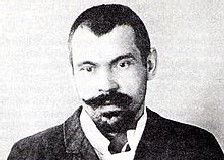 Frans Otto Eriksson
Murderer · Sweden · 1909
Frans Otto Eriksson (also known as Svarta Hästen, “The Black Horse”) Frans Otto…
2 victims
Frans Otto Eriksson
Murderer · Sweden · 1909
Frans Otto Eriksson (also known as Svarta Hästen, “The Black Horse”) Frans Otto…
2 victims
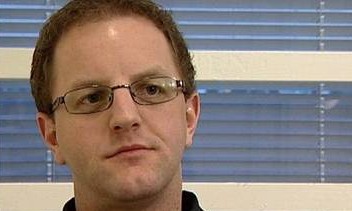 Helge Fossmo
Murderer · Sweden · 1999
Helge Arnold Fossmo (1971-) was a Pentecostal pastor. He was involved in the Kn…
2 victims
Helge Fossmo
Murderer · Sweden · 1999
Helge Arnold Fossmo (1971-) was a Pentecostal pastor. He was involved in the Kn…
2 victims
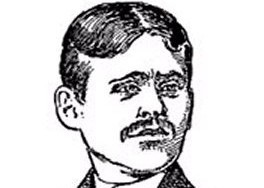 Israel Lipski
Murderer · United Kingdom · 1887
Israel Lipski Israel Lipski (1865 - 1888) was born Israel Lobulsk. He was of Po…
1 victim
Israel Lipski
Murderer · United Kingdom · 1887
Israel Lipski Israel Lipski (1865 - 1888) was born Israel Lobulsk. He was of Po…
1 victim
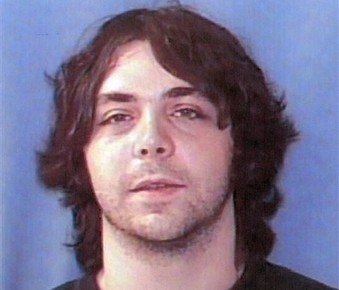 Wesley Higdon
Mass murderer · USA · 2008
Wesley Neal Higdon was a 25-year-old press operator from Henderson. He was desc…
5 victims
Wesley Higdon
Mass murderer · USA · 2008
Wesley Neal Higdon was a 25-year-old press operator from Henderson. He was desc…
5 victims
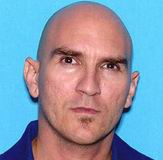 Pedro Alberto Vargas
Mass murderer · USA · 2013
Pedro Alberto Vargas carried out a shooting rampage at an apartment complex in…
6 victims
Pedro Alberto Vargas
Mass murderer · USA · 2013
Pedro Alberto Vargas carried out a shooting rampage at an apartment complex in…
6 victims
 Leslie Wallace
Murderer · USA · 2001
Leslie Wallace fatally shot her 6-year-old son, James, with a shotgun and attem…
1 victim
Leslie Wallace
Murderer · USA · 2001
Leslie Wallace fatally shot her 6-year-old son, James, with a shotgun and attem…
1 victim
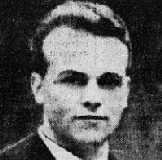 Roger Girerd
Mass murderer · France · 1965
Roger Girerd was the perpetrator of a mass murder in Charvieu-Chavagneux on May…
10 victims
Roger Girerd
Mass murderer · France · 1965
Roger Girerd was the perpetrator of a mass murder in Charvieu-Chavagneux on May…
10 victims
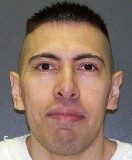 Frank Martinez Garcia
Murderer · USA · 2001
Name: Frank Martinez Garcia TDCJ Number: 999418 Date of Birth: 10/21/1972 Age a…
2 victims
Frank Martinez Garcia
Murderer · USA · 2001
Name: Frank Martinez Garcia TDCJ Number: 999418 Date of Birth: 10/21/1972 Age a…
2 victims
- Gender
- male
- Country
- Sweden
- Location
- Stockholm, Sweden
- Date of birth
- April 23, 1947
- Age at first offence
- 23
- Characteristics
- fugitive, drug addict, alcoholic, abuse, history of mental illness
- Victim profile
- A man / Olof Palme, 59 ( Swedish Prime Minister)
- Method of murder
- Stabbing with a bayonet / Shooting
- Date(s) of murder
- 1970 / February 28, 1986
- Years active
- 1970–1986
- Date of arrest
- —
- Status
-
Died in custody
Sentenced to prison for manslaughter; sentenced to life imprisonment in 1988; conviction overturned and Pettersson was acquitted the next year; died on September 29, 2004
Overview
Christer Pettersson was a Swedish criminal and a suspect in the assassination of Swedish Prime Minister Olof Palme. Pettersson was tried and convicted for the murder of Palme, and was later acquitted on appeal. Pettersson died on September 29, 2004.
Background
Christer Pettersson grew up in a middle class family in Solna outside of Stockholm and later moved to the suburb Sollentuna. In his youth, he attended a theatrical school (Calle Flygares teaterskola) where he was considered very promising by at least one of his teachers. Pettersson suffered a head injury that he would never fully recover from, and after the injury he began a period of substance abuse that forced him to drop out of school.
In 1970, Pettersson killed a man in a street of Stockholm, seemingly without any provocation. Swedish press dubbed the killing the “bayonet murder”. Pettersson was sentenced to prison for manslaughter for the killing. After his release, he continued a life of petty crime that financed his alcohol and drug abuse.
Pettersson had a history of substance abuse and was described as a drug user and alcoholic.
The assassination of Olof Palme
On the night of February 28, 1986, Olof Palme was shot and killed on a street in Stockholm, Sweden, as he left a movie theatre with his wife, Lisbet Palme. The attacker escaped eastwards on the Tunnelgatan and disappeared.
The police who investigated the killing failed to find the murder weapon. The .357-caliber Magnum pistol used to kill Palme was never found.
Timeline
- February 28, 1986 — Olof Palme was shot and killed in Stockholm as he walked home from a cinema with his wife, Lisbet Palme.
- 23:21 — Palme was fatally shot in the back at close range; a second shot wounded Mrs Palme.
- 23:21:30 — The Palme couple were shot.
- 23:22:20 — The 90000 SOS emergency line received a phone call; an eye witness said there was “murder on Sveavägen,” and was redirected to the police, but the phone call was not redirected properly and the caller was not put through to the police.
- 23:23:40 — A Järfälla Taxi switchboard operator called directly to the police dispatch center on behalf of one of its drivers on the scene; the operator could not give any more details than that someone had been shot at the corner Sveavägen/Tunnelgatan.
- 23:24:00 (ca) — The first police patrol arrived at the scene on Kungsgatan after being alerted by a second taxi driver who heard the emergency call via the taxi radio.
- 23:24:40 — The police dispatch center was contacted by the SOS alarm central concerning the shooting on Sveavägen; the dispatch center operator denied knowledge about any such events.
- 23:24:00–23:25:30 (ca) — A second police patrol and patrol wagon arrived at the crime scene; it was stationed at Malmskillnadsgatan and the commanding officer at the scene, Superintendent Gösta Söderström, ordered it to immediately take up the hunt for the perpetrator.
- 23:25:00 (ca) — A patrolling ambulance was stopped at the scene and gave immediate assistance to the victims.
- 23:26:00 — The police dispatch center called the SOS emergency center to assure them they were informed about the events on the Sveavägen/Tunnelgatan intersection; a third police patrol wagon arrived at the scene after refueling; a second ambulance arrived to assist.
- 23:28:00 — The first ambulance left the scene, rushing for the Sabbatsberg hospital with prime minister Olof Palme and his wife; Mrs Palme refused to leave her husband.
- 23:30:00 — Superintendent Söderström contacted the police dispatch center to inform them that it was the prime minister who had been shot.
- 23:31:40 — The SOS central was informed that the ambulance had arrived at the hospital.
- 00:06:00 — Prime Minister Olof Palme was pronounced dead at the Sabbatsberg hospital.
- 01:10:00 — First radio broadcast about the murder.
- 04:00:00 — First TV broadcast about the events.
- 05:15:00 — The government held a press conference.
- 1988 — Pettersson was convicted and sentenced to life imprisonment for Palme’s murder in 1988.
- 1989 — Pettersson was freed after an appeal court cited lack of evidence, including the missing murder weapon; the next year after the 1988 conviction he was acquitted.
- 1998 — The Supreme Court rejected a prosecutor’s appeal to retry Pettersson.
- September 15, 2004 — Pettersson reported being harassed by the police, with unsubstantiated rumors circulating that he was a victim of police violence.
- September 16, 2004 — Pettersson underwent emergency surgery for unspecified head injuries and had been in a coma since this date.
- September 29, 2004 — Pettersson died at the Karolinska University Hospital after a cerebral hemorrhage; he had been in a coma for two weeks.
- January 2005 — Pettersson was buried in his hometown Sollentuna.
- February 2006 — A documentary aired on the Swedish television channel SVT suggested associates claimed Pettersson had confessed to his role in the murder, though with an explanation of mistaken identity; the newspaper Dagens Nyheter published articles ridiculing the documentary on February 28, 2006.
- February 28, 2006 — Two senior SVT reporters criticized the documentary severely in an op-ed in Dagens Nyheter and alleged that the filmmaker had fabricated statements while omitting contradictory evidence.
Investigation
The only leads left by the assassin were two bullets of the type Winchester-Western .357 Magnum. Both bullets corresponded to lead fragments found in the clothing of Olof and Lisbet Palme. Great efforts were made to try to locate the murder weapon.
During the investigation, Swedish police test-fired approximately 500 Magnum revolvers. The investigation placed particular emphasis on tracking down the ten Magnum revolvers reported stolen at the time of the murder. All were located except the Sucksdorff revolver, a weapon stolen from the Stockholm home of Swedish filmmaker Arne Suckdorff in 1977. The person who stole the weapon was a friend of drug dealer Sigge Cedergren, who claimed on his deathbed that he had lent a gun of the same type to Christer Pettersson two months prior to the assassination.
Another weapon that figured prominently in the investigation was the so-called Mockfjärd gun. It was a revolver of the type Smith & Wesson Model 28 (“Highway Patrolman”) with .357 Magnum caliber. The gun was first purchased legally by a civilian in the northern Swedish city of Luleå. The gun and 91 metal piercing bullets were stolen in a burglary in Haparanda in 1983 and were believed to have been used in the robbery of a post office in Mockfjärd, Dalarna that same year. A lead isotope analysis of a bullet fired during the robbery confirmed it had the same isotopic composition as the bullets retrieved from the assassination crime scene, verifying that the bullets were manufactured at the same time.
In the autumn of 2006, Swedish police acting on a tip communicated to the Expressen newspaper retrieved a Smith & Wesson .357 revolver from a lake in Dalarna. The gun was determined to be the same one used in the post office robbery in Mockfjärd, confirmed by the gun’s serial number. The gun was transferred to the National Laboratory of Forensic Science in Linköping for further analysis. In May 2007, the laboratory concluded that tests on the gun could not confirm that it was used in the Palme assassination because it was too rusty. Swedish police undertook reviewing the Palme case and Pettersson’s role in light of revelations from the February 2006 documentary and subsequent criticism in Dagens Nyheter.
The cost of the investigation stood at SEK 350 million, €38 million, or US$45 million as of 25 February 2006, and the total number of pages accumulated during the investigation was around 700,000. According to criminologist Leif GW Persson, the investigation was “the largest in global police history”. The reward for solving the murder was SEK 50 million (approximately €5 million or US$7 million).
Arrest and trial
Christer Pettersson was arrested for the murder of Palme in December 1988, almost three years after Palme’s death. He was accused of Palme’s murder after an extensive investigation by the Swedish police. Pettersson was picked out from a police lineup by Mrs Palme.
Pettersson was convicted and sentenced to life imprisonment in 1988. In 1989 he was freed after an appeal court cited lack of evidence, including the missing murder weapon, and it questioned the reliability of Mrs Palme’s identification. Pettersson was later acquitted on appeal.
In 1998, the Supreme Court rejected a prosecutor’s appeal to retry Pettersson, citing that evidence was not strong enough to place him at the scene of the shooting. The chief prosecutor, Agneta Blidberg, considered re-opening the case, while acknowledging that a confession alone would not be sufficient because the appeals court set that condition in its ruling. Swedish police file on the investigation could not be closed until both the murder weapon and murderer were found.
In addition to the courtroom case, some of Pettersson’s confessions were discussed in interviews. In an interview with Swedish writer Gert Fylking in 2001, Pettersson said:
“Sure as hell it was me who shot (him), but they can never nail me for it. The weapon is gone,”
He later retracted the statement and said he was not involved in the killing.
Sentencing and legal outcome
Pettersson was sentenced to prison for manslaughter for the 1970 killing that Swedish press dubbed the “bayonet murder.” For Palme’s murder, he was convicted and sentenced to life imprisonment in 1988. The next year the conviction was overturned and Pettersson was acquitted.
Pettersson was awarded about $50,000 in compensation for defamation by the police and for wrongful imprisonment.
Coma, death, and burial
On September 29, 2004, Pettersson died at the Karolinska University Hospital after he suffered a cerebral hemorrhage caused by a falling accident onset by an epileptic seizure. He had been in a coma since September 16, 2004, when he underwent emergency surgery for head injuries and never regained consciousness. The cause of the injuries was unclear, and the injuries were associated with a falling accident onset by an epileptic seizure.
Pettersson had reported being harassed by the police on September 15, 2004, the day before he was found with head injuries, and unsubstantiated rumors circulated that he was a victim of police violence.
Pettersson was buried in his hometown Sollentuna in January 2005.
Contacts and alleged communications
Shortly before Pettersson was taken to hospital, he contacted Mårten Palme, the son of Olof and Lisbet Palme, explaining he had something to tell the family. Palme said he was willing to meet Pettersson if he was ready to confess to the murder, but the meeting did not take place and what Pettersson had to tell was never revealed.
Associates of Pettersson claimed in a documentary broadcast on SVT in February 2006 that Pettersson had confessed to them his role in Olof Palme’s murder, with the explanation that it was a case of mistaken identity. The documentary suggested that Pettersson had intended to kill a drug dealer who customarily walked in similar clothing along the same street at night.
Other theories and investigation context
The Palme case remained unsolved. Multiple alternative theories were discussed, including descriptions of possible involvement by Yugoslavian security services and claims connected to Kurdish groups. A Swedish extremist, Victor Gunnarsson (labeled in the media 33-åringen, “the 33-year-old”), was soon arrested for the murder but quickly released after a dispute between police and prosecuting attorneys. Gunnarsson had connections to extremist groups including the European Workers Party and the Swedish branch of the LaRouche Movement, and pamphlets hostile to Palme from the party were found in his home outside Stockholm. Gunnarsson later moved to the United States of America, where he was murdered.
Hans Holmér, the Stockholm police commissioner, followed up an intelligence lead and arrested Kurds living in Sweden after allegations that one of their organisations, the PKK, was responsible for the murder; the lead proved inconclusive and ultimately led to Holmér’s removal from the Palme murder investigation. In April 2001, a team of Swedish police officers went to interview PKK leader Abdullah Öcalan in a Turkish prison about Öcalan’s allegations that a dissident Kurdish group led by his ex-wife murdered Palme; the police team’s visit proved futile. Renewed allegations of PKK complicity surfaced during the Ergenekon investigation, ongoing as of October 2008.
Additional allegations included claims that Palme had been carried out by an operative of the Yugoslavian security service based on German interrogation records cited by Focus in January 2011. The Red Army Faction claimed responsibility via an anonymous phone call to a London news agency, and the claim included that the group supposedly carried out the assassination through the “Holger Meins Commando.” There were also claims involving Roberto Thieme, police conspiracy allegations described in a German weekly Die Zeit from March 1995 involving right-wing extremist police officers, and other suspect theories including John Ausonius (“the Laser Man”, also known as John Stannerman) and Trowbridge H Ford’s Iran-Contra-based theory.
The investigation included discussion of apartheid-related motives. On 21 February 1986, Palme made a keynote address to the Swedish People’s Parliament Against Apartheid in Stockholm, where he said:
“Apartheid cannot be reformed, it has to be eliminated.”
In 1996, Colonel Eugene de Kock gave evidence to the Supreme Court in Pretoria alleging that Palme was shot and killed in 1986 because he “strongly opposed the apartheid regime and Sweden made substantial contributions to the ANC”. De Kock alleged he knew the person responsible and said it was Craig Williamson, a former police colleague and a South African superspy. Brigadier Johannes Coetzee identified Anthony White, a former Rhodesian Selous Scout with links to the South African security services, as Palme’s actual murderer. Bertil Wedin, a Swedish mercenary living in Northern Cyprus since 1985, was named as the killer by Peter Caselton, a member of Coetzee’s assassination squad known as Operation Longreach. In October 1996, Swedish police investigators visited South Africa but were unable to uncover evidence to substantiate de Kock’s claims.
In a 2007 book, Athol Visser (or “Ivan the Terrible”) was suggested as responsible for planning and carrying out the assassination. An episode of Efterlyst in Sweden was co-hosted by Tommy Lindström, who pointed to apartheid South Africa as the number one suspect after being asked by Hasse Aro whom he believed was behind the assassination.
Pettersson and media portrayals
Before and after his death, Pettersson achieved notoriety as a cult figure, portrayed as a victim of society and as a scapegoat in the media, and simultaneously seen as an outlaw and a rebel and as an icon in some subcultures including music and art.
Pettersson used his money from the suit to sell his stories to newspapers.
Film portrayals and literature
In the 1998 Swedish fictional thriller film The Last Contract (Sista kontraktet), Palme’s assassination was portrayed as having been planned by a hired assassin. A Special Branch detective, Roger Nyman (Mikael Persbrandt), searched for an international hitman, Ray Lambert (played by Michael Kitchen), whose line of inquiry was blocked by senior police officers and the Swedish establishment. The suggested reason was Palme’s stance rejecting deployment of nuclear weapons in Sweden and rejecting war in general as a solution. The film was compared favorably to The Day of the Jackal and Oliver Stone’s JFK.
Jan Bondeson’s 2005 book Blood on the Snow: The Killing of Olof Palme advanced a theory linking Palme’s murder to arms trades to India. The theory described Palme’s friendship with Rajiv Gandhi to secure a SEK 8.4 billion deal for Bofors to supply the Indian Army with howitzers, and alleged bribes through a shady company called AE Services based in Guildford, Surrey, England to conclude the deal. Bondeson suggested that Palme met with Muhammad Saeed al-Sahhaf on the morning he was assassinated and that the conversation might have triggered the murder. The book alleged Swedish police suppressed vital MI6 intelligence about a Bofors/AE Services deal with India.
Other mentioned works included Bondeson’s and books by Poutiainen (Inuti labyrinten [Within the labyrinth]), Holmér (Olof Palme är skjuten!), Springer and van Soest (Ah, was it him? The predicted murder of Olof Palme and the Dutch connection), and Persson (Mellan sommarens längtan och vinterns köld: en roman om ett brott).
Spotted an error, or have more information about this case?