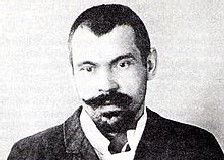
Frans Otto Eriksson
Murderer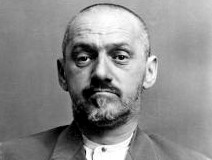 Mohammed Hadjetlaché
Murderer · Sweden · 1918
Mohammed Beck Hadjetlaché (20 May 1868, he also sometimes stated 1870 or 1872,…
3 victims
Mohammed Hadjetlaché
Murderer · Sweden · 1918
Mohammed Beck Hadjetlaché (20 May 1868, he also sometimes stated 1870 or 1872,…
3 victims
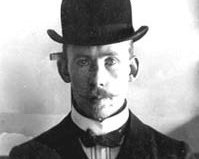 Johan Alfred Ander
Murderer · Sweden · 1910
Johan Alfred Ander was born on October 27, 1873, and was executed on November 2…
1 victim
Johan Alfred Ander
Murderer · Sweden · 1910
Johan Alfred Ander was born on October 27, 1873, and was executed on November 2…
1 victim
 Juha Valjakkala
Murderer · Sweden · 1988
Juha Veikko Valjakkala (born June 13, 1965) was convicted of the murder of a fa…
3 victims
Juha Valjakkala
Murderer · Sweden · 1988
Juha Veikko Valjakkala (born June 13, 1965) was convicted of the murder of a fa…
3 victims
 Peter Mangs
Murderer · Sweden · 2003
Peter Mangs was sentenced to life in prison for murder and attempted murder con…
3 victims
Peter Mangs
Murderer · Sweden · 2003
Peter Mangs was sentenced to life in prison for murder and attempted murder con…
3 victims
 Anders Eklund
Murderer · Sweden · 2000
Anders Eklund (born August 6, 1965) was a Swedish murderer and rapist. He was c…
2 victims
Anders Eklund
Murderer · Sweden · 2000
Anders Eklund (born August 6, 1965) was a Swedish murderer and rapist. He was c…
2 victims
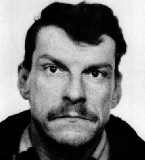 Christer Pettersson
Murderer · Sweden · 1970
Christer Pettersson was a Swedish criminal and a suspect in the assassination o…
2 victims
Christer Pettersson
Murderer · Sweden · 1970
Christer Pettersson was a Swedish criminal and a suspect in the assassination o…
2 victims
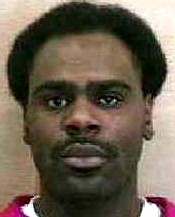 Michael Earl Sexton
Murderer · USA · 1990
Michael Earl Sexton was executed by lethal injection in North Carolina on Novem…
1 victim
Michael Earl Sexton
Murderer · USA · 1990
Michael Earl Sexton was executed by lethal injection in North Carolina on Novem…
1 victim
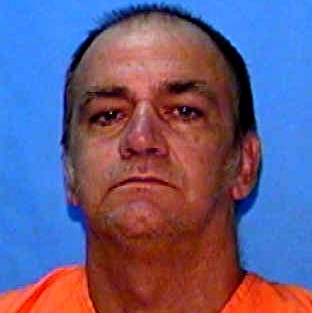 Gary Lawrence
Murderer · USA · 1994
Gary Lawrence (DOB: 06/29/57) was tried in the First Judicial Circuit, Santa Ro…
1 victim
Gary Lawrence
Murderer · USA · 1994
Gary Lawrence (DOB: 06/29/57) was tried in the First Judicial Circuit, Santa Ro…
1 victim
 Ronald Prible
Mass murderer · USA · 1999
Ronald Prible, Jr. was born 04/18/1972 and received his case on 11/04/2002 at a…
5 victims
Ronald Prible
Mass murderer · USA · 1999
Ronald Prible, Jr. was born 04/18/1972 and received his case on 11/04/2002 at a…
5 victims
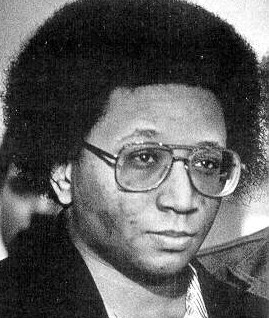 Wayne Williams
Serial killer? · USA · 1979
Wayne Bertram Williams was sentenced to two consecutive terms of life imprisonm…
24 victims
Wayne Williams
Serial killer? · USA · 1979
Wayne Bertram Williams was sentenced to two consecutive terms of life imprisonm…
24 victims
 Sanna Sillanpää
Homicide · Finland · 1999
Sanna Riitta Liisa Sillanpää (born April 15, 1968) was a Finnish woman who shot…
3 victims
Sanna Sillanpää
Homicide · Finland · 1999
Sanna Riitta Liisa Sillanpää (born April 15, 1968) was a Finnish woman who shot…
3 victims
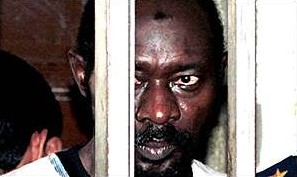 Mohammed Adam Omar
Murderer · Yemen · 1995
Mohammed Adam Omar was a morgue assistant at Sanaa University’s medical faculty…
16 victims
Mohammed Adam Omar
Murderer · Yemen · 1995
Mohammed Adam Omar was a morgue assistant at Sanaa University’s medical faculty…
16 victims
- Gender
- male
- Country
- Sweden
- Location
- Heden, Leksand, Sweden
- Date of birth
- April 15, 1867
- Age at first offence
- 42
- Characteristics
- armed robbery, arsonist, convicted rapist, torture
- Victim profile
- Daniel Dunder, 82, and his wife Kerstin, 75
- Method of murder
- Poisoning (arsenic)
- Date(s) of murder
- December 11, 1909
- Years active
- 1909
- Date of arrest
- Same
- Status
-
Released
Sentenced to life imprisonment in January 1910; death sentence commuted on 28 October 1910; paroled on 31 October 1930
Name
Frans Otto Eriksson (also known as Svarta Hästen, “The Black Horse”)
Background
Frans Otto Eriksson was a Swedish baker and a convicted thief and murderer. He was born in Badelunda, Västerås. His family moved to Stenby, Adelsö when he was six years old. At the age of thirteen, he moved back to Västerås, where he lived until his church confirmation. After his confirmation, Eriksson became an apprentice with a local baker.
In the early 1890s, Eriksson moved to Stockholm, where he worked at a number of bakeries. He later moved to Gnesta. Around 1900, he moved to Obbola, where he found work at a local store. After about a year at that job, Eriksson became indigent and was vagrant for some time.
In July 1907, Eriksson found employment at a baker's shop in Vretstorp, where the owner was pleased with his work.
The offence
Eriksson joined a conspiracy to commit double murder in desperation for money. In the village of Heden, Leksand, Eriksson moved in with Kerstis Karin Olsdotter (also known as “Jutta”), along with Fredrik Alfred Vestlund (also known as “Löfstalunsen”). Olsdotter lived a promiscuous life and had a poor reputation in the village.
Olsdotter was informed that a former corporal Daniel Dunder, born 1827, and his wife Kerstin, born 1834, had recently sold their last cow to a neighbour and received a large sum of money. Eriksson, Olsdotter and Vestlund were in need of money, and they thought of a scheme to rob the Dunder couple on 11 December 1909.
To avoid revealing their identities, the trio decided to poison the couple. Vestlund administered the poison by serving the Dunder couple coffee laced with arsenic. Eriksson and Olsdotter stood guard outside the Dunders’ home.
The Dunders died immediately. The trio started cleaning up the crime scene and started a fire in the couple’s fireplace to make it look like the couple had died from carbon monoxide poisoning.
Investigation
The dead couple was discovered by a neighbour, and the police quickly suspected murder. Evidence pointed to Eriksson, Olsdotter and Vestlund, and they were all arrested in a matter of days.
Arrest
Eriksson, Olsdotter and Vestlund were taken to Falu prison by Christmas.
Trial
On 10 January 1910, legal proceedings started in Leksand.
Olsdotter was sentenced to death for plotting the murders, while Eriksson received life imprisonment. Vestlund, who was considered the mastermind behind the murders, was also sentenced to death.
On 15 July of that year, the court denied their appeals.
Sentencing
On 28 October 1910, the sentences against Vestlund and Olsdotter were commuted to life imprisonment.
Eriksson’s life imprisonment sentence remained in place.
Appeals
On 15 July of the trial year, the court denied their appeals.
Imprisonment
Eriksson and Vestlund served their time in Långholmen Prison within Stockholm, while Olsdotter served her time at a women’s prison in Växjö.
Eriksson served his first years on the island of Långholmen. In January 1916, he was transferred to Malmö. In 1918, he was sent to Karlskrona before he was transferred back in Långholmen in 1920. In 1922, Eriksson was transferred to a low-security prison in Mariestad that specialized in farming, and he was permitted to work there with horses.
During his time in prison, Eriksson was involved in a number of fights because of his temperament, which may have factored into the denials of many of his later appeals.
Clemency and parole
In November 1925, Eriksson wrote his first clemency appeal, which was denied. He made additional requests in 1926, 1928 and 1929 without success. On 31 October 1930, his clemency request was approved upon his fifth appeal, and he was paroled.
Outcome
Eriksson returned to freedom and faced hardship in finding work as a farm hand in Stockholm. He suffered from paranoia.
In 1953, he was placed in a nursing home in Västerås. He died of cancer on 7 June 1953.
His remains were buried on 20 January 1954 in the cemetery at Skogskyrkogården.
Other details
Earlier offences
In September 1900, Eriksson borrowed a suit from a friend. When he did not return the suit, the friend pressed charges, and Eriksson was sentenced to two months imprisonment for shoplifting and embezzlement.
On 8 July 1904, Eriksson was convicted of shoplifting for a second time after stealing clothes from a shop in Haverö, Sweden. He was sentenced to prison for two months, which he served in Sundsvall.
In January 1905, Eriksson and a friend, who both were drunk at the time, stole three cans of lobster in Sollefteå. He was again sentenced to two months in jail, plus an additional year to be served in Härnösand.
In 1909, Eriksson moved to the city of Leksand.
Prison locations and transfers
Eriksson was transferred to Malmö in January 1916. He was sent to Karlskrona in 1918. He was transferred back to Långholmen in 1920. He was transferred to Mariestad in 1922, where he was permitted to work with horses.

Spotted an error, or have more information about this case?