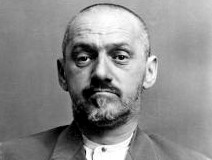
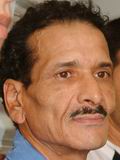
Mohammed Hadjetlaché
Murderer Frans Otto Eriksson
Murderer · Sweden · 1909
Frans Otto Eriksson (also known as Svarta Hästen, “The Black Horse”) Frans Otto…
2 victims
Frans Otto Eriksson
Murderer · Sweden · 1909
Frans Otto Eriksson (also known as Svarta Hästen, “The Black Horse”) Frans Otto…
2 victims
 Johan Alfred Ander
Murderer · Sweden · 1910
Johan Alfred Ander was born on October 27, 1873, and was executed on November 2…
1 victim
Johan Alfred Ander
Murderer · Sweden · 1910
Johan Alfred Ander was born on October 27, 1873, and was executed on November 2…
1 victim
 Juha Valjakkala
Murderer · Sweden · 1988
Juha Veikko Valjakkala (born June 13, 1965) was convicted of the murder of a fa…
3 victims
Juha Valjakkala
Murderer · Sweden · 1988
Juha Veikko Valjakkala (born June 13, 1965) was convicted of the murder of a fa…
3 victims
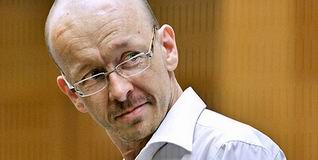 Peter Mangs
Murderer · Sweden · 2003
Peter Mangs was sentenced to life in prison for murder and attempted murder con…
3 victims
Peter Mangs
Murderer · Sweden · 2003
Peter Mangs was sentenced to life in prison for murder and attempted murder con…
3 victims
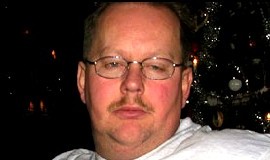 Anders Eklund
Murderer · Sweden · 2000
Anders Eklund (born August 6, 1965) was a Swedish murderer and rapist. He was c…
2 victims
Anders Eklund
Murderer · Sweden · 2000
Anders Eklund (born August 6, 1965) was a Swedish murderer and rapist. He was c…
2 victims
 Christer Pettersson
Murderer · Sweden · 1970
Christer Pettersson was a Swedish criminal and a suspect in the assassination o…
2 victims
Christer Pettersson
Murderer · Sweden · 1970
Christer Pettersson was a Swedish criminal and a suspect in the assassination o…
2 victims
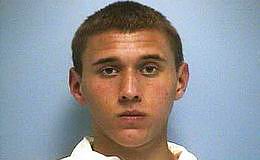 Tyler Hadley
Homicide · USA · 2011
Tyler Hadley was convicted of killing his parents, Mary Jo Hadley and Blake Had…
2 victims
Tyler Hadley
Homicide · USA · 2011
Tyler Hadley was convicted of killing his parents, Mary Jo Hadley and Blake Had…
2 victims
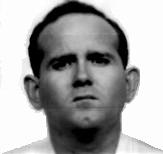 Alvin Wayne Crane
Murderer · USA · 1987
Alvin Wayne Crane was executed by lethal injection in Texas on October 12, 1999…
1 victim
Alvin Wayne Crane
Murderer · USA · 1987
Alvin Wayne Crane was executed by lethal injection in Texas on October 12, 1999…
1 victim
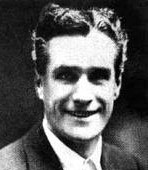 Patrick Mahon
Murderer · United Kingdom · 1924
Patrick Herbert Mahon (also known as Pat Waller), born in West Derby, Liverpool…
1 victim
Patrick Mahon
Murderer · United Kingdom · 1924
Patrick Herbert Mahon (also known as Pat Waller), born in West Derby, Liverpool…
1 victim
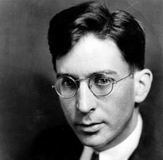 Carl Weiss
Murderer · USA · 1935
Carl Weiss died at the scene after being shot in the Capitol building in Baton…
1 victim
Carl Weiss
Murderer · USA · 1935
Carl Weiss died at the scene after being shot in the Capitol building in Baton…
1 victim
 Charles Rathbun
Murderer · USA · 1989
Charles Rathbun was a freelance photographer who was sentenced to life in priso…
6 victims
Charles Rathbun
Murderer · USA · 1989
Charles Rathbun was a freelance photographer who was sentenced to life in priso…
6 victims
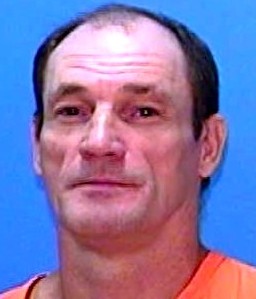 Charles Globe
Murderer · USA · 2000
Charles Globe was an inmate in Columbia Correctional Institution in July of 200…
1 victim
Charles Globe
Murderer · USA · 2000
Charles Globe was an inmate in Columbia Correctional Institution in July of 200…
1 victim
- Gender
- male
- Country
- Sweden
- Location
- Stockholm County, Sweden
- Date of birth
- May 20, 1868
- Age at first offence
- 50
- Characteristics
- kidnapping, murder for hire
- Victim profile
- Karl Calvé / Juri Levi Levitsky / Nicolai Ardachev (accused of being Bolshevik agents)
- Method of murder
- ???
- Date(s) of murder
- 1918 - 1919
- Years active
- 1918–1919
- Date of arrest
- 1919
- Status
-
Died in custody
Sentenced to death; commuted to life in prison; died in prison on November 4, 1929
Background
Mohammed Beck Hadjetlaché (20 May 1868, he also sometimes stated 1870 or 1872, Istanbul - 4 November 1929, Stockholm) was a Circassian journalist and writer. He was also an SIS and cheka agent. Hadjetlaché used many assumed identities, but his real name was probably Kasi Beck Akhmetukov. Kasi Beck Akhmetukov was born in Istanbul in a Circassian family, which fled from Circassia after the Russian-Circassian War.
In 1878 his father, a Bashi-bazouk leader, was killed in the Russo-Turkish War (1877–1878). In 1882 he returned to Russia, and was adopted by the childless Ettinger family and called Grigory. In the 1890s he wrote and published several novels and short stories under the pen name Hadjetlaché.
In 1902 Hadjetlaché joined the Socialist-Revolutionary Party. In 1908 he started to publish the magazine “Moslem” in Paris and the newspaper “In the world of Islam” in Saint Petersburg.
In 1916 Hadjetlaché offered to run a “anti-German and anti-Turkish propaganda campaign among the Moslems on a worldwide scale” for the Russian government and asked for money.
He left Soviet Russia and came to Sweden in 1918. Under the cheka and SIS direction he organized a fake White Terrorist cell planning to help in the counter revolutionary struggle against the Bolsheviks with Stockholm as his base. The goal of the operation was to portray all white émigrés as bloodthirsty terrorists and provoke Swedish police actions against Russian emigrants.
Hadjetlaché purchased a house in the woods outside of Stockholm.
The offence
Hadjetlaché and his gang brought people to the house who he accused of being Bolshevik agents. He killed them, and their bodies were then dropped in a nearby lake.
When the police discovered the gang in 1919, three murdered bodies were found in the Norrviken lake. The confirmed victims were engineer Karl Calvé (originally possibly Gleb Varfolomeyev), journalist and Soviet diplomatic courier Juri Levi (Paul) Levitsky, and nobleman Nicolai Ardachev, a doctor in law.
According to Hadjetlaché’s own “death list” it is likely that more people had been killed.
The murders were used for propaganda purposes by the Soviet press. Soviet writer Alexei Tolstoi included it in his novel “Emigrants”.
Investigation
Trial
Hadjetlaché was sentenced to death, later converted to lifetime in jail by the Swedish court.
Sentencing
His death sentence was converted to lifetime in jail by the Swedish court.
Outcome
Hadjetlaché died in 1929 in Långholmen Prison. He was the last person to be sentenced to the death penalty in Sweden.
Aftermath
Carl Sandburg wrote a poem about Hadjetlaché under the title, “Mohammed Bek Hadjetlaché.” It is written as if Sandburg had personally met Mohammed Beck Hadjetlaché.
Spotted an error, or have more information about this case?