Thomas Shanks
Murderer Rahan Arshad
Murderer · United Kingdom · 2006
Rahan Arshad (born 1970) was a taxi driver. He lived at Turves Road, Cheadle Hu…
4 victims
Rahan Arshad
Murderer · United Kingdom · 2006
Rahan Arshad (born 1970) was a taxi driver. He lived at Turves Road, Cheadle Hu…
4 victims
 Anthony Smith
Murderer · United Kingdom · 2001
Anthony Smith was a former sergeant in the Coldstream Guards. He had left the C…
3 victims
Anthony Smith
Murderer · United Kingdom · 2001
Anthony Smith was a former sergeant in the Coldstream Guards. He had left the C…
3 victims
 David John Copeland
Murderer · United Kingdom · 1999
David John Copeland was born in Isleworth, in the London Borough of Hounslow, a…
3 victims
David John Copeland
Murderer · United Kingdom · 1999
David John Copeland was born in Isleworth, in the London Borough of Hounslow, a…
3 victims
 Karl Bluestone
Murderer · United Kingdom · 2001
Karl Bluestone was a Gravesend police officer. · 28 August 2001 — Karl Blueston…
3 victims
Karl Bluestone
Murderer · United Kingdom · 2001
Karl Bluestone was a Gravesend police officer. · 28 August 2001 — Karl Blueston…
3 victims
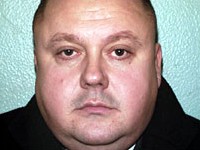 Levi Bellfield
Murderer · United Kingdom · 2003
Levi Bellfield (born 17 May 1968) was a British murderer. He was described by p…
3 victims
Levi Bellfield
Murderer · United Kingdom · 2003
Levi Bellfield (born 17 May 1968) was a British murderer. He was described by p…
3 victims
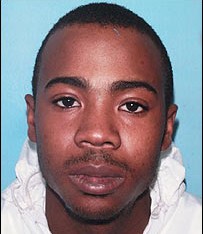 Carl Morgan
Murderer · United Kingdom · 2004
Carl Morgan (born 1981) was a former producer of the rap group So Solid Crew. I…
1 victim
Carl Morgan
Murderer · United Kingdom · 2004
Carl Morgan (born 1981) was a former producer of the rap group So Solid Crew. I…
1 victim
 Lonnie Earl Johnson
Murderer · USA · 1990
Lonnie Earl Johnson was executed by lethal injection in Texas on July 24, 2007.…
2 victims
Lonnie Earl Johnson
Murderer · USA · 1990
Lonnie Earl Johnson was executed by lethal injection in Texas on July 24, 2007.…
2 victims
 Bruce Williams
Homicide · USA · 1999
Bruce Williams (TDCJ Number 999338) was born on 12/16/1981. He was male, from D…
1 victim
Bruce Williams
Homicide · USA · 1999
Bruce Williams (TDCJ Number 999338) was born on 12/16/1981. He was male, from D…
1 victim
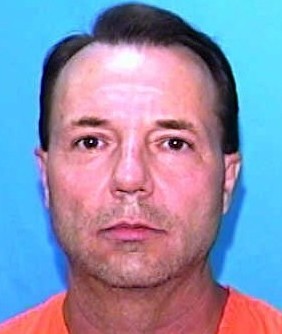 Milford Byrd
Murderer · 1981
Milford Byrd was sentenced to death for the murder of his wife, Debra Byrd. Deb…
1 victim
Milford Byrd
Murderer · 1981
Milford Byrd was sentenced to death for the murder of his wife, Debra Byrd. Deb…
1 victim
 Clover Boykin
Murderer · USA · 1993
Clover Boykin killed her 5-month-old son, Dayton Boykin, in Florida on October…
2 victims
Clover Boykin
Murderer · USA · 1993
Clover Boykin killed her 5-month-old son, Dayton Boykin, in Florida on October…
2 victims
- Gender
- male
- Country
- United Kingdom
- Location
- Castleford, West Yorkshire, England, United Kingdom
- Date of birth
- 1949
- Age at first offence
- 49
- Characteristics
- domestic dispute, jealousy, rape, motive unknown
- Victim profile
- His ex-girlfriend, Vickie Fletcher, 21
- Method of murder
- Shooting ( Kalashnikov AK47)
- Date(s) of murder
- May 7, 1998
- Years active
- 1998
- Date of arrest
- Same day
- Status
-
Life imprisonment
Sentenced to life in prison (minimum 18 years) on April 19, 2000
Case record
Background
Vickie Fletcher was a 21-year-old nurse who began working at Pontefract General Infirmary, West Yorkshire, in 1995. Also working at the hospital was 49-year-old anaesthetist Thomas Shanks. Shanks and Fletcher formed a stormy relationship that lasted three years. Eventually Fletcher jilted Shanks and shortly afterwards began a relationship with David Griffin, a former patient at the hospital.
Shanks had served as a doctor in the SAS during the Gulf War. When he returned to Britain he smuggled into the country a Kalashnikov AK47 rifle as a souvenir and kept it in his flat at the hospital.
The judge later said Shanks would have got more than 30 years if he had been sentenced today, but was bound by the more lenient sentencing guidelines in force at the time he was convicted.
The offence
On the evening of 7th May 1998, Fletcher was having a drink with Griffin and his son in the Castlefields public house in Castleford when she received a telephone call from Shanks. Following the call, Fletcher and her party left and went to another pub. Shanks turned up shortly afterwards and he and Fletcher started to argue.
Fletcher left the pub and returned to the Castelfields. Shanks returned to his flat, assembled the rifle, and put it into his Peugeot car before driving back to wait in the Castlefields’ car park. Fletcher went out into the car park to speak to Shanks.
Within minutes, Shanks brought out the rifle from his car and Fletcher fled in terror. Shanks fired fifteen rounds in total, ten of which struck Fletcher. She died within two hours.
Putting the weapon back into his car, Shanks drove off and went to Lennoxtown, Strathclyde, where he was later arrested.
After the killing, Shanks drove to Glasgow. He was arrested in a phone box in nearby Lennoxtown, and two Strathclyde traffic cops were given bravery awards for catching him.
The judge later said Shanks shot Fletcher as she was walking away from him, and that Fletcher was still staggering from the first burst of gunfire when he fired a second at closer range.
Investigation
No investigation-specific steps were stated in the supplied material.
Arrest
Shanks was later arrested at Lennoxtown, Strathclyde.
Trial
At his trial at Sheffield Crown Court, Shanks denied murder but admitted manslaughter, claiming he had been affected mentally by his part in the Gulf War.
At the trial, Shanks told the court he was not responsible for his actions when he shot Fletcher and claimed his mind had been affected by Gulf war syndrome. The trial judge said his defence was "spurious".
The judge later said Shanks was convicted on overwhelming evidence of premeditated murder.
The judge later also said the worst feature of the case was that Shanks shot Fletcher as she was walking away from him. The judge said the worst feature was that Shanks shot Fletcher while she was walking away from him.
At the Royal Courts of Justice in London, Mrs Justice Cox rejected claims by the killer’s lawyers that his sentence should be cut because of his "mental disorder". Mrs Justice Cox noted that Shanks had lost his temper and "manhandled" nurses at work several times before the murder. The judge said he had been given a final warning from the hospital over the incidents.
Mrs Justice Cox said Shanks’s good behaviour in jail painted "an encouraging picture". She said his conduct was nowhere near exceptional enough to justify a sentence lower than 18 years.
Sentencing
On 19th April 2000, after a trial lasting eight weeks, Thomas Shanks was found guilty of murder and sentenced to life imprisonment.
He was also found guilty on charges of possession of a weapon with intent to endanger life and illegal possession of the AK47.
Concurrent terms of twelve years and nine years, respectively, were imposed.
A judge later ordered Shanks to serve at least 18 years of a life sentence. Because he was originally jailed in 2000 and had already served two years while awaiting trial, he would be able to apply for parole in April 2016.
The judge said he had been convicted on overwhelming evidence of premeditated murder. She said Shanks would have got more than 30 years if he had been sentenced today, but she was bound by the more lenient sentencing guidelines in force at the time he was convicted.
Appeals
Mrs Justice Cox rejected claims that his sentence should be cut because of his "mental disorder".
Outcome
Shanks was found guilty of murder and sentenced to life imprisonment (minimum 18 years) on April 19, 2000. He was also found guilty of possession of a weapon with intent to endanger life and illegal possession of the AK47, with concurrent terms imposed.
Aftermath
A law change forced judges to set minimum terms for lifers, leading to a court appearance by Shanks. Mrs Justice Cox rejected arguments for a reduction based on mental disorder and set the minimum term at 18 years.
Shanks would be able to apply for parole in April 2016 due to having served two years while awaiting trial.
Other details
The supplied material included references to murder-UK.com, “SAS Man Who Killed Ex With Kalashnikov Could Be Out In Eight Years” by Ian Dow, DailyRecord.co.uk, March 1, 2008.
The judge later said that Shanks murdered Vickie on May 7, 1998 outside a pub in Castleford, Yorkshire.
Shanks tracked Fletcher and her new man to the pub and confronted them.
Shanks went home for the Kalashnikov, described as a trophy from his service in the Gulf War, and returned to the scene. The supplied material also said Shanks had an axe, a sheath knife, and a baseball bat in his car.
Vickie Fletcher was described as “Vickie Fletcher, a 21-year-old nurse.”
Fletcher’s age, nurse occupation, and the injury detail that ten of fifteen rounds struck her were stated.

Spotted an error, or have more information about this case?