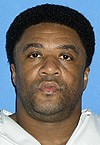
Lonnie Earl Johnson
Murderer Brian Kevin Rosenfeld
Murderer · USA · 1985
Brian Kevin Rosenfeld Brian Kevin Rosenfeld was sentenced to three concurrent l…
23 victims
Brian Kevin Rosenfeld
Murderer · USA · 1985
Brian Kevin Rosenfeld Brian Kevin Rosenfeld was sentenced to three concurrent l…
23 victims
 Yahweh ben Yahweh
Murderer · USA · 1980
Yahweh ben Yahweh was born and legally named Hulon Mitchell Jr. (October 27, 19…
23 victims
Yahweh ben Yahweh
Murderer · USA · 1980
Yahweh ben Yahweh was born and legally named Hulon Mitchell Jr. (October 27, 19…
23 victims
 Russell Ellwood
Murderer · USA · 1991
Russell Ellwood was a former taxi driver. Authorities suspected him of killing…
20 victims
Russell Ellwood
Murderer · USA · 1991
Russell Ellwood was a former taxi driver. Authorities suspected him of killing…
20 victims
 Robert Martines Perez
Murderer · USA · 1994
Name: Robert Martines Perez · Other name used in proceedings: Robert Martinez P…
15 victims
Robert Martines Perez
Murderer · USA · 1994
Name: Robert Martines Perez · Other name used in proceedings: Robert Martinez P…
15 victims
 Everett Mueller
Murderer · USA · 1990
Everett Lee Mueller abducted, raped and killed Charity Powers, a 10-year-old gi…
1 victim
Everett Mueller
Murderer · USA · 1990
Everett Lee Mueller abducted, raped and killed Charity Powers, a 10-year-old gi…
1 victim
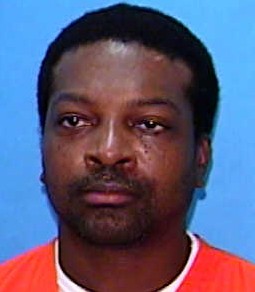 Lancelot Armstrong
Murderer · USA · 1990
Lancelot Armstrong was the defendant in Florida Supreme Court Lancelot Armstron…
1 victim
Lancelot Armstrong
Murderer · USA · 1990
Lancelot Armstrong was the defendant in Florida Supreme Court Lancelot Armstron…
1 victim
 Larry Hatten
Murderer · USA · 1995
Larry Hatten, 34, was condemned for fatally shooting a 5-year-old boy nearly 14…
1 victim
Larry Hatten
Murderer · USA · 1995
Larry Hatten, 34, was condemned for fatally shooting a 5-year-old boy nearly 14…
1 victim
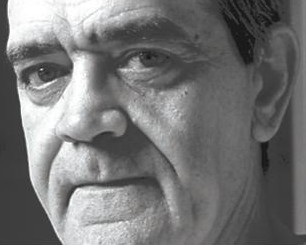 Dennis Stockton
Murderer · USA · 1978
Dennis Waldon Stockton was convicted in Virginia for the capital murder of Kenn…
1 victim
Dennis Stockton
Murderer · USA · 1978
Dennis Waldon Stockton was convicted in Virginia for the capital murder of Kenn…
1 victim
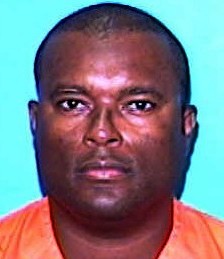 Emanuel Johnson
Murderer · USA · 1988
Emanuel Johnson was convicted of First-Degree Murder and was sentenced to death…
2 victims
Emanuel Johnson
Murderer · USA · 1988
Emanuel Johnson was convicted of First-Degree Murder and was sentenced to death…
2 victims
- Gender
- male
- Country
- USA
- Location
- Harris County, Texas, USA
- Date of birth
- March 9, 1963
- Age at first offence
- 27
- Characteristics
- robbery, murder for hire, torture
- Victim profile
- Gunar Nelson “Sean” Fulk, 16, and Leroy McCaffrey, Jr., 17
- Method of murder
- Shooting
- Date(s) of murder
- August 15, 1990
- Years active
- 1990
- Date of arrest
- August 30, 1990
- Status
-
Executed
Executed by lethal injection in Texas on July 24, 2007
Case record
Lonnie Earl Johnson was executed by lethal injection in Texas on July 24, 2007.
Status and outcome
Johnson was sentenced to death. The Texas Court of Criminal Appeals affirmed the conviction and sentence. The United States Supreme Court denied certiorari review. Johnson pursued state and federal habeas corpus proceedings. A federal district court denied relief, and the 5th U.S. Circuit Court of Appeals denied a certificate of appealability. Johnson was executed after his final appeal was rejected.
People involved
- Lonnie Earl Johnson — defendant; convicted of capital murder and sentenced to death
- Gunar Nelson “Sean” Fulk — victim; shot
- Leroy McCaffrey, Jr. — victim; shot
- Leroy “Punkin” McCaffrey — victim; also referred to as “Punkin”
- Gunar “Sean” Fulk — victim; also referred to as “Bubba”
- Gunar Fulk — referred to in testimony and statements as a name for the victim
- Sean Fulk Schulz — victim; referred to with “Schulz” in statements about execution viewers
- Leroy McCaffrey Jr. — victim; referred to with “Jr.”
- Chris Schulz — victim’s relative (mother of Sean Fulk Schulz)
- Laura McCaffrey — victim’s relative (mother of Leroy McCaffrey)
- Jason Clark — Texas Department of Criminal Justice spokesman who saw Johnson when he arrived at the death house
- Tammy Durham — a store clerk interviewed by police
- Donald Richardson — witness who testified during the punishment phase and later recanted
- Diana Lynn Glaeser — prosecutor at Johnson’s trial referenced in a note
- Rob Kepple — assistant district attorney involved in pretrial proceedings referenced in findings
- D.C. Wells — investigator for the Harris County District Attorney’s office referenced in findings
- J. Burnett — trial judge (183rd Judicial District Court, Harris County) in the suppression appeal case excerpt
- Grant — judge in the Texarkana Court of Appeals in the suppression appeal excerpt
- Overstreet — judge in the Court of Criminal Appeals in the suppression appeal excerpt
- Clinton — judge who dissented in the suppression appeal excerpt
- Overstreet, J. — authored holdings in the suppression appeal excerpt
- Richardson’s girlfriend — the woman in Austin who gave oral and written statements implicating Johnson
Timeline
- August 15, 1990 — Fulk and McCaffrey approached Johnson at a Tomball convenience store; Johnson asked them for a ride.
- August 15, 1990 (later that morning) — motorists found the bodies of Fulk and McCaffrey beside a rural road; Fulk had been shot four times and McCaffrey twice (other accounts described different details of the shots and McCaffrey’s position).
- August 29, 1990 — Johnson was arrested in Austin; he admitted shooting the two teens.
- August 30, 1990 (early morning hours) — Austin investigators arrested Johnson on the girlfriend’s car parking lot without a warrant (as described in the suppression appeal excerpt).
- August 31, 1990 — Johnson was arrested in Austin (as stated in the procedural history).
- December 13, 1990 — a Harris County grand jury indicted Johnson for capital murder.
- September 1994 — the trial continued (as described in Amnesty International’s narrative).
- November 14, 1994 — a Harris County jury found Johnson guilty of capital murder.
- November 17, 1994 — after a separate punishment hearing, the court sentenced Johnson to death (also described as the judge accepted the jury’s punishment verdict of a death sentence three days later, in one narrative).
- April 30, 1997 — the Texas Court of Criminal Appeals affirmed the conviction and sentence.
- October 4, 1999 — Johnson filed a state application for writ of habeas corpus in the trial court.
- October 8, 2003 — the Texas Court of Criminal Appeals denied an application for writ of habeas corpus.
- October 15, 1998 — Johnson filed a state application for writ of habeas corpus (duplicate procedural point appears in the provided text).
- October 7, 2004 — Johnson filed a petition for writ of habeas corpus in federal district court.
- August 31, 2005 — the federal district court denied relief.
- September 7, 2005 — a notice of appeal was filed in federal district court.
- October 26, 2006 — the 5th U.S.
- July 24, 2007 — Johnson was executed in Texas by lethal injection.
- July 25, 2007 — reporting about the execution appeared in multiple publications (as contained in the provided text).
Background
In the early morning hours of August 15, 1990, Fulk and McCaffrey approached Johnson at a Tomball convenience store. Johnson asked the two teens for a ride. The store clerk saw Fulk and McCaffrey leave in Fulk’s pickup, with Johnson seated between them.
After the killings, Johnson drove the pickup to Austin to visit his girlfriend and abandoned the truck in a restaurant parking lot in San Marcos. Several narratives also stated he traded the gun for cocaine. Johnson admitted shooting the two teens and maintained self-defense as his position through trial and appeals.
The offence
The bodies of Fulk and McCaffrey were found later that morning beside a rural road. One account stated Fulk had been shot four times and McCaffrey twice. Another account stated Fulk was shot three times in the head and once in the chest, and described McCaffrey being found entangled in a fence about 350 feet away with a knife in his hand; another narrative stated that the spinal cord was severed by a single gunshot.
Investigators determined that Johnson shot Fulk and McCaffrey, then drove the pickup to Austin to visit his girlfriend. Johnson abandoned the truck in San Marcos.
Prosecutors said Johnson forced the victims out of the pickup at gunpoint, shot Fulk multiple times, and that McCaffrey ran away. Johnson chased McCaffrey for a distance of about 350 feet before catching and killing him.
Johnson did not deny killing the youths and taking their pickup. He insisted the slayings were in self-defense after the pair pulled a gun and made racial threats against him. He also asserted that he had no weapon and that one teenager had a gun and the other a knife.
Investigation
Tammy Durham, the store clerk, was interviewed. She said she asked the teenagers to come to the store where she worked after she saw a black man acting suspiciously near the store. She said that after the teenagers arrived, she saw them approach a black man using a payphone outside the store and that they left with him in their vehicle after asking for a can of petrol.
Police identified Johnson as a suspect and obtained a statement from his girlfriend. In one narrative, she gave oral and written statements implicating him and later identified that Johnson arrived at her hotel room in Austin in Fulk’s vehicle in the early hours of August 16, 1990, and said he had shot the two teenagers.
The suppression appeal excerpt described that Harris County investigators received assistance from police in Austin. Austin investigators located the girlfriend, who gave oral and written statements implicating Johnson. A written statement was FAXed to Harris County investigators, who then tried to obtain a warrant. The excerpt also described that Austin investigators arrested Johnson in the early morning hours without a warrant after observing him enter his girlfriend’s car at the parking lot of her place of employment.
A suppression claim arose from that arrest. The trial court granted a motion to suppress Johnson’s postarrest written statement. The state appealed, and a higher court reversed and remanded, holding that the statement was admissible. The Court of Criminal Appeals in the excerpt stated that the attenuation doctrine was applicable to the statutory prohibition against evidence obtained in violation of the law and affirmed.
Arrest and custody
Johnson was arrested in Austin about two weeks after the killings. One narrative stated he was arrested on August 31. Another account in the provided text stated the arrest occurred around 1:30 a.m. in Austin, and the arrest warrant was signed at 3:50 a.m. in Harris County.
Johnson admitted shooting the two teens after his arrest, maintaining self-defense.
Trial
Johnson was charged with capital murder. A Harris County grand jury indicted him on December 13, 1990. A Harris County jury found him guilty of capital murder on November 14, 1994.
At the punishment phase, evidence was introduced of Johnson’s prior violence and aggressive behavior. The provided text described:
- He had been sentenced to a year’s probation for misdemeanor assault on a female relative.
- When he was seventeen, he punched his teenage girlfriend in the face when she spoke to another man, and he struck her with a brick on another occasion.
- Another girlfriend testified that Johnson struck her in the face and stole her car.
- A friend testified that on a road trip Johnson brandished a handgun twice and stated his intention to kill two individuals: one a college kid at a convenience store and the other a passing motorist.
- While in Harris County Jail awaiting trial, Johnson hit a fellow inmate during an argument over a newspaper, fought with another inmate over cleaning supplies, struck an inmate with a writing pen piercing the inmate’s lip, and broke a broom handle over the head of another inmate.
During the punishment phase, the state called Donald Richardson to testify regarding violent threats Johnson made during a motorcycle trip from Tomball, Texas to Austin. Richardson testified Johnson, who was armed with a gun, threatened to kill a man for his car.
After Johnson’s conviction, Richardson recanted his trial testimony in an affidavit, stating: “The statements I made at trial about Lonnie displaying a handgun and wanting to kill a motorist were all false. These were statements made to make the district attorney happy, so she would secure my early release from prison.”
Sentencing
After a separate punishment hearing, the court sentenced Johnson to death. The Texas Court of Criminal Appeals affirmed the conviction and sentence on April 30, 1997.
In one narrative, Johnson’s final punishment statement to the press and language about self-defense were described, and his execution delay occurred while the U.S. Supreme Court considered his final appeal.
Appeals
- April 30, 1997 — Texas Court of Criminal Appeals affirmed conviction and sentence.
- October 15, 1998 — Johnson filed a state application for writ of habeas corpus in the trial court (also duplicated with October 4, 1999 in the procedural history text).
- March 20, 1998 — the Texas Court of Criminal Appeals issued an opinion on Johnson’s motion for rehearing, affirming the trial court judgment.
- October 4, 1997 (timeline excerpt in the provided narrative) — (no additional dated event beyond what is already included above; the procedural history gives dates already listed).
- September 7, 2005 — notice of appeal was filed in federal district court.
- October 26, 2006 — the 5th U.S.
The COA denial narrative stated Johnson challenged:
- suppression of material exculpatory evidence during the sentencing phase under due process,
- a claim that due process and equal protection required jury instructions regarding parole laws, and
- a claim that the Texas capital sentencing scheme was unconstitutional because it did not require proof beyond a reasonable doubt for certain jury determinations.
The appeals excerpt concluded that Johnson failed to make a substantial showing of the denial of a constitutional right and denied the COA. It discussed Richardson’s recantation and a Brady claim, including state habeas court findings that no deal was made and that Richardson was relocated within the jail rather than promised an early release.
In addition, Amnesty International’s narrative said Johnson’s appeals were denied and described a newly filed appeal alleging that the prosecution withheld evidence favorable to his self-defense claim. The provided text also mentioned that a witness later recanted and that a Texas Court of Criminal Appeals decision noted that flight could be evidence from which an inference of guilt may be drawn.
Execution details and final statements
Johnson was scheduled to be executed after 6 p.m. on Tuesday, July 24, 2007. The provided text described:
- Texas Department of Criminal Justice spokesman Jason Clark said Johnson arrived at the death house and that Johnson was confident his appeals would keep him alive.
- Johnson received about an extra 30 minutes while the U.S.
- After the appeal was rejected, Johnson was pronounced dead eight minutes after lethal drugs began to flow in one account.
- Another account stated Johnson was pronounced dead at 6:44 p.m., eight minutes after the lethal drugs began to flow.
- Another account stated he was pronounced dead at 6:30 p.m.
In one final statement, Johnson said:
"It's been a joy and a blessing. Give everybody my regards. I love you, and I'll see you in eternity," he said in a final statement. "Father, take me home. I'm gone, baby. I'm ready to go."
Another account said:
"He was pretty confident his appeals would keep him alive," said Texas Department of Criminal Justice spokesman Jason Clark.
In his final statement and remarks included in the provided text, Johnson expressed love to a friend and did not acknowledge the victims’ relatives who witnessed the execution. The provided text included a statement by Chris Schulz:
"We're being punished," Chris Schulz, whose son was one of the slain teens, said earlier. "We're going through our own prison sentence here. We're going to go through it all our lives. "All I can do for him is to go to his grave and make sure he can be remembered ... If it wasn't for the victims, there wouldn't be an execution. People need to remember that."
The provided text also included a statement by Johnson’s friend Carrie Christensen:
"A beautiful soul was killed today," Christensen said after the execution. "His only crime was to defend himself against racist aggressors."
Other details
- The procedural history stated Johnson filed a state application for writ of habeas corpus and later a petition for writ of habeas corpus in federal district court.
- Johnson was described in the provided material as black, with his two victims described as white.
- Multiple narratives described disputes about self-defense and the aggressor’s alleged gun and knife.
- The provided text stated that at age 27 he approached the teenagers at a convenience store and that he had no previous prison record in one narrative, while also describing aggressive behavior, including jail fights, before trial.
Legal citations included in the provided text
The provided text included part of a suppression appeal excerpt involving:
- “Johnson v. State , 871 S.W.2d 744 (Tex.Crim.App. 1994.) (Suppression Appeal).” It described:
- the 183rd Judicial District Court, Harris County, J. Burnett, J., granted a motion to suppress Johnson’s postarrest written statement,
- the Texarkana Court of Appeals reversed and remanded,
- the Court of Criminal Appeals affirmed and held that the attenuation doctrine applied to the statutory prohibition against evidence obtained in violation of law,
- Overstreet wrote the holding and Clinton dissented.

Spotted an error, or have more information about this case?