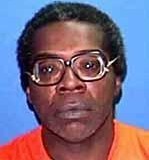
Frank Lee Smith
Murderer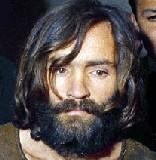 Charles Manson
Murderer · USA · 1969
Charles Milles Manson (born November 12, 1934) was an American criminal and mus…
9 victims
Charles Manson
Murderer · USA · 1969
Charles Milles Manson (born November 12, 1934) was an American criminal and mus…
9 victims
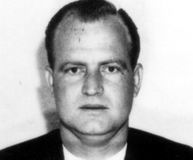 Gary Gene Tison
Murderer · USA · 1967
Gary Gene Tison was serving life sentences at the Arizona state prison. He had…
7 victims
Gary Gene Tison
Murderer · USA · 1967
Gary Gene Tison was serving life sentences at the Arizona state prison. He had…
7 victims
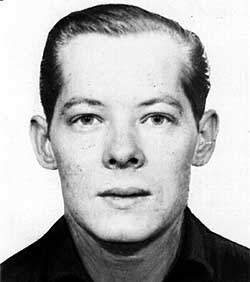 Richard Lee Tingle
Murderer · USA · 1968
Richard Lee Tingle was born out of wedlock in December 1940. He was raised by a…
6 victims
Richard Lee Tingle
Murderer · USA · 1968
Richard Lee Tingle was born out of wedlock in December 1940. He was raised by a…
6 victims
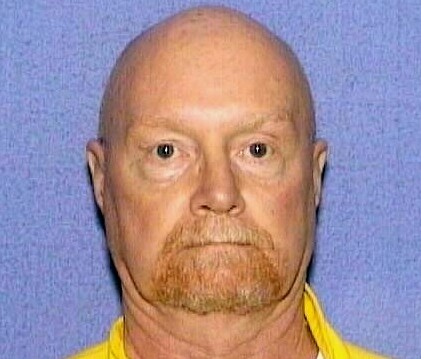 Gary Duane Rardon
Murderer · USA · 1962
Gary Duane Rardon killed a man in 1962 and later served 4 years for manslaughte…
4 victims
Gary Duane Rardon
Murderer · USA · 1962
Gary Duane Rardon killed a man in 1962 and later served 4 years for manslaughte…
4 victims
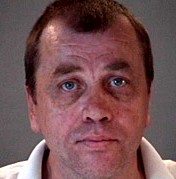 David William Tiley
Murderer · United Kingdom · 2007
David William Tiley was born in 1960. In 1995, he received a six-year jail term…
2 victims
David William Tiley
Murderer · United Kingdom · 2007
David William Tiley was born in 1960. In 1995, he received a six-year jail term…
2 victims
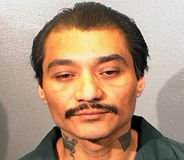 Alfredo Prieto
Serial killer · USA · 1988
Alfredo Rolando Prieto was a serial rapist and a convicted rapist who was sente…
9 victims
Alfredo Prieto
Serial killer · USA · 1988
Alfredo Rolando Prieto was a serial rapist and a convicted rapist who was sente…
9 victims
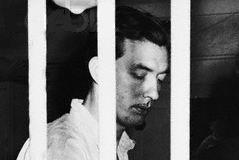 Otto Stephen Wilson
Murderer · USA · 1944
Otto Stephen Wilson was executed by asphyxiation-gas at San Quentin Prison on S…
2 victims
Otto Stephen Wilson
Murderer · USA · 1944
Otto Stephen Wilson was executed by asphyxiation-gas at San Quentin Prison on S…
2 victims
 Alvin Goodwin
Murderer · USA · 1986
Defendant: Alvin Goodwin Alvin Urial Goodwin III Status: Executed by lethal inj…
1 victim
Alvin Goodwin
Murderer · USA · 1986
Defendant: Alvin Goodwin Alvin Urial Goodwin III Status: Executed by lethal inj…
1 victim
 Timothy Lee Hurst
Murderer · USA · 1998
Name: Timothy Lee Hurst · Date of birth: 12/12/78 · Jurisdiction: First Judicia…
1 victim
Timothy Lee Hurst
Murderer · USA · 1998
Name: Timothy Lee Hurst · Date of birth: 12/12/78 · Jurisdiction: First Judicia…
1 victim
- Gender
- male
- Country
- USA
- Location
- Broward County, Florida, USA
- Date of birth
- 1947
- Age at first offence
- 13
- Characteristics
- juvenile, rape, domestic violence
- Victim profile
- Stabbed boy in argument / S hot holdup victim / Shandra Whitehead, 8 ?
- Method of murder
- St abbing with knife / Shooting
- Date(s) of murder
- 1960 / 1965 / 1985
- Years active
- 1960–1985
- Date of arrest
- —
- Status
-
Acquitted / overturned
Exonerated on December 15, 2000, after dying in prison on January 30, 2000
Case record: Frank Lee Smith
Frank Lee Smith died in prison on January 30, 2000. He was exonerated on December 15, 2000, after his death.
Background
Frank Lee Smith was an eight-year-old victim’s case in Broward County, Florida, involving an attack in the victim’s home.
The offence
On April 15, 1985, an eight-year-old victim died from injuries sustained from an attack in her home by a burglar. Repetitive blows from a blunt object, later found to be a rock, contributed to the victim’s death, along with attempted strangulation. An autopsy revealed that the victim had been raped and sodomized.
Investigation
Shaky eyewitness descriptions from neighbors, Chiquita Lowe and Gerald Davis, as well as the victim’s mother, resulted in the investigation centering on a black male described as about six feet tall, with muscular upper arms, shoulders, and chest, a dark complexion, about thirty years old, and wearing an orange t-shirt and jeans.
Chiquita Lowe testified that, on her way home, she was flagged down by an unidentified black male with a full beard, scraggly hair, and a droopy eye. A composite sketch was created with Davis and Lowe, and Frank Lee Smith was arrested on April 29, 1985.
Arrest
Frank Lee Smith was arrested on April 29, 1985.
The prosecution relied on identification by the victim’s mother and Smith’s criminal history. The victim’s mother identified Smith as the man she saw leaving through the living room window on the night of the murder.
Trial
Frank Lee Smith was indicted for first-degree murder, sexual battery, and burglary in the Seventeenth Judicial Circuit, Broward County, Florida, on May 9, 1985.
Smith was tried in January 1986 and convicted on all three counts.
The Florida Supreme Court noted that the jury had difficulty reaching a guilty verdict, including requesting to rehear Chiquita Lowe’s testimony after deliberating for five hours. After the court declined, the jury requested again; the court acceded. The jury rendered its verdict two and one-half hours later.
After a one-day penalty phase, the jury recommended a death sentence. On May 2, 1986, Circuit Judge Robert Tyson sentenced Smith to death. The Florida Supreme Court affirmed the conviction on direct appeal.
The United States Supreme Court denied certiorari.
The conviction was based on the testimony of three “eyewitnesses”—none of whom actually saw the crime occur. The victim’s mother testified she saw a man outside her house just before she found her daughter. Chiquita Lowe testified that a man flagged down her car near the victim’s house on the night of the crime and asked her for money. Gerald Davis testified he was walking on the victim’s street on the night of the crime when a man approached him and offered him drugs.
There was described as no physical evidence linking Smith to the crime or the crime scene, including no hair, no fingerprints, no blood, and no fibers matching Smith found.
The Florida Supreme Court specifically noted that the victim’s mother “could not identify [the man's] face” and later identified Smith based only on his shoulders. The Court also noted that Davis “could not remember ‘how the guy looked’” and that he testified Smith looked like the man but he could not identify him positively.
The defense’s insanity plea failed and the jury unanimously recommended the death penalty.
Sentencing
On May 2, 1986, Circuit Judge Robert Tyson sentenced Frank Lee Smith to death.
A death warrant was signed by former Governor Bob Martinez. The death warrant was signed in 1989 and scheduled an execution in January 1990.
Smith was able to win a stay of execution in January 1990.
Appeals
The Florida Supreme Court ordered an evidentiary hearing in 1998 based on Smith’s claim of new evidence, stated as having nothing to do with DNA evidence. During this trial-like evidentiary proceeding, three witnesses including the victim’s mother testified against Smith.
Chiquita Lowe changed her story during the later proceedings after she had been shown a picture of another suspect by a defense investigator. The defense began requesting DNA testing. After Smith’s death, a blood sample from Smith obtained by the state prosecutor’s office was tested against a semen sample taken from the victim’s vagina. The samples were sent to the FBI laboratory, which reported that Frank Lee Smith was excluded as the depositor of the semen.
Smith v. Dugger, 565 So. 2d 1293 (Fla. 1990) addressed the jury’s difficulty and the rehearing of Lowe’s testimony.
Smith v. State, 515 So. 2d 182 (Fla. 1987) affirmed on direct appeal.
Smith v. State, 485 U.S. 971 (1988) reflected denial of certiorari.
The record additionally described a 1989 death warrant litigation and subsequent post-conviction procedural history, including Judge Tyson’s actions and later Florida Supreme Court rulings controlling proceedings on the Chiquita Lowe affidavit only, and a remand for a new evidentiary hearing.
Outcome
Frank Lee Smith died of cancer on January 30, 2000.
On December 15, 2000, eleven months after his death, and fourteen years after his 1986 conviction, Frank Lee Smith was exonerated based on exculpatory DNA testing results.
The results cleared Smith of the rape and murder and identified Eddie Lee Mosley as the true perpetrator.
Other details
The victim’s name was stated as Shandra Whitehead, and the death was linked to injuries from an attack in her home.
The composite sketch and descriptions were tied to reports from Chiquita Lowe and Gerald Davis. The investigation was described as involving a burglar who attacked the victim in her home.
The record stated that the defense’s exhaustion and the later DNA testing did not relate to the claim that led to the 1998 hearing.
The record stated that Eddie Lee Mosley was a convicted rapist and murderer and was living in the Tacachale State Center for mentally retarded defendants in Gainesville, Florida.
The record included an allegation that Frank Lee Smith had a juvenile history, including “11 months juvenile detention, 1960-61” and that he later served a life term in 1966.
The record also stated that former Governor Bob Martinez signed a death warrant in 1989.
The record contained the following verbatim statements within an affidavit by Chiquita Lowe:
- “My name is Chiquita Lowe and I live in Ft. Lauderdale, Florida. I am presently twenty-four years old.”
- “In 1985, I testified during a murder trial. A little girl was raped and killed near my grandmother's house. I saw the man in the street right before the crime happened.”
- “In 1985, I told the police detectives and the state attorney about how the man asked me for money. I told them that I only saw the man for an instant and that the only things I remembered were the droopy eye, scraggly hair, pot marks on his face, and the ring on his finger.”
- “The police detectives and the attorney told me the man had a scar under his eye. I never saw a scar and they knew that. The state attorney told me that the man on trial had committed several crimes just like the one that happened near my grandmother's house. The state attorney also told me that the man on trial was dangerous, guilty of the crime, and needed to be taken off the streets.”
- “While I was in the courtroom telling about what I saw, I knew that the man on trial was too thin to be the same man I saw on the street. The police detectives and the state attorney put so much pressure on me to testify against the man on trial.”
- “The state attorney told me not to worry about my testimony because the man would be locked up and electrocuted the following May. He also pointed out the man's entire family to me. I was just feeling so pressured.”
- “I have not forgotten about the trial and every few months I picture the man's face in my mind. I also remember how sorry I felt for the little girl.”
- “On December 20, 1989, I was shown a photo and asked if this was the man who approached me and asked for fifty cents back in 1985. When I looked at the picture everything came back to me. The photo is attached to this affidavit. The man in the photo is without a doubt the man I saw. I know that he is not the same man who was on trial for the little girl's murder. I am so sorry that the wrong man is in prison and sentenced to death. I had doubts in the courtroom but I was under so much pressure. Also, the state attorney told me about how dangerous the man was and how he needed to be locked up forever.”
- “I feel so bad that I did not tell the state attorney about my doubts. I did not know what to do. I felt a lot of pressure to say that the man on trial was the man I saw, even though I had doubts, and the man's hair did look the same.”
- “I swear on my mother's grave that the man in the photo is the man I saw on the street the night when the little girl was raped and killed. I identified the wrong man in the courtroom. (Amendment to PC-R. 4-7).”
The record also included verbatim testimony and questioning during later proceedings, including the following exchanges:
“I can understand how innocent people can end up in prison for something they did not do,” says Bikel.
“What I cannot understand--and what drives me crazy--is how people in prison, sometimes on Death Row, cannot get out even when they are innocent.”
Detective Chief Inspector Kevin Allen stated: “When [Mosley is] incarcerated there are no unsolved rape/murders of black females in northwest Fort Lauderdale,” police officer Kevin Allen tells FRONTLINE. “Immediately upon his release or within thirty days, we find a black female [murdered] at the rate of one a month until he is incarcerated again. And that history...repeated itself consistently....”
Chiquita Lowe stated: “When I went into the courtroom and seen [Smith], he was too skinny, too tall, and he did not have the droopy eye,” she tells FRONTLINE. “I was pressured by my family, people that's in my neighborhood, and the police officer,” she says. “They kept telling me that I'm the only one that seen that man that night.”
And at the later proceedings, Chiquita Lowe testified: “Only thing I remember is when I walked into the courtroom . . . I seen Mr. Frank [Smith] standing up there. I had my -- they kept saying is that the man, but I had my doubts that was the man because the man I seen that night he was muscular, big and Mr. Frank [Smith] was not.” (PC-R. 65).
At trial closing, Assistant State Attorney William Dimitrouleas stated: “I don't care how much Gerald Davis' testimony was attacked, how much his identification is attacked, there has never been any question as to the fact that there was a weird strange guy that was talking to Gerald Davis that evening and what he said was bizarre.” (R. 1156). He also stated: “Between the police and the victim's mother and the other witnesses...”
The record included a description of a “reverse Williams' Rule motion,” a procedural discussion about ex parte contact, and further evidentiary hearing procedures.
The record also stated the description of the scheduling deadlines around post-conviction relief and the timeline around the death warrant and related filings.
Spotted an error, or have more information about this case?