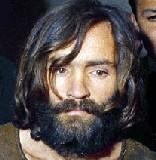
Charles Manson
Murderer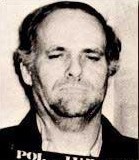 Ervil LeBaron
Murderer · USA · 1972
Ervil Morrell LeBaron (1925 to August 16, 1981) was the leader of a polygamous…
35 victims
Ervil LeBaron
Murderer · USA · 1972
Ervil Morrell LeBaron (1925 to August 16, 1981) was the leader of a polygamous…
35 victims
 Marvin Gray
Murderer · USA · 1975
Marvin Gray was convicted killer who claimed responsibility for 23 slayings and…
23 victims
Marvin Gray
Murderer · USA · 1975
Marvin Gray was convicted killer who claimed responsibility for 23 slayings and…
23 victims
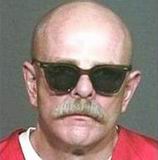 Barry Byron Mills
Murderer · USA · 1979
Barry Byron Mills (born 1948) was a leader of the Aryan Brotherhood (AB) prison…
8 victims
Barry Byron Mills
Murderer · USA · 1979
Barry Byron Mills (born 1948) was a leader of the Aryan Brotherhood (AB) prison…
8 victims
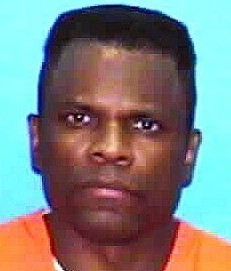 John Errol Ferguson
Murderer · USA · 1977
John Errol Ferguson was sentenced to death and was executed by lethal injection…
8 victims
John Errol Ferguson
Murderer · USA · 1977
John Errol Ferguson was sentenced to death and was executed by lethal injection…
8 victims
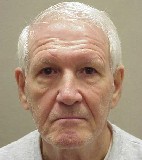 Robert Reldan
Murderer · USA · 1974
Name: Robert Reldan Robert Reldan was sentenced to life in prison on two counts…
8 victims
Robert Reldan
Murderer · USA · 1974
Name: Robert Reldan Robert Reldan was sentenced to life in prison on two counts…
8 victims
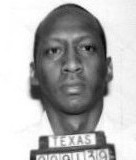 Kia Levoy Johnson
Murderer · USA · 1993
Kia Levoy Johnson was convicted of capital murder of William Matthew Rains in t…
1 victim
Kia Levoy Johnson
Murderer · USA · 1993
Kia Levoy Johnson was convicted of capital murder of William Matthew Rains in t…
1 victim
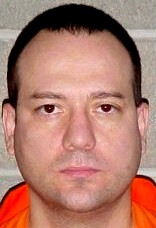 Robert Lee Walden
Murderer · USA · 1991
Robert Lee Walden was a Caucasian defendant. The victim was Hispanic. On June 1…
1 victim
Robert Lee Walden
Murderer · USA · 1991
Robert Lee Walden was a Caucasian defendant. The victim was Hispanic. On June 1…
1 victim
- Gender
- male
- Country
- USA
- Location
- Los Angeles County, California, USA
- Date of birth
- November 12, 1934
- Age at first offence
- 35
- Characteristics
- —
- Victim profile
- Gary Allen Hinman, 34 / Movie actress Sharon Tate, 26 (eight and a half months pregnant) ; Jay Sebring, 35; Wojciech Frykowski, 32; Abigail Folger, 25, and Steven Earl Parent, 18 / Leno LaBianca, 44, and his wife, Rosemary, 38 / Donald Jerome "Shorty" Shea
- Method of murder
- Stabbing with knife
- Date(s) of murder
- July-August 1969
- Years active
- 1969
- Date of arrest
- October 12, 1969
- Status
-
Sentenced to death
Sentenced to death on April 19, 1971; death sentence automatically commuted to life imprisonment after a 1972 California Supreme Court decision
Case record: Charles Manson
Identity
Charles Milles Manson (born November 12, 1934) was an American criminal and musician who led what became known as the Manson Family, a quasi-commune that arose in California in the late 1960s.
Background
Manson was born to an unmarried 16-year-old named Kathleen Maddox in Cincinnati General Hospital, Ohio. Within weeks, he was named Charles Milles Maddox. For a period after his birth, his mother was married to a laborer named William Manson, whose last name the boy was given.
The biological father appears to have been “Colonel Scott,” against whom Kathleen Maddox filed a bastardy suit that resulted in an agreed judgment in 1937. Manson later denied that his biological father had African American ancestry when asked about these official records by attorney Vincent Bugliosi in 1971. Several statements in Manson’s 1951 case file from the seven months he would later spend at the National Training School for Boys in Washington, D.C., alluded to the possibility that “Colonel Scott” was African American. The first two sentences of the family background section read: “Father: unknown. He is alleged to have been a colored cook by the name of Scott, with whom the boy's mother had been promiscuous at the time of pregnancy.”
In the quasi-autobiography, “Colonel Scott” was said to have been “a young drugstore cowboy ... a transient laborer working on a nearby dam project.” The description indicated Kathleen Maddox gave birth to Manson while living in Cincinnati after she had run away from her own home in Ashland, Kentucky.
Manson’s mother was allegedly a heavy drinker. According to a family member, she once sold her son for a pitcher of beer to a childless waitress, from whom his uncle retrieved him some days later.
When Manson’s mother and her brother were sentenced to five years imprisonment for robbing a Charleston, West Virginia, service station in 1939, Manson was placed in the home of an aunt and uncle in McMechen, West Virginia. After her 1942 parole, Kathleen retrieved her son and lived with him in run-down hotel rooms. Manson later characterized her physical embrace of him on the day she returned from prison as his sole happy childhood memory.
In 1947, Kathleen Maddox tried to have her son placed in a foster home but failed because no such home was available. The court placed Manson in Gibault School for Boys, in Terre Haute, Indiana. After 10 months, he fled from there to his mother, who rejected him.
First offences and juvenile confinement
Manson committed burglary of a grocery store and obtained cash to rent a room. A string of burglaries of other stores—including one from which he stole a bicycle—ended when he was caught in the act. He was sent to an Indianapolis juvenile center. His escape after one day led to his recapture and his placement in Boys Town. Four days after his arrival there, he escaped with another boy. The pair committed two armed robberies on their way to the home of the other boy’s uncle.
After he was caught during the second of two subsequent break-ins of grocery stores, Manson was sent, at age 13, to the Indiana Boys School. He later claimed he was brutalized sexually and otherwise there. After many failed attempts, he escaped with two other boys in 1951.
In Utah, the three were caught driving to California in cars they had stolen. They had burglarized several gas stations along the way. For the federal crime of taking a stolen car across a state line, Manson was sent to Washington, D.C.’s National Training School for Boys.
Despite four years of schooling and an I.Q. of 109 (later tested at 121), he was illiterate. A caseworker deemed him aggressively antisocial.
First imprisonment
In October 1951, on a psychiatrist’s recommendation, Manson was transferred to Natural Bridge Honor Camp, a minimum security institution. Less than a month before a scheduled February 1952 parole hearing, he “took a razor blade and held it against another boy's throat while he sodomized him.”
He was transferred to the Federal Reformatory in Petersburg, Virginia, where he was considered “dangerous.” In September 1952, disciplinary offences resulted in his transfer to the Federal Reformatory at Chillicothe, Ohio, a more secure institution. About a month after the transfer, he became almost a model resident. Good work habits and a rise in his educational level from the lower fourth to the upper seventh grade won him a May 1954 parole.
After temporarily honoring a parole condition that he live with his aunt and uncle in West Virginia, Manson moved in with his mother in West Virginia.
In January 1955, he married a hospital waitress named Rosalie Jean Willis. He supported their marriage via small-time jobs and auto theft.
Around October, about three months after he and his pregnant wife arrived in Los Angeles in a car he had stolen in Ohio, Manson was charged with a federal crime for taking the vehicle interstate. After a psychiatric evaluation, he was given five years probation.
His subsequent failure to appear at a Los Angeles hearing on an identical charge filed in Florida resulted in his March 1956 arrest in Indianapolis. His probation was revoked; he was sentenced to three years’ imprisonment at Terminal Island, San Pedro, California.
While Manson was in prison, Rosalie gave birth to their son, Charles Manson, Jr. During his first year at Terminal Island, he received visits from Rosalie and his mother, who were living together in Los Angeles. In March 1957, when the visits from his wife ceased, his mother informed him Rosalie was living with another man. Less than two weeks before a scheduled parole hearing, Manson tried to escape by stealing a car; he was given five years probation, and his parole was denied.
Second imprisonment
Manson received five years parole in September 1958. In the same year, Rosalie received a decree of divorce. By November, he was pimping a 16-year-old girl and receiving additional support from a girl with wealthy parents.
In September 1959, he pleaded guilty to a charge of attempting to cash a forged U.S. Treasury check. He received a 10-year suspended sentence and probation after a young woman with an arrest record for prostitution made a “tearful plea” before the court that she and Manson were “deeply in love... and would marry if Charlie were freed.”
Before the year ended, the woman married Manson, possibly so testimony against him would not be required. Her name was Leona; as a prostitute, she had used the name Candy Stevens.
After Manson took her and another woman from California to New Mexico for purposes of prostitution, he was held and questioned for violation of the Mann Act. He was released, and he suspected that the investigation had not ended. When he disappeared in violation of his probation, a bench warrant was issued; an April 1960 indictment for violation of the Mann Act followed.
Manson was arrested in Laredo, Texas, in June when one of the women was arrested for prostitution. He was returned to Los Angeles. For violation of his probation on the check-cashing charge, he was ordered to serve his 10-year sentence.
In July 1961, after a year spent unsuccessfully appealing the revocation of his probation, Manson was transferred from the Los Angeles County Jail to the United States Penitentiary at McNeil Island. Although the Mann Act charge had been dropped, the attempt to cash the Treasury check remained a federal offence. His September 1961 annual review noted he had a “tremendous drive to call attention to himself,” an observation echoed in September 1964.
In 1963, Leona was granted a divorce, alleging that she and Manson had had a son, Charles Luther. In June 1966, Manson was sent again to Terminal Island in preparation for early release. By March 21, 1967, his release day, he had spent more than half of his 32 years in prisons and other institutions. He told authorities that prison had become his home and requested unsuccessfully that he be permitted to stay.
The offence and subsequent murders
Helter Skelter and leadership
After his release day, Manson requested and was granted permission to move to San Francisco, where, with the help of a prison acquaintance, he moved into an apartment in Berkeley. In prison, bank robber Alvin Karpis taught him to play steel guitar. Living mostly by panhandling, he met Mary Brunner, a 23-year-old graduate of the University of Wisconsin–Madison. Brunner worked as an assistant librarian at UC Berkeley, and Manson moved in with her.
A second-hand account stated Manson overcame her resistance to his bringing other women in to live with them. Soon they were sharing Brunner’s residence with 18 other women. Manson established himself as a guru in San Francisco’s Haight-Ashbury during 1967’s “Summer of Love.”
Manson expounded a philosophy that included some of the Scientology he had studied in prison and soon had his first group of young followers, most of them female. Upon a staff evaluation of Manson when he entered prison in July 1961 at the U.S. penitentiary in McNeil Island, he entered “Scientologist” as his religion.
Before the summer was out, Manson and eight or nine followers piled into an old school bus reworked in hippie style, with colored rugs and pillows in place of the many seats they had removed. They roamed as far north as Washington state, then southward through Los Angeles, Mexico, and the southwest.
After returning to the Los Angeles area, they lived in Topanga Canyon, Malibu, and Venice. An alternative account stated that Manson acquired Family members during months of travels undertaken in part in a Volkswagen van, with Brunner apparently accompanying him. In that account, it was November when the school bus set out from San Francisco with the enlarged group.
Spahn Ranch
Manson established a base for the group at Spahn’s Movie Ranch not far from Topanga Canyon in August 1968 after Wilson’s manager told the Family to move out of Wilson’s home; the entire Family relocated to the ranch. The ranch had been a television and movie set for Western productions, but by the late 1960s the buildings had deteriorated and it earned money primarily by selling horseback rides. Family members did helpful work around the grounds.
Manson ordered the Family’s women, including Lynette “Squeaky” Fromme, to occasionally have sex with George Spahn, described as a nearly blind, 80-year-old owner. The women acted as seeing-eye guides for Spahn. In exchange, Spahn allowed Manson and his group to live at the ranch for free. Squeaky acquired her nickname because she often squeaked when Spahn pinched her thigh.
Charles Watson joined the group at Spahn’s ranch. Watson met Manson at Dennis Wilson’s house and gave Wilson a ride while Wilson was hitchhiking after his cars had been wrecked. Spahn nicknamed Watson “Tex” because of his pronounced Texan drawl.
“Helter Skelter” ideology and predictions
In the first days of November 1968, Manson established the Family at alternative headquarters in Death Valley’s environs, occupying two unused or little-used ranches, Myers and Barker. Myers was owned by the grandmother of a new woman in the Family, and Barker was owned by an elderly local woman whom Manson presented himself to as musicians in need of a congenial place. The woman agreed to let them stay if they fixed up things, and Manson honored her with one of the Beach Boys’ gold records, given by Dennis Wilson.
While at Spahn Ranch, no later than December, Manson and Watson visited a Topanga Canyon acquaintance who played them the Beatles’ White Album, recently released.
Manson was obsessed with the Beatles. At McNeil, he had told fellow inmates including Alvin Karpis that he could surpass the group in fame. To the Family, he spoke of the group as “the soul” and “part of 'the hole in the infinite.'”
Manson had been saying that racial tension between blacks and whites was growing and that blacks would rise up in rebellion in America’s cities. He emphasized Martin Luther King, Jr.’s assassination on April 4, 1968. On a cold New Year’s Eve at Myers Ranch, Family members gathered around a large fire and listened as Manson explained that the social turmoil he had predicted had also been predicted by the Beatles. He declared that White Album songs told it all “although in code.” He maintained that the album was directed at the Family itself, “an elect group” instructed to preserve the worthy from impending disaster.
In early January 1969, the Family escaped the desert’s cold and positioned itself to monitor L.A.’s supposed tension by moving to a canary-yellow home in Canoga Park near Spahn Ranch. Because the locale would allow the group to remain “submerged beneath the awareness of the outside world,” Manson called it the Yellow Submarine, another Beatles reference.
At the Canoga Park house, Family members prepared for an impending apocalypse which, around a campfire, Manson had termed “Helter Skelter,” after the song of that name. By February, his vision was complete: the Family would create an album whose songs would trigger predicted chaos, with retaliation involving “ghastly murders of whites by blacks,” and a split between racist and non-racist whites leading whites to self-annihilation. Blacks’ triumph would precede their being ruled by the Family, which would ride out the conflict in “the bottomless pit”—a secret city beneath Death Valley.
Dennis Wilson, Melcher and connections
The events culminating in the murders were set in motion in late spring 1968, when Dennis Wilson picked up two hitchhiking Manson women and brought them to his Pacific Palisades house for a few hours. Wilson later returned from a night recording session early the following morning and was greeted in the driveway by Manson. Wilson asked the stranger if he intended to hurt him. Manson assured him he had no such intent and began kissing Wilson’s feet. Inside the house, Wilson discovered 12 strangers, mostly women. Over the next few months, as their number doubled, the Family members who became part of Wilson’s Sunset Boulevard household cost him approximately $100,000, including a large medical bill for gonorrhea and $21,000 for accidental destruction of his uninsured car borrowed by the Family. Wilson sang and talked with Manson, with Wilson’s women treated as servants to them both.
Wilson paid for studio time to record songs written and performed by Manson and introduced Manson to entertainment acquaintances including Gregg Jakobson, Terry Melcher, and Rudi Altobelli. Jakobson was impressed by “the whole Charlie Manson package” of artist/lifestylist/philosopher and also paid to record Manson material. Altobelli owned a house he soon rented to actress Sharon Tate and Roman Polanski. In Manson in His Own Words, the account was that Manson met Wilson at a friend’s San Francisco house to obtain marijuana; Wilson gave Manson his Sunset Boulevard address and invited him to stop by in Los Angeles.
Encounter with Sharon Tate and Roman Polanski
On March 23, 1969, Manson entered, uninvited, upon 10050 Cielo Drive, known as Melcher’s residence. As of that February, tenants were Sharon Tate and Roman Polanski. Manson was met by Shahrokh Hatami, a photographer and Tate’s friend, who had been there to photograph Tate in advance of her departure for Rome the next day. Hatami asked what Manson wanted. When Manson told Hatami he was looking for someone whose name Hatami did not recognize, Hatami informed him the place was the Polanski residence and advised him to try “the back alley,” meaning the path to the guest house beyond the main house.
Hatami went down on the front walk to confront Manson. Tate appeared behind Hatami in the house’s front door and asked who was calling. Hatami said a man was looking for someone. Hatami and Tate remained on their positions while Manson, without a word, went back to the guest house, returned a minute or two later, and left. That evening, Manson returned and again went back to the guest house.
This time he presumed to enter the enclosed porch and spoke with Rudi Altobelli, who was coming out of the shower. Manson asked for Melcher; Altobelli felt Manson had come looking for him and lied that he did not know Melcher’s new address. Altobelli said himself was in the entertainment business and expressed a wish that Manson not disturb his tenants. Altobelli lied that he would be gone for more than a year even though he was flying with Tate to Rome the next day. Altobelli and Tate maintained that Manson had gone back the day before. As Altobelli flew with Tate, Tate asked whether “that creepy-looking guy” had gone back to the guest house the day before.
Crowe shooting
On May 18, 1969, Terry Melcher visited Spahn Ranch to hear Manson and the women sing. Melcher arranged a subsequent visit where he brought a friend with a mobile recording unit, but Melcher did not record the group.
By June, Manson told the Family they might have to show blacks how to start “Helter Skelter.” When Manson tasked Watson with obtaining money intended to help the Family prepare, Watson defrauded Bernard “Lotsapoppa” Crowe, a black drug dealer. Crowe threatened to wipe out everyone at Spahn Ranch. On July 1, 1969, Manson shot Crowe at his Hollywood apartment. Manson’s mistaken belief that he had killed Crowe was seemingly confirmed by a news report of a dumped body of a Black Panther in Los Angeles; Crowe was not a Black Panther. Believing retaliation from the Black Panther group was coming, Manson turned Spahn Ranch into a defensive camp with night patrols of armed guards. Tex Watson later wrote: “[B]lackie was trying to get at the chosen ones.”
Hinman murder
On July 25, 1969, Manson sent Bobby Beausoleil along with Mary Brunner and Susan Atkins to the house of Gary Hinman to persuade him to turn over money Manson thought Hinman had inherited. Beausoleil, Brunner, and Atkins held Hinman hostage for two days. During that time, Manson showed up with a sword to slash his ear. After that, Beausoleil stabbed Hinman to death, ostensibly on Manson’s instruction.
Before leaving the Topanga Canyon residence, Hinman’s blood was used to write “Political piggy” on the wall and to draw a panther paw, a Black Panther symbol. In magazine interviews of 1981 and 1998–99, Beausoleil stated he went to Hinman’s to recover money paid to Hinman for drugs that had supposedly been bad, and he added that Brunner and Atkins, unaware of his intent, went along idly to visit Hinman. Atkins, in her 1977 autobiography, wrote that Manson told Beausoleil, Brunner, and her to go and get the supposed inheritance—$21,000—and that if she wanted to “do something important,” she could kill Hinman and get his money.
Beausoleil was arrested on August 6, 1969, after he had been caught driving Hinman’s car. Police found the murder weapon in the tire well. Two days later, Manson told Family members at Spahn Ranch, “Now is the time for Helter Skelter.”
Tate murders
On the night of August 8, Manson directed Watson to take Atkins, Linda Kasabian, and Patricia Krenwinkel to “that house where Melcher used to live” and “totally destroy everyone in [it], as gruesome as you can.” Watson instructed the women to do as he instructed.
Krenwinkel was an early Family member, one of the hitchhikers allegedly picked up by Dennis Wilson. The occupants of the target house were Sharon Tate, Roman Polanski (Tate’s husband, in London), Tate’s friend and former lover Jay Sebring, Wojciech Frykowski (Polanski’s friend and aspiring screenwriter), and Frykowski’s lover Abigail Folger, heiress to the Folger coffee fortune; Tate was eight and a half months pregnant. Tate’s husband returned to the United States only three weeks earlier.
Watson climbed a telephone pole near the gate and cut the phone line. It was around midnight and into August 9, 1969. The group backed down to the bottom of the hill, parked, and walked back up. Thinking the gate might be electrified or rigged with an alarm, they climbed a brushy embankment on the right and dropped onto the grounds. Headlights came their way; Watson ordered the women to lie in the bushes. Watson then ordered 18-year-old student and hi-fi enthusiast Steven Parent to halt. Watson leveled a 22-caliber revolver at Parent. Parent begged Watson not to hurt him and claimed he would not say anything. Watson slashed at Parent with a knife, gave a defensive slash wound on the palm of his hand severing tendons and tearing the boy’s watch off, then shot him four times in the chest and abdomen.
Watson ordered the women to push the car further up the driveway. After traversing the front lawn and having Kasabian search for an open window, Watson cut the screen of a window and let Atkins and Krenwinkel through the front door. Watson whispered to Atkins, and Frykowski awoke on the living-room couch. Watson kicked Frykowski in the head. When Frykowski asked who Watson was and what he was doing there, Watson replied, “I’m the devil, and I’m here to do the devil’s business.”
Watson tied Tate and Sebring together by their necks with rope slung over a beam. Sebring’s protest—his second—of rough treatment of the pregnant Tate prompted Watson to shoot him. Folger was taken momentarily back to her bedroom for her purse, from which she gave the intruders $70. Watson stabbed Sebring seven times as Folger was taken back. Frykowski’s hands were bound with a towel; he struggled with Atkins, who stabbed at his legs with a knife with which she had been guarding him. As Frykowski fought toward and out the front door onto the porch, Watson joined in against him. Watson struck him over the head with the gun multiple times, stabbed him repeatedly, and shot him twice. Watson broke the gun’s right grip in the process.
Kasabian was drawn outside by “horrifying sounds.” In an effort to halt the massacre, she told Atkins falsely that someone was coming. Folger escaped from Krenwinkel and fled out a bedroom door to the pool area. Folger was pursued to the front lawn by Krenwinkel, who stabbed and finally tackled her. Watson dispatched Folger; her assailants had stabbed her 28 times. Watson murdered Frykowski with a final flurry of stabbing as he struggled across the lawn. Frykowski was stabbed a total of 51 times.
Tate pleaded to be allowed to live long enough to have her baby, offered herself as a hostage to save her unborn child, and her killers would not allow it. Tate was stabbed 16 times. Watson later wrote that Tate cried, “Mother... mother...” as she was being killed.
Earlier, as the Family members headed out from Spahn Ranch, Manson had told the women to “leave a sign... something witchy”. Using the towel that had bound Frykowski’s hands, Atkins wrote “pig” on the house’s front door in Tate’s blood. The killers changed out of bloody clothes on the way home; clothes and weapons were ditched in the hills.
In initial confessions to cellmates of hers at Sybil Brand Institute, Atkins would say she killed Tate. Later statements to her attorney, prosecutor Vincent Bugliosi, and before a grand jury indicated Tate had been stabbed by Tex Watson. In his 1978 autobiography, Watson said that he stabbed Tate and that Atkins never touched her. Watson acknowledged that he falsely testified that he did not stab her because he knew the prosecutor, Bugliosi, and the jury had been convinced Atkins had stabbed Tate.
LaBianca murders
The next night, six Family members rode out at Manson’s instruction: Leslie Van Houten, Steve “Clem” Grogan, and the four from the previous night. Manson accompanied them “to show [them] how to do it.” After hours, Manson directed Kasabian to 3301 Waverly Drive, described as the home of supermarket executive Leno LaBianca and his wife, Rosemary, co-owner of a dress shop. It was in the Los Feliz section of Los Angeles and was next door to another house where Manson and Family members had attended a party the previous year.
According to Atkins and Kasabian, Manson disappeared up the driveway and returned to say he had tied up the occupants, then sent Watson up with Krenwinkel and Van Houten. In Watson’s autobiography, Watson stated that having gone up alone, Manson returned to take him to the house with him. After Manson pointed out a sleeping man through a window, the two entered through an unlocked back door.
Watson stated at trial he “went along with” the women’s account so he would look less responsible. As Watson told it, Manson roused sleeping Leno LaBianca at gunpoint, bound his hands with a leather thong, and Watson covered the couple’s heads with pillowcases at Manson’s instruction. Watson bound these with lamp cords. Manson left, sending Krenwinkel and Leslie Van Houten into the house with instructions that the couple be killed.
After leaving Spahn Ranch Watson had complained to Manson about the inadequacy of the previous night’s weapons. Now Watson began stabbing Leno LaBianca in the living room with a chrome-plated bayonet; the first thrust went into the man’s throat. After sounds of a scuffle in the bedroom, Watson went there and found Mrs. LaBianca keeping women at bay by swinging a lamp tied to her neck. Watson subdued her with several stabs of the bayonet, returned to the living room, and resumed attacking Leno, stabbing him the balance of 12 times with the bayonet.
Watson stated he carved “WAR” on Leno’s exposed abdomen. Atkins later gave testimony described as unclear, possibly indicating she believed Krenwinkel carved the word; a later ghost-written newspaper account said Watson carved it.
Back in the bedroom, Watson found Krenwinkel stabbing Rosemary LaBianca with a knife from the LaBianca kitchen. Watson stated that heeded Manson’s instruction that each woman play a part, he told Van Houten to stab Mrs. LaBianca as well; Van Houten stabbed her approximately 16 times in the back and exposed buttocks. At trial, Van Houten would claim uncertainly that Rosemary LaBianca was dead when she stabbed her. Evidence showed many of Mrs. LaBianca’s 41 stab wounds were inflicted post-mortem.
While Watson cleaned off the bayonet and showered, Krenwinkel wrote “Rise” and “Death to pigs” on the walls and “Healter [sic] Skelter” on the refrigerator door in LaBianca blood. Krenwinkel gave Leno LaBianca 14 puncture wounds with an ivory-handled, two-tined carving fork, left jutting out of his stomach, and planted a steak knife in his throat.
Manson then directed Kasabian to drive to a Venice home of an actor acquaintance of hers, described as another “piggy.” Depositing the second trio of Family members at the actor acquaintance’s apartment building, Manson drove back to Spahn Ranch and left the LaBianca killers to hitchhike home. Kasabian thwarted this murder plan by deliberately knocking on the wrong apartment door and waking a stranger. As the group abandoned the plan, Susan Atkins defecated in the stairwell.
Investigation
The Tate murders became news on August 9, 1969. Winifred Chapman, the Polanskis’ housekeeper, arrived for work that morning and discovered the murder scene. On August 10, detectives of the Los Angeles County Sheriff’s Department—having jurisdiction in the Hinman case—told LAPD detectives assigned to the Tate case of bloody writing at the Hinman house.
The Tate team ignored the similarities and thought the murders could be a consequence of a drug transaction. Tate autopsies were underway and the LaBianca bodies were not yet discovered.
Steven Parent, the shooting victim in the Tate driveway, was determined to have been an acquaintance of William Garretson, who lived in the guest house. Garretson was a young man hired by Rudi Altobelli to care for the property while Altobelli was away. Parent had been leaving Cielo Drive after a visit to Garretson. Garretson briefly was held as a Tate suspect; he told police he had not seen or heard anything on the murder night. He was released on August 11, 1969, after undergoing a polygraph examination indicating he was not involved. Decades later, Garretson stated he had witnessed part of the murders, consistent with what the examination suggested.
The LaBianca crime scene was discovered at about 10:30 p.m. on August 10, about 19 hours after the murders. Fifteen-year-old Frank Struthers—Rosemary’s son from a prior marriage and Leno’s stepson—returned from a camping trip and was disturbed by the home’s exterior condition. He called his older sister and her boyfriend; the boyfriend, Joe Dorgan, accompanied him into the home and discovered Leno’s body. Rosemary’s body was found by investigating police officers.
On August 12, 1969, LAPD told the press it had ruled out any connection between the Tate and LaBianca homicides.
On August 16, 1969, the sheriff’s office raided Spahn Ranch and arrested Manson and 25 others as suspects in a major auto theft ring involving stealing Volkswagens and converting them into dune buggies. Weapons were seized, but because the warrant was misdated the group was released a few days later.
In a report at the end of August when leads had gone nowhere, LaBianca detectives noted a possible connection between the bloody writings at the LaBianca house and the Beatles’ most recent album.
Still working separately from the Tate team, LaBianca detectives checked in mid-October with the sheriff’s office about similar crimes and learned of the Hinman case. They learned that Hinman detectives had spoken with Beausoleil’s girlfriend, Kitty Lutesinger, who had been arrested days earlier with members of the Manson Family at desert ranches. Authorities had raided the Myers and Barker ranches after clues were left unintentionally when Family members burned an earthmover owned by Death Valley National Monument. Raiders found stolen dune buggies and other vehicles and arrested two dozen people including Manson. A Highway Patrol officer found Manson hiding in a cabinet beneath Barker’s bathroom sink.
A month after speaking with Lutesinger, LaBianca detectives contacted members of a motorcycle gang she said Manson tried to enlist as bodyguards while the Family was at Spahn Ranch. A dormitory mate of Susan Atkins later informed LAPD of the Family’s involvement. Atkins had been arrested at Barker after confirming to sheriff’s detectives she was involved in Hinman’s murder. Atkins was transferred to Sybil Brand Institute and began talking to bunkmates Ronnie Howard and Virginia Graham, to whom she gave accounts of events in which she had been involved.
Arrest and warrants
On December 1, 1969, acting on information from these sources, LAPD announced warrants for Watson, Krenwinkel, and Kasabian in the Tate case; the suspects’ involvement in the LaBianca murders was noted.
Manson and Atkins were already in custody and were not mentioned; the connection between the LaBianca case and Van Houten among those arrested near Death Valley had not yet been recognized.
Watson and Krenwinkel were under arrest in McKinney, Texas, and Mobile, Alabama, having been picked up on notice from LAPD. Kasabian voluntarily surrendered to authorities in Concord, New Hampshire, on December 2 after being informed a warrant was out for her arrest.
Evidence and forensic leads
Physical evidence including Krenwinkel’s and Watson’s fingerprints collected by LAPD at Cielo Drive was augmented by evidence recovered by the public.
On September 1, 1969, Watson’s distinctive .22-caliber Hi Standard “Buntline Special” revolver used on Parent, Sebring, and Frykowski had been found and given to police by Steven Weiss, a 10-year-old who lived near the Tate residence. In mid-December, Los Angeles Times published a crime account based on information Susan Atkins gave her attorney. Weiss’s father made phone calls that prompted LAPD to locate the gun in its evidence file and connect it via ballistics tests.
Acting on the same newspaper account, a local ABC television crew located and recovered bloody clothing discarded by the Tate killers. The knives discarded en route from the Tate residence were never recovered despite a search by some of the same crewmen and, months later, by LAPD. A knife found behind the cushion of a chair in the Tate living room was apparently Atkins’s, lost in the course of the attack.
Trial
Commencement and charged counts
The trial began June 15, 1970. Kasabian was the prosecution’s main witness. Along with Manson, Atkins, and Krenwinkel, she had been charged with seven counts of murder and one of conspiracy. Because Kasabian had not participated in the killings, she was granted immunity in exchange for testimony detailing the nights of the crimes.
Originally a deal had been made with Atkins in which the prosecution agreed not to seek the death penalty against her in exchange for her grand jury testimony that secured the indictments. Once Atkins repudiated that testimony, the deal was withdrawn.
Because Van Houten participated only in the LaBianca killings, she was charged with two counts of murder and one of conspiracy.
Representation and courtroom conduct
Judge William Keene initially granted Manson permission to act as his own attorney, but because of Manson’s conduct including violations of a gag order and submission of “outlandish” and “nonsensical” pretrial motions, the permission was withdrawn before the trial’s start. Manson filed an affidavit of prejudice against Keene; Keene was replaced by Judge Charles H. Older.
On Friday, July 24, the first day of testimony, Manson appeared with an “X” carved into his forehead and issued a statement that he was “considered inadequate and incompetent to speak or defend [him]self” and that he had “X’d [him]self from [the establishment's] world.” Over the following weekend, female defendants duplicated the mark on their foreheads. Most Family members did so within another day or so. Manson’s X was eventually replaced by a swastika.
During the trial, Family members loitered near courthouse entrances and corridors. The prosecution subpoenaed them as prospective witnesses so they could not enter the courtroom while others testified. When the group established itself in vigil on the sidewalk, each of the “hard-core” members wore a sheathed hunting knife carried legally and each was identifiable by the X on his or her forehead.
Some Family members attempted to dissuade witnesses from testifying. Prosecution witnesses Paul Watkins and Juan Flynn were threatened; Watkins was badly burned in a suspicious fire in his van. Former Family member Barbara Hoyt agreed to accompany Ruth Ann Moorehouse to Hawaii. In Hawaii, Moorehouse allegedly gave Hoyt a hamburger spiked with several doses of LSD. Hoyt was found sprawled on a Honolulu curb in a drugged semi-stupor, taken to hospital, and did her best to identify herself as a witness in the Tate-LaBianca murder trial. Before the incident, Hoyt had been reluctant; afterward, her reticence disappeared.
On August 4, despite precautions, Manson flashed the jury a Los Angeles Times front page with the headline “Manson Guilty, Nixon Declares,” referencing Nixon’s previous day remark decrying media glamorization of Manson. The jurors contended the headline had not influenced them. The next day, female defendants stood up and said in unison that, in light of Nixon’s remark, “there was no point in going on with the trial.”
On October 5, Manson was denied permission to question a prosecution witness whom defense attorneys had declined to cross-examine. Manson leaped over the defense table and attempted to attack the judge. Bailiffs wrestled him to the ground; he was removed from the courtroom, and the female defendants rose and began chanting in Latin. Thereafter, Older allegedly began wearing a revolver under his robes.
On November 16, the prosecution rested its case. Three days later, after dismissal motions, the defense rested as well without calling any witness. Atkins, Krenwinkel, and Van Houten demanded their right to testify. In chambers, women’s lawyers told the judge clients wanted to testify that they planned and committed the crimes and that Manson had not been involved. The prosecutor viewed it as Manson advising them to testify this way to save himself. Krenwinkel said later in a 1987 documentary that “The entire proceedings were scripted — by Charlie.”
The next day Manson testified. To avoid violating People v. Aranda by implicating co-defendants, the jury was removed. Manson spoke for more than an hour and stated, among other things, that “the music is telling the youth to rise up against the establishment.” He stated, “Why blame it on me? I didn’t write the music.” He also said: “To be honest with you,” Manson stated, “I don’t recall ever saying 'Get a knife and a change of clothes and go do what Tex says.' ”
After closing arguments approached, attorney Ronald Hughes disappeared during a weekend trip. Maxwell Keith was appointed to represent Van Houten in Hughes’s absence, requiring a delay of more than two weeks to allow Keith to familiarize himself with voluminous transcripts. Shortly after Christmas, disruptions of the prosecution closing argument by defendants led Older to ban the four defendants from the courtroom for the remainder of the guilt phase. Older said it had become obvious the defendants acted in collusion and were putting on a performance.
Motive theory and “Helter Skelter” triggering
The prosecution placed triggering of “Helter Skelter” as the main motive. Bloody White Album references—“pig,” “rise,” “helter skelter”—were correlated with testimony about Manson predictions that murders blacks committed at the outset of Helter Skelter involved writing “pigs” in victims’ blood.
Testimony that Manson said “now is the time for Helter Skelter” was supplemented with Kasabian’s testimony that on the night of the LaBianca murders Manson considered discarding Rosemary LaBianca’s wallet in the street of a black neighborhood. Kasabian testified he “wanted a black person to pick it up and use the credit cards so that the people, the establishment, would think it was some sort of an organized group that killed these people.” Kasabian concealed the wallet in the women’s rest room of a service station near a black area. Kasabian said Manson told her: “I want to show blackie how to do it,” as the Family drove along after leaving the LaBianca house.
Verdicts and sentencing
On January 25, 1971, guilty verdicts were returned against the four defendants on each of the 27 separate counts against them. On March 29, 1971, the jury returned verdicts of death against all four defendants on all counts. On April 19, 1971, Judge Older sentenced the four to death.
The record described that during the penalty phase, jurors saw the defence they had expected. Atkins, Krenwinkel, and Van Houten testified murders were conceived as “copycat” versions of the Hinman murder for which Atkins took credit. They said the killings were intended to draw suspicion away from Bobby Beausoleil by resembling the crime for which he was jailed. The plan was allegedly the work of someone “in love with Beausoleil”—Linda Kasabian—rather than Manson.
The “copycat” scenario was rejected. Midway through the penalty phase, Manson shaved his head and trimmed his beard to a fork and told the press: “I am the Devil, and the Devil always has a bald head.” The female defendants refrained from shaving until after jurors retired to weigh the state’s request for the death penalty. The effort to exonerate Manson via the copycat scenario failed.
On the day verdicts recommending death were returned, Ronald Hughes’s badly decomposed body was found wedged between two boulders in Ventura County. It was rumored, although never proven, that Hughes was murdered by the Family possibly because he had stood up to Manson and refused to allow Van Houten to take the stand and absolve Manson. Sandra Good stated that Hughes was “the first of the retaliation murders.”
Appeal and legal status change
Manson’s death sentence was automatically commuted to life imprisonment after a 1972 decision by the Supreme Court of California temporarily eliminated the state’s death penalty. The narrative referenced California v. Anderson, 493 P.2d 880, 6 Cal. 3d 628 (Cal. 1972), in which the California Supreme Court abolished the death penalty in that state.
Manson was described as currently incarcerated at Corcoran State Prison after the eventual reestablishment of capital punishment did not affect him.
Other convictions connected to Manson’s case
After his Tate/LaBianca convictions, a separate 1971 trial took place after which Manson was found guilty of the murders of Gary Hinman and Donald “Shorty” Shea and was given a life sentence. Shea was a Spahn Ranch stuntman and horse wrangler killed approximately 10 days after the August 16, 1969 sheriff’s raid on the ranch. Manson suspected Shea helped set up the raid. Separate trials found Family members Bruce Davis and Steve “Clem” Grogan guilty of Shea’s murder.
Subsequent incarceration, parole hearings, and later events
On September 5, 1975, Squeaky Fromme attempted to assassinate U.S. President Gerald Ford in Sacramento. Fromme and Manson follower Sandra Good moved to be near Manson while he was incarcerated at Folsom State Prison. Good’s actions led to her conviction for conspiring to send threatening communications through the United States mail and transmitting death threats by way of interstate commerce against corporate executives and U.S. government officials concerning supposed environmental dereliction. Fromme was sentenced to 15 years to life under U.S. Code Title 18, chapter 84 (1965) for attempting to assassinate the President of the United States.
In 1977, authorities learned the precise location of the remains of Shorty Shea and that, contrary to Family claims, Shea had not been dismembered and buried in several places. Steve Grogan told a prosecutor Shea’s corpse had been buried in one piece and drew a map pinpointing where it was recovered. Grogan became the first, and as of 2009 the only, person convicted of Manson-ordered murders to be paroled in 1985.
On September 25, 1984, while imprisoned at the California Medical Facility at Vacaville, Manson was severely burned when a fellow inmate poured paint thinner on him and set him alight. The fellow inmate, Jan Holmstrom, explained Manson objected to his Hare Krishna chants and verbally threatened him. Manson suffered second- and third-degree burns over 20 percent of his body and recovered.
In a 1994 conversation with Manson prosecutor Vincent Bugliosi, Catherine Share stated her penalty-phase testimony had been a fabrication intended to save Manson from the gas chamber and was given on Manson’s explicit direction. Share’s testimony had introduced a copycat-motive story in which the Tate-LaBianca murders were attributed to Linda Kasabian’s idea; the testimony of three female defendants echoed this.
In 1997, Manson was found to have been trafficking in drugs by a prison disciplinary committee, and in August 1997 he was moved from Corcoran State Prison to Pelican Bay State Prison.
His California Department of Corrections and Rehabilitation inmate number at Corcoran State Prison was B33920.
Manson’s first parole hearing took place on November 16, 1978, at California Medical Facility in Vacaville. He was denied parole for the 12th time on April 11, 2012. Prison officials argued he had controlling behavior and mental health issues including schizophrenia and paranoid delusional disorder and was too great a danger to be released. It was determined he would not be reconsidered for parole for another 15 years, when he would be 92 years old. The narrative stated he would be eligible to re-apply for parole in 2012.
A footnote to California v. Anderson described that any prisoner under sentence of death could file a petition for writ of habeas corpus in superior court to modify the judgment to provide alternative punishment of life imprisonment or life without possibility of parole as specified by statute for the crime for which he was sentenced to death. This was described as making Manson eligible to apply for parole after seven years’ incarceration.
Voice and leadership description
Prosecutors described Manson and his followers as trying to incite a race war he believed was prophesized in the Beatles’ song “Helter Skelter.”
Manson was associated with “Helter Skelter,” a term he took from the song “Helter Skelter,” written and recorded by The Beatles. He misconstrued the lyrics as about an apocalyptic race war intended to precipitate the murders.
Cultural and media references (as recorded facts)
Recordings of songs written and performed by Manson were released commercially after he was charged. Artists including Guns N’ Roses and Marilyn Manson covered his songs in later decades.
On March 6, 1970, the day a court vacated Manson’s status as his own attorney, LIE, an album of Manson music, was released. The record included “Cease to Exist,” a Manson composition the Beach Boys had recorded with modified lyrics, and included the title “Never Learn Not to Love.” Over the next couple of months only about 300 of the album’s 2,000 copies sold.
In the 1980s Manson gave three notable interviews: the first recorded at California Medical Facility and aired June 13, 1981 by Tom Snyder for NBC’s The Tomorrow Show; the second recorded at San Quentin and aired March 7, 1986 by Charlie Rose for CBS News Nightwatch and won an Emmy Award for “Best Interview” in 1987; the last with Geraldo Rivera in 1988 as part of Rivera’s prime-time special on Satanism. By at least the Snyder interview, Manson’s forehead bore a swastika in the spot where the X had been carved during trial.
On October 4, 2012, Bruce Davis was recommended for parole at his 27th parole hearing. He still required the final approval of the governor’s office. In 2010, Governor Arnold Schwarzenegger reversed the board’s previous finding in favor of Davis, denying parole for two more years. On March 1, 2013, Governor Jerry Brown denied parole for Davis.
Final status
Manson remained incarcerated at Corcoran State Prison after automatic commutation of his death sentence to life imprisonment following a 1972 California Supreme Court decision.
Spotted an error, or have more information about this case?