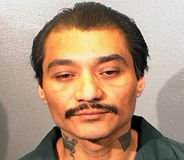
Alfredo Prieto
Serial killer Glen Edward Rogers
Serial killer · USA · 1993
Glen Edward Rogers was a spree killer whose cross-country rampage in 1994-95 le…
70 victims
Glen Edward Rogers
Serial killer · USA · 1993
Glen Edward Rogers was a spree killer whose cross-country rampage in 1994-95 le…
70 victims
 Michael Swango
Serial killer · USA · 1981
Michael Swango (Joseph Michael Swango) was a physician and American serial kill…
60 victims
Michael Swango
Serial killer · USA · 1981
Michael Swango (Joseph Michael Swango) was a physician and American serial kill…
60 victims
 Efren Saldivar
Serial killer · USA · 1989
Efren Saldivar (born 30 September 1969) was an American serial killer who murde…
50 victims
Efren Saldivar
Serial killer · USA · 1989
Efren Saldivar (born 30 September 1969) was an American serial killer who murde…
50 victims
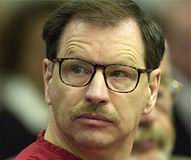 Gary Ridgway
Serial killer · USA · 1982
Gary Leon Ridgway Ridgway was born 18-February-1949 in Salt Lake City, UT. He w…
49 victims
Gary Ridgway
Serial killer · USA · 1982
Gary Leon Ridgway Ridgway was born 18-February-1949 in Salt Lake City, UT. He w…
49 victims
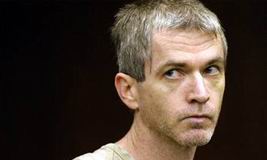 Charles Cullen
Serial killer · USA · 1984
Charles Cullen (born February 22, 1960) was a former nurse and the most prolifi…
45 victims
Charles Cullen
Serial killer · USA · 1984
Charles Cullen (born February 22, 1960) was a former nurse and the most prolifi…
45 victims
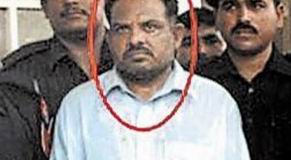 Muhammad Yousaf
Serial killer · Pakistan · 2010
Muhammad Yousaf was convicted in a notorious murder case registered by the Mura…
13 victims
Muhammad Yousaf
Serial killer · Pakistan · 2010
Muhammad Yousaf was convicted in a notorious murder case registered by the Mura…
13 victims
 Arthur Brown
M ass m urderer · 1992
Arthur Brown Jr. was convicted in Texas of shooting four people to death in a d…
4 victims
Arthur Brown
M ass m urderer · 1992
Arthur Brown Jr. was convicted in Texas of shooting four people to death in a d…
4 victims
 Leroy Pooler
Murderer · USA · 1995
Leroy Pooler (born 01/27/48) was tried in the Fifteenth Judicial Circuit, Palm…
1 victim
Leroy Pooler
Murderer · USA · 1995
Leroy Pooler (born 01/27/48) was tried in the Fifteenth Judicial Circuit, Palm…
1 victim
- Gender
- male
- Country
- USA
- Location
- California/Virginia, USA
- Date of birth
- 1966
- Age at first offence
- 22
- Characteristics
- serial rapist, convicted rapist, rape, drug addict
- Victim profile
- Veronica "Tina" Jefferson, 24 / Rachael A. Raver, 22, and Warren H. Fulton III, 22 / Manuel F. Sermeno, 27 / Stacey Siegrist, 19, and Tony Gianuzzi, 21 / Herbert, 65, and Lula Farley, 71 / Yvette Woodruff, 15
- Method of murder
- Shooting
- Date(s) of murder
- 1988 - 1990
- Years active
- 1988–1990
- Date of arrest
- September 6, 1990
- Status
-
Sentenced to death
Sentenced to death in Virginia on November 5, 2010
Case overview
Alfredo Rolando Prieto was a serial rapist and a convicted rapist who was sentenced to death in Virginia on November 5, 2010.
People
Alfredo Rolando Prieto — defendant Rachael A. Raver, 22 — victim Warren H. Fulton III, 22 — victim Yvette Woodruff, 15 — victim Veronica “Tina” Jefferson, 24 — victim Stacey Siegrist, 19 — victim Anthony Gianuzzi, 21 — victim Lula Farley, 71 — victim Herbert Farley, 65 — victim Manuel F. Sermeno, 27 — victim Veronica Raver — Rachael Raver’s mother Matthew Raver — Rachael Raver’s brother Rob Shapiro of Centreville — participant at sentencing hearing Randy I. Bellows — Fairfax Circuit Court judge Raymond F. Morrogh — Commonwealth’s Attorney Robert F. Horan Jr. — former Fairfax Commonwealth’s Attorney Casey Lingan — Deputy Commonwealth’s Attorney Peter D. Greenspun — defense attorney Jonathan Shapiro — defense attorney Stanton E. Samenow — forensic psychologist hired for evaluation Dennis J. Smith — judge who declared a mistrial in Prieto’s first Fairfax trial Robert F. Horan Jr. — sought extradition to Virginia Robert F. Horan Jr. — retired in 2007 Ramon G. Melusky Jr. — foreman of the second jury Scott Brown — Riverside Sgt. Scott Brown Investigator John Powers — sheriff’s Investigator John Powers
Timeline
- May 10, 1988 — DNA evidence linked Prieto to the rape and shooting death of Tina Jefferson, 24, in Arlington, Virginia; Prieto was not charged.
- December 1988 — Rachael A. Raver, 22, and Warren H. Fulton III, 22, were shot to death in Reston, Virginia; Raver was also sexually assaulted; Prieto was convicted of murdering Raver and Fulton, and a jury recommended he be put to death.
- May 1988 — Prieto was linked by DNA to a slaying in Arlington County involving Tina Jefferson.
- February (year not stated in source) — Prieto was convicted in Fairfax of the rape and murder of Rachael A. Raver and the murder of Warren H. Fulton III; he was sentenced to death.
- 1990 — Prieto was convicted in California of the rape and murder of 15-year-old Yvette Woodruff in Ontario, Calif.
- May 5, 1990 — Stacey Siegrist, 19, and Anthony Gianuzzi, 21, were found shot to death in Rubidoux; Siegrist was sexually assaulted.
- May 3, 1990 — Siegrist and Gianuzzi were last seen together.
- June 2, 1990 — Lula Farley, 71, and Herbert Farley, 65, were ambushed by two men as they collected recyclables behind a supermarket in Ontario; Lula Farley was shot to death; Herbert Farley was abducted and later found shot to death in Rubidoux.
- Sept. 2, 1989 — Manuel F. Sermeno, 27, was shot to death and discovered inside a burning car in Prince William, Virginia; ballistics testing linked Prieto to the case but Prieto was not charged.
- Sept. 2, 1990 — Prieto and two other people kidnapped three people in Ontario during a burglary; Prieto sexually assaulted and fatally shot Yvette Woodruff, 15; the other two men sexually assaulted the other two women and repeatedly stabbed them; the women survived; all three men were convicted; Prieto was sentenced to death.
- 1990 — Prieto was incarcerated in California since his arrest there in 1990.
- 1992 — Prieto was on death row in California for the rape and murder of Yvette Woodruff, 15.
- 2002 — Prieto was executed in 2002.
- 2005 — Fairfax cold case homicide unit resubmitted DNA from the unsolved rape and shooting of Raver and the killing of her boyfriend, Fulton, in an empty lot near Hunter Mill Road; Prieto’s DNA matched the semen left at the scene of Raver’s killing.
- 2006 — Fairfax prosecutors extradited Prieto in 2006.
- 2007 — In a six-week trial, a mistrial was declared when a juror claimed he had been pressured into convicting Prieto.
- November 2005 — Horan obtained two murder indictments against Prieto in November 2005.
- April 2006 — California agreed to send Prieto to Virginia in April 2006.
- 2008 — After an eight-week trial, Prieto was convicted again and sentenced to death; the Virginia Supreme Court ruled that the verdict form given to jurors was incorrect and ordered a resentencing.
- 2009 — Supreme Court of Virginia case referenced as Alfredo Rolando Prieto v. Commonwealth of Virginia - 2009.
- September 6, 2010 — Prieto was to return to a Fairfax County courtroom for a sentencing trial intended to obtain the death penalty a third time.
- October 5, 2010 — Prieto spoke in open court in Fairfax for the first time Tuesday in his resentencing for a double murder and rape outside Reston in 1988.
- November 5, 2010 — A Fairfax County judge gave Prieto two death sentences; the jury recommended death and the judge imposed the sentences.
- Dec. 16 — Bellows would impose the jury’s sentence, or reduce it to life without parole, Dec. 16.
- Oct. 3 — State law required Bellows to set an execution date of Oct. 3; he immediately suspended that date pending post-trial motions.
- December 16, 2010 — “Serial killer to be executed” headline text in the case summary; the narrative described the giving of two death sentences Thursday morning by a Fairfax County judge.
Background
Alfredo Prieto was on death row in California since his 1992 death sentence for the rape and murder of Yvette Woodruff, 15. While in prison in California, Prieto’s DNA was linked to the Raver-Fulton homicides, and also the rape and murder of Veronica “Tina” Jefferson, 24, in Arlington in May 1988. Authorities also linked Prieto through ballistics and DNA to multiple additional killings described as occurring in Riverside County, California, and in Prince William County, Virginia.
The offence
Rachael A. Raver and Warren H. Fulton III (Reston, Virginia)
Prieto was convicted of the rape and capital murder of Rachael A. Raver, 22, and the capital murder of Warren H. Fulton III, 22, in a vacant lot near Reston in December 1988. Prosecutors said Prieto shot both Raver and Fulton in the back, and then raped Raver as she bled to death.
Investigation and evidence
DNA linking
In 2005, DNA evidence from the Raver-Fulton case was resubmitted by Fairfax’s cold case homicide unit; the DNA matched Prieto to the semen left at the scene of Raver’s killing. DNA matched Prieto to Tina Jefferson’s rape and shooting death in Arlington, Virginia, with Prieto later described as not having been charged for that matter. Investigators later named Prieto as a suspect in unsolved 1990 slayings in Ontario and Montclair through DNA testing completed in the timeframe described as “last month” in the narrative. Prieto’s DNA was found at the Rubidoux crime scene where Stacey Siegrist and Anthony Gianuzzi were discovered. Ballistics testing also linked the weapon used to kill Siegrist and Gianuzzi to the double slaying in June 1990 of Lula Farley and Herbert Farley. The killings were described as remaining unsolved until Riverside County Sheriff’s Department cold case detectives submitted DNA earlier in the year described in the narrative and it matched Prieto.
Ballistics linkage described
The weapon used to kill Siegrist and Gianuzzi was also described as being used in the double slaying of Lula Farley and Herbert Farley. Ballistics testing was also described as linking Prieto to the September 2, 1989 case of Manuel F. Sermeno, who was found in a burning car in Prince William, Virginia; Prieto had not been charged.
Arrest
Prieto was described as being incarcerated in California since his arrest there in 1990.
Trial
Fairfax jury and death sentence proceedings
A Fairfax jury imposed two death sentences on Prieto. The jury in Prieto’s first Fairfax trial found him guilty of capital murder; during sentencing in that first trial, a juror rebelled and sent out notes saying he had been pressured by other jurors, and Judge Dennis J. Smith declared a mistrial. In Prieto’s second Fairfax trial, after an eight-week case, Prieto was convicted again and sentenced to death; the Virginia Supreme Court ruled that the verdict form given to jurors was incorrect and ordered a resentencing.
Sentencing trial described as third phase
The third time, the jury was empaneled simply to decide whether Prieto should be executed. Jurors were told of the Woodruff killing and that an earlier jury had convicted Prieto of capital murder in the slayings of Raver and Fulton. The defense team presented evidence of Prieto’s upbringing in war-torn El Salvador and damage described as lasting damage from exposure to war, poverty, abuse and abandonment. The defense attorney made statements to the jury about moral culpability and desensitization. The judge imposed two death sentences, with the judge saying he saw no reason to reduce the sentences to life without parole.
Prieto’s statements during open court
Prieto spoke in open court in Fairfax for the first time during resentencing testimony. During questions about cooperation with a mental health expert, Prieto stated verbatim:
“I spoke to Dr. Samenow for six or seven hours,” Prieto said, speaking clearly and with a slight Spanish accent. “I answer all his questions. I even ask Dr. Samenow to tape record it.” Bellows asked Prieto if he had refused to discuss the specific events of the case. “I spoke to him about a variety of issues,” Prieto said. “I don't know if he wrote it down. Because most of the time he would just argue with me about my responses.” Bellows repeated his question, and Prieto responded, “Some of the questions I could not answer, under the Fifth Amendement, I have a right to remain silent.” Prieto continued, “He asked me some questions about my state of mind. What I said was, I was using a lot of drugs, I was drinking, I gave him a lot of answers. Some of the questions he was taking down, some of the questions, I guess he wanted a different response, he wasn't taking down.” Did Samenow ask Prieto if he had murdered Raver, Bellows asked? “No sir,” Prieto said. “Some of his other questions, I just said I couldn't answer or I don't recall.” Bellows then said he wasn't sure what Prieto was refusing to answer, and said he would hold a hearing to ask Samenow his version of events.
Sentencing
Fairfax Circuit Court Judge Randy I. Bellows imposed the jury’s sentence and also commented on the crimes. The judge said:
“What you did to those two young people was vile and horrible and beyond the pale,” the judge said.
After the November 5, 2010 death sentences were imposed, the judge did not reduce the sentences to life without parole. In a later-described Fairfax sentencing context, Judge Bellows had also told Prieto:
“On the night you executed them,” Fairfax Circuit Court Judge Randy I. Bellows told Prieto, “you turned the final moments of their life into what could be described as a living hell.” He also said: “You ruined their lives,” Bellows told Prieto. And he said: “They will never, never recover. I could not put it better than Mrs. [Jackie] Fulton did when she said that the bullet you put in her son went through him and lodged in her heart.”
Prieto’s statement during the sentencing described:
“I have nothing to say, by lawyer's advice.”
State law required Bellows to set an execution date as Oct. 3, and the date was immediately suspended pending post-trial motions, followed by appeals to the Virginia Supreme Court and then to the federal courts.
Appeals
The Virginia Supreme Court ruled that the verdict form given to jurors in 2008 was incorrect and ordered a resentencing. Prieto’s case was described as being part of “going through the appellate process” for the Yvette Woodruff case.
Outcome
Alfredo Rolando Prieto received two death sentences in Fairfax County, Virginia, on November 5, 2010. Prieto had already been on death row in California since 1992. An execution in 2002 was described for Prieto.
Aftermath
Statements by Rachael Raver’s family
When Prieto stood to be led out of the courtroom after sentence, Rachael Raver’s mother, Veronica Raver, stood and yelled at him verbatim:
“Hey Prieto, does your mother know you rape dying dead girls?” As her family restrained her, she added verbatim: “Twenty two years of this crap.” Veronica Raver later described that she had rehearsed her brief comment and that it was not meant to be threatening, merely an honest expression of her feelings toward him.
Statements by juror Rob Shapiro
Rob Shapiro of Centreville said he returned to show empathy and support and for closure, stating verbatim:
“empathy with the family, to show support. To let the [prosecution] team know how well they did. And for me, a little bit of closure, having struggled through such an experience.”
Statements by Commonwealth’s Attorney Raymond F. Morrogh
Raymond F. Morrogh said he sought capital punishment even though Prieto was already on death row in California. He stated verbatim:
“because he'll never get the death penalty in California. He effectively has a life sentence. I think it was time to bring him to justice for his horrible crimes. I think he got just what he deserved.”
Statements by Commonwealth’s Attorney Robert F. Horan Jr.
The narrative described Robert F. Horan Jr. as deciding extradition to Virginia for faster conviction and execution. He was described as having retired in 2007 after seeking the death penalty proceedings in Virginia.
Named suspect statements and investigative updates (Riverside County and related)
Authorities in Riverside County named Prieto as the suspect in unsolved slayings in 1990 of Stacey Siegrist and Anthony Gianuzzi. The narrative described Siegrist and Gianuzzi as being found shot twice each, with Siegrist sexually assaulted. It also described a statement by Stacey Siegrist’s family members reacting to identification of a suspect:
“We are relieved to know one of the persons involved has been caught,” the statement said.
“However, closure is something families of murder victims will never have. “Stacey was so full of life and so loved by her family. She had a lot of life left to live, that’s the real tragedy: a young person taken away before they’ve even had a chance to live. “To have a loved one taken in such a brutal way has been too much to bear. No family should ever have to deal with that. The pain we’ve suffered is tremendous and never ending. “You try to live with it, but it’s always there. All we have left of Stacey are our memories. Her smile, her laugh, we will never forget her and we will always miss her. “Our heartfelt thanks and appreciation goes out to the Riverside (County) sheriff’s Cold Case Unit for their diligence with this case and hearts go out to the families of the other murder victims. To any other families that are going through this, don’t ever give up hope.” Detectives also described potential involvement of one or two other people and urged people with information to contact sheriff’s Investigator John Powers at 951-955-2777.
Additional investigative details described
Prieto was described as suspected but not charged in several killings, including those in Arlington and Prince William counties, and in Riverside County. The narrative said Prieto was not charged in connection with the newly linked cases.
Motive statement attributed to Sgt. Scott Brown
Sgt. Scott Brown said Prieto’s motive in many cases was unclear and could only be understood if stated by Prieto himself, stating verbatim:
“Prieto is the only one that car reveal this to us,” Brown said.
Other details
Dispute about mental health expert cooperation
The narrative described that Prieto had refused to discuss anything related to the slayings of Raver and Fulton, and that his lawyers advised him to do so. Bellows had warned that Prieto had to cooperate with forensics psychologist Stanton E. Samenow, not just a defense expert, or risk that the defense expert would not be allowed to testify.
Prieto’s criminal history described
The narrative described Prieto as having multiple murder convictions in addition to rape convictions, and it described ballistics and DNA linkage to other slayings where Prieto had been identified as a suspect but not charged. The narrative described that Prieto had been a “Pomona Northside gang member” in connection with investigative identification.
Execution scheduling described in multiple places
The narrative included state law requiring Bellows to set an execution date and the date being suspended pending post-trial motions.
Juror deliberation length described
The jury deliberated for eight hours over two days before reaching its verdict in the resentencing.
Representation and compensation
Court records described that defense was paid nearly $360,000 for attorney and witness fees and costs in the first trial, and about $265,000 for the second trial.
Legal phase description for jury in resentencing
The sentencing was described as beginning with jury selection and then being expected to continue through October, with opening statements described as taking place Sept. 21. Three hundred Fairfax residents were summoned and questioned on their ability to rule fairly in a death-penalty case.
Evidence used in sentencing
The narrative described that the details of the slaying of Veronica “Tina” Jefferson, 24, were used in the sentencing phase to help persuade the jury to impose the death sentence.
Other named places and dates included in narrative
The narrative referenced Reston, Virginia; Arlington, Virginia; Ontario, California; Montclair; Riverside County; Rubidoux near the intersection of Canal and Alta streets; Mira Loma; Hunter Mill Road; Mister Day’s, a bar in the District; and an empty lot that was later described as occupied by houses. It also referenced a now-closed Alpha Beta supermarket on Mountain Avenue in Ontario, and a burning car near Interstate 95 in Prince William, Virginia.
Spotted an error, or have more information about this case?