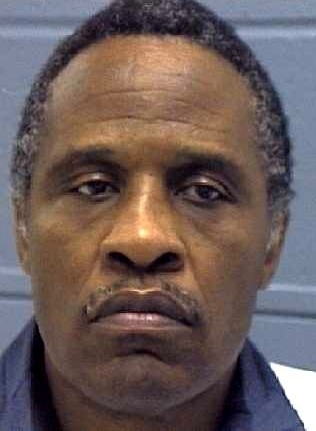
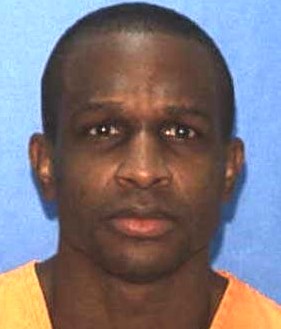
William Kenny Stephens
Murderer Ervil LeBaron
Murderer · USA · 1972
Ervil Morrell LeBaron (1925 to August 16, 1981) was the leader of a polygamous…
35 victims
Ervil LeBaron
Murderer · USA · 1972
Ervil Morrell LeBaron (1925 to August 16, 1981) was the leader of a polygamous…
35 victims
 Brian Kevin Rosenfeld
Murderer · USA · 1985
Brian Kevin Rosenfeld Brian Kevin Rosenfeld was sentenced to three concurrent l…
23 victims
Brian Kevin Rosenfeld
Murderer · USA · 1985
Brian Kevin Rosenfeld Brian Kevin Rosenfeld was sentenced to three concurrent l…
23 victims
 Marvin Gray
Murderer · USA · 1975
Marvin Gray was convicted killer who claimed responsibility for 23 slayings and…
23 victims
Marvin Gray
Murderer · USA · 1975
Marvin Gray was convicted killer who claimed responsibility for 23 slayings and…
23 victims
 Yahweh ben Yahweh
Murderer · USA · 1980
Yahweh ben Yahweh was born and legally named Hulon Mitchell Jr. (October 27, 19…
23 victims
Yahweh ben Yahweh
Murderer · USA · 1980
Yahweh ben Yahweh was born and legally named Hulon Mitchell Jr. (October 27, 19…
23 victims
 Robin Gecht
Serial killer · USA · 1981
Robin Gecht was associated with the group known as the Ripper Crew or Chicago R…
18 victims
Robin Gecht
Serial killer · USA · 1981
Robin Gecht was associated with the group known as the Ripper Crew or Chicago R…
18 victims
 Walter Ellis
Serial killer · USA · 1986
Walter E. Ellis was a serial killer known as the Milwaukee North Side Strangler…
7 victims
Walter Ellis
Serial killer · USA · 1986
Walter E. Ellis was a serial killer known as the Milwaukee North Side Strangler…
7 victims
 Carolyn Warmus
Murderer · USA · 1989
Name: Carolyn Warmus Status: Warmus was sentenced to 25 years to life in prison…
1 victim
Carolyn Warmus
Murderer · USA · 1989
Name: Carolyn Warmus Status: Warmus was sentenced to 25 years to life in prison…
1 victim
 Luis Ceja
Murderer · 1930
Luis Ceja was executed at the Nevada State Prison in Carson City on September 4…
1 victim
Luis Ceja
Murderer · 1930
Luis Ceja was executed at the Nevada State Prison in Carson City on September 4…
1 victim
 Randall Scott Jones
Murderer · USA · 1987
Randall Scott Jones was indicted in the Seventh Judicial Circuit, Putnam County…
2 victims
Randall Scott Jones
Murderer · USA · 1987
Randall Scott Jones was indicted in the Seventh Judicial Circuit, Putnam County…
2 victims
- Gender
- male
- Country
- USA
- Location
- Richmond County, Georgia, USA
- Date of birth
- 1948
- Age at first offence
- 31
- Characteristics
- convicted rapist, history of mental illness, drug addict, mentally ill, mentally retarded, to avoid arrest, police officer
- Victim profile
- Larry D. Stevens, 38 (police officer)
- Method of murder
- Shooting
- Date(s) of murder
- January 24, 1979
- Years active
- 1979
- Date of arrest
- Same day
- Status
-
Life imprisonment
Resentenced to life in prison in 2000
Case information
Defendant: William Kenny Stephens Victim: Investigator Larry D. Stevens, 38
Timeline
- January 22, 1979 — Police stopped the defendant for questioning regarding the burglary of a department store in which several weapons had been taken.
- January 24, 1979 — Investigator Larry Stevens of the Richmond County Sheriff's Department located the defendant, followed him briefly, and stopped him; the defendant fired into the police car, fatally shooting Investigator Stevens through the rear window; the defendant then drove off and a high speed pursuit occurred after he purchased more ammunition; officers trapped him in a cul-de-sac and a gun battle ensued; the defendant was arrested after the shootout.
- January 30, 1979 — The defendant was indicted for malice murder and three counts of aggravated assault.
- February 15, 1980 — A jury convicted the defendant on all counts.
- February 1980 — The defendant was sentenced to death in Richmond County for the murder.
- November 1989 — The defendant was resentenced to death in Richmond County.
- March 1980 — The defendant was convicted and sentenced to death.
- October 10, 1989 — The State filed a notice of intent to seek the death penalty.
- November 14–22, 1989 — The defendant’s sentencing trial was held; the jury recommended a death sentence on November 22, 1989.
- November 26, 1990 — The defendant filed a notice of appeal to the Georgia Supreme Court.
- November 29, 1989 — The defendant filed a motion for new trial.
- June 29, 1990 — The defendant supplemented his motion for new trial.
- November 6, 1990 — The motion for new trial was denied.
- February 10, 1998 — A hearing was held to determine the Attorney General’s role in ordering a state physical and neurological examination of the defendant.
- April 16, 1998 — The case was re-docketed by this Court.
- July 13, 1998 — The case was orally argued.
- December 4, 1998 — The case was decided.
- December 17, 1998 — Reconsideration was denied.
- May 18, 2000 — A third jury decided whether the defendant would return to death row or a regular prison cell.
- 2000 — The defendant was resentenced to life in prison.
Background
William Kenny Stephens was arrested for DUI and driving without a license in January 1979. The police suspected he had been involved in the burglary of a store where several guns had been stolen and released him when he promised to return with information about who had committed the burglary.
Stephens had failed to return as promised, and the police began looking for him.
At the 1989 sentencing trial, a dispute arose over the proper burden of proof regarding Stephens’s mental retardation. His counsel presented expert testimony that Stephens was mentally retarded, and presented evidence regarding IQ tests ranging from 62-72, and that Stephens failed three grades before leaving school in the fifth grade. Stephens also presented psychiatric evidence in support of his claims of mental retardation and mental illness.
A defense attorney described Stephens as having only two paths: death or life in prison. The defense also presented Stephens’s family and other witnesses, and a clinical psychologist who had examined Stephens. The defense argued that the death penalty was reserved for the worst of the worse and that Stephens had compassion.
The offence
On January 24, 1979, Investigator Larry Stevens of the Richmond County Sheriff's Department stopped Stephens’s car. While Investigator Stevens was sitting in his police car, Stephens got out of his vehicle with a high-powered rifle and fired through the windshield, shattering Investigator Stevens’s right forearm and rendering his right arm below the elbow useless.
The officer managed to retrieve his gun and fired wild shots through his car at Stephens. Stephens fired a second shot striking Investigator Stevens in the right side, seriously wounding him. Stephens then walked to the rear of Investigator Stevens’s automobile, raised the weapon to shoulder height, and fired through the rear window in a calm, deliberate manner. The round hit Investigator Stevens in the chest and was almost immediately fatal.
A postal worker saw Stephens walk to the rear of the police car and fire the last shot.
Stephens then went to his car and drove off at a high rate of speed. He intended to go to his mother’s house, but stopped at a store to purchase more ammunition. Approximately twenty-five minutes after the murder, authorities were waiting and a high speed pursuit occurred. Officers finally trapped the defendant in a cul-de-sac, and a gun battle with the police ensued.
Stephens maintained that when Investigator Stevens stopped him, he exited his automobile with a loaded rifle in order to show the officer he had recovered some of the guns from the burglary; as he approached the officer’s car, the officer shot at him for no reason; Stephens then opened fire shooting the officer in self-defense.
Investigation
On January 22, 1979, police stopped the defendant for questioning regarding the burglary of a department store in which several weapons had been taken. It was discovered that he was driving under the influence and without a license. He was arrested.
After questioning at the police station, Stephens agreed to ask around and find out who was involved in the burglary in exchange for release upon his own recognizance, with a requirement that he report back by a certain time. When he did not contact the officer at the appointed time, nor for two days thereafter, the police began looking for him.
On January 24, 1979, Investigator Larry Stevens located Stephens, followed him briefly, and stopped him. When the officer stopped the defendant, he radioed this fact and his location to fellow officers.
Arrest and custody
After the fatal shooting, Stephens drove off at a high rate of speed, bought more ammunition, and entered a high-speed pursuit. Officers trapped him in a cul-de-sac and a gun battle with police ensued.
Stephens was arrested after the shootout. While in custody, Stephens made several incriminating statements.
The first statement was made to the officer transporting him to the Sheriff's office. Stephens told the officer that the victim was a “no good son-of-a-bitch and should have had it happen to him a long time ago.”
A second statement was made after Stephens was given his Miranda warnings and acknowledged that he understood these rights. Stephens argued that the statement was inadmissible because his mother had retained an attorney, and the attorney had called the jail; the jailer informed the attorney that Stephens had not been logged into the jail. The court found no evidence that the jailer knew the whereabouts of Stephens during interrogation at the Sheriff's office, and the court found Stephens had waived his rights and there was no misconduct on the part of the investigating officers. The court ruled the statements were admissible.
Trial
Charges and verdict
The defendant was indicted on one count of murder and three counts of aggravated assault, with the victim in each count being a police officer.
The defendant was found guilty on all charges.
At trial, the defendant was sentenced to death for the murder and to twenty years on each count of aggravated assault to be served consecutively.
Pretrial and trial proceedings
Severance of counts: The defendant argued the trial court erred in overruling his motion to sever the murder count from the aggravated assault counts for trial. The argument relied on Dingler v. State, 233 Ga. 462 (211 SE2d 752) (1975), including the view that the charges arose out of a continuous course of conduct and that evidence of one crime would permit evidence of the other because the murder of the police officer was the probable cause for the chase and the stopping of the defendant that resulted in the shootout. The court found no merit in the contention.
Jury panel sequestration: The defendant contended the trial court erred in overruling his motion for sequestration of the jury panel during individual voir dire and his renewed motion. He argued that peer pressure could result in bias or prejudice, though he cited no incident of actual bias or prejudice. The court found no merit, referencing Whitlock v. State and affirming that whether individual questioning takes place outside the presence of other jurors lies within trial court discretion.
Motion to quash / aliases: The defendant argued the trial court erred in overruling his motion to quash the indictment because it listed three other names for him under “also known as.” He argued this was a deliberate attempt to prejudice the jury by portraying him as a “desperado” with many aliases. The court rejected the argument, stating a motion to quash was not the proper remedy for striking an alias; a special plea of misnomer should have been filed, and it was lawful for the indictment to identify the accused by aliases where known by different names.
The court also noted that two former convictions introduced at the sentencing phase were in the names of two of the aliases listed in the indictment.
Change of venue: The defendant argued the trial court erred in overruling his motion for change of venue. The court discussed articles about the shooting, editorials, letters concerning the death penalty, and radio/television reports, noting the trial occurred one year after the death of the officer, and that none of the jurors thought publicity would influence their decision. The court found no merit.
Expert witness request: The defendant argued the trial court erred in overruling his motion for the appointment of an expert witness to examine the State’s evidence, arguing that State Crime Laboratory employees were under the direction of prosecution. The court found no merit, stating the defendant had not alleged harm or shown how his defense would have been aided, and that appointment lay in the trial court’s sound discretion.
Victim’s widow in the courtroom: The defendant argued the trial court erred in allowing the widow of the victim to remain in the courtroom after her testimony. The prosecution and defense had sequestered all witnesses. After the widow testified, the district attorney requested she remain. Defense counsel objected, and upon questioning, admitted his objection was to keep her from being seen by the jury. The trial court allowed her to remain but required her to sit in the area furthest from the jury and out of their direct view. The court found no abuse of discretion and held the sequestration rule did not prohibit persons from remaining in the courtroom during proceedings.
The victim’s wife’s testimony included identifying the coat and shirt of the victim and testifying that the victim was right-handed, described as crucial to the State’s case.
Admission of statements: The trial court admitted the first spontaneous statement and the second Miranda-warned statement. The court addressed Miranda principles for custodial interrogation and found the first statement spontaneous and admissible because the officer had not initiated interrogation. For the second statement, the court addressed Stephens’s claim that his attorney had not been informed due to the jailer’s actions, and found no misconduct and a valid waiver.
Refused instructions regarding self-defense and lesser included offenses:
- The court rejected the defendant’s claim that the trial court erred in failing to give his requested charge that aggravated assaults were justified if officers placed him in reasonable apprehension of receiving a violent injury, reasoning that the subject was covered in self-defense instructions.
- The court rejected claims that the trial court erred in failing to give requested charges on involuntary manslaughter and simple assault as a lesser included offense of aggravated assault, finding no evidence requiring such charges.
Other trial rulings: The court rejected multiple other claims of error, including challenges to jury panel excusals for cause under Witherspoon, refusal to define “depravity” in a sentencing instruction, and claims about the jury being influenced by pretrial publicity.
Sentencing proceedings (1980 and 1989)
At the February 1980 sentencing, the jury found aggravating circumstances and sentenced Stephens to death.
At the November 1989 sentencing trial, the jury recommended a death sentence on November 22, 1989. The trial court later reversed the death sentence due to the sentencing instruction issue described in the Georgia Supreme Court analysis, and the matter was remanded for a new sentencing trial where Stephens would bear the burden of proving mental retardation by a preponderance of the evidence.
The Georgia Supreme Court described statutory aggravating circumstances and issues raised during sentencing review. It affirmed the death penalty in the 1981 direct review but reversed in the 1998 reconsideration decision concerning jury instructions and the burden of proof for mental retardation at resentencing.
In reviewing the death sentence in this case, the court concluded the sentence was not imposed under the influence of passion, prejudice, or arbitrary factor. The court listed three aggravating circumstances found by the jury, including:
- that the offense was outrageously and wantonly vile, horrible and inhuman, involving depravity of mind;
- that the murder was committed for the purpose of preventing lawful arrest;
- that the murder was committed against a peace officer while engaged in performance of official duties.
The court stated it reversed the first and second aggravating circumstances for reasons noted below, but found the evidence supported beyond a reasonable doubt that the offense was committed against a peace officer engaged in the performance of his official duties.
Appeals
Direct review (1981)
The Georgia Supreme Court reviewed the case and affirmed the imposition of the death penalty. The court concluded the evidence supported the statutory aggravating circumstance that the murder was committed against a peace officer engaged in his official duties.
The court addressed multiple enumerations of error and rejected them.
Federal habeas and subsequent sentencing (1988–1998)
The Eleventh Circuit Court of Appeals upheld Stephens’s convictions on federal habeas corpus. It had considered the results of a 1979 court-ordered psychiatric evaluation showing “no evidence of a mental disability or disorder,” and concluded trial counsel’s reliance on that evaluation was reasonable insofar as the guilt phase was concerned.
The dissent described that the majority reversed Stephens’s second sentencing trial because the trial court failed to instruct the jury on a preponderance-of-the-evidence standard of proof on mental retardation raised in mitigation of the death penalty. The dissent argued that habeas relief cases were wrongly decided.
1998 Georgia Supreme Court decision
The Georgia Supreme Court reversed Stephens’s death sentence and remanded for a sentencing trial, holding that the timing of the guilt-innocence phase determined which burden of proof applied for mental retardation at the 1989 sentencing trial.
The court described dispute over burden:
- It concluded Stephens should have been required at his 1989 sentencing trial to prove mental retardation by a preponderance of the evidence.
- It therefore reversed the death sentence and remanded for a sentencing trial with that burden.
The court also addressed other issues:
- It found the trial court was not required to vacate the convictions due to purported mental retardation, noting that convictions were affirmed on direct appeal and upheld in federal habeas corpus.
- It rejected Stephens’s Fifth Amendment claim that rebuttal examinations violated his right against self-incrimination because he presented psychiatric evidence through expert witnesses.
- It rejected Stephens’s Sixth Amendment claim of insufficient notice for the relevant examinations, stating counsel had notice for the 1978 and 1979 examinations, and that for other examinations direct appeal exhaustion had occurred so Sixth Amendment right to counsel had ended with regard to those examinations.
- It discussed an examination in 1988 conducted while Stephens was imprisoned by Dr. Slade, where a notation stated it was “requested by AG’s office.” It described that none of Stephens’s lawyers were notified about this examination, and that the results were later elicited first from a defense expert on cross-examination and then challenged when Dr. Slade was called in rebuttal. The court held Stephens’s challenge was waived because the jury had already heard part of Dr. Slade’s report without objection.
- It addressed a claim of prosecutorial misconduct related to alleged ex parte communication by the Attorney General’s office ordering the examination, and concluded there was insufficient evidence to find prosecutorial misconduct.
The court stated that because it reversed the death sentence, it did not address Stephens’s remaining enumerations of error.
Jury sentencing after 1998
After appeals, a third jury again determined punishment. The jury received legal instructions after three days of testimony, deliberated, and sent a note to Judge Albert M. Pickett asking whether they could go home and whether life in prison meant life without parole. Judge Pickett sent them home with instructions to return and told them about “life” meaning remainder of a person’s natural life and that parole was not a subject for jury consideration.
Outcome
The defendant’s death sentences were vacated on appeal, leading to a resentencing process. In 2000, Stephens was resentenced to life in prison.
Aftermath
A May 18, 2000 report described that Stephens was going back to prison for murder, and that the fact he murdered Richmond County sheriff’s Investigator Larry D. Stevens Sr., 38, on January 24, 1979, had never changed, but the third jury faced deciding whether he returned to death row or a regular prison cell.
The report included closing arguments:
- Defense attorney Peter Johnson told the jury: “I'm going to be very blunt . . . William Kenny Stephens has only two paths to take out of this courtroom,'' and: “The fact that Kenny Stephens was convicted of murder doesn't mean that you have to impose the death penalty.''
- District Attorney Danny Craig argued: “This is not an athletic competition; this is a search for the truth,'' and:
Your verdict will speak for the residents of Richmond County . . . and no one will speak for them again. '' and: “You will say . . . what we as a people feel about the risks a police officer takes on by serving us every day. I do ask that your verdict send a message. If they (police officers) are willing to protect us, we should be willing to protect them,'' and:Your husband and your father did not die in vain.'' - Defense countered that no one could change what happened or the suffering caused his family, but that the jury could consider the crime and who Stephens was.
- Peter Johnson argued: “The death penalty is reserved for the worst of the worse . . . someone who is not human, has no humanity,'' and: “This is a man who actually has compassion. He's not beyond redemption.''
- In closing, Peter Johnson said: “Let Kenny Stephens continue walking down the road he started on in March 1980. Let Kenny Stephens live,'' and reminded the jury that for 21 years Stephens had lived behind bars, mostly in a 6-by-9 cell for all but 32 hours a week.
Other details
Trial participants and representation (as identified)
- Judge Pickett presided at trial and in proceedings described.
- Charles L. Wilkinson III represented the appellant.
- Richard E. Allen was the district attorney for appellee.
- Arthur K. Bolton was Attorney General for appellee.
- Harrison Kohler was Assistant Attorney General for appellee.
- Peter D. Johnson and John R. Carroll were listed for appellant.
- Daniel J. Craig was District Attorney for appellee.
- Thurbert E. Baker was Attorney General for appellee.
- Mary Beth Westmoreland was Deputy Attorney General for appellee.
- Paula K. Smith was Senior Assistant Attorney General for appellee.
- Thompson, Justice, dissenting included a dissent joined by Justice Hunstein and Justice Carley.
Legal issues discussed in the appellate decisions (as written)
- The court discussed joinder of offenses and relied on Dingler v. State standards quoted in full:
“The ABA Standards on Joinder of Offenses provides: 'Two or more offenses may be joined in one charge, with each offense stated in a separate count, when the offenses . . . (b) are based on the same conduct or on a series of acts connected together or constituting parts of a single scheme or plan.'”
- The 1989-sentencing decision discussed burdens of proof for mental retardation and described statutory provisions including OCGA 17-7-131 (j) and OCGA 17-7-131 (c) (3), and the public policy described in the decision.
- The 1998 decision included verbatim explanation of Miranda and the definition of custodial interrogation quoted in part:
“By custodial interrogation, we mean questioning initiated by law enforcement officers after a person has been taken into custody or otherwise deprived of his freedom of action in any significant way.”
- The dissent included quoted reasoning, including references to:
“essentially the same opportunity to litigate the issue of [their] mental retardation as [they] would have had if the case[s] were tried today, with the benefit of the OCGA 17-7-131 (j) death-penalty exclusion.”
- The appellate record included a quote from the defense attorney and quotes from the district attorney as reproduced in the May 18, 2000 report (including the passage “[an error occurred while processing this directive]” in the narrative).
- The appellate decision described the jury instruction on depravity and the jury’s confusion, and stated the trial court answered the jury’s question by instructing them that the charge was complete in itself.
Enumeration categories and key findings included in the appellate text
The appellate decision included numbered enumerations of error addressing severance, sequestration of the jury panel, quashal of indictment and aliases, change of venue, appointment of expert witness, sequestration of widow, admissibility of statements, jury instructions including self-defense and lesser included offenses, jury charge on aggravating circumstances and use of the word “torture,” excusing jurors under Witherspoon, sufficiency of evidence, constitutionality of Georgia death penalty statute, sentencing-phase requested charges, sentencing review of aggravating circumstances, and refusal to allow Dr. Phillip Reichel to testify on nondeterrent effect of capital punishment.
Additional note on dates and indictment/conviction/sentencing (as included in the record)
- The notes indicated the crimes occurred on January 24, 1979.
- The defendant was indicted for malice murder and three aggravated assault counts on January 30, 1979.
- The jury convicted the defendant on February 15, 1980.
- The death sentence and three consecutive twenty-year sentences for aggravated assaults were imposed.
- After the death sentence was vacated by the Eleventh Circuit, the State filed notice on October 10, 1989.
- The sentencing trial was held November 14–22, 1989, with jury recommendation on November 22, 1989.
- The motion for new trial was filed November 29, 1989 and supplemented June 29, 1990, and denied November 6, 1990.
- The case was remanded for a hearing on Attorney General’s role, with a hearing held February 10, 1998, re-docketing on April 16, 1998, oral argument on July 13, 1998, decision on December 4, 1998, and reconsideration denied on December 17, 1998.
Spotted an error, or have more information about this case?