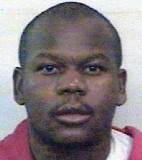
Phillip Stroud
Murderer Russell Ellwood
Murderer · USA · 1991
Russell Ellwood was a former taxi driver. Authorities suspected him of killing…
20 victims
Russell Ellwood
Murderer · USA · 1991
Russell Ellwood was a former taxi driver. Authorities suspected him of killing…
20 victims
 Robert Martines Perez
Murderer · USA · 1994
Name: Robert Martines Perez · Other name used in proceedings: Robert Martinez P…
15 victims
Robert Martines Perez
Murderer · USA · 1994
Name: Robert Martines Perez · Other name used in proceedings: Robert Martinez P…
15 victims
 Billy Frank Vickers
Murderer · USA · 1993
Billy Frank Vickers Vickers was executed by lethal injection in Texas on Januar…
14 victims
Billy Frank Vickers
Murderer · USA · 1993
Billy Frank Vickers Vickers was executed by lethal injection in Texas on Januar…
14 victims
 Franklin DeWayne Alix
Murderer · USA · 1997
Franklin DeWayne Alix was a Texas death row inmate who was executed in 2010. Du…
4 victims
Franklin DeWayne Alix
Murderer · USA · 1997
Franklin DeWayne Alix was a Texas death row inmate who was executed in 2010. Du…
4 victims
 Zhou Kehua
Murderer · China · 2004
Zhou Kehua (simplified Chinese: 周克华 ; traditional Chinese: 周克華 ; pinyin: Zhōu K…
10 victims
Zhou Kehua
Murderer · China · 2004
Zhou Kehua (simplified Chinese: 周克华 ; traditional Chinese: 周克華 ; pinyin: Zhōu K…
10 victims
 Linda & Charlotte Mulhall
Murderers · Ireland · 2005
Linda Mulhall — sister of Charlotte Mulhall; defendant; sentenced to a 15-year…
1 victim
Linda & Charlotte Mulhall
Murderers · Ireland · 2005
Linda Mulhall — sister of Charlotte Mulhall; defendant; sentenced to a 15-year…
1 victim
 Yavuz Yapicioglu
Serial killer · Turkey · 1994
Yavuz Yapıcıoğlu (born 1967) was a Turkish serial killer and arsonist, nickname…
18 victims
Yavuz Yapicioglu
Serial killer · Turkey · 1994
Yavuz Yapıcıoğlu (born 1967) was a Turkish serial killer and arsonist, nickname…
18 victims
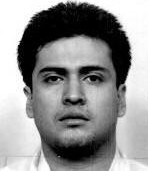 Carlos de Luna
Murderer · USA · 1983
Carlos de Luna was executed by lethal injection in Texas on December 7, 1989. H…
1 victim
Carlos de Luna
Murderer · USA · 1983
Carlos de Luna was executed by lethal injection in Texas on December 7, 1989. H…
1 victim
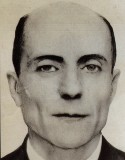 Gabriel Socley
Murderer · France · 1935
Gabriel Socley was sentenced to death for the rape, and the later status of the…
1 victim
Gabriel Socley
Murderer · France · 1935
Gabriel Socley was sentenced to death for the rape, and the later status of the…
1 victim
- Gender
- male
- Country
- USA
- Location
- St. Joseph County, Indiana, USA
- Date of birth
- December 30, 1978
- Age at first offence
- 22
- Characteristics
- burglary, robbery, kidnapping
- Victim profile
- Wayne Shumaker, 59; Corby Myers, 30, and Lynn Ganger, 54
- Method of murder
- Shooting ( .9mm handgun)
- Date(s) of murder
- September 14, 2000
- Years active
- 2000
- Date of arrest
- —
- Status
-
Sentenced to death
Sentenced to life without parole; consecutive sentences of 20 years (Burglary), 20 years (Robbery), 20 years (Robbery), 20 years (Attempted Robbery) after death sentence was vacated and the case was remanded for new “penalty and sentencing phases”
Case record: Phillip Stroud
Background
Phillip A. Stroud was approximately age 21 at the time of the murders. He had a disadvantaged childhood; he rarely saw his father. He was mistreated by his mother’s boyfriends and abandoned by his mother. He was caring towards his younger half-brother, and the court considered emotional hardship on family and friends.
At the time of the murders, Phillip A. Stroud was released on bail for charges of Dealing in Cocaine. He was later convicted on 01-16-02 in the St. Joseph Superior Court and sentenced to terms of 50 years imprisonment in Cause # 71D08-9907-CF-0414 and 20 years imprisonment in Cause # 71D08-9907-CF-0410.
Phillip A. Stroud had a girlfriend. DNA from dog feces found outside the house matched DNA in feces on the Nike athletic shoes police took from the apartment of Stroud’s girlfriend.
The offence
After one of the workers came out of the barn, Phillip Stroud decided they needed to be killed because he may have seen the license plate on their car.
Instead of fleeing the scene, they went to the barn, where Stroud ordered the men tied up and robbed. Stroud then shot each victim in the head with a Tech .9 mm semiautomatic handgun. After the shootings, Stroud and accomplices returned to the home to finish the burglary.
The bodies of Wayne Shumaker, Lynn Ganger, and Corby Myers were found on the afternoon of September 14, 2000, in a barn on the property of Arthur and Theresa Sears in Lakeville, Indiana. Shumaker, Ganger, and Myers had been building a loft in the Searses’ barn. The three men were found lying face down on the barn floor, their hands tied behind their backs with duct tape, and all had died from gunshot wounds to the head.
According to some witnesses, Phillip Stroud, Tyrome Wade, Kerel Seabrooks, and Ronald Carter went to the Searses’ residence with the intent to steal from the place. They learned about the Searses’ residence from Charity Payne, a former girlfriend of the Searses’ son. Ronald Carter, who was also charged for the crimes and testified pursuant to a plea bargain with the State, said that Phillip Stroud shot the three men.
It appeared that four bullets had been fired, but it could not be determined conclusively whether all of the bullet fragments found at the scene were fired from the same gun. It was possible that the bullets were fired from an Intratec Tec-9 gun. Ronald Carter testified that Defendant carried a Tec-9 gun.
Investigation
The State’s main evidence against Defendant consisted of testimony from others involved in the incident, ballistics testimony, and shoeprint testimony.
Shoeprint marks were found on pieces of lumber inside the barn. The marks could have been made by a pair of Nike shoes taken from the apartment of Defendant’s girlfriend when he was arrested. These same Nike shoes had some debris on them, which was compared to debris at the crime scene. A carpet fiber found on the shoes had the same class characteristics as carpet from the Searses’ home. The Nike shoes also had animal feces on them, and an expert testified that the feces on the Nike shoes and the feces from the ground at the crime scene were likely from the same animal.
DNA from dog feces found outside the house matched the DNA in feces on the Nike athletic shoes police took from the apartment of Stroud’s girlfriend.
Charges
On September 18, 2000, the State charged Phillip A. Stroud with three counts of murder; three counts of felony murder; one count of burglary, a Class A felony; and three counts of robbery, all Class B felonies.
At trial, the jury found Defendant guilty of three counts murder and three counts felony murder, which the trial court merged; one count burglary, a Class B felony; two counts robbery, Class B felonies; and one count attempted robbery, a Class B felony.
Trial
The defense did not put on any witnesses during the guilt phase of trial.
In statements later given to police, Stroud claimed that his only role was as a lookout and that he was not involved in the killings.
Ronald Carter testified pursuant to a plea bargain with the State and said that Defendant shot the three men.
During the penalty phase of the trial, the defense presented evidence of mitigating circumstances. The jury recommended that Defendant receive the death penalty.
Judge William T. Means, in his sentencing order, stated that he believed Indiana’s amended death penalty statute required him to follow the jury’s recommendation. If he were not so constrained, however, he said he would “be inclined to judicially override the jury recommendation for death.” (Appellant’s App. at 642.)
Sentencing
On September 4, 2002, Stroud was sentenced to death for each of the murders and to 20 years for each of the other four counts. The record listed four death sentences and four 20-year terms as consecutive.
Aggravating Circumstances: b (1) Burglary, Robbery; b (8) 3 Murders. Mitigating Circumstances: 21 years of age; disadvantaged childhood; rarely saw father; mistreatment by mother’s boyfriends; abandoned by mother; caring towards younger half-brother; emotional hardship on family and friends.
Appeals
Direct Appeal: Stroud v. State , 809 N.E.2d 274 (Ind. May 25, 2004). Convictions Affirmed 5-0; DP Vacated 5-0. Opinion by Sullivan; Shepard, Dickson, Rucker and Boehm concur.
The death penalty was vacated on grounds that jury was improperly instructed that verdict was only a “recommendation.” The case was remanded for new “penalty and sentencing phases.” Rucker and Boehm concurred with a separate opinion, noting that “accordingly” in new statute does not compel Judge to follow jury recommendation for death.
On remand and final disposition
On Remand, 05-24-05, lead defense attorney James F. Korpal was allowed to withdraw, citing a severe breakdown in the attorney-client relationship.
For State: Frank Schaffer, James Fox, Deputy Prosecutors. 07-11-05
Stroud entered a guilty plea pursuant to a Plea Agreement and was sentenced by St. Joseph County Superior Court Judge William T. Means to Life Without Parole, and consecutive sentences of 20 years (Burglary), 20 years (Robbery), 20 years (Robbery), 20 years (Attempted Robbery).
Other details
Charity Lynn Payne was 18 years old when she provided information about the house, the valuables in it, and how to bypass the burglar alarm in order to get in. Payne had once dated a member of the family. Payne cooperated by testifying at trial and later received 151 years imprisonment.
Tyrome Wade, Kerel Seabrooks, and Ronald Carter were named in witness accounts as going to the Searses’ residence with intent to steal.
Ronald Carter, as an accomplice who testified, received a sentence of 45 years. Wade received 55 years.
Spotted an error, or have more information about this case?