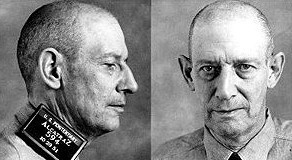
Robert Stroud
Murderer John S. Williams
Murderer · USA · 1910
John S. Williams was convicted of murder and sentenced to life imprisonment on…
18 victims
John S. Williams
Murderer · USA · 1910
John S. Williams was convicted of murder and sentenced to life imprisonment on…
18 victims
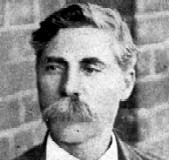 Floyd Allen
Murderer · USA · 1912
Floyd Allen (July 5, 1856 – March 28, 1913) was an American landowner and patri…
5 victims
Floyd Allen
Murderer · USA · 1912
Floyd Allen (July 5, 1856 – March 28, 1913) was an American landowner and patri…
5 victims
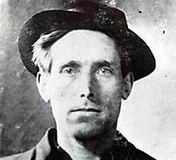 Joe Hill
Murderer · USA · 1914
Joe Hill was a Swedish-American labor activist, songwriter, and member of the I…
2 victims
Joe Hill
Murderer · USA · 1914
Joe Hill was a Swedish-American labor activist, songwriter, and member of the I…
2 victims
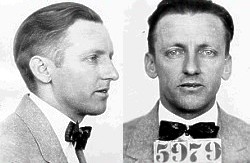 Paul Hadley
Murderer · USA · 1916
Paul V. Hadley was executed by hanging in Arizona on April 13, 1923. On Friday,…
2 victims
Paul Hadley
Murderer · USA · 1916
Paul V. Hadley was executed by hanging in Arizona on April 13, 1923. On Friday,…
2 victims
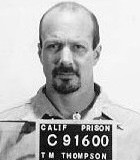 Thomas Martin Thompson
Murderer · USA · 1981
Thomas Martin Thompson (CDC# C91600), alias “Young, Thomas” and “Thomas Michael…
1 victim
Thomas Martin Thompson
Murderer · USA · 1981
Thomas Martin Thompson (CDC# C91600), alias “Young, Thomas” and “Thomas Michael…
1 victim
 Kenneth Myers
Mass murderer · USA · 2011
Kenneth Lee Myers was 47. He killed four women and then took his own life betwe…
4 victims
Kenneth Myers
Mass murderer · USA · 2011
Kenneth Lee Myers was 47. He killed four women and then took his own life betwe…
4 victims
 De'Marquise Elkins
Homicide · USA · 2013
De'Marquise Elkins was a Georgia teenager who fatally shot a baby in a stroller…
1 victim
De'Marquise Elkins
Homicide · USA · 2013
De'Marquise Elkins was a Georgia teenager who fatally shot a baby in a stroller…
1 victim
 Radcliffe Haughton
Murderer · USA · 2012
Radcliffe Franklin Haughton was tentatively identified as the shooter. He was 4…
3 victims
Radcliffe Haughton
Murderer · USA · 2012
Radcliffe Franklin Haughton was tentatively identified as the shooter. He was 4…
3 victims
- Gender
- male
- Country
- USA
- Location
- Alaska/Kansas, USA
- Date of birth
- January 28, 1890
- Age at first offence
- 19
- Characteristics
- murder for hire, abuse, alcohol, escape
- Victim profile
- F. K. "Charlie" Von Dahmer / Andrew F. Turner (prison guard)
- Method of murder
- Shooting / St abbing with homemade knife
- Date(s) of murder
- January 18, 1909 / March 26, 1916
- Years active
- 1909–1916
- Date of arrest
- —
- Status
-
Died in custody
Sentenced to death on May 17, 1916; commuted to life imprisonment in 1920; died in prison on November 21, 1963
Case record: Robert Stroud
Background
Robert Stroud, known to the public as the “Birdman of Alcatraz,” was a federal inmate who was held at McNeil Island, Leavenworth Federal Penitentiary, and Alcatraz.
Stroud had a relationship with Kitty O’Brien (also spelled Kitty OBrien). Stroud and Kitty O’Brien had an acquaintance, F. K. “Charlie” Von Dahmer (nicknamed Charlie), who was involved in events that led to Stroud’s imprisonment. Stroud’s mother was Elizabeth Stroud. Stroud’s brother was Marcus.
Stroud developed interests connected to birds during his incarceration, including canaries and related writings.
Stroud died while incarcerated at the Springfield medical facility for federal prisoners.
The offence
In 1909, Robert Stroud murdered a bartender who allegedly failed to pay a prostitute for whom Stroud was pimping in Alaska. After shooting the bartender to death, Stroud took the man’s wallet to ensure that he and the prostitute would receive compensation for her services.
The material also describes events associated with the earlier confrontation involving F. K. “Charlie” Von Dahmer and Kitty O’Brien. In that narrative, Von Dahmer beat O’Brien, Stroud confronted Von Dahmer, a struggle ensued, and Von Dahmer died from a gunshot wound. Stroud turned himself in at the Juneau City Marshal’s office and awaited trial.
Investigation
After the killing(s) described in the record, Stroud turned himself in to the Juneau City Marshal’s office and was put in jail to await trial for murder.
Arrest
Stroud turned himself in after the shooting described in the record.
Trial
Stroud was found guilty of manslaughter on August 23, 1909, and sentenced to 12 years in prison.
In 1911, Stroud was convicted of manslaughter and sent to serve his sentence at McNeil Island, a Federal penitentiary in Washington State.
A later conviction occurred in connection with a prison homicide. In 1916, after being refused a visit with his brother, Stroud stabbed a guard to death in front of eleven hundred inmates in the prison Mess Hall. He was convicted of first-degree murder and sentenced to death by hanging, and he was ordered to await his death sentence in solitary confinement.
After the death sentence, the narrative states that the sentence was thrown out in December by the U.S. Supreme Court, because the jury had not said it intended for Stroud to hang. A second trial followed in May 1917, where Stroud was also convicted but received a life sentence. That sentence was also thrown out by the Supreme Court on constitutional grounds.
A third trial began in May 1918, and on June 28 he was again sentenced to death by hanging. The Supreme Court intervened, but only to uphold the death sentence, scheduled to be carried out on April 23, 1920.
Sentencing
On August 23, 1909, Stroud was sentenced to 12 years in the federal penitentiary on Puget Sound’s McNeil Island.
On May 17, 1916, Stroud was sentenced to death.
In 1916, following the stabbing of a guard, Stroud was ordered to await the death sentence in solitary confinement.
After petitions and appeals, the narrative states that President Woodrow Wilson commuted Stroud’s death sentence to life imprisonment without parole in 1920.
A warden named T. W. Morgan directed that Stroud be permanently placed in the segregation unit to live out his sentence in total solitude.
Appeals
The narrative states that Stroud’s death sentence was thrown out in December by the U.S. Supreme Court, and a second trial was held in May 1917. The life sentence from the second trial was also thrown out by the Supreme Court on constitutional grounds.
The record also states that the execution scheduled for April 23, 1920 was halted after petitions to President Woodrow Wilson and his wife, Edith Bolling Wilson. The death sentence was altered to life imprisonment.
The narrative also describes later petitions by Stroud claiming his long incarceration amounted to cruel and unusual punishment; his attempts to be released were unsuccessful.
Outcome
He was sentenced to death on May 17, 1916. His death sentence was commuted to life imprisonment in 1920. He died in prison on November 21, 1963.
Aftermath
After his conviction for the prison homicide, Stroud was confined in isolation/segregation and was described as spending years in segregation and in a prison hospital. The narrative states that he was transferred to Alcatraz on December 19, 1942, and that he was later transferred to the Medical Center for Federal Prisoners in Springfield, Missouri in 1959.
On November 21, 1963, the day before the assassination of President John F. Kennedy, Robert Franklin Stroud died at the Springfield Medical Center at the age of 73. The material states he died of natural causes.
The narrative also states that his personal property, including original manuscripts, was delivered to his last attorney representative, Richard M. English of California. English later turned over some possessions to the Audubon Society.
The record also states that Stroud was buried in Metropolis, Illinois (Massac County).
Other details
Stroud was described as violent and difficult to manage in prison.
The record states that Stroud viciously assaulted a hospital orderly who he insisted had reported him for attempting to procure narcotics through intimidation and threats.
The record also states that Stroud stabbed a fellow inmate.
After receiving an additional six-month sentence for hostile actions, Stroud was transferred to Leavenworth Federal Penitentiary in Kansas due to ceaseless complaints about his threats toward other inmates and because of overcrowding.
In 1916, the narrative states that a guard named Andrew F. Turner was killed by Stroud after a confrontation in the dining hall.
A psychiatrist named Romney M. Ritchey assessed Stroud in 1943 and diagnosed him as a psychopath, with an I.Q. of 134.
The record describes Stroud’s bird-related activities, including that he authored manuscripts and books such as “Diseases of Canaries,” “Stroud’s Digest on the Diseases of Birds,” and “Looking Outward: A History of the U.S. Prison System from Colonial Times to the Formation of the Bureau of Prisons,” and an autobiography titled “Bobbie” (also spelled “Bobbye”).
The record states that prison officials discovered that some requested equipment was being used to construct a still to make an alcoholic brew.
Stroud attempted to take his life in December 1951 by overdosing on pain medication.
The narrative states that Stroud was not permitted to see a film portrayal of him, in which Burt Lancaster portrayed him. The record says the film received an Academy Award nomination for best actor.
The record also mentions later cultural references, including that Dennis Farina played Stroud in the 1987 TV movie “Six Against the Rock,” that a concept album by Rick Wakeman included an instrumental titled “Birdman of Alcatraz,” and that a character named Birds in “Katekyo Hitman Reborn!” is based on Robert Stroud.
The record includes multiple names and attributions for related people mentioned in the narrative: Thomas E. Gaddis, Guy Trosper, John Frankenheimer, Burt Lancaster, Karl Malden, Thelma Ritter, and Richard M. English, as well as Morton Sobell, who is named as a convicted spy, close friend, and fellow inmate at the time of Stroud’s death.

Spotted an error, or have more information about this case?