Douglas Turner
Homicide - Murderer Abdullah Hameen
Homicide - Murderer · USA · 1980
Abdullah Hameen was executed by lethal injection in Delaware on May 25, 2001. H…
2 victims
Abdullah Hameen
Homicide - Murderer · USA · 1980
Abdullah Hameen was executed by lethal injection in Delaware on May 25, 2001. H…
2 victims
 Antonio Melton
Homicide - Murderer · USA · 1990
Antonio Melton was sentenced to death on May 19, 1992. He was born on 12/29/72.…
2 victims
Antonio Melton
Homicide - Murderer · USA · 1990
Antonio Melton was sentenced to death on May 19, 1992. He was born on 12/29/72.…
2 victims
 Jessie James Cowans
Homicide - Murderer · USA · 1977
Jessie James Cowans Jessie James Cowans was arrested for armed robbery when he…
2 victims
Jessie James Cowans
Homicide - Murderer · USA · 1977
Jessie James Cowans Jessie James Cowans was arrested for armed robbery when he…
2 victims
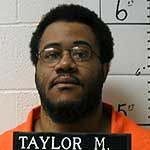 Michael Taylor
Homicide - Murderer · USA · 1995
Michael Taylor was convicted of first-degree murder and forcible rape in 1998.…
2 victims
Michael Taylor
Homicide - Murderer · USA · 1995
Michael Taylor was convicted of first-degree murder and forcible rape in 1998.…
2 victims
 Terrance Williams
Homicide - Murderer · USA · 1984
Terrance Williams was sentenced to death in Pennsylvania on July 1, 1987. He wa…
2 victims
Terrance Williams
Homicide - Murderer · USA · 1984
Terrance Williams was sentenced to death in Pennsylvania on July 1, 1987. He wa…
2 victims
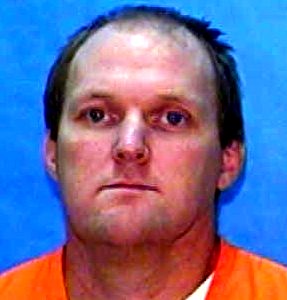 Darryl Barwick
Murderer · USA · 1986
Darryl Barwick was convicted and sentenced to death for the murder of Rebecca W…
1 victim
Darryl Barwick
Murderer · USA · 1986
Darryl Barwick was convicted and sentenced to death for the murder of Rebecca W…
1 victim
 Gianluca Casseri
Murderer · Italy · 2011
Gianluca Casseri committed suicide by shooting himself the same day after an ar…
2 victims
Gianluca Casseri
Murderer · Italy · 2011
Gianluca Casseri committed suicide by shooting himself the same day after an ar…
2 victims
 Molly Midyette
Murderer · USA · 2006
Molly Midyette was convicted of child abuse resulting in death in the 2006 deat…
1 victim
Molly Midyette
Murderer · USA · 2006
Molly Midyette was convicted of child abuse resulting in death in the 2006 deat…
1 victim
 Leslie Demeniuk
Murderer · USA · 2001
Leslie Demeniuk was a mother accused of murdering her twin 4-year-old sons, Jam…
2 victims
Leslie Demeniuk
Murderer · USA · 2001
Leslie Demeniuk was a mother accused of murdering her twin 4-year-old sons, Jam…
2 victims
 Mahin Qadiri
Serial killer · Iran · 2008
Mahin Qadiri was an Iranian woman convicted as a serial killer. A Guardian repo…
5 victims
Mahin Qadiri
Serial killer · Iran · 2008
Mahin Qadiri was an Iranian woman convicted as a serial killer. A Guardian repo…
5 victims
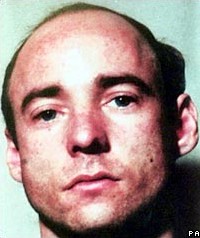 Alun Kyte
Murderer · United Kingdom · 1993
Alun Kyte was a British convicted double murderer. He was convicted of murderin…
2 victims
Alun Kyte
Murderer · United Kingdom · 1993
Alun Kyte was a British convicted double murderer. He was convicted of murderin…
2 victims
- Gender
- male
- Country
- USA
- Location
- Montana, USA
- Date of birth
- 1971
- Age at first offence
- 16
- Characteristics
- juvenile (16), alcohol, history of mental illness, armed robbery
- Victim profile
- James Brooks, Ora Brooks, and Sharon Brooks / Gerald Pileggi (fellow inmate) / Five inmates
- Method of murder
- Shooting (rifle) / Beating with a baseball bat
- Date(s) of murder
- November 19, 1987 / September 2, 1990 / September 22, 1991
- Years active
- 1987–1991
- Date of arrest
- —
- Status
-
Died in custody
Committed suicide in prison on July 8, 2003
Background
Douglas Turner was a juvenile who was released from an alcohol treatment program in Glendive, Montana, following several juvenile offenses. Turner retrieved a .30-.30 rifle after being dropped off at his house around midnight, and he then killed members of the Brooks family next door.
Turner’s background included conduct disorder, solitary aggressive type, alcohol dependence, cannabis abuse, and psychoactive substance abuse. A Warm Springs State Hospital report concluded that Turner did not suffer from a mental disease or defect that would interfere with his competence to stand trial, but it documented conduct disorder and impaired impulse control and judgment due to alcohol intoxication. The evaluation also documented that Turner had been physically abused as a child, did not have a good relationship with his adoptive father, and had been sexually assaulted on one occasion. The sentencing court later found Turner had a considerable record of juvenile criminal activity beginning in May 1985, with approximately 12 contacts involving offenses ranging from misdemeanors to felony in nature.
The offence
On November 19, 1987, Turner shot three people dead. Turner had been drinking Southern Comfort, vodka, and beer at a party in Glendive, Montana. After the party broke up, Turner was dropped off at his house around midnight.
After entering his house, Turner retrieved his .30-.30 rifle, went next door, and killed James Brooks, Ora Brooks, and Sharon Brooks. Turner had never met his neighbors before.
Around midnight, a neighbor heard someone yell, “God damn it, let me in.” Another neighbor heard James Brooks saying, “Put the gun away.” Shortly thereafter, five shots were fired.
Ora Brooks was shot while running out of the house screaming.
Sean Brooks, age eight, and his friend Scott Miller were in the Brooks’ basement preparing to go to sleep when Turner entered the house. After hearing gunshots, Sean and Scott ran upstairs. They saw Turner standing in the kitchen, immediately got down on the floor, and covered their heads. Turner’s rifle misfired, so Turner beat the boys on the head with the butt end of his rifle. When Turner left them to go downstairs, the boys ran from the house.
Turner was arrested at the scene after police arrived several minutes later.
Investigation
Turner was charged in district court with three counts of deliberate homicide, two counts of felony assault, and one count of aggravated burglary. Dawson County Public Defender Jerry Cook was appointed to represent Turner.
Cook had 17 years of criminal defense experience at the time, including handling two homicide cases at the trial level and one negligent homicide case on appeal. Cook had no recorded notes of his meetings with Turner and did not keep time records because he was a salaried public defender. He did not recall exactly when meetings took place. Cook testified that the seven-year passage of time between his representation and the evidentiary hearing affected his memory, but he testified he was likely to have met with Turner before his initial appearance in district court on December 16, 1987, at least once prior to arraignment on February 12, 1988, prior to the omnibus hearing on March 1, 1988, and at least once prior to the change of plea hearing on April 12, 1988. Cook also recalled meeting with Turner in the presence of Donald LaPlante several times before sentencing.
The District Court found that Cook maintained personal contact with Turner throughout the course of representation.
Cook conducted a factual investigation by reviewing police reports and witness statements, viewing physical evidence, talking to police officers, and going to the scene of the crime. Cook concluded that the State had a strong factual case against Turner and believed the evidence would support a conviction of deliberate homicide. Cook also considered a mitigated homicide defense and identified Turner's age, personal history, and alcohol consumption as mitigating factors to present even though intoxication was not a defense under Montana law.
Arrest
Police arrived several minutes later and arrested Turner at the scene.
Trial
In April 1988, Turner pled guilty to three counts of deliberate homicide, two counts of felony assault, and one count of aggravated burglary.
At a change of plea hearing held on April 12, 1988, the District Court advised Turner of constitutional rights and that many of those rights would be waived upon entry of a guilty plea. Turner indicated he understood, had ample time to discuss the case with his attorney, and was satisfied with his attorney’s services.
The sentencing court then placed Turner under oath and questioned him about the voluntariness of his plea. Turner indicated the plea was entirely voluntary and that no threats or promises had been made by the court, prosecutor, defense counsel, or the sheriff’s department. Turner’s mother also represented that she thought her son’s guilty plea was a voluntary choice.
Turner acknowledged at the guilty plea hearing that he had discussed possible defenses with Cook, had read the “Acknowledgment of Waiver of Rights and Plea of Guilty” document, and understood “every word of it.” The court questioned Turner about the facts underlying the offenses and confirmed that although Turner could not remember certain details about the crimes, Turner believed he was responsible for the deaths and the assaults that occurred that night.
At the time the decision to plead guilty was made on April 12, 1988, trial was tentatively scheduled for April 20, 1988. Cook acknowledged he was not prepared to go to trial on that date and would have sought to continue the trial had Turner opted to pursue that course.
Cook testified at the evidentiary hearing: “I rarely let anyone enter a guilty plea until I'm satisfied, number one, that that's what they want to do, number two, there is very little defense, or the defense is such that I don't think we can overcome the Prosecution's case, and they are more than likely going to get a verdict.”
Turner did not present the court with any refusal by Cook to take the case to trial if Turner wanted to pursue that course. The District Court found Turner’s claim that his plea was involuntary came “years after the sentencing hearing” and was “not creditable.”
Warm Springs State Hospital evaluation
On December 16, 1987, Cook filed a motion for a psychiatric evaluation of Turner pursuant to § 46-14-202, MCA (1987), to determine whether Turner, as a result of mental disease or defect, was fit to stand trial.
As a result, Turner was sent to Warm Springs State Hospital for 36 days. Following interviews and testing procedures, Warm Springs personnel compiled a report sent to defense counsel, the prosecutor, and the presiding judge. The report documented conduct disorder, solitary aggressive type, alcohol dependence, cannabis abuse, and psychoactive substance abuse.
The report also concluded: “Mr. Turner does not suffer from a mental disease or defect that would interfere with his competence to stand trial. He does suffer from Conduct Disorder which is essentially an abnormality manifested by repeated antisocial conduct․ At the time of the alleged crime it is clear that Mr. Turner was under the effects of alcohol intoxication. As with anyone who consumes enough alcohol his impulse control and judgment were severely impaired. Due to the effects of the alcohol and only due to the effects of the alcohol he was not capable of acting with knowledge and purpose at the time of the criminal conduct charged. However, his state was not due to an idiosyncratic response to alcohol. Also, he had foreknowledge of the effects of alcohol, and in spite of two inpatient courses for substance abuse he chose to consume the alcohol with clear knowledge and purpose. The evaluation also documents that Turner was physically abused as a child, he did not have a good relationship with his adoptive father, and he had been sexually assaulted on one occasion.”
Cook did not immediately acquiesce to pleading guilty and began to investigate possible defenses. At the March 1, 1988, omnibus hearing, Cook indicated he was still considering the possibility of relying upon the insanity defense or diminished mental capacity if the case proceeded to trial.
Sentencing
On April 19 and 20, 1988, Judge Cox held Turner’s sentencing hearing. The State called 14 witnesses, including Turner. The Warm Springs report was admitted as an exhibit, and a social history report prepared by Craig Anderson was also admitted.
At sentencing, Cook’s strategy was to ask the court to give Turner some hope for the future. Cook called Donald LaPlante as a witness, and LaPlante testified extensively about Turner’s background. LaPlante described how Turner’s background contributed to Turner’s emotional state on the night of the murders, including emotional “anniversary dates” triggering responses. LaPlante testified that Turner knew he was “on the brink” and that if he made one error he would be committed to Pine Hills. LaPlante testified that Turner harbored anger toward people who had abused him and had previously entertained thoughts of killing someone.
LaPlante stated: “I may as well have the best last party that we're gonna have” before going to Pine Hills.
LaPlante testified that: “That because of the anniversary date syndrome coupled with the disassociation process, all of this triggered within his mind the rehearsal that he engaged in, the thoughts of killing someone; and that he then went about doing it.”
LaPlante described this as a “psychogenic fugue state,” and testified that this diagnosis is not made in the presence of an organic mental disorder. When asked whether Turner consciously recognized he was killing the Brooks family, LaPlante responded: “I do believe that at times during that process Doug did know exactly what he was doing, at a conscious awareness level; that at a subconscious level he was aware of it, his memories of it exist at all times. But no, I do not believe that he was consciously aware that he was murdering the Brooks.”
At the close of the evidence, the prosecutor argued Turner was not capable of rehabilitation based on numerous failures despite services offered. The prosecutor recommended the maximum sentence and parole ineligibility, which the prosecutor argued would permanently remove Turner from society.
Cook argued that although Turner received alcohol treatment, he had never received treatment for his underlying problem and would continue drinking until it was addressed. Cook told the court he did not offer LaPlante’s testimony as an “excuse,” but as insight into Turner’s mental processes. Cook emphasized Turner’s age and willingness to take responsibility by pleading guilty. Cook asked the court to avoid the “no parole” designation to give Turner a ray of hope for rehabilitation.
Judge Cox imposed a greater sentence than proposed by the prosecution. Turner was sentenced to a total of 390 years in prison and was designated ineligible for parole. Judge Cox gave the following reasons for the sentence:
- The Defendant is alone responsible for his behavior even though his background has been less than stable and he may have been a victim of physical and sexual abuse.
- The Defendant resisted many efforts to help him control his behavior and chemical and alcohol dependency. He was expelled from Hilltop Treatment Center at Havre, Montana, prior to completion of treatment. On the day of his discharge from the Chemical Dependency Center in Glasgow, Montana, he chose to drink again.
- The Defendant is in relatively good health and is approximately six feet, one inch in height, and weighs 180 pounds. Intellectually he is in the average range, if not slightly above. His MMPI Profile is remarkably normal. He is not psychotic.
- The Defendant has a considerable record of juvenile criminal activity beginning in May 1985. There are approximately 12 contacts involving offenses ranging from misdemeanors to felony in nature.
- The crimes committed by the Defendant November 20, 1987, and for which the above Sentences were imposed, were brutal, savage and utterly senseless. There was not motive nor reason for the commission of the crimes. In a matter of minutes, the Defendant killed and destroyed a vivacious, energetic, well respected couple married 22 years, leaving four (4) children to grieve for the rest of their lives. He killed a grandparent of those four (4) children and he brutally assaulted two youngsters age eight and nine who will never forget the nightmare and will probably need counseling for the rest of their lives. The crimes were committed without any provocation by the victims who were unarmed and the crimes were without warning.
- The Defendant has displayed little remorse and this Court recognizes that may be consistent with [Donald LaPlante's] diagnosis of dissociation.
- As an aggravating factor, the offenses were committed as a part of a scheme or operation which, if completed, would result in the death of more than one person and in fact resulted in three (3) deaths. The evidence is not clear but for the fact that the rifle had not malfunctioned, the two youths who were victims of the felonious assaults might have also been killed.
- The only statutory mitigating circumstance is that the Defendant was less than 18 years of age when he committed the crimes. The Court does not believe that the voluntary intoxication of the Defendant under the circumstances of this case is a mitigating factor. The evidence clearly disclosed that the Defendant was aware of the effects of alcohol since at least age 12; that he had twice received in-patient treatment for alcoholism; but instead of using his will, the Defendant actually fostered it seeming to actually enjoy being an alcoholic as well as using other drugs because it was “fun to drink.” On the night of the crimes the Defendant deliberately partied and drank excessively and made the determination and calculated decision to become intoxicated. The crimes were committed approximately one (1) week after the Defendant's discharge from in-patient treatment and the Defendant himself admitted that during the last week of his treatment he in fact planned to continue drinking upon his discharge.
- Because of the nature of the crimes committed, the manner in which they were committed and the Defendant's history of criminal activity, with continued repetition of crimes, continued use of alcohol, and continued rejection of helpful intervention, any chance of rehabilitating the Defendant is poor, if not impossible.
- When crimes such as the above have been committed in such a brutal, savage and senseless manner, then the only response that a civilized society can make is to remove the perpetrator of those crimes from society, not out of society's revenge or retribution, but out of the real fear that if this is not done then the perpetrator will continue to commit additional violent crimes and the general public is at risk.
Appeals
In May 1993, Turner filed a postconviction relief petition requesting to withdraw his guilty pleas because they were involuntarily given based on alleged ineffective assistance of counsel. The petition alleged 13 claims, the majority alleging ineffective assistance by Cook.
A hearing was held in January 1995 before District Judge Ted Mizner. Several witnesses testified, including LaPlante.
LaPlante testified at the postconviction hearing that Turner was in and out of a dissociative state on the night of the murders and what might have caused that state. LaPlante also testified that a person in a dissociative state nonetheless has the capacity to act purposely or knowingly, which is the mental state requirement for deliberate homicide.
LaPlante testified he was present during meetings between Turner and Cook where Cook explained the charges and the evidence in the State’s possession. LaPlante heard Cook talk about legal options. LaPlante stated: “He appeared, a number of times, not to care.”
LaPlante recalled asking Turner: “[H]ow can you help us, how can we help you if you won't give us the information?”
Turner’s mother Beverly and grandmother Effie Wehren testified. Effie Wehren adopted Turner when he was three and one-half years old. She testified Turner had frequent nightmares and she recalled seeing black and blue marks on his head. She testified that Turner was often left with a babysitter who placed him in an ice bath when he messed his pants, and that Turner’s little brother had running sores on his bottom. She testified that she was not aware of any physical abuse but believed that Jim Sparks was unfair because he made the boys work and belittled them.
Beverly Turner testified that she recalled Cook discussing the nature of the charges, the possibility of a mitigated deliberate homicide defense, and the death penalty as a possible punishment. She testified she had concerns about Cook’s representation but could not articulate specifics.
Michael Donahoe testified as an expert that Cook’s representation was substandard for multiple reasons:
- He did not follow the procedure outlined in Ake v. Oklahoma for obtaining a mental health evaluation and review of that evaluation.
- He did not challenge the transfer of the case to district court.
- He did not do enough to “get the death penalty off the table;”
- He failed to anticipate or object to the prosecution's evidence at sentencing; and
- He did not advise Turner of his right to remain silent prior to the Warm Springs evaluation.
On cross-examination, Donahoe admitted that while he may have tried the case differently, he was not proposing he could have achieved a different result.
Affidavit testimony was offered from three out-of-state attorneys. The District Court gave these affidavits and Donahoe’s testimony little weight, finding they demonstrated how different attorneys might handle a case in different ways.
Turner disputed Cook’s testimony that Turner wanted to plead guilty from the start. The District Court found Cook’s testimony credible and Turner’s testimony not creditable.
Turner described Cook’s explanation of options prior to the guilty pleas: “It was his position that there was one way we could approach it, by going to trial and trying to get a mitigated deliberate homicide verdict, but he didn't think the chances of that were very good, and if the Jury came back with the guilty verdict on deliberate homicide, it would send a message to Judge Cox, who is, you know, a member of the Glendive community, that this is what's expected of him, is to give me the death penalty.”
Turner testified that his dissatisfaction with Cook’s representation arose after sentencing when he arrived at Montana State Prison and he had time to “look back and think about some things,” coming to the conclusion that Cook had “sent [him] up the river.”
After the postconviction evidentiary hearing, Turner moved to expand the record to include notes made by a social worker for the Department of Family Services stating: “Jerry [Cook] said he'll have Doug [Turner] plead guilty so as to avoid the death penalty.”
Turner sought deposition testimony from Robert Nasheim, and Turner moved to supplement the record with the Nasheim deposition and other documents. The State did not oppose the request, arguing the supplemental material did not sufficiently tip the evidentiary scale. The District Court did not rule on the motion before issuing findings of fact, conclusions of law, and an order denying postconviction relief on July 28, 1998. Turner later moved for reconsideration under Rule 60(b), M.R.Civ.P., and the District Court declined to do so.
On appeal, the Supreme Court of Montana addressed whether Turner should be allowed to withdraw his guilty pleas because they were involuntary based on ineffective assistance of counsel. The issues were restated as whether Turner should be allowed to withdraw guilty pleas due to involuntary entry based on his claim of ineffective assistance of counsel.
The Supreme Court ultimately affirmed the denial of postconviction relief. Justice WILLIAM E. HUNT, SR., delivered the Opinion of the Court, and TURNAGE, C.J., GRAY, NELSON and TRIEWEILER, JJ., concur.
Other details
On April 12, 1988, Turner signed an “Acknowledgment of Waiver of Rights and Plea of Guilty” in which he acknowledged the offenses charged, his right to a trial, the rights he waived by pleading guilty, and his satisfaction with the services of his attorney. Turner acknowledged he fully understood what he was doing and understood that the prosecutor would recommend a total sentence of 370 years in prison along with a dangerous offender designation. Turner provided a statement of facts, including the following verbatim text: “I am pleading guilty because in fact I know I am guilty. I have had the opportunity to review toxicology reports, reports from the Division of Forensic Science, Affidavit and Motion for Leave to File Information Direct, as well as having been advised of the facts to be testified to by police officers and eye witnesses. In view of the testimony, as well as all the reports, there is no doubt in my mind that I caused the deaths of James Brooks, Jr., Sharon Brooks, and Ora Brooks, and that I committed the assaults on Sean Brooks and Scott Miller, and that I entered the premises to do so. I have no direct recollection of being in the premises and actually pulling the trigger or striking anyone, but I do have a vague recollection of the arrest, and I recall making a statement to the effect that I killed someone, although I do not recall exactly when that statement was made or why I made it. I have been advised by Mr. Cook and have received copies of the statutes under which I am charged, as well as the statutes defining mitigated deliberate homicide, and copies of the sentencing statutes. I am entering this plea of guilt voluntarily as my own free act after conferring with my attorney and my mother. It was my instructions to Mr. Cook after our initial interview, that if at all possible, I did not want to put anyone through a trial of this case, especially the Brooks family and my family. I know and have no doubt that I committed the crimes alleged, even though I cannot understand why, and it is difficult to accept the facts, as I know I have caused a great many people pain and suffering, for which I am truly sorry, knowing that this expression is not enough.”
Turner’s mother Beverly Turner also signed the document.
The acknowledgment form included that Turner was entering his plea of guilty voluntarily “as my own free act after conferring with my attorney and my mother.” Turner’s instructions to Mr. Cook were that “if at all possible, I did not want to put anyone through a trial of this case, especially the Brooks family and my family.”
The record reflected Cook represented to the court that “after our initial conference, I believe at almost every conference thereafter, [Turner] has requested that I allow him to enter a guilty plea.”
At sentencing, Cook told the court: “Doug has, from, I believe, the second meeting with me, almost insisted on pleading guilty to the charges. And I think I've told the Court that already. He does have, in his present state of mind, some empathy for the Brooks family and his family. It was never his intention to cause them to feel the hurt a second or third time. He wanted it ended. And I think his entry of a plea of guilty was an effort to do that, however little it was, in view of what happened.”
Turner’s psychiatric evaluation was sent to defense counsel, the prosecutor, and the presiding judge following interviews and testing procedures.
In April 1988, Turner signed the plea acknowledgment and pled guilty.
The Supreme Court of Montana case was styled as “Supreme Court of Montana State v. Turner STATE of Montana, Plaintiff/Respondent, v. Doug TURNER, Defendant/Appellant. No. 99-104. October 26, 2000.”
Turner was later sentenced to three consecutive life sentences in prison in April 1988. Turner was sentenced to death in 1992. Turner was sentenced to 30 years in prison and five concurrent terms of life imprisonment in 1993. Turner’s involvement included the 1991 prison riot in which Turner and co-inmate William Gollehon were convicted of helping murder five other inmates. Turner received the death penalty in 1992 for involvement in the 1990 beating death of fellow inmate Gerald Pileggi.
Turner committed suicide in prison on July 8, 2003.
Spotted an error, or have more information about this case?