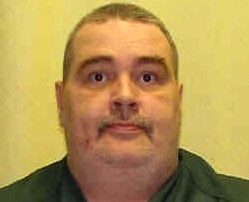
Jessie James Cowans
Homicide - Murderer Douglas Turner
Homicide - Murderer · USA · 1987
Douglas Turner was a juvenile who was released from an alcohol treatment progra…
9 victims
Douglas Turner
Homicide - Murderer · USA · 1987
Douglas Turner was a juvenile who was released from an alcohol treatment progra…
9 victims
 Carl Brandt
Homicide - Murderer · USA · 1971
Carl “Charlie” Brandt · Jan. 3, 1971 — Carl Brandt killed his pregnant mother a…
6 victims
Carl Brandt
Homicide - Murderer · USA · 1971
Carl “Charlie” Brandt · Jan. 3, 1971 — Carl Brandt killed his pregnant mother a…
6 victims
 Henry Brisbon
Homicide - Murderer · USA · 1973
Henry Brisbon was a juvenile (17) when he was convicted for double murder. The…
3 victims
Henry Brisbon
Homicide - Murderer · USA · 1973
Henry Brisbon was a juvenile (17) when he was convicted for double murder. The…
3 victims
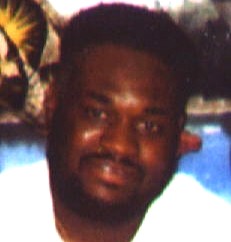 Abdullah Hameen
Homicide - Murderer · USA · 1980
Abdullah Hameen was executed by lethal injection in Delaware on May 25, 2001. H…
2 victims
Abdullah Hameen
Homicide - Murderer · USA · 1980
Abdullah Hameen was executed by lethal injection in Delaware on May 25, 2001. H…
2 victims
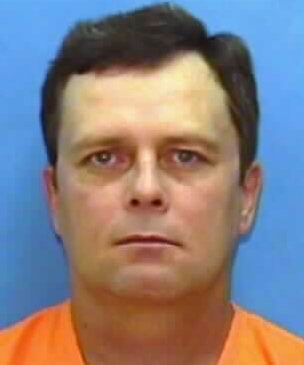 Dana Williamson
Homicide - Murderer · USA · 1975
Dana Williamson (born 09/18/59) was convicted and sentenced to death for the 11…
2 victims
Dana Williamson
Homicide - Murderer · USA · 1975
Dana Williamson (born 09/18/59) was convicted and sentenced to death for the 11…
2 victims
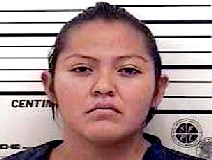 Patricia Ignacio
Murderer · USA · 2008
Patricia Ignacio was a 21-year-old woman of Nageezi accused of beating another…
1 victim
Patricia Ignacio
Murderer · USA · 2008
Patricia Ignacio was a 21-year-old woman of Nageezi accused of beating another…
1 victim
 Robert Vannoy Black
Murderer · USA · 1985
Robert Vannoy Black, Jr. was convicted in a Texas court of hiring a man to kill…
1 victim
Robert Vannoy Black
Murderer · USA · 1985
Robert Vannoy Black, Jr. was convicted in a Texas court of hiring a man to kill…
1 victim
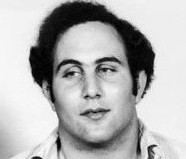 David Berkowitz
Serial killer · USA · 1976
David Berkowitz (born June 1, 1953) was known by the nicknames “Son of Sam” and…
6 victims
David Berkowitz
Serial killer · USA · 1976
David Berkowitz (born June 1, 1953) was known by the nicknames “Son of Sam” and…
6 victims
 Terry Driver
Murderer · Canada · 1995
Terry Driver was known as the “Abbotsford killer.” He was a convicted Canadian…
1 victim
Terry Driver
Murderer · Canada · 1995
Terry Driver was known as the “Abbotsford killer.” He was a convicted Canadian…
1 victim
- Gender
- male
- Country
- USA
- Location
- Monroe County, Ohio , USA
- Date of birth
- October 23, 1960
- Age at first offence
- 17
- Characteristics
- juvenile (16), robbery, torture, drugs, alcohol
- Victim profile
- His best friend, who was in a wheelchair / Clara Swart, 69
- Method of murder
- Manual strangulation / Strangulation with a phone cord
- Date(s) of murder
- 1977 / 1996
- Years active
- 1977–1996
- Date of arrest
- —
- Status
-
Released
Sentenced to death on April 17, 1997; paroled in 1989 after a sentence of 15 years to life in 1977
Name
Jessie James Cowans
Background
Jessie James Cowans was arrested for armed robbery when he was 8 years old. He was raised in Over-the-Rhine with 17 brothers and sisters, and a report noted that “All but one of Cowans' male siblings have been . . . sent to the penitentiary.”
When Cowans was 16, he strangled a wheelchair-bound friend. He also robbed the friend’s wallet, ring and watch from his corpse, turned up the gas on a stove in the dead man's apartment, and tried to set a fire. A prison psychologist described Cowans as having lived a life of “basically . . . raising hell,” and recommended maximum security, stating: “... officials can expect a host of rules violations, covering the entire spectrum.”
The offence
On August 29, 1996, Jessie Cowans murdered a 69-year-old woman, Clara Swart, in the course of burglarizing and robbing her home on Lindale-Mt. Holly Street in Amelia. Cowans used the strap of the woman's purse to strangle her.
Investigation
Cowans still denied he killed Swart, but the evidence included that he told a jailhouse snitch how he killed her, that he knew details before they were released by police, that his palm print was found in her home, and that items from her home were found in his bedroom or buried in his yard.
Arrest
Jessie Cowans was arrested for the murder of Clara Swart on Sept. 2.
Trial
During Cowans’s trial, he was “wired with a shock device.”
Sentencing
In 1977, at age 16, Cowans was sentenced to 15 years to life for aggravated murder and robbery.
Cowans was paroled in 1989 after serving 12 years and four months of his “life” sentence. He lasted 16 months on the outside before he was caught with a knife, pills and marijuana after leaving the scene of an accident. Back in prison, he piled up six more violations, including “seductive and obscene acts,” fighting, two drug violations and four involving “intoxicants.”
The Parole Board released Cowans a second time in May 1996 for committing a prior murder and robbery.
Cowans was sentenced to death on April 17, 1997.
Appeals
Cowans was on death row in Ohio for murdering an elderly Monroe Township neighbor, Clara Swart, in 1996.
Outcome
Clara Swart was found in her own home, strangled.
Aftermath
After Cowans was arrested, pictures of him scuffling with court deputies came as no surprise to cops, prosecutors and judges. The parole board was described as ignoring warnings and letting him loose twice, with the chairwoman making a statement about the parole decision.
Margarette Ghee, chairwoman of the parole board, said:
“This guy - I don't know what happened to him,” Margarette Ghee, chairwoman of the parole board, said, sighing deeply.
“I was just appalled. It's really tragic that this woman lived to be 69 years old and had to die like this. This is bothering everybody.”
The Hamilton County Prosecutor's office opposed release and sent repeated letters stating: “this office strongly opposes any type of parole, furlough or release of the defendant, Jesse James Cowans.”
Other details
Cowans’s parole risk assessment prior to his second parole included references to substance-abuse counseling, psychological tests, and a March 29, 1995 risk assessment.
A March 29, 1995 risk assessment rated Cowans in 10 categories, including prior felonies, alcohol and drug abuse, and prison behavior, and in every category but one, he had the highest risk-score possible. On a maximum-risk scale that stopped at 40, he had a 37. On a scale of 1-4, with 4 as the highest possible risk, Jesse James Cowans rated a 5, which was inked out and “corrected” to a 4.
The Parole Board’s quick-glance matrix was described as: “4 means: ‘Usually Will Not be Released Until After Two (2) or More Continuances’ (added time).” The text also stated: “A 5 means, ‘Release is Not Appropriate.’”
The prison records described multiple incidents, including:
- threats to prisoners and guards
- being caught with a weapon, an 8-inch spike
- setting fire to cell
- “threw urine and defecation” at guards
- attacking guards with a steel bucket
- charging guards with pencils
- fighting with inmates and guards
- trying to scam a woman with letters asking for “protection” money
- “Attitude hostile and angry,” with “Really bad attitude.”
Cowans said he was high on alcohol, pot and “reds” when he committed the murder. A counselor declared: “Chemical dependency is the root cause,” and the text also noted repeated punishments for “drinking hooch” and using drugs in prison.
A visitation relationship was described involving Steve Schlechty, a tool designer in Wilmington, who visited prisoners including Shrout and Cowans. Steve Schlechty was quoted stating:
“They're where they belong,” Schlechty says.
He also said:
“Personally, I feel Clay should die for his crimes, but the state said otherwise.”
Schlechty said about Cowans:
“The guards I talk to never have a problem with Jesse,” Schlechty said.
“He's a new man, I can tell you that. I would feel very comfortable having Jesse Cowans in my house with my wife and children. Same with Clay. I know him well.”
Schlechty said about his own father:
“My own father thinks I'm crazy for going in there. It's a very dark place, a very heavy spirit.”
He said prison officials told him the visits helped, and he stated:
“have been a blessing to me.”
Schlechty said Cowans still denied he killed Swart, and the text said “the evidence is airtight” and listed factors including the jailhouse snitch and palm print.
When Schlechty saw a picture of Cowans in the paper, he said:
“I figured if any man ever needed help, he did,” he said.
He described a time seeing Cowans in jail:
“I saw a man beginning to melt from the inside, who knew he was in big trouble.”
Schlechty said:
“Cowans has nobody else - no relatives or friends on the outside,” Schlechty said.
Cowans wrote:
“He told me that Jesus could save anybody no matter what they have done or how bad they thought they were,” Cowans wrote.
“I didn't believe it.”
Schlechty said:
“There is nobody on this earth too bad to be forgiven. Thank God for that.”
The text also included a quote from Schlechty:
“God's done for them what prison reform cannot do,” Schlechty said.
“He changed their hearts.”
Spotted an error, or have more information about this case?